January 14, 2026 • 13 min read

January 14, 2026 • 13 min read
"Those who cannot remember the past are condemned to repeat it." - George Santayana
And in advertising? Those who can't access historical ads are condemned to reinvent the wheel while their competitors speed ahead with data-driven insights.
Yes, you can access historical ads through ad libraries, but the depth, timeframe, and usability vary wildly by platform. Facebook Ad Library goes back to 2018 for political ads (but only 7 years for commercial), Google Ads Transparency Centre offers limited historical views, and LinkedIn shows active ads only. Third-party tools like Vibemyad, Foreplay, and AdSpy aggregate historical data across platforms, offering deeper archives and better search functionality. The real question isn't whether you can access historical ads; it's whether your tools let you actually use that data strategically.
Here's what most marketers miss: historical ads aren't just nostalgia trips through old campaigns. They're strategic goldmines.
When you analyse past advertising campaigns, you're reverse-engineering what worked (and what flopped) without spending a dollar on testing. You're seeing seasonal patterns, messaging evolution, creative fatigue points, and audience shift signals that took your competitors months and budgets to discover.
Think about it. Would you rather:
Historical ad data turns guesswork into pattern recognition. But accessing it? That's where things get messy.
The good news: multiple ad libraries exist. The bad news: they're fragmented, have different retention policies, and range from "barely functional" to "actually useful."
Facebook Ad Library is the most robust free option. Launched in 2018 for transparency around political advertising, it now includes commercial ads. You can search by advertiser name, see active and inactive ads, and filter by country, platform (Facebook, Instagram, Messenger), and ad type.
The catch? Commercial ads are only retained for 7 years. Political ads get permanent archiving, but your competitor's product launch from 2019? That's gone.
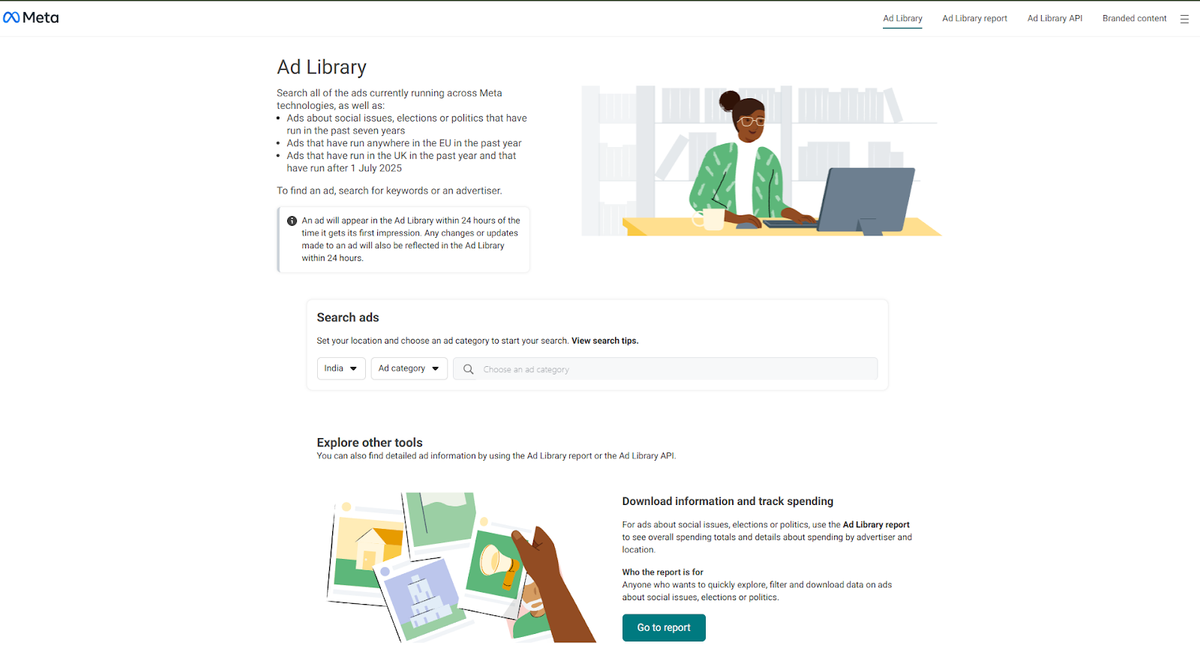
Facebook Ad Library
Google Ads Transparency Centre offers verified advertiser searches and shows recent creatives across Search, Display, and YouTube. But "recent" is doing heavy lifting here; Google's historical depth is shallow compared to Meta's. You'll see what's running now and maybe a few weeks back, but forget deep historical analysis.
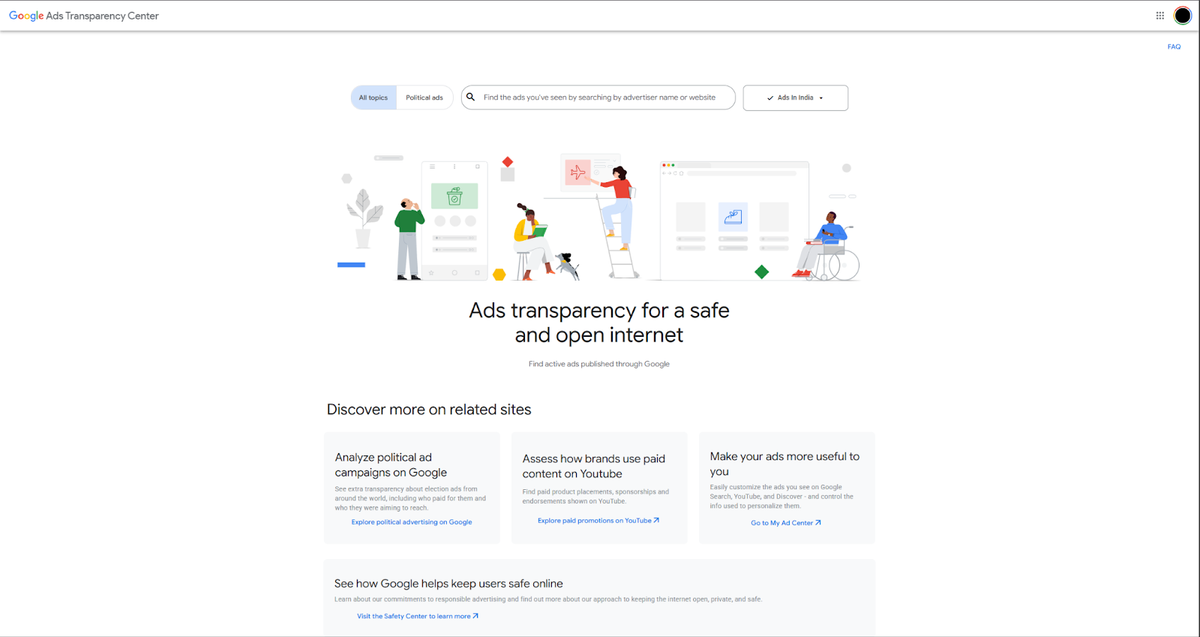
Google Ads Transparency Centre
LinkedIn Ad Library doesn't really exist in the traditional sense. LinkedIn offers a "See ads" feature on company pages, but it only shows currently active campaigns. Once an ad stops running, it vanishes. Zero historical retention for public viewers.
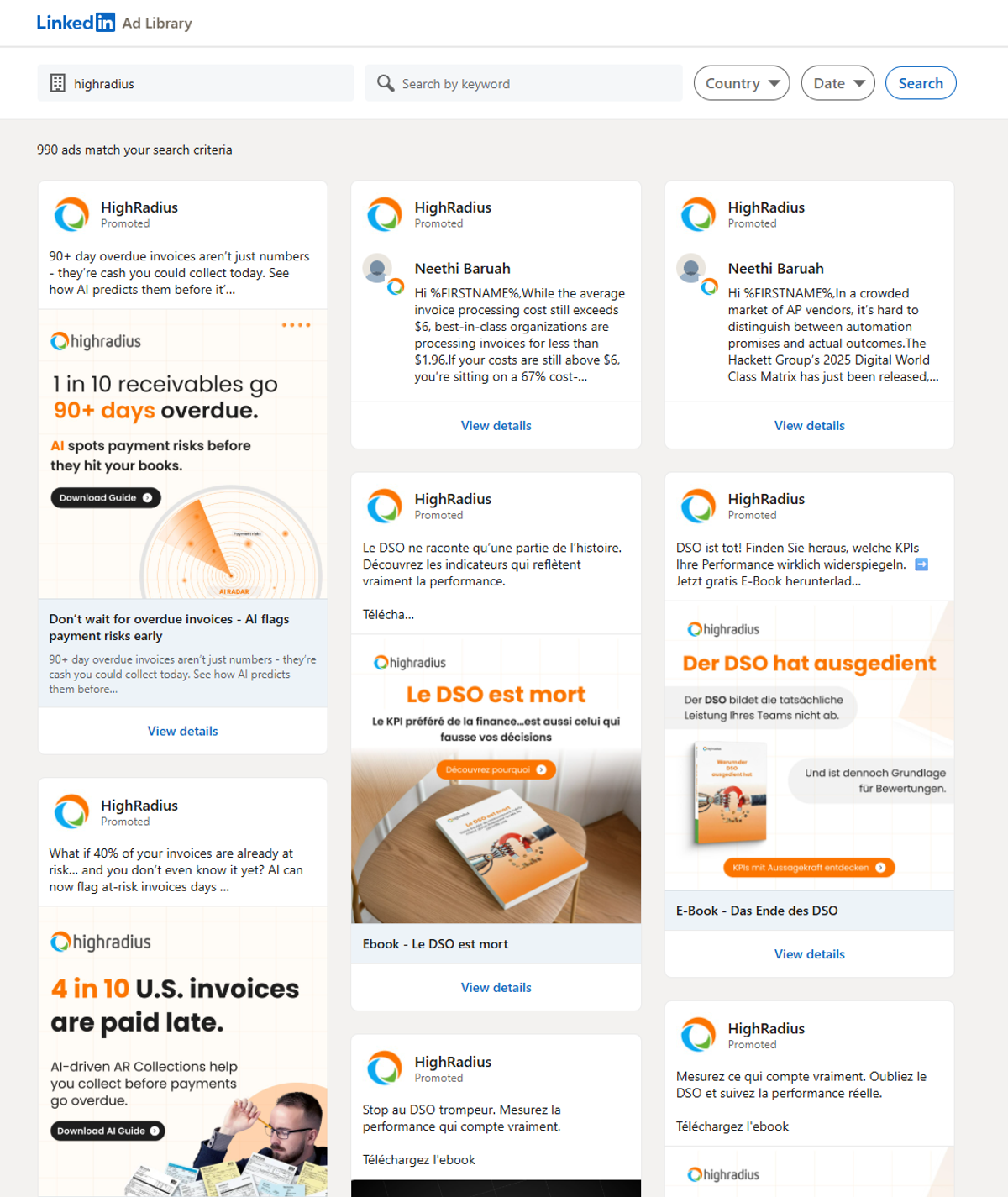
LinkedIn Ad Library
TikTok Creative Centre follow similar patterns; current campaigns are visible, but historical archives are minimal to nonexistent.
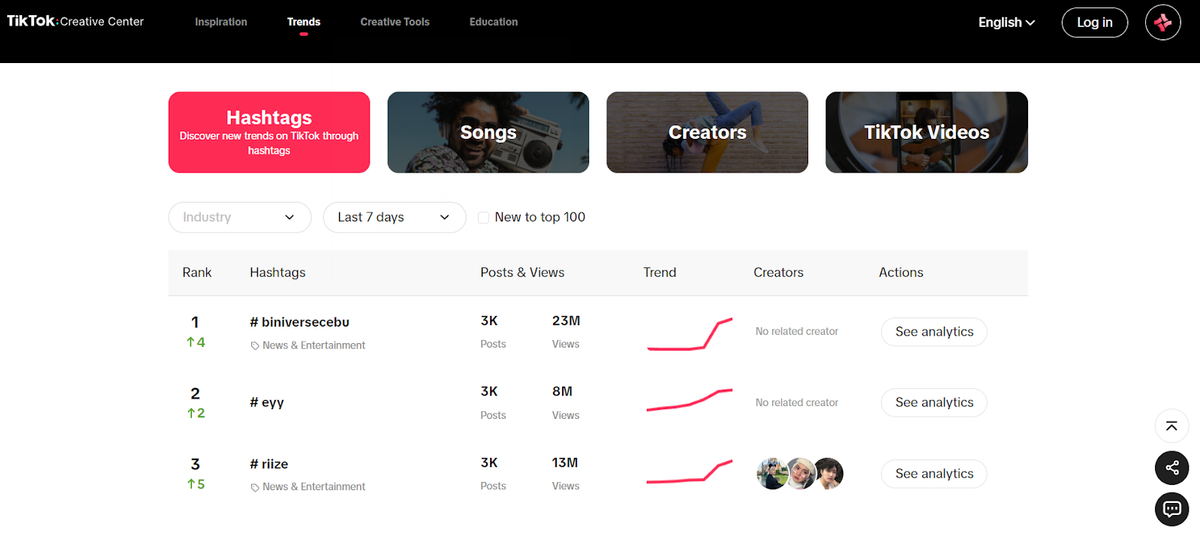
TikTok Creative Centre
This is where historical ad access gets serious.
Tools like AdSpy, Foreplay, BigSpy, and Vibemyad scrape and archive ads across platforms, building databases that go back years. Unlike native libraries that delete old content, these platforms preserve it.
Here's what makes third-party tools different:
Deeper time ranges, some platforms archive ads going back 5+ years across multiple channels.
Advanced filtering, Search by engagement metrics, ad copy keywords, landing page elements, date ranges, and creative formats.
Cross-platform visibility, see Facebook, Instagram, TikTok, and native ads in one dashboard instead of jumping between libraries.
Saved searches and monitoring, Track competitors over time, and get alerts when they launch new campaigns.
The trade-off? These are paid tools. But if you're serious about competitor historical ads and need more than a basic search box, the investment pays for itself in time saved and insights gained.
Short answer: yes, but with asterisks the size of billboards.
What you'll actually find depends on three factors:
Each ad library has its own data retention rules:
If you're researching a campaign from 2020, Facebook is your best bet among free tools. For anything older or cross-platform, you need third-party archives.
Having historical data means nothing if you can't find what you need.
Native ad libraries offer basic search, usually just advertiser name and date filters. Want to find all video ads in the fitness niche that ran during Q4 2022? Good luck manually scrolling through thousands of results.
Third-party platforms solve this with semantic search, keyword filtering, engagement sorting, and visual similarity matching. Vibemyad, for instance, categorises competitor ads into content buckets automatically, revealing strategic patterns across time periods without manual sorting.
Some ad libraries are region-locked or category-specific. Google's political ad archive only covers certain countries. Facebook's commercial archive availability varies by region. TikTok's Creative Centre prioritises certain markets over others.
If you're tracking global competitors or niche industries, you'll hit walls with single-platform libraries.
Not all historical ads are created equal in terms of what data gets saved.
Standard preserved elements:
Often missing from archives:
This is where platform differences create real friction. Facebook Ad Library shows you the creative, but tells you nothing about performance. You can see what ran, not what worked.
Advanced tools like Vibemyad's Ad Spider fill these gaps by tracking landing pages, analysing hooks, mapping value propositions, and identifying target audience signals, transforming static archived ads into actionable competitive intelligence.
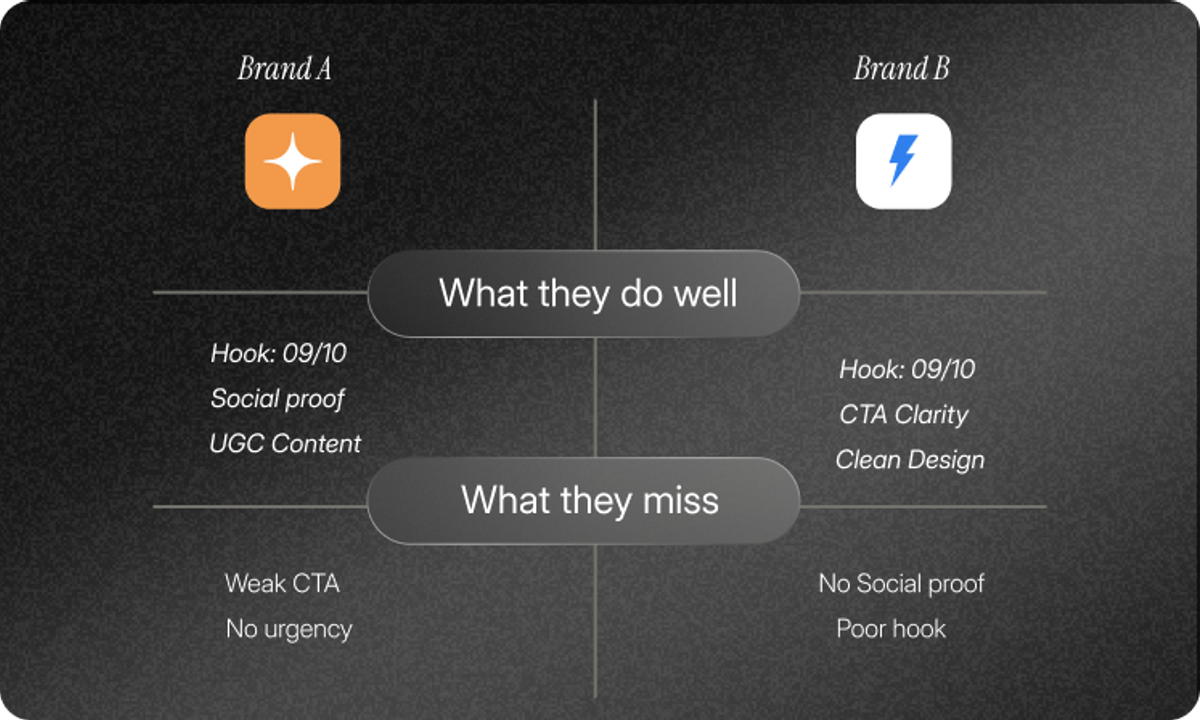
Vibemyad's Ad Spider
The honest answer? It depends on when you started tracking.
If you're using native ad libraries:
If you're using third-party tools:
Most ad intelligence platforms launched between 2016 and 2019, meaning their archives realistically go back 5-8 years at most. Newer competitors might only have 2-3 years of archived.
But here's the strategic shift: instead of asking "how far back can I go," ask "am I tracking competitors now for future analysis?"
If you start monitoring competitors today using tools with archival features, you're building your own historical database going forward. Six months from now, you'll have a complete picture of their seasonal strategies. A year from now, you'll spot their creative refresh cycles. Two years from now, you'll predict their next move.
Vibemyad's competitor tracking works exactly this way: once you add competitors to Ad Spider, we continuously monitor and categorise their campaigns, creating a growing historical record of their advertising strategy over time.
Accessing historical ads is step one. Turning that access into a competitive advantage is where most marketers stall out.
Here's how to actually use archived digital advertisements strategically:
Don't just look at individual old ads; analyse campaigns across time. Track:
Your competitor already spent months testing hooks. Steal the blueprint (not the execution).
If their archived ads show 15 variations of pain-point messaging before settling on benefit-driven angles, you just skipped that entire testing phase. Launch with what already works.
The ad is half the story. The landing page is where conversion happens.
When reviewing historical ads, try to access archived versions of landing pages using tools like the Wayback Machine or platforms that track destination URLs. See how offers, page structure, and conversion elements evolved alongside creative changes.
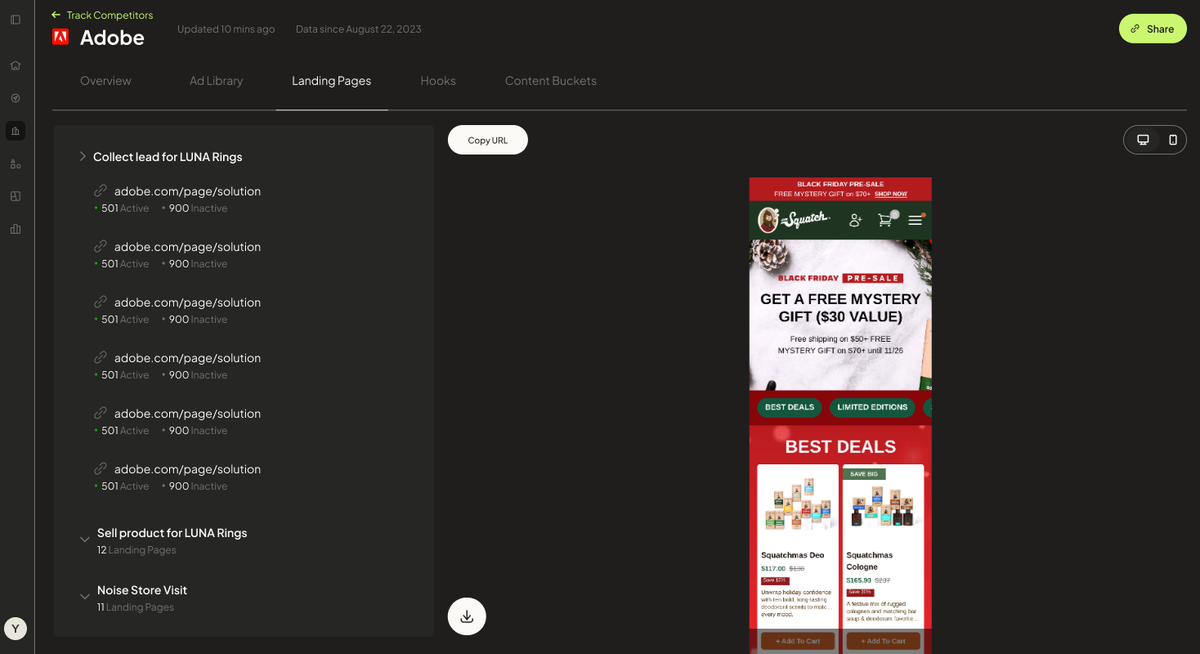
Vibemyad's Landing Page Tracking
monitors where competitors send traffic and how those pages are structured, connecting ad creative to conversion strategy without the manual detective work.
Plot how a brand's value proposition has shifted over 1-2 years. This reveals:
When a competitor suddenly changes messaging after years of consistency, they're either responding to market pressure or testing new positioning. Either way, that's intelligence you can use.
Let's get specific about what each major platform actually offers for historical ad access.
Access: Free, public, no account required Historical depth: 7 years for commercial ads Best for: Tracking major competitors, political/social issue ad research, and broad creative trend analysis
Search by: Advertiser name, keywords in ad text, country, ad type Can't search by: Industry, engagement, creative format, targeting details
Pro tip: Use advanced search operators in the search bar. Searching "Nike + running + 2022" in the keyword field surfaces ads from that period more effectively than date filtering alone.
Access: Free, public, searchable by advertiser Historical depth: 30-90 days typically, with some verified advertisers going back further Best for: Search ad copy research, YouTube pre-roll creative trends
Search by: Advertiser name, region Can't search by: Keywords, ad format, engagement metrics
Limitation: Google's Transparency Centre focuses on verified advertisers, meaning smaller competitors might not appear at all.
Access: Free, but requires account login Historical depth: Limited, mostly focused on trending current content Best for: Format and trend spotting, seeing what's working right now
TikTok's approach prioritises performance over history; you'll find top ads by engagement, but don't expect a deep archive of past campaigns.
Relying solely on third-party archives means you're always limited by what they've captured and how far back their data goes.
The smarter play? Start building your own archive today.
Manual approach:
Tool-assisted approach:
Vibemyad's competitor tracking automates this entirely. Add competitors once, and we continuously monitor their campaigns, analyse hooks, track landing pages, map value propositions, and categorise ads into content buckets. You're building a proprietary intelligence database without the manual work.
Over time, your custom archive becomes more valuable than any public ad library because it's tailored to your competitive landscape and includes the specific patterns you care about.
Here's the reality: no single tool does everything perfectly. Your choice depends on what you need historical ads for.
Vibemyad sits in the "strategic intelligence" category, not just showing you historical ads, but helping you understand why they ran, what patterns emerged, and how to apply those insights to your own campaigns.
With features like hooks analysis, value proposition mapping, and automated content bucket categorisation, you're not drowning in data; you're extracting actionable strategy.
You're past the "what's an ad library?" stage. Now you're evaluating tools, comparing workflows, and deciding what actually moves the needle.
Here's how historical ad access fits into your growth strategy:
Problem you're solving: Reducing creative testing time and increasing win rate on new campaigns by learning from proven patterns.
Workflow improvement: Instead of brainstorming in a vacuum, you're starting with validated creative directions, proven hooks, and battle-tested messaging frameworks.
Efficiency gain: What used to take 6 weeks of A/B testing now takes 6 days of research and smart implementation.
Decision point: Do you manually stitch together insights from fragmented free tools, or do you use a platform that consolidates, analyses, and surfaces patterns automatically?
The MOFU question: Does this tool help you make better decisions faster, or does it just give you more data to manually sift through?
Vibemyad bridges the gap between "I can access historical ads" and "I know what to do with them." With 3 free credits daily to test AI ad generation and competitive intelligence features, you can validate whether this workflow actually improves your output, without committing to a subscription first.
If you're already tracking competitors manually, compare one week of your current process to one week using Ad Spider. The time saved compounds quickly.
When evaluating ad archive tools, ignore the marketing fluff. Here's what actually matters:
Data depth: How far back do archives go, and across which platforms?
Search precision: Can you find exactly what you need in under 5 minutes, or are you scrolling for hours?
Monitoring automation, does it track competitors continuously, or do you manually check back?
Analysis features: Does it surface patterns and insights, or just dump raw ad data on you?
Export and workflow integration: Can you save, organise, and share findings easily?
Update frequency: How fast do new ads get added to the archive?
Most tools excel at one or two of these. Few nail all six.
Vibemyad's approach combines archival depth with intelligent analysis. Ad Spider doesn't just show you competitor ads, it automatically categorises them by content buckets, analyses hooks and value props, and tracks landing pages. When our AI Research Agent launches, you'll be able to ask strategic questions about competitor campaigns and get synthesised insights instead of raw data dumps.
That's the difference between a historical ad archive and a competitive intelligence system.
Historical ads aren't just accessible, they're one of the most underutilised competitive advantages in digital marketing.
The difference between marketers who crush campaigns and those who endlessly A/B test is simple: one group learns from the past, the other reinvents it.
You can access historical ads through native ad libraries for free, but depth, usability, and strategic value vary wildly. Platform libraries like Facebook offer 7-year windows but minimal analysis. Third-party tools provide deeper archives and smarter search, but at a cost.
The real question isn't where to find historical ads, it's what you'll do with them once you have access.
If you're still manually screenshotting competitor ads and dumping them into folders, you're doing archaeology. If you're using tools that automatically track, categorise, and surface strategic patterns, you're doing intelligence.
Start building your advantage today: Explore Vibemyad's ad library at vibemyad.com/explore, add your first competitors to Ad Spider, and see what patterns emerge when you stop guessing and start learning from proven campaigns.
Because in advertising, those who study history don't just avoid repeating it, they profit from it.
Get notified when new insights, case studies, and trends go live — no clutter, just creativity.
Table of Contents


Rahul Mondal
Product, Design and Co-founder, Vibemyad


Ananya Namdev
Content Writer, Vibemyad

Rahul Mondal
Product, Design and Co-founder, Vibemyad