
January 15, 2026 • 16 min read

January 15, 2026 • 16 min read
"In India, your competitor isn't just the brand next door, it's the festival offer two cities away, the vernacular ad in a dialect you didn't track, and the micro-influencer in a tier-3 town you've never heard of."
Ad competitive analysis in India isn't just about tracking what your rivals are doing; it's about understanding a fragmented, multilingual, price-sensitive market where consumer behaviour shifts by region, platform, and even time of day. This guide walks you through actionable frameworks for digital ad competitor analysis in India, from setting up systematic tracking to extracting strategic insights that actually move the needle. You'll learn how to monitor Google Ads competitor analysis, Meta ads competitor research, and YouTube ads competitor analysis while avoiding common pitfalls that waste time and budget. Whether you're a startup or an established brand, these best practices will help you turn competitor intelligence into a competitive advantage.
If you've run ads in the US or Europe, you know the playbook: identify competitors, track their creatives, analyse landing pages, optimise accordingly. Simple enough.
Now try that in India.
You're suddenly dealing with 22 official languages, consumers who switch between three apps before buying a ₹500 product, festivals that trigger spending spikes every other month, and a digital advertising landscape where a D2C brand in Mumbai and a local kirana delivery service in Jaipur might be targeting the same customer.
Advertising competitive analysis here isn't linear; it's layered. Your "competitors" might include:
• Direct brand rivals
• Category alternatives (bike vs. scooter, not just Honda vs. TVS)
• Regional players you've never heard of
• Aggregator platforms that own the search intent
• Influencers and content creators who've basically become media channels
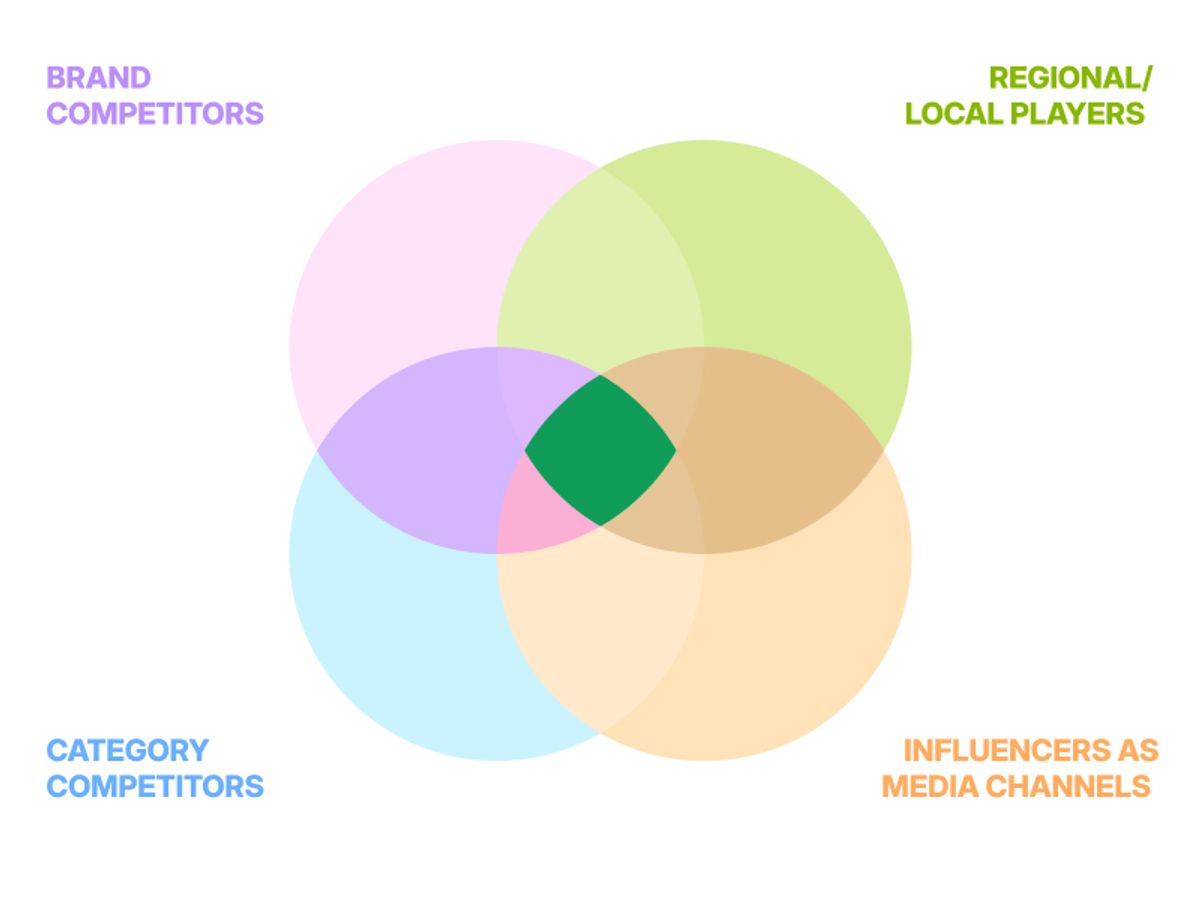
The modern competitive landscape in India extends beyond direct brand rivals to include category alternatives, regional players, and influencers functioning as media channels often overlapping in the same customer journey.
The stakes? India's digital ad spend is projected to cross $10 billion in 2025, according to Dentsu's Digital Advertising Report. Brands that master competitive advertising strategy in India early will capture disproportionate market share. Those that don't will keep wondering why their CPAs are rising while conversions flatline.
This isn't a beginner's guide to "what is competitive analysis." If you're reading this, you already know why it matters. What you need are the how and what next, the workflows, the frameworks, and the honest shortcuts that work in the Indian context.
If you're reading this, you're likely past the awareness stage. You know competitive analysis matters; you're now evaluating how to do it efficiently without burning through team bandwidth or budget.
This is classic MOFU content: you're comparing approaches, evaluating tools, and looking for a system that actually scales. You don't need convincing that competitor tracking is important. You need a workflow that:
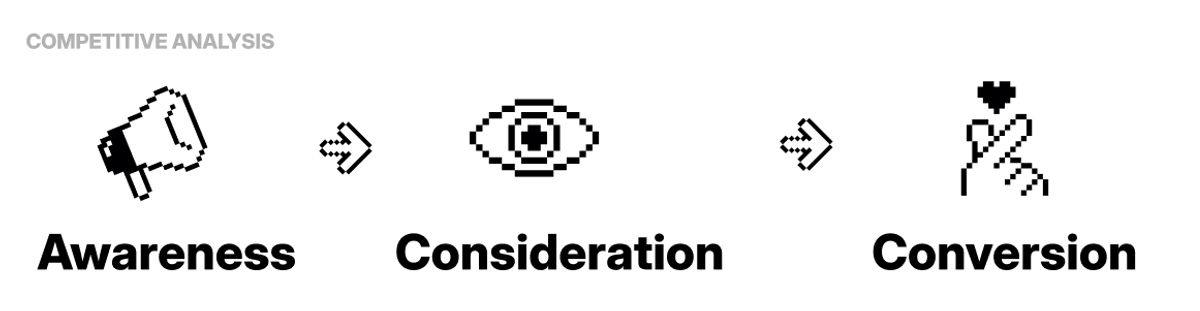
Competitive ad analysis supports every stage of the funnel, from building awareness to influencing consideration and driving final conversions.
• Saves your team 10+ hours a week
• Surfaces insights, not just data
• Helps you move from "they're running this ad" to "here's what we should test next"
The frameworks and tools discussed here are designed to help you make that decision, whether you build an in-house process, stitch together multiple platforms, or use a unified solution like Vibemyad that consolidates ad intelligence and creative production.
Let's break down what actually matters when analysing competitors in the Indian digital market. Forget generic "best practices" that assume homogeneous audiences and stable consumer behaviour. Here's what works.
Google Ads competitor analysis in India means understanding search intent fragmentation. A Bangalore user searching "best laptop under 60000" is not the same as a Lucknow user searching "laptop sasta acha", even though both might convert for you.
Track:
• Ad copy variations: How do competitors adapt messaging for Hindi vs. English searches?
• Bidding patterns: When do CPCs spike? (Hint: festival seasons, long weekends, salary credit days)
• Landing page localization: Are they using geo-targeted pages or one-size-fits-all?
Meta ads competitor research (Facebook and Instagram ad analysis) requires a different lens. According to Meta's India Advertising Insights, video ads see 3x higher engagement than static creatives in tier-2 and tier-3 cities. Your competitors know this. Do you?
Track:
• Creative formats: Are they doubling down on Reels? Carousels? Stories?
• Hook patterns: What stops the scroll in the first 3 seconds?
• Regional language advertising: Are they running Tamil ads in Chennai and Marathi ads in Pune, or just generic English everywhere?
YouTube ads competitor analysis is where brand storytelling meets performance marketing. India is YouTube's largest market by watch time (Google India Blog). Competitors running pre-roll, mid-roll, and bumper ads are capturing intent at different funnel stages.
Track:
• Skippable vs. non-skippable ratio: What's working for retention?
• Influencer integrations: Are they sponsoring creators or running direct response ads?
• Call-to-action patterns: App installs? Website visits? Lead forms?
Indian consumer behaviour in digital ads is time-sensitive in ways that don't apply elsewhere. You're not just competing on message; you're competing on when that message appears.
Festival marketing isn't optional; it's the game. According to RedSeer's Festive Season Report, 35-40% of annual e-commerce sales happen during Diwali, Dussehra, and end-of-year sales.
But here's what most brands miss: your competitors aren't just preparing for the festival. They're warming up audiences 6-8 weeks before with teaser campaigns, building wish lists, and retargeting anyone who engaged.
Best practice: Map competitor ad volume by week. Use tools that track ad frequency and identify when competitors start ramping up spend. If you're launching your Diwali campaign during Diwali, you've already lost.
This is where most paid ads competitor analysis efforts fail. Teams collect hundreds of competitor ads but never ask: What's the core benefit being sold?
In India, value propositions cluster around predictable themes:
• Price/affordability ("₹999 only," "50% off," "EMI from ₹500/month")
• Trust/safety ("100% genuine," "7-day return," "verified sellers")
• Convenience ("2-hour delivery," "no-cost EMI," "cash on delivery")
• Aspiration/status ("premium quality," "exclusive design," "limited edition")
Your competitors aren't randomly picking these. They're testing, learning, and doubling down on what converts.
Actionable workflow:
Collect 50-100 competitor ads across platforms
Tag each ad with its primary value proposition
Identify which propositions appear most frequently
Cross-reference with your own messaging: where are the gaps?
This is where a platform like Vibemyad saves hours. Instead of manually tagging ads, the platform's content bucket categorisation automatically groups competitor ads by theme and timing, revealing their strategic patterns.
You can have the perfect ad creative, but if your landing page doesn't match the promise, you're torching money.
Competitor landing page tracking reveals:
• Message match: Does the landing page headline echo the ad copy?
• Localisation depth: Are they using regional languages, local testimonials, or city-specific offers?
• Conversion friction: How many form fields? Is COD available? What's the refund policy visibility?
India's digital advertising landscape is brutal on trust. First-time buyers need social proof, clear return policies, and payment flexibility. Track which competitors are nailing this and reverse-engineer their approach.
Here's an uncomfortable truth: you and your competitors are often targeting the same people. The winner isn't who has the better product; it's who captures attention first and retargets smarter.
Digital marketing competitive analysis in India means understanding:
• Demographic overlaps: Are you both going after 25-35-year-old urban males?
• Interest targeting: Are they targeting "fitness enthusiasts" or "gym equipment buyers"? (The difference matters.)
• Lookalike strategies: Are they expanding from a high-LTV customer base or casting wide nets?
Platforms like Meta's Ad Library (Meta Ad Library) give you surface-level visibility, but they won't tell you why a competitor stopped running an ad or shifted budgets between campaigns. That requires systematic tracking over time.
Knowing what to track is one thing. Actually doing it consistently is another. Here's a workflow that scales without requiring a full-time analyst.
Start with 5-10 direct competitors, but don't stop there. Add:
• Category disruptors: Who's solving the same problem differently?
• Regional players: Brands dominating specific states or cities
• Platform-native brands: D2C players born on Instagram or YouTube
Use tools like SimilarWeb (SimilarWeb) to identify traffic sources and ad spend estimates.
Manual competitor tracking dies within two weeks. You need a system.
Option A: DIY Approach
• Bookmark competitor Facebook pages and check their "Page Transparency" section weekly
• Use Google Ads Auction Insights for search competitors
• Screenshot ads manually and store them in folders by platform/date
Time cost: 8-12 hours/week Sustainability: Low
Option B: Unified Competitor Intelligence
• Use a platform like Vibemyad's Ad Spider to track competitors automatically
• Get alerts when they launch new campaigns
• Access pre-categorised ad libraries with hooks, landing pages, and targeting insights
Time cost: 1-2 hours/week Sustainability: High
You've collected ads. Now what?
Ask:
• What changed? New messaging, new offers, new audiences?
• What's working? Which ads keep running for weeks? (That's a signal.)
• What's missing? Are there gaps in their strategy you can exploit?
Pro tip: Track ad longevity. Ads running for 30+ days are usually winners. Ads that disappear in a week? Failed experiments. Learn from both.
Competitive analysis isn't about copying, it's about informed experimentation.
If three competitors are using carousel ads with "swipe to see more" hooks, that's not a coincidence. Test your own version. If regional language advertising is showing up everywhere except your campaigns, run a controlled test in Tamil Nadu or West Bengal.
The goal is strategic speed: see what's working in the market, adapt it to your brand, and test faster than competitors can react.
Let's talk tools. There's no shortage of platforms claiming to solve competitor analysis. Here's the honest breakdown.
Meta Ad Library (Meta Ad Library): Free, but surface-level. Good for quick checks, terrible for systematic tracking.
Google Ads Auction Insights: Shows who you're competing with in search, but gives zero creative visibility.
Semrush / Ahrefs: Excellent for SEO and PPC overlap, but won't show you actual ad creatives or landing pages.
Ad Intelligence Platforms (Vibemyad, AdSpy, BigSpy): These are purpose-built for what we're discussing. Vibemyad stands out because it doesn't just collect ads; it categorises them by theme, tracks landing pages, and maps value propositions automatically. Instead of drowning in data, you get insights.
The best tools for ad competitive analysis in India combine:
Visual ad libraries (see what's running)
Tracking over time (identify patterns)
Landing page monitoring (understand the full funnel)
Insight extraction (turn data into action)
If you're a startup or small team, trying to build this in-house will cost more in lost time than any tool subscription. Pick a platform, commit to using it weekly, and stop switching tools every quarter.
Even experienced marketers make these mistakes. Let's save you the budget burn.
You track 20 competitors, collect 500 ads, and then... nothing. Data without action is just expensive hoarding.
Fix: Focus on 5 key competitors. Review monthly, not daily. Extract 2-3 actionable insights per review session and test them immediately.
Just because a competitor's ad is running doesn't mean it's working. They might be testing, failing, or targeting a completely different audience.
Fix: Track ad longevity and frequency. Ads running consistently for 30+ days are signals. One-off experiments aren't.
Running the same ad in Mumbai and Bhopal is like running the same ad in New York and Nashville, technically the same country, practically different planets.
Fix: Track how competitors localise. If they're running Marathi ads in Pune and English ads in Bangalore, there's a reason. Test regional variations even if it feels tedious.
Ad creative is 30% of success. The other 70%? Targeting, landing pages, offers, and post-click experience.
Fix: Track the full funnel. Where are competitors sending traffic? What's on the landing page? What's the offer structure?
You identify a winning competitor strategy and then... forget about it because your plate is full.
Fix: Treat competitive insights like A/B tests. Schedule them into your sprint. If something looks promising, test it within two weeks or don't bother analysing at all.
Let's ground this in reality. What are realistic benchmarks for PPC competitor analysis in India and performance metrics?
According to WordStream's India PPC Benchmarks, average click-through rates (CTR) in India vary wildly by industry:
• E-commerce: 1.5-2.5% (Google Ads), 0.8-1.2% (Meta)
• Finance: 2-3% (Google Ads), 0.5-0.9% (Meta)
• Education: 3-5% (Google Ads), 1-1.5% (Meta)
But averages lie. Your real benchmark is: Are you improving month-over-month relative to your own baseline and competitors in your niche?
Ad benchmarking India's best practices:
Track your CTR, CPC, and conversion rate by platform
Compare against competitors (when data is available)
Identify outliers, campaigns performing 2x better or worse
Double down on winners, kill losers, test new angles quarterly
The Indian digital advertising landscape rewards speed and iteration. Brands that test weekly beat brands that plan quarterly.
Here's where most competitive analysis efforts in India fall short: everyone's tracking competitors in Delhi, Mumbai, and Bangalore. Almost no one is systematically tracking tier 2 and tier 3 market advertising.
Yet these markets represent 60%+ of India's internet users (IAMAI-Kantar ICUBE Report).
What's different in tier 2/3 cities?
• Language-first content: English is often a barrier, not a bridge
• Influencer trust: Local micro-influencers (5k-50k followers) outperform celebrities
• Price sensitivity: Discounts and offers aren't nice-to-haves; they're table stakes
• Platform preferences: ShareChat, Moj, and regional apps matter as much as Instagram
Competitive insight to track: Are your competitors running separate campaigns for tier 2/3 audiences? If yes, what's different? If no, there's your white space.
Brands like Meesho, PharmEasy, and CRED have cracked tier 2/3 marketing by treating these audiences as distinct segments, not just "lower-tier metros." Your competitive analysis should do the same.
Startups face a unique challenge: you're competing with brands that have 10x your budget. You can't outspend them, so you need to out-think them.
Lean competitive analysis framework for startups:
Pick your battles: Don't track every competitor. Focus on 2-3 brands one stage ahead of you (not market leaders, you'll never match their spend).
Track creative patterns, not volume: You don't need to know every ad they run. You need to know what messaging and formats they're doubling down on.
Exploit timing gaps: Big brands plan quarterly. You can move weekly. If you spot a competitor pausing campaigns or shifting focus, that's your window.
Use AI to level the playing field: Manually tracking and creating ads is slow and expensive. Platforms like Vibemyad let you analyse competitor strategies and generate test creatives in under a minute, something that used to take agencies days.
Focus on micro-conversions: If competitors are optimising for purchases, you optimise for add-to-cart or engagement first. Lower CPAs, faster learning.
Real talk: Startups that treat competitive analysis as a monthly "check-in" lose. Startups that embed it into weekly sprint planning, tracking, testing, and iterating punch above their weight.
Let's address the elephant in the room: AI is changing how competitive analysis works, and if you're still doing this manually, you're already behind.
Traditional workflow:
Manually search for competitor ads
Screenshot and organise in folders
Analyse patterns (maybe)
Brief a designer to create something inspired by the findings
Wait 3-5 days for creatives
Test
AI-powered workflow:
Platform tracks competitors automatically
AI categorises ads by theme, timing, and value prop
You review insights in minutes
Generate test creatives using AI (turn competitor insights into your own ads instantly)
Test the same day
The efficiency gap isn't incremental; it's exponential.
Vibemyad's upcoming AI Research Agent goes further: instead of scrolling through ad libraries, you ask questions like "What hooks are working for fintech apps targeting millennials?" and get synthesised insights. This is where competitor intelligence is heading: less manual digging, more strategic querying.
Theory is useless without execution. Here's a 30-day roadmap to implement digital ad competition strategies in India starting today.
Week 1: Foundation
• Identify 5-7 core competitors (mix of direct, category, and regional players)
• Set up tracking using Meta Ad Library + a dedicated tool
• Document current performance benchmarks (CTR, CPC, conversion rate)
Week 2: Data Collection
• Track competitor ads daily (5-10 minutes/day)
• Tag ads by platform, format, value proposition, and language
• Identify the top 3 recurring creative themes
Week 3: Insight Extraction
• Map competitor landing pages for top-performing ads
• Identify messaging gaps (what are they saying that you're not?)
• Document 3 testable hypotheses based on findings
Week 4: Testing & Iteration
• Launch 2-3 ad tests inspired by competitive insights
• Use AI tools to speed up creative production
• Set a recurring weekly review: What's new? What's working? What should we test next?
Repeat monthly. Competitive analysis isn't a one-time project; it's an ongoing strategic advantage.
Here's the reality: ad competitive analysis in India is not a competitive advantage anymore, it's table stakes. Every serious brand is tracking competitors. The differentiation comes from what you do with that intelligence.
The marketers winning in this market aren't the ones with the most data. They're the ones who spot patterns faster, test bolder, and iterate relentlessly.
You can spend 10 hours a week manually collecting competitor ads, or you can spend 1 hour a week reviewing insights from a platform that's already done the heavy lifting. You can wait weeks for designer availability, or you can use AI to turn competitive insights into test creatives in under a minute.
The Indian digital advertising landscape isn't slowing down. Festival seasons will keep compressing timelines. Regional competitors will keep getting smarter. Consumer attention will keep fragmenting across platforms and languages.
Your move: Set up systematic competitor tracking this week. Extract one actionable insight. Test it by Friday.
And if you're looking for a platform that combines ad intelligence with AI-powered creative production, because analysis without execution is just expensive procrastination, explore Vibemyad and see how the best Indian marketers are turning competitor insights into winning campaigns.
The question isn't whether to do competitive analysis. It's whether you'll do it faster and smarter than everyone else.
Get notified when new insights, case studies, and trends go live — no clutter, just creativity.
Table of Contents


Ananya Namdev
Content Writer, Vibemyad

Ananya Namdev
Content Writer, Vibemyad

Ananya Namdev
Content Writer, Vibemyad