April 10, 2026 • 15 min read

April 10, 2026 • 15 min read
You're looking for ideas for your next skincare campaign. You save a Rhode image, send a CeraVe video to your team, and add a beautifully photographed serum to the reference folder. Then someone asks, "Which of these should we try?"
That's where collecting examples gets difficult. Your brand has a different budget, a different customer, and perhaps a product that needs more explaining.
We've picked these 15 beauty and skincare ad examples for the decisions behind them. Some make us want a closer look at the product. Others explain something well. A few need more work before we'd use the approach in an ad aimed at immediate sales.
Below is what we'd borrow, where we'd be careful, and how we'd turn the reference into a brief your team can use.
This selection includes static ads, campaign photography, and two video campaigns. Archive collages are labeled. We assess the creative itself; we don't have these brands' campaign results.
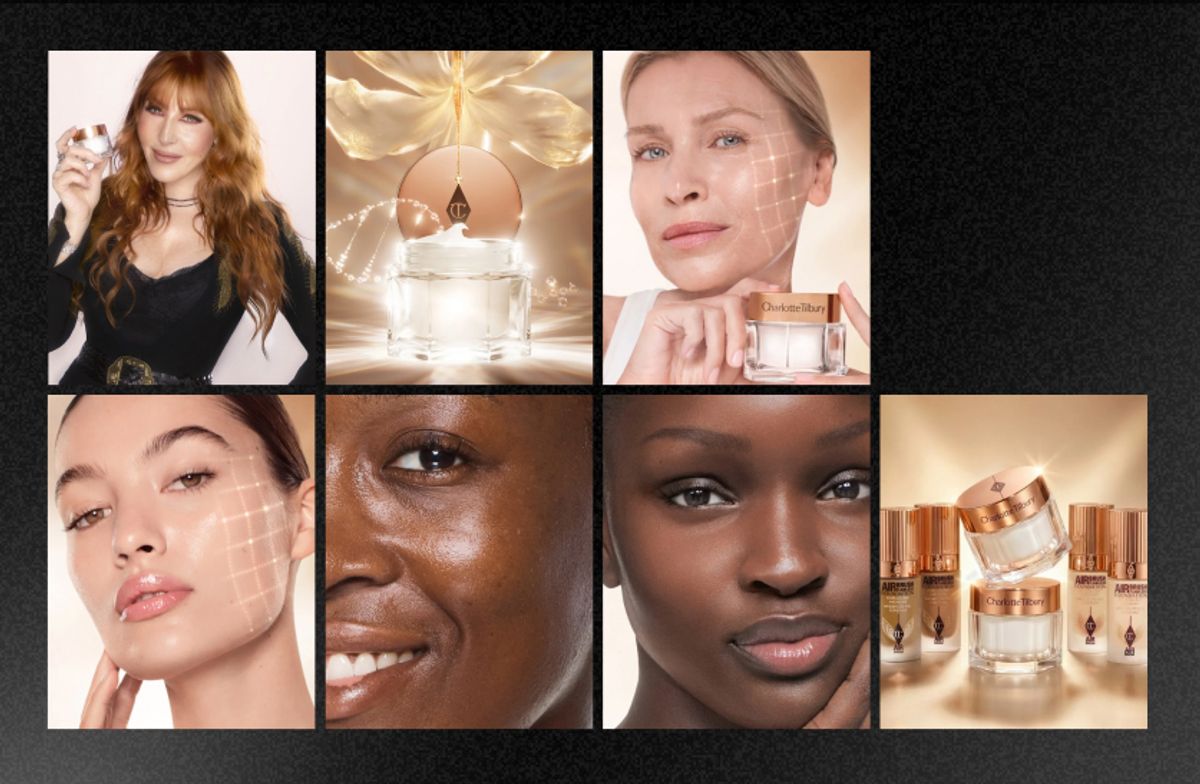
Campaign compilation from Vibemyad’s existing image archive; not one standalone ad.
The jar gets our attention first. The warm metallic packaging and close skin portraits make the cream feel like something you'd enjoy having on your dressing table. There's a clear sense of how the brand wants the purchase to feel.
That consistency is worth borrowing. Before adding props or copy, decide what the product should look like across the whole campaign. Here, the packaging and photography agree with each other.
We'd be less quick to borrow the restraint. If someone has never heard of your brand, a beautiful jar leaves quite a lot unexplained. Why this cream? What does it feel like? What makes it worth the price?
For a smaller D2C brand, we'd keep the photograph and try one version with a clear, supported benefit beside it. Compare purchases and acquisition cost as well as clicks. That should tell you whether the image needs a little help making the sale.
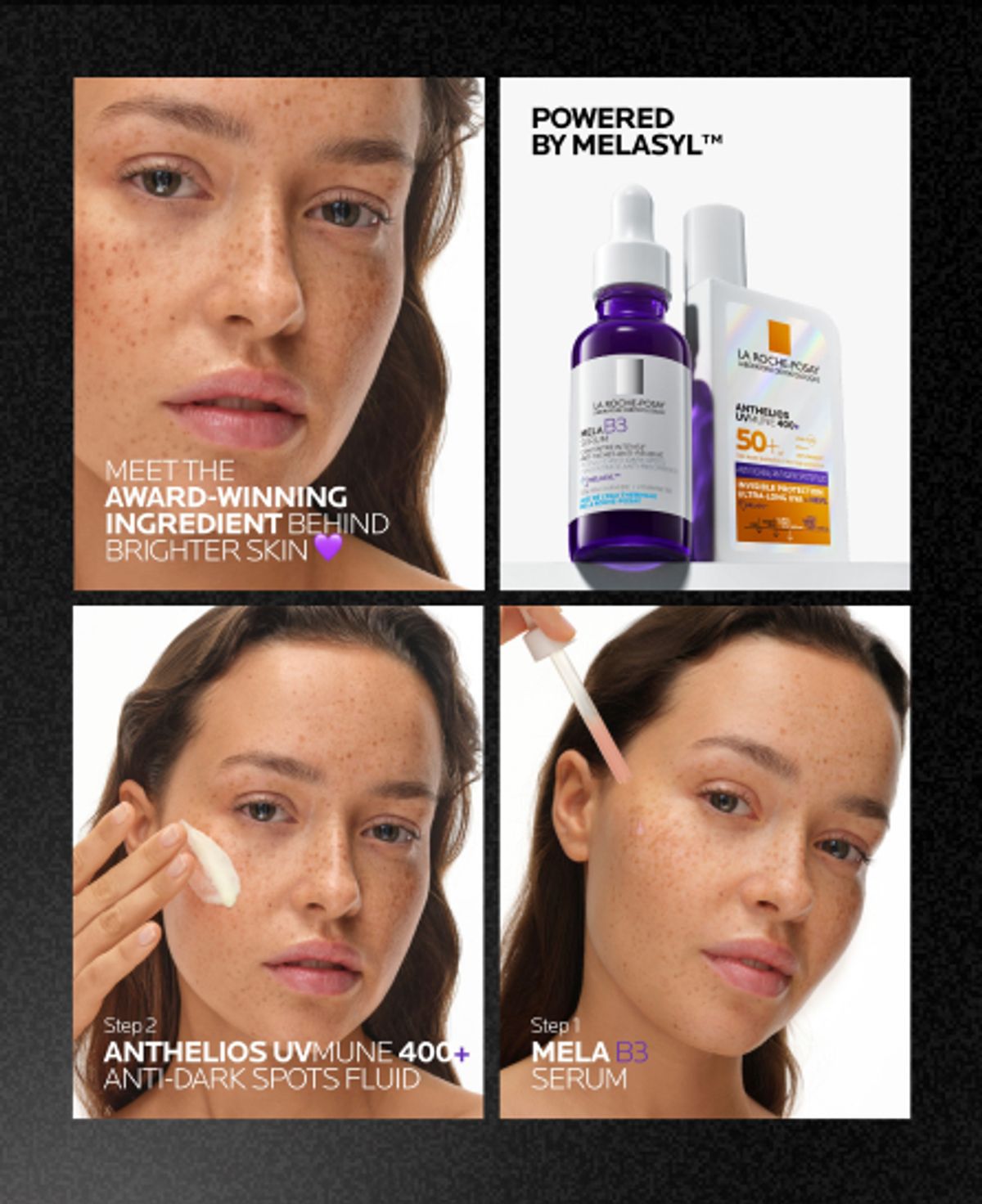
Campaign compilation from Vibemyad’s existing image archive.
Imagine your customer reading the ingredient name on this ad. Does it mean anything to them yet?
The answer changes how we'd write the copy. The La Roche-Posay reference puts ingredient copy beside the packaging and application images. There's enough context to connect the formula with something the shopper can recognize and use.
The temptation is to squeeze your entire ingredient list into the same space. We'd choose the one fact that helps someone understand why the product might suit them. Give it a plain-language explanation and make sure the product page can support the claim.
To find out which explanation your customers need, keep the image and compare the ingredient name with the benefit expressed in everyday language. If the technical version brings clicks but few purchases, revisit the explanation on the page. You may have sparked interest without helping the shopper decide.
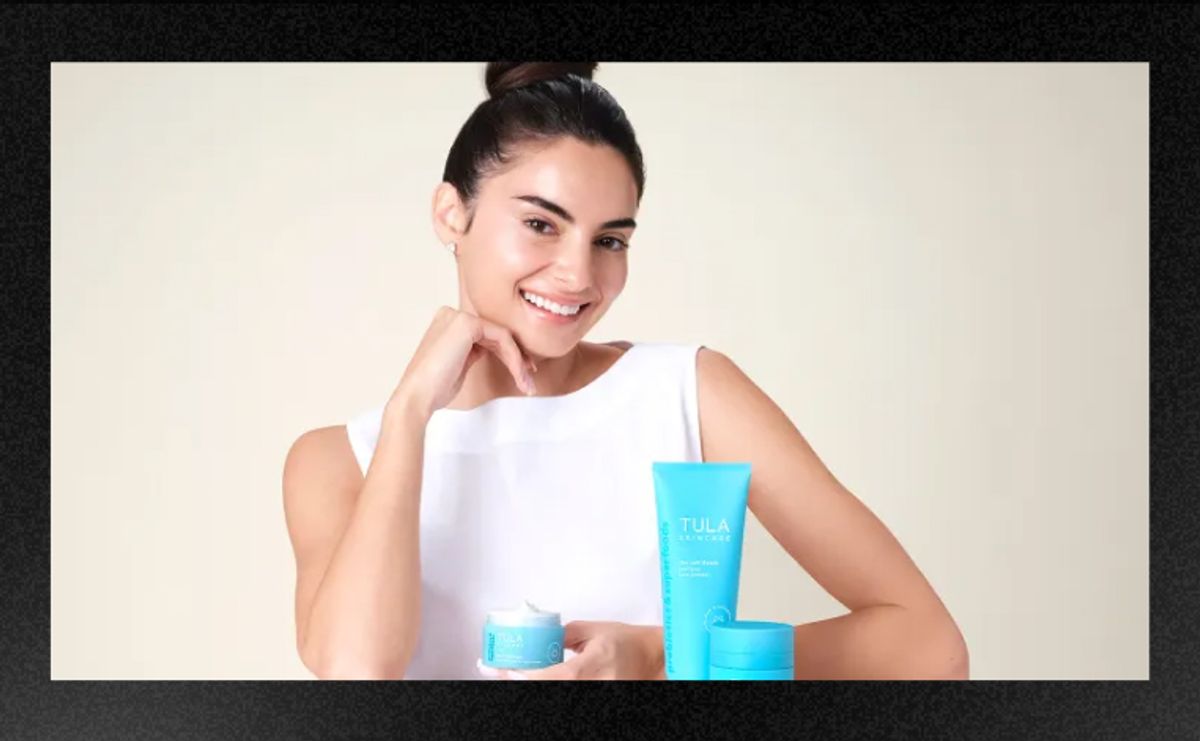
Campaign photograph from Vibemyad’s existing image archive.
There's very little competing for attention in this TULA photograph, which suits the image. The portrait gives it warmth, and the turquoise packaging is easy to pick out against the light background.
It's a useful reference if you're planning a shoot and wondering how much you need in the frame. Here, the person and the products give the image enough to work with. More props would have to earn their place.
At your own shoot, get a version with the person and a clean product-only version. You can then compare them with the same headline and offer, without guessing whether a completely different message caused the result.
If you're adding a customer quote, use their actual, approved words. The photograph alone doesn't establish a testimonial. Our static testimonial ad examples show how a review can become the main reason to stop and read.
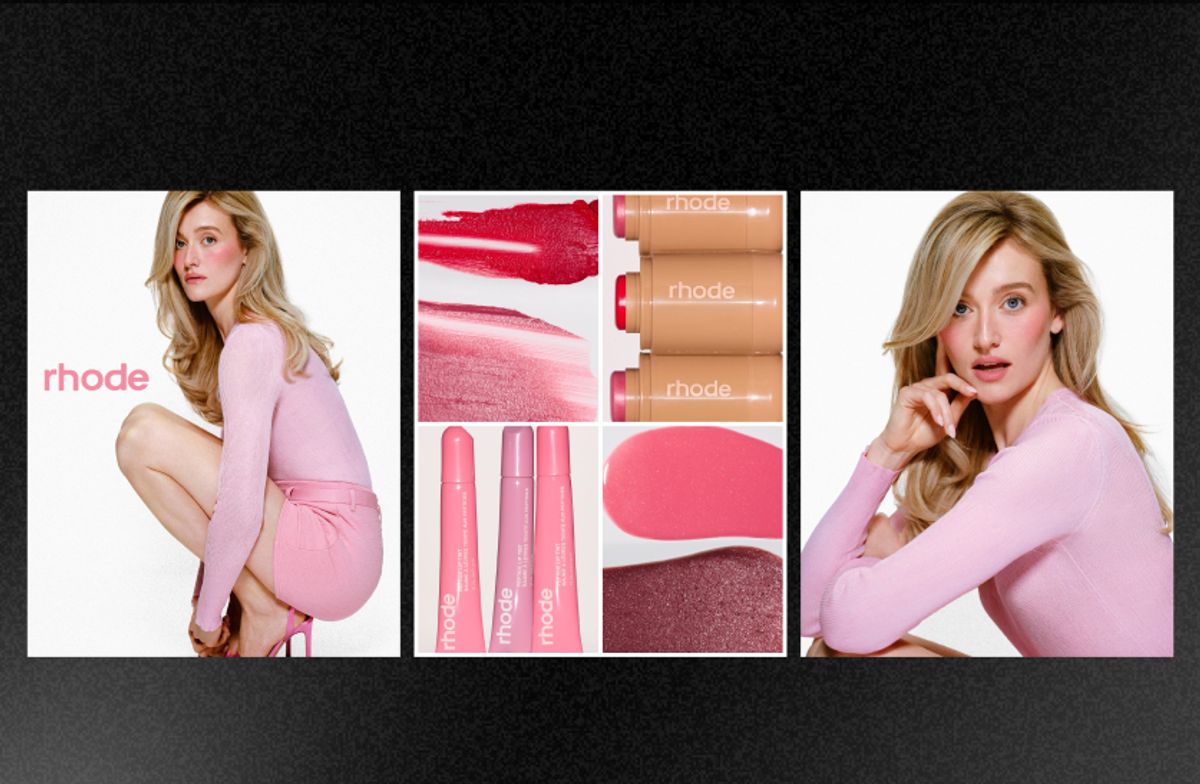
Campaign compilation from Vibemyad’s existing image archive.
The pink styling carries across the clothes, products, and swatches. Even when your eye moves between images, the campaign still feels like one piece of work.
We'd make that consistency part of the brief, right down to the wardrobe. Pick a setting and a few visual choices that belong together. Decide where the product fits before the shoot, so it doesn't end up looking like something someone handed the model at the last second.
You can try this with a familiar location and a small wardrobe budget. A getting-ready scene, for example, gives a skincare product a believable place in someone's day.
A studio image gives you a useful comparison, provided you keep the benefit and landing page the same. Pay attention to what people respond to. If the setting earns attention but the product barely registers, bring it closer or make its role clearer. The scene still has to help someone understand what you're selling.
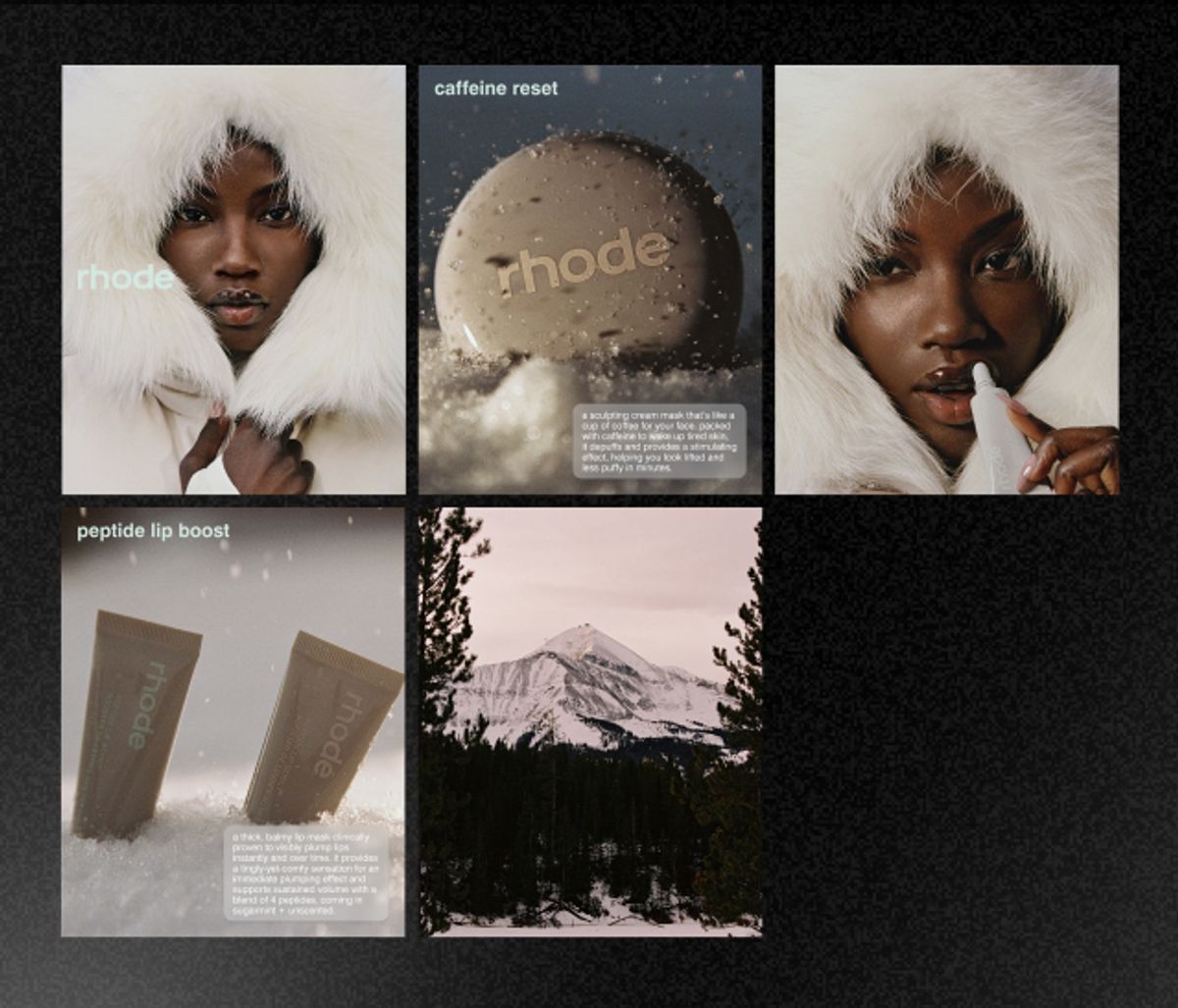
Campaign compilation from Vibemyad’s existing image archive.
There's a reason to get this close. You can inspect the visible finish on the lips, while the packaging and winter imagery give the product a setting.
We find this more useful as a photography reference than a layout to reproduce. If your customer asks whether something looks glossy, heavy, or obvious when worn, a close photograph can give them more to work with than another shot of the tube.
Be precise about what the picture shows. A styled portrait can illustrate appearance; it doesn't establish a treatment result. Keep the lighting consistent if you're comparing finishes.
Add a close application shot to your next shoot and compare it with the product-only image. Then read the questions people ask after clicking. Those questions can tell you which details still need a better explanation on the product page.
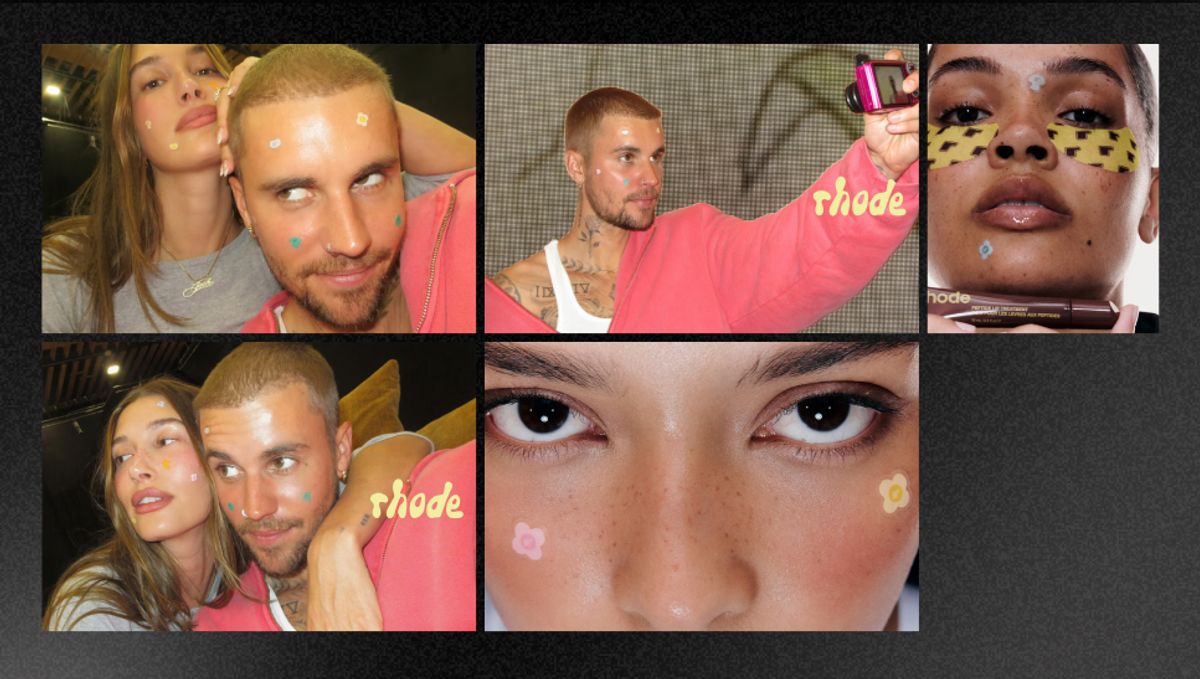
Campaign compilation from Vibemyad’s existing image archive.
You can see the patches on people's faces. That sounds like a small observation, but it's the most useful part of this reference.
A shopper thinking about wearing a patch outside has a fairly personal question: how will I look with this on? These images let them judge the size, placement, and decorative appearance for themselves.
Put that question in the creator brief. Ask for a clear view of the product in use, in surroundings that make sense for the customer. Give them room to show it naturally, while making sure the detail you're selling remains visible.
Then compare the in-use image with the packaging shot. Keep the product the same and see which helps people buy. Appearance and efficacy need separate evidence, so let the photograph do the job it can do well: show someone what wearing the product looks like.
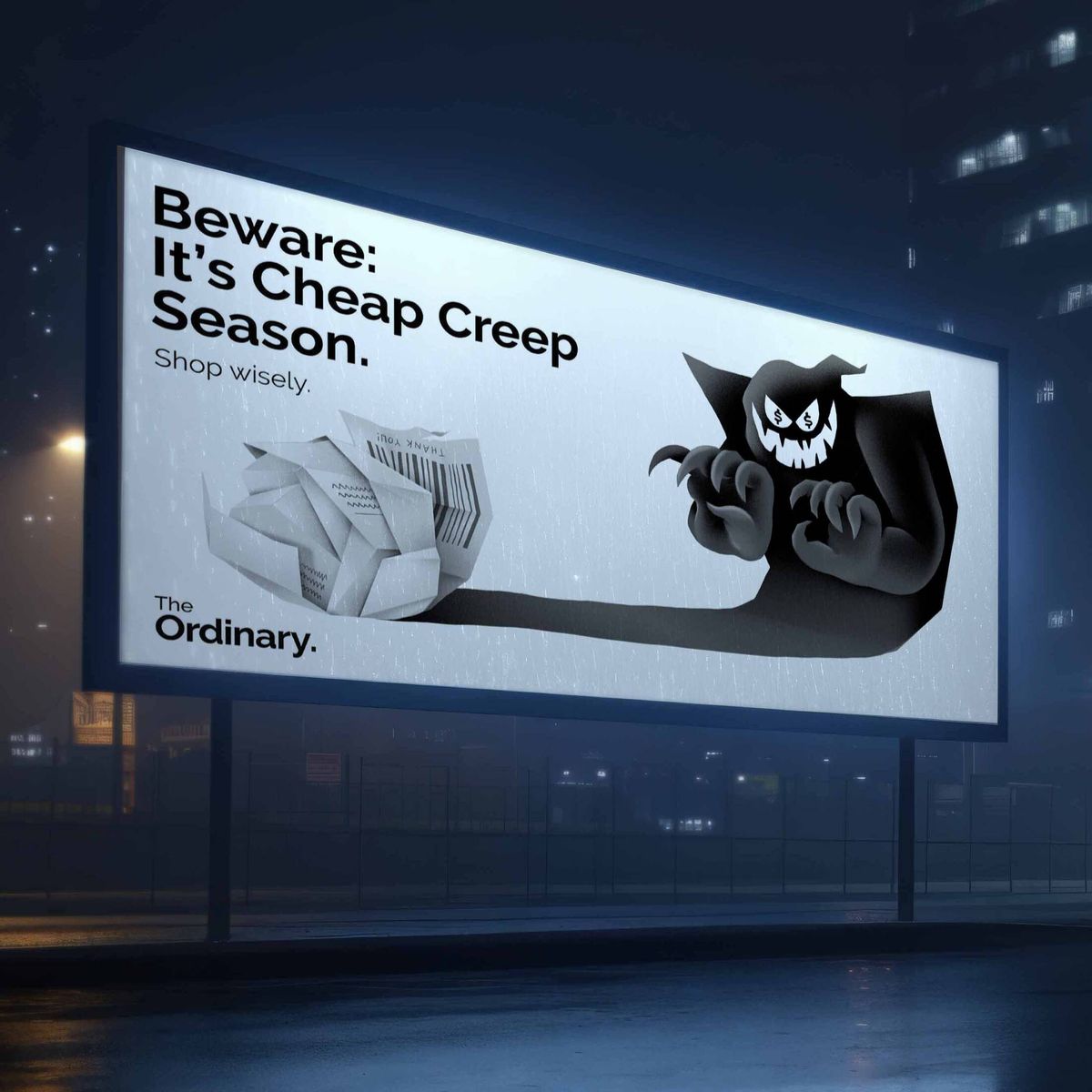
2024 outdoor campaign by Soursop. Campaign source.
A crumpled receipt casts a monster-shaped shadow. It's an unusually pointed image for a skincare promotion, and that's why we'd keep it in the reference folder.
The Ordinary's 2024 Slowvember campaign asks shoppers to question a deal before buying. We like the choice to acknowledge the hesitation someone might already feel during a sales event.
If you're planning a promotion, consider what your customer needs to know besides the percentage off. Which set should they choose? What's inside it? Would they use everything they're buying?
An ad answering one of those questions would make an interesting comparison with your straightforward discount ad. Keep the offer and eligibility clear on the landing page, then compare order value and margin as well as acquisition cost. The buying-guide approach has to make commercial sense, even if it feels more helpful to read.
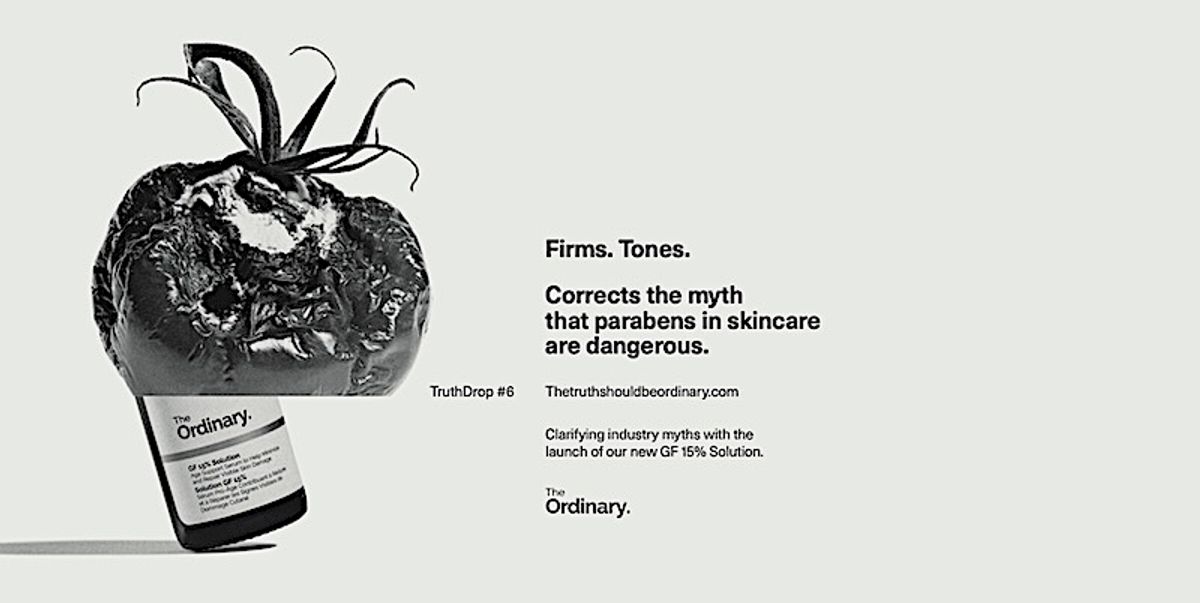
2025 campaign creative by Uncommon. Campaign source.
A decaying tomato above a serum bottle is a strange image to choose. It gives the reader a reason to pause and work out what the brand is saying.
What earns its place in this list is the follow-through. Truth Drops directs the reader toward an explanation. The curiosity has somewhere to go.
That makes this a useful reference for a skincare brand with a product people need help understanding. Start with a question you can answer properly. Your support inbox may already contain it.
The ad and its destination need to work together here. Write the question, show enough to make someone interested, then give them a focused answer on the page. Compare it with your more direct product ad, and follow the reader through to product views and purchases. If they read the explanation and leave, check whether you've made the connection to the product clear enough.
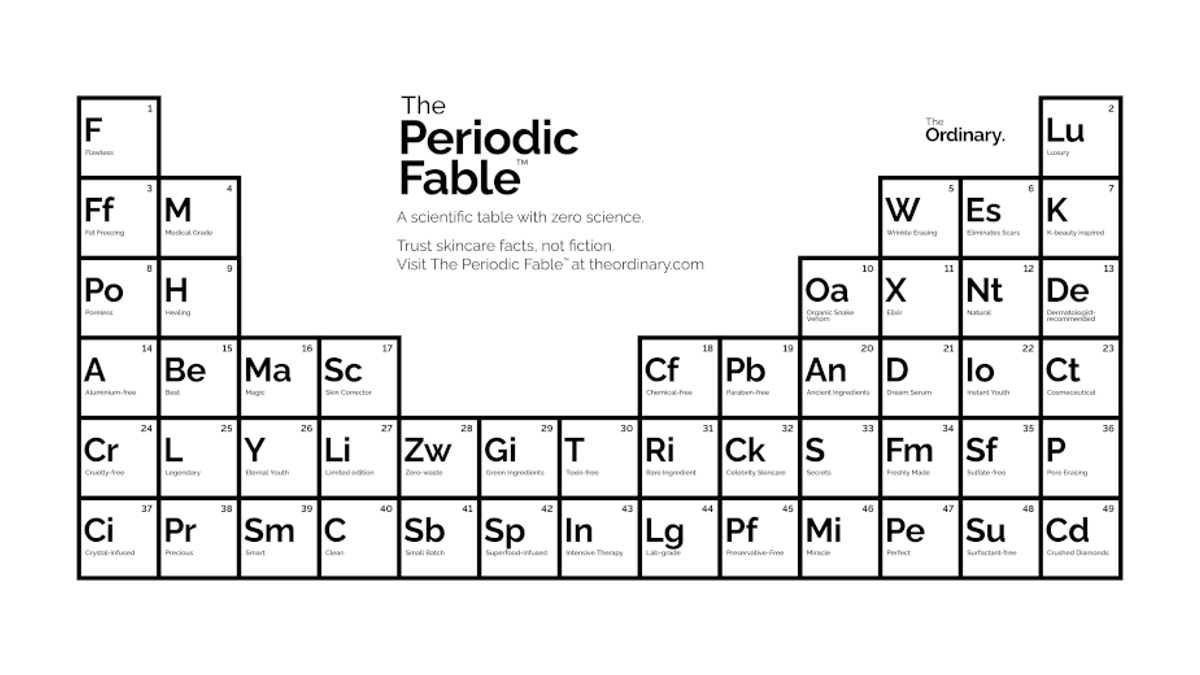
2025 campaign graphic by Uncommon. Campaign source.
The Periodic Fable is worth spending a minute with. It takes a structure you recognize from a science classroom and fills it with beauty marketing terms. The form is part of the argument.
It's one of the more interesting campaign ideas in this selection, though the full graphic asks a lot of a small mobile screen. We'd simplify it for that placement.
For your own brand, borrow the thought that went into organizing the information. If you sell several products that customers struggle to tell apart, a simple guide might do more for them than another photograph of the range.
A useful version could show three products and the role each plays in a routine. Compare that with the same products in a standard lineup, and give interested readers a link to the fuller explanation. Keep enough detail in the ad to help someone choose what to explore next.
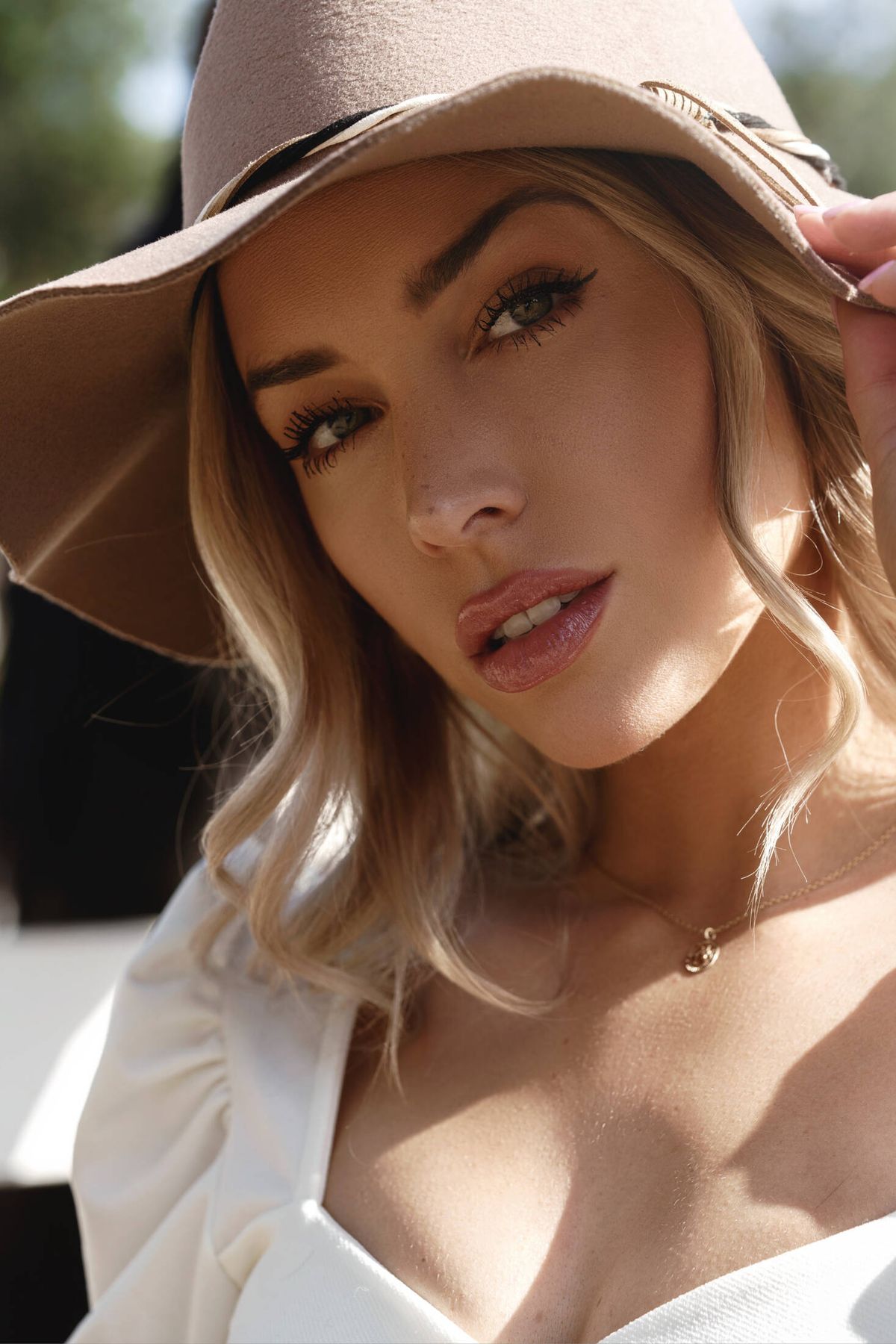
2023 campaign photography by Altered State Productions. Campaign source.
We like the light in this Based Skin portrait. The close framing and outdoor setting give it an easy, unhurried feel. As a reference for a photographer, there's plenty here to discuss.
As a standalone sales ad, we'd ask for more context. Someone seeing the portrait for the first time still needs to know which product you're asking them to consider.
This is a distinction worth making before commissioning a shoot. Tell the photographer where the image will appear and what the finished ad needs to communicate. Leave room for the product and copy if that's how you'll use it.
A branded version with an identifiable product and concise benefit would be worth testing against a composition that puts the product first. Judge the finished ads together. Choosing the prettier photograph in a review meeting won't tell you which one helps a new customer understand the offer.
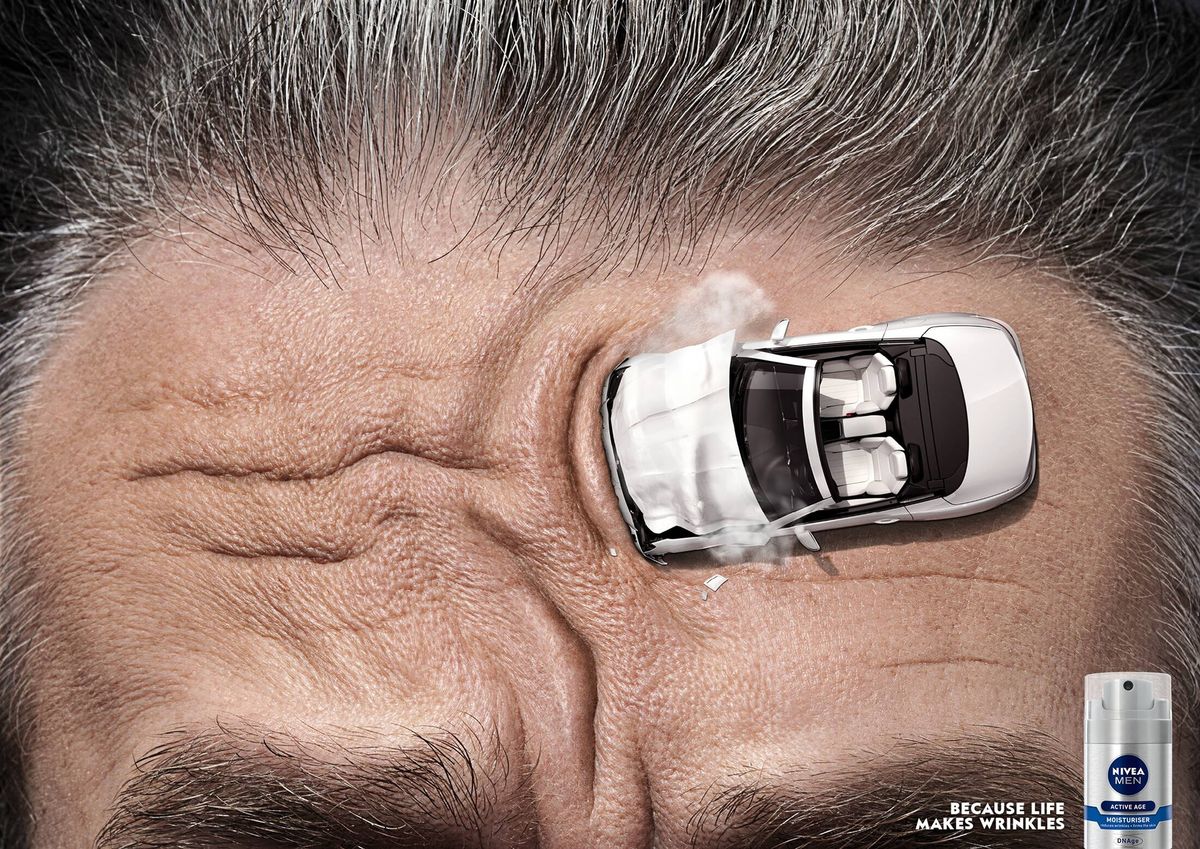
2014 print campaign by Jung von Matt. Campaign source.
A tiny car has crashed into a forehead. The worry lines suddenly have a story attached to them.
This NIVEA print ad dates back to 2014, and we've kept it because the idea is so easy to explain. You don't need a long paragraph to connect the image with the product category.
We'd be careful with the tone if adapting the approach today. Humor about everyday stress can be relatable; copy that makes someone feel bad about their appearance is a different choice.
The clarity of the visual metaphor makes it worth studying. Find a familiar experience your product can credibly relate to, then see whether one image can express it. Before spending, show the draft to a few people and ask what they think it sells. If you have to explain the joke, the creative needs another pass. You can then test it against a direct product photograph.
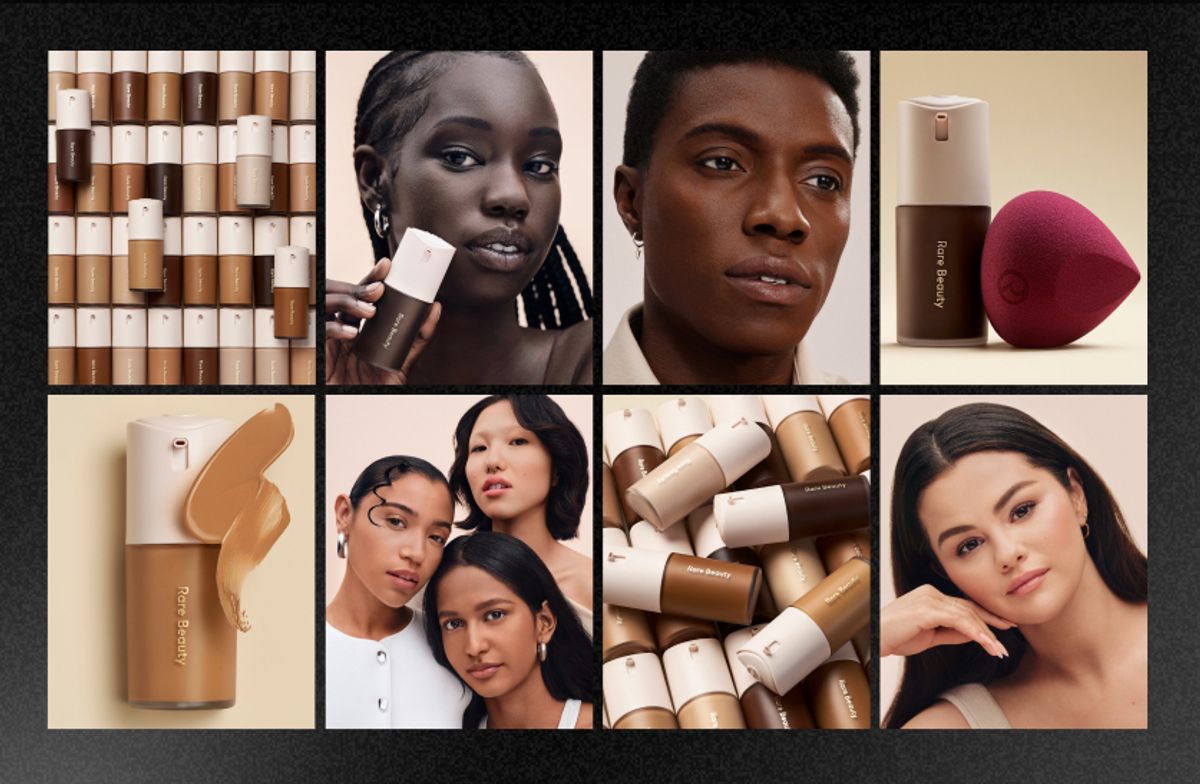
Makeup campaign compilation from Vibemyad’s existing image archive.
The swatches are what make this Rare Beauty reference useful to us. Beside the packaging and faces, they give the shopper something to compare.
This is a makeup example, but the question behind it applies to skincare too: which option is for me?
If your store sells several textures or routine bundles, think about the distinction a first-time buyer needs to see. Showing the full range might help. It might also leave them with more decisions than they wanted.
A smaller selection with clear labels is worth comparing with the full lineup. Keep the destination the same, and make sure the choices in the ad are easy to find when someone arrives. Look at the products they view and purchase, as well as the clicks. The result should tell you whether the creative helped people find a suitable option.
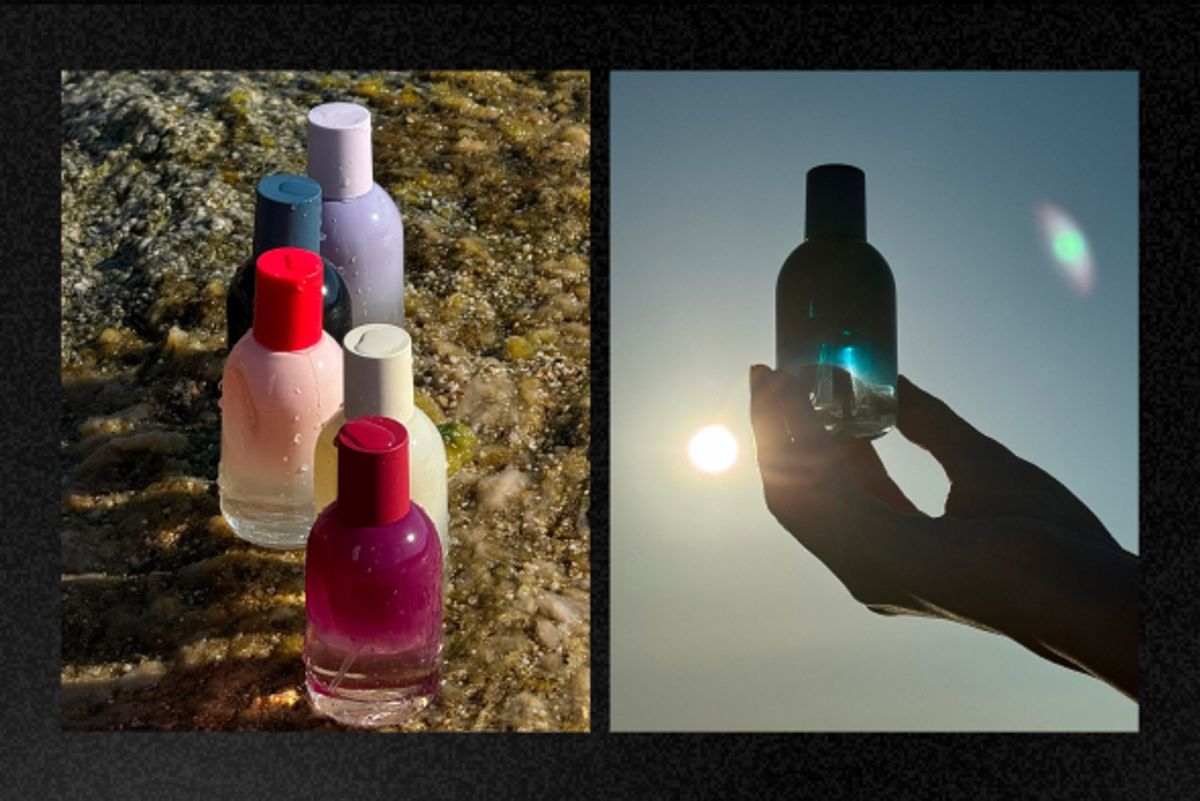
Fragrance campaign compilation from Vibemyad’s existing image archive.
You can't smell a fragrance through an ad. These Glossier images give you wet rocks, colored glass, and light to think about instead.
We like how much the surroundings contribute. The bottles remain visible, but the setting gives the viewer an impression of the experience around them.
For skincare, that raises a useful question for the shoot: how could we make the texture or feel easier to imagine? The answer might involve a prop, a change in lighting, or showing the product during application.
Photograph your product on a plain background and in one carefully chosen setting, then keep the headline the same on both versions. Watch what the second image implies. If people start asking about an ingredient you don't use, the photograph is telling a story you didn't mean to tell. The atmosphere should support an accurate picture of the product.
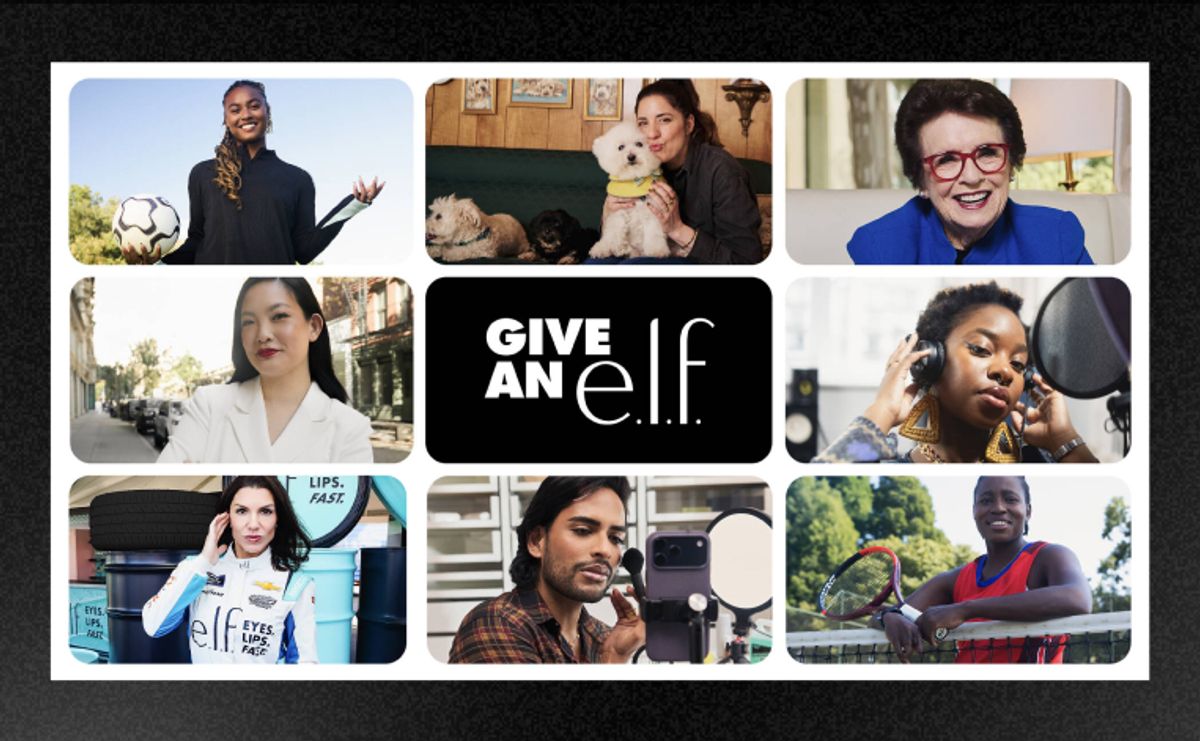
Campaign compilation from Vibemyad’s archive. Watch the official campaign on YouTube. Agency source.
Give an e.l.f. | Official campaign
"Give an e.l.f." is a phrase with room for different people and causes. In this campaign, it holds the message together while the participants give it substance.
For a smaller brand planning a values campaign, the connection to a specific action needs just as much thought as the wording. What action could you show? Who could explain why it matters? A broad statement becomes easier to believe when the reader can see what sits behind it.
The campaign is useful as a brand-building reference. We wouldn't use it to predict whether a purpose-led ad would beat a product offer on immediate purchases.
If you try the approach, choose a commitment your business already acts on and give people a way to check the detail. Set a clear objective and evaluation period, and keep the brand recognizable. You want someone who remembers the message to remember who shared it, too.
Watch “Michael CeraVe” on CeraVe’s official YouTube channel.
Michael CeraVe | Official campaign
2024 video campaign. Official campaign explanation.
The resemblance between Michael Cera's name and CeraVe gives the campaign its premise. The explanation brings you back to how the products were developed: with dermatologists.
This is why we'd include it in a creative review. The story gives the audience a reason to remember a fact about the brand. The celebrity and the joke have a specific job.
For a D2C video, we'd write down the product fact first. Then ask whether a short story could make it easier to understand or recall. You should still be able to explain why the opening belongs to this particular product.
Try that version alongside a direct explanation, with the same offer and destination. Viewing data can tell you whether people stay with the story; purchases help you judge whether it contributes to the sale. Our beauty and skincare video ad examples offer more references for that brief.
If you're working with a limited budget, we'd start with the question customers ask most often before buying. That gives you a reason to choose one of these ideas over another.
Say people keep asking about texture. We'd brief a close application image and a product shot with a clear explanation. If they struggle to choose between products, we'd try a labeled routine against the full lineup. The brief should name the product, customer question, supported message, visual, and destination. Keep enough of those elements consistent to understand what caused the difference.
Need to narrow the shortlist? Our guide to how many ad creatives to test in a first campaign helps you choose a manageable set of distinct ideas for your budget.
Set the commercial yardstick before the ads run. For a purchase campaign, we'd look at acquisition cost, conversion rate, and margin. Click-through rate adds context, but more clicks don't automatically make an ad worth keeping. Our Meta ads testing framework explains how to organize the test.
When you review it, write down what happened in a full sentence. "The application image brought more product-page visits, but purchase conversion stayed flat" gives the next brief something to work with. "Lifestyle won" leaves too much unexplained.
Keep promising ideas for another variation and be honest about small samples. A handful of purchases may leave you with an interesting direction and more questions. That's a reasonable place to start the next round.
If you need a team to turn the brief into a campaign, our beauty and skincare marketing agency guide explains what to look for across creative production, paid media, and product pages.
Get notified when new insights, case studies, and trends go live — no clutter, just creativity.
Table of Contents


Rahul Mondal
Product, Design and Co-founder, Vibemyad


Arpita Mahato
Content Writer, Vibemyad

Rahul Mondal
Product, Design and Co-founder, Vibemyad