March 14, 2026 • 10 min read

March 14, 2026 • 10 min read
Someone searching for static testimonial ad examples is not looking for theory. They want to see what real brands ran, understand why it worked, and take something back to their next brief.
That is exactly what this is. Ten real static testimonial ads - from billboards to LinkedIn cards to OOH takeovers - each broken down so you can steal the idea without copying the execution.
These five are the most directly replicable. You can brief a version of any of them this week regardless of budget or team size.
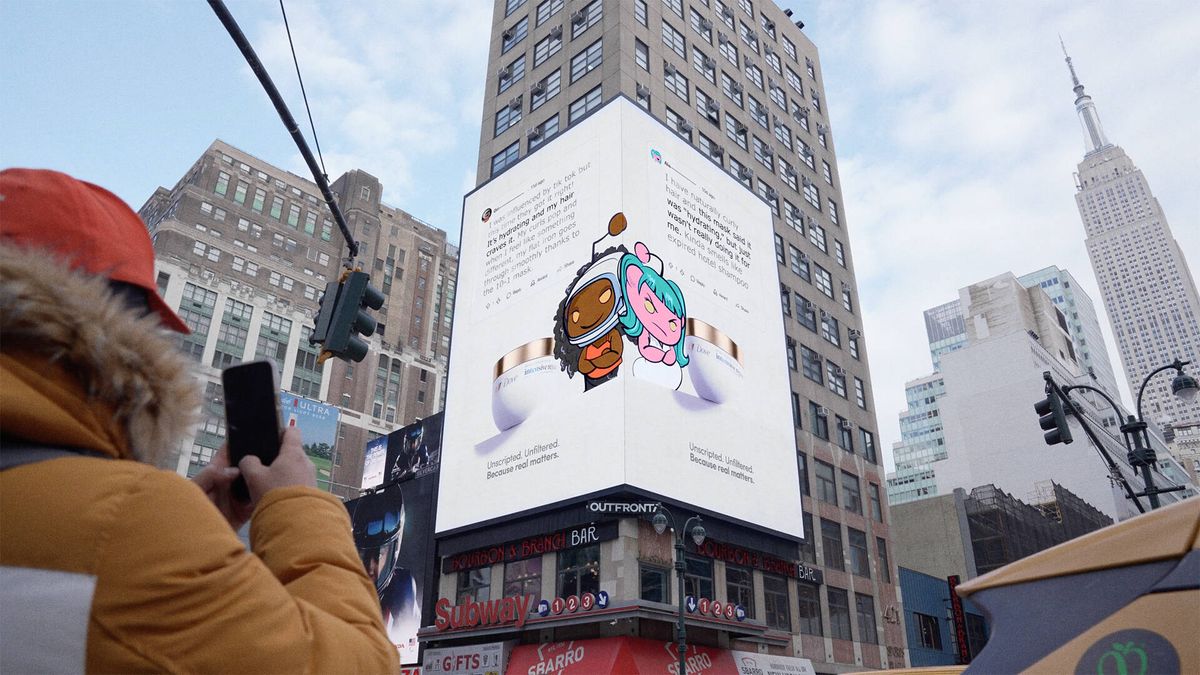
Dove Reddit review billboard, Manhattan
Dove plastered unedited real Reddit user reviews of its Intensive Repair Hair Mask across large-format billboards in Manhattan. The copy reads: "Their reviews. That's our campaign. No edits." Reviews like "kinda smells like expired hotel shampoo" went up on public walls next to five-star reviews. Each quote was paired with the reviewer's Snoo avatar to preserve anonymity.
Publishing negative reviews on a billboard is the most extreme version of product confidence possible. The negative reviews do not undermine the ad — they are the ad. The viewer's logic is immediate: if they are willing to show me the bad ones, the good ones must be real. That single inference generates more trust than any curated quote wall ever could. The campaign earned global press coverage specifically because of the negative reviews — turning a static placement into earned media at scale.
Remove your editorial control from one testimonial campaign. Publish the first reviews you received, not the best ones. The constraint is the proof.
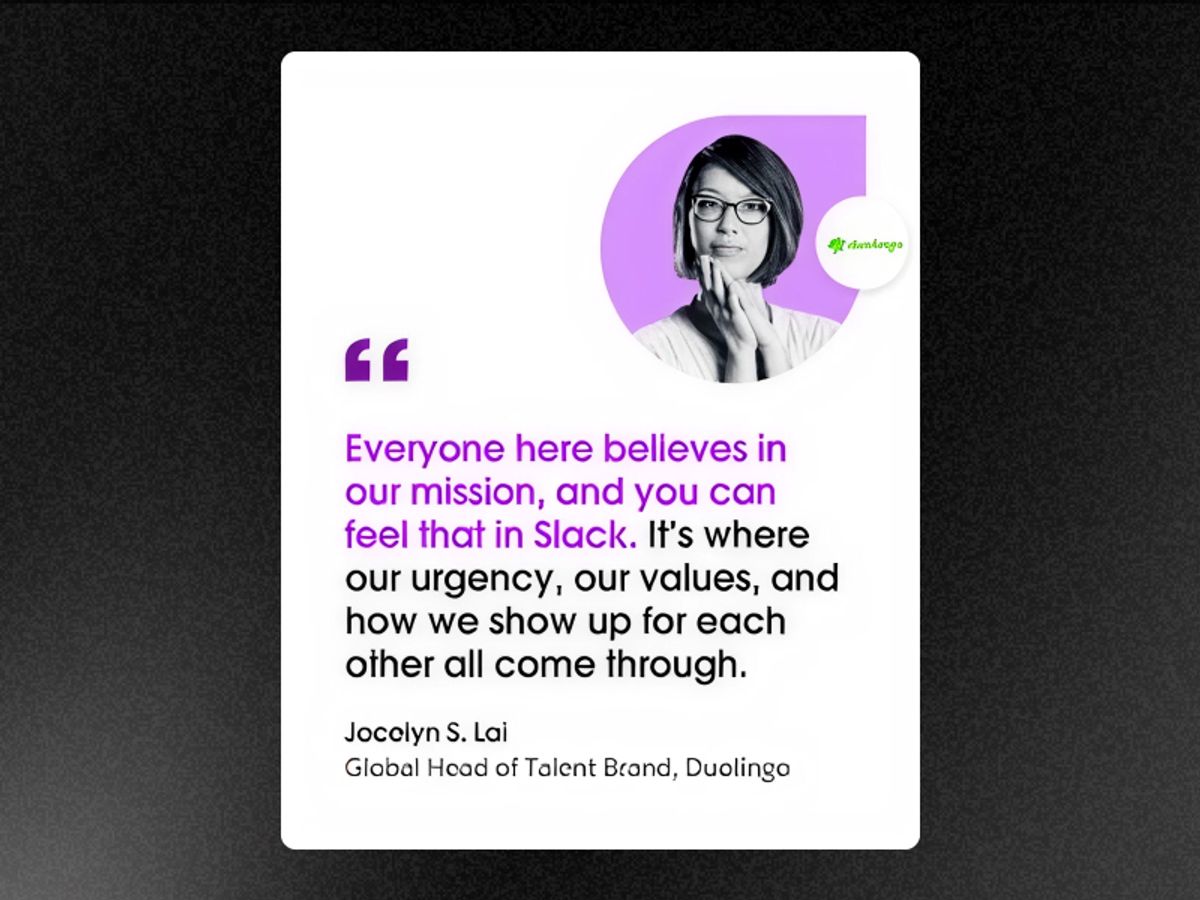
Slack X Duolingo Quote Cards
Slack runs static image ads featuring real customer testimonials — direct quotes from executives at OpenAI, Stripe, IBM, and Paramount — with full name, job title, and company logo visible. These run simultaneously as LinkedIn sponsored posts, paid display ads, and as the hero section of Slack's homepage.
Name plus title plus recognizable company logo is the highest-trust format in B2B static advertising. The claim is fully verifiable — the viewer can look the person up. The logo stacking tells a prospect something no brand copy can say as efficiently: companies smarter than you already made this decision. The minimal visual design makes the quote the only thing competing for attention. Nothing else in the frame gives the viewer anywhere to look except the testimonial.
For B2B static ads your creative hierarchy should be: metric or quote first, then name and title, then company logo. If your design competes with your quote for attention, your design is wrong.
Notion runs static paid ads featuring verbatim quotes from recognizable executives. Steve Huffman, Co-founder and CEO of Reddit: "I think of Notion as the bones of our company knowledge." Guillermo Rauch, CEO of Vercel: "We use Notion across Sales, Marketing, Product, and Engineering. You can replace Google, Trello, Dropbox Paper, Guru, and Confluence all in one tool." Clean text on minimal background. Company logos clearly visible.
Notion's target audience actively follows the CEO of Reddit and the CEO of Vercel. Seeing those names in a testimonial is not just social proof — it is peer validation from people the viewer genuinely respects. The Vercel quote does something else entirely: it answers the single biggest B2B objection in one sentence. Replace five tools with one. That is the entire ROI calculation done in the ad, by someone the viewer trusts more than any case study Notion could write themselves.
Find the testimonial that directly answers your biggest objection, from the most credible source for your specific audience. One quote that does both is worth more than ten quotes that do neither.
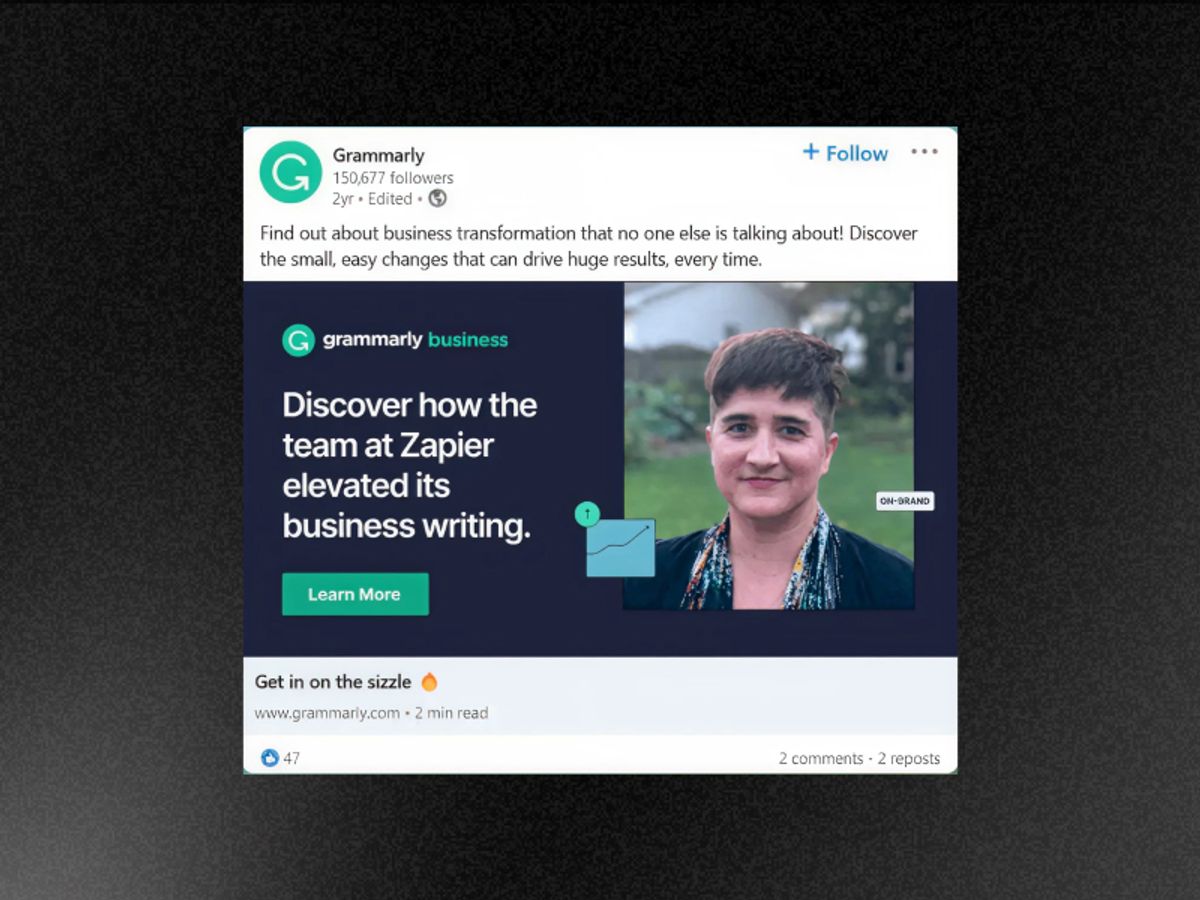
HubSpot LinkedIn static ad — "Discover how the team at Zapier elevated its business writing"
Grammarly's B2B LinkedIn static ads lead with three specific outcome metrics from real enterprise customer Zapier: 87% reduction in lead errors, 42+ hours saved per week, 90%+ CSAT score. Same template runs across multiple customer logos and industries as a systematic creative engine.
Three specific verifiable metrics in one static ad answer every B2B buyer's core question before they have to ask it: what will I actually get? The Zapier logo is immediately recognizable to Grammarly's exact target audience. And the format is deliberately systematic — the same template runs with different customer logos and different metrics, which means every industry vertical feels personally addressed without any additional creative production. One template, infinite relevance.
Build a testimonial template you can run at scale across multiple customers, not a one-off creative you retire after one campaign. The most effective B2B testimonial advertising is a system, not a single ad.
HubSpot runs static paid social ads built around quantified customer outcomes. Each ad leads with the metric: Cluey Learning — 190% increase in ad effectiveness, 17% lower cost per conversion. Agicap — 10% increase in conversions, 15% revenue growth. Same template across dozens of customer logos targeting decision-makers on LinkedIn, Facebook, and Google Display continuously.
The metric is the headline. Not "how HubSpot helped Cluey Learning" — 190% more effective. The number does the selling before the viewer reads a word of copy. HubSpot's case studies page doubles as both an ad landing page and an organic SEO asset, meaning every paid ad click lands somewhere that compounds trust rather than breaking it. The same template across dozens of logos means every vertical feels personally addressed at zero additional production cost.
Your metric is your headline. If you are burying the outcome in the body copy of your testimonial ad, move it to the first thing the viewer sees. The number earns the click. The story earns the conversion.
These are bigger in scale — OOH campaigns, station takeovers, city-wide activations. The budgets are larger but the creative thinking behind each one is fully stealable.
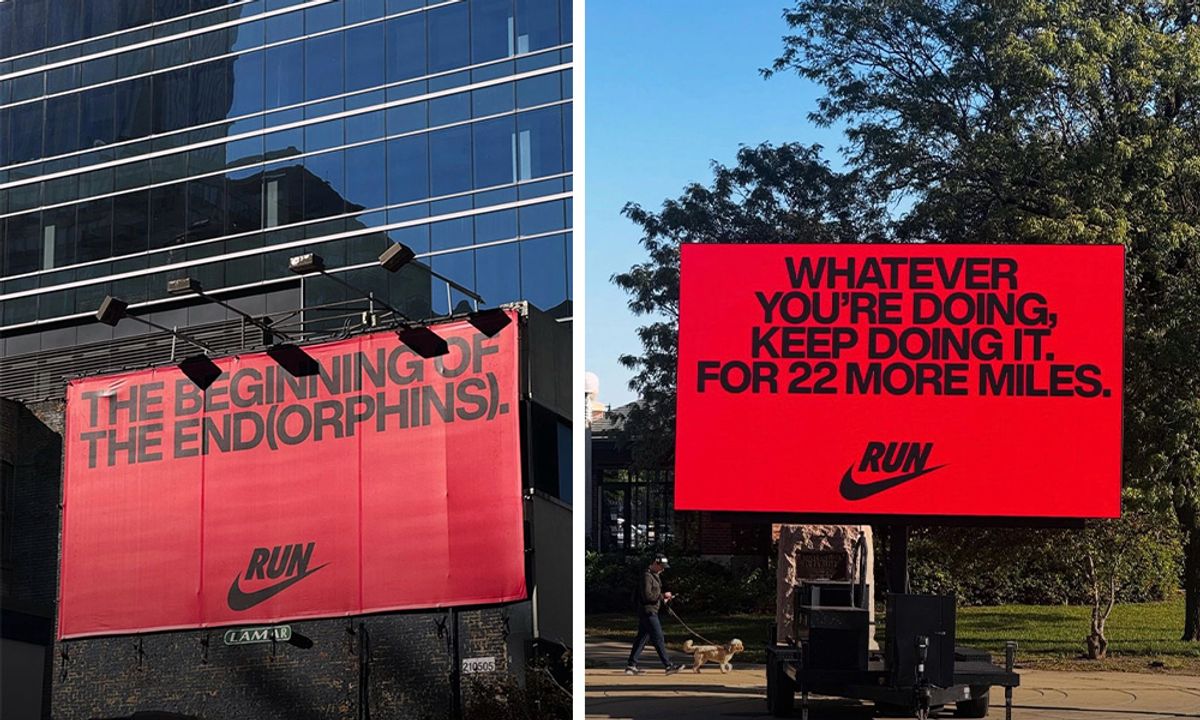
Nike bold red billboard at Chicago Marathon mile marker
Nike placed static red-background billboards along the 2025 Chicago Marathon route at the most punishing mile markers. The copy was written entirely in the first-person inner voice of a runner mid-race: "SHUT UP, BRAIN." "TOENAILS ARE FOR LOSERS." "FUTURE YOU IS BRAGGING ABOUT THIS RIGHT NOW." No product description. No feature callout. Just a swoosh and the word "RUN."
The copy is not brand language. It is the exact thought a runner has at mile 18 when their body is telling them to stop. Nike did not write an ad — they wrote what the audience was already thinking and placed it where they would see it at exactly the right moment. Runners photographed the billboards mid-race and posted them, generating organic reach no paid placement could buy.
Write your testimonial copy in your customer's inner voice. The test: would your customer say this to themselves? If not, rewrite it until they would.
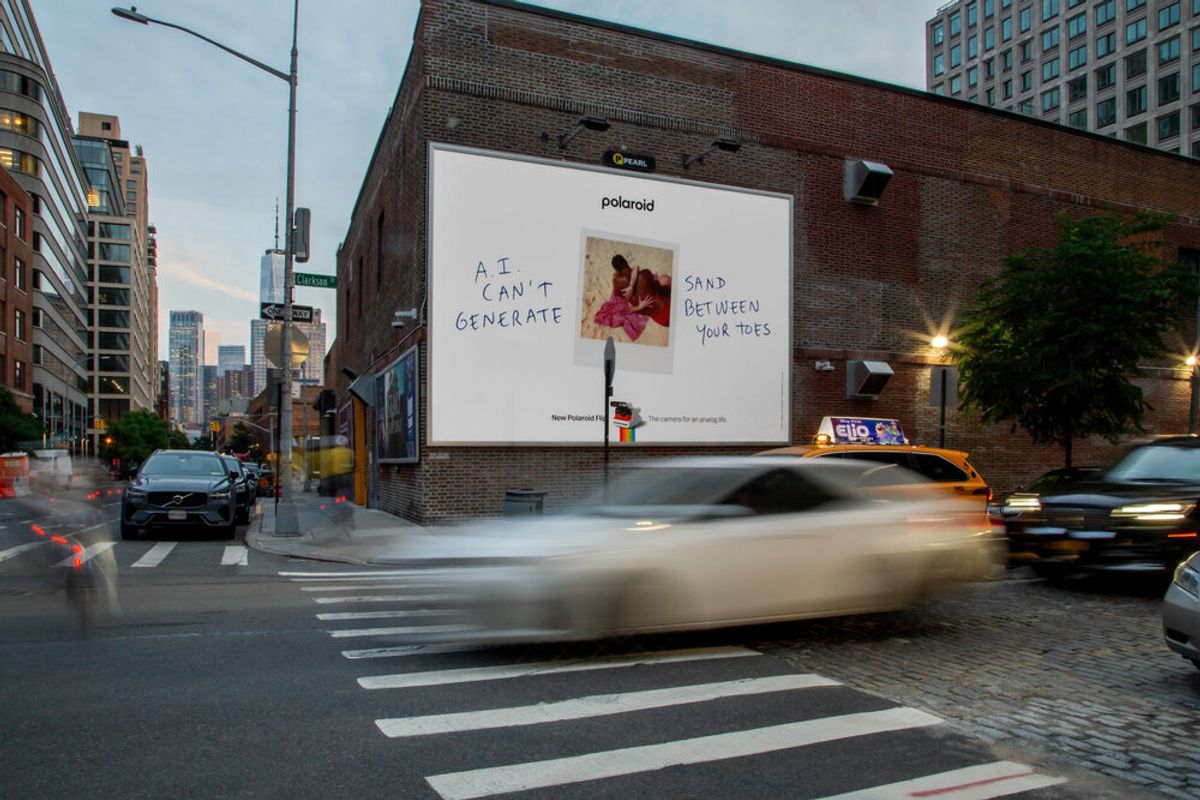
Polaroid billboard
Polaroid placed static billboards deliberately next to Apple Stores and Google offices in New York and London. Copy lines: "No one on their deathbed ever said: I wish I'd spent more time on my phone." "Real stories. Not stories & reels." "AI can't generate sand between your toes." Real Polaroid photographs — grainy, imperfect, tactile — were the visuals.
These copy lines are not Polaroid's claims. They are things millions of people already believe and feel but have not articulated. Reading them on a billboard feels like validation, not advertising. Placement next to Apple Stores created deliberate ironic contrast that generated press without any paid amplification.
Find the belief your customer holds that your product validates. Write the copy they would say to a friend, not the copy you would say to a customer.
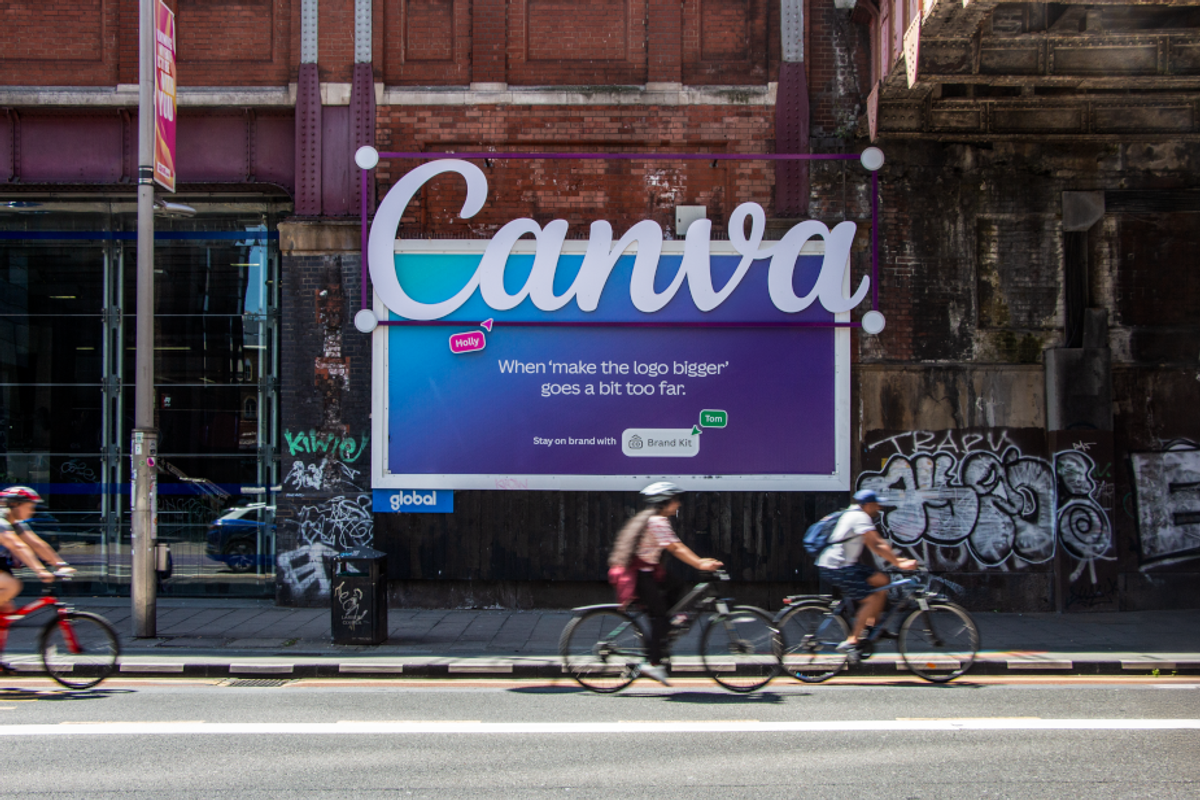
Canva billboard at Waterloo Station
Canva took over all 14 billboard panels at London's Waterloo Station and filled each one with a real designer frustration — wrong aspect ratios, removed backgrounds, conflicting client feedback. Every board was a different joke that every designer and marketer had lived through personally.
This is a testimonial ad where the testimony is a shared problem, not a positive outcome. Canva did not show you what their product does — they showed you what their audience suffers through, in the exact language the audience uses, across 14 sequential boards. Recognizing yourself in the joke is more powerful than reading a five-star quote.
Articulating your customer's frustration with the precision of someone who has lived it is its own form of proof. If your audience reads your ad and thinks "that is exactly it" — you have done the same work as a five-star review.
Every ad in this list removes the brand's voice and replaces it with something the viewer trusts more. Unedited Reddit reviews. Named executives at recognizable companies. A runner's inner monologue. A designer's exact frustration. Real user behavior turned into billboard copy.
The format is almost irrelevant. Billboard, LinkedIn card, guerrilla flypost, aggregate stat display — all of it works when the proof is real and specific enough to be believed.
Before you brief a single static testimonial ad, it is worth knowing what your competitors have already tested and scaled — and then generating your own version in seconds.
Vibemyad Ad Vault
Vibemyad Ad Vault lets you search for ads by category, format, and keyword. If you want to find every static testimonial ad running in your space right now, you can filter to it directly. You can also track specific competitors — once added, Ad Vault shows you every static ad they are running, how long each one has been active, and which creatives they are scaling. A competitor static testimonial ad running for 60 days is proof the format and message are working. You see it before you spend anything testing your own.
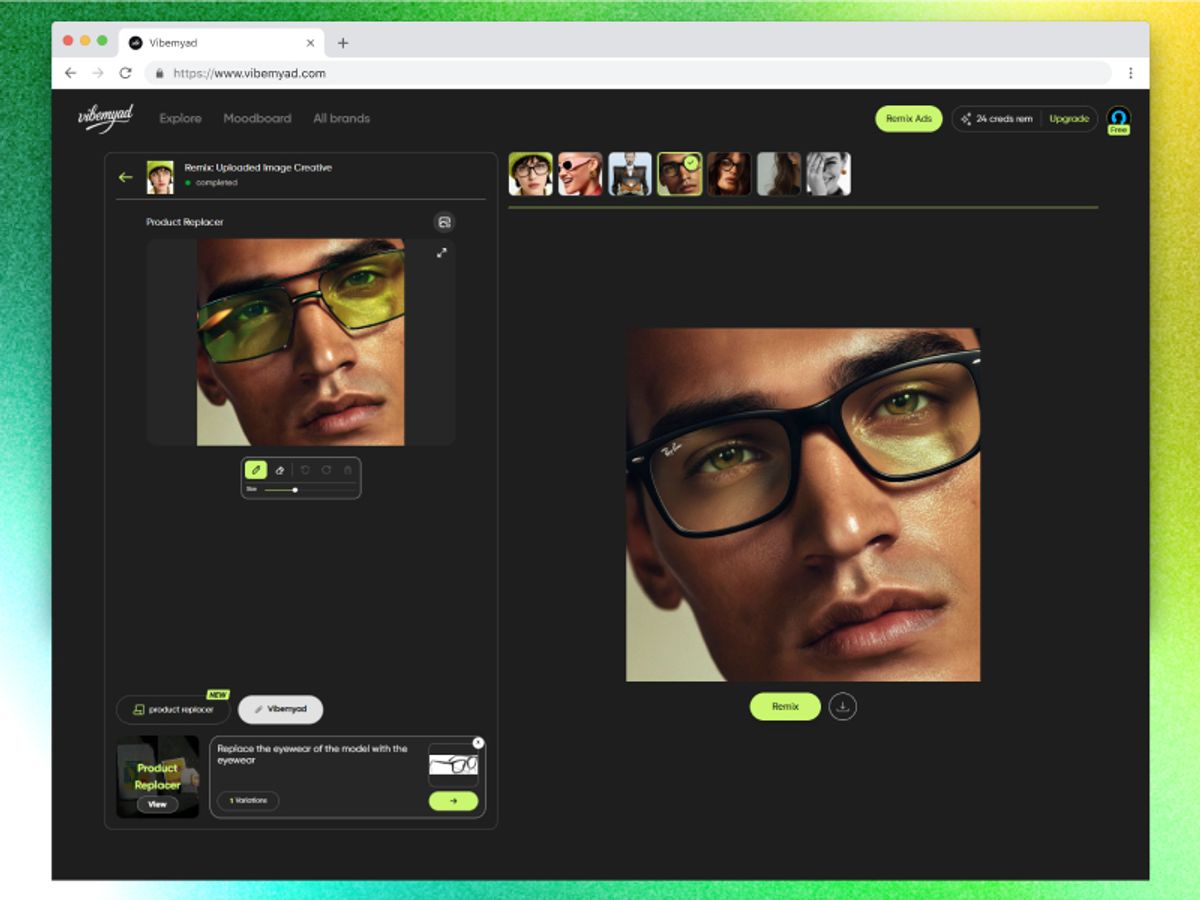
Vibemyad Ad Gen
Once you know what works in your category, Vibemyad Ad Gen generates your own static testimonial ad variations in seconds. Brief it with your customer quote, your metric, or your audience pain point — and get multiple creative variations ready to test without a designer or a production timeline.
Get notified when new insights, case studies, and trends go live — no clutter, just creativity.
Table of Contents


Rahul Mondal
Product, Design and Co-founder, Vibemyad

Rahul Mondal
Product, Design and Co-founder, Vibemyad

Rahul Mondal
Product, Design and Co-founder, Vibemyad