
April 12, 2026 • 13 min read

April 12, 2026 • 13 min read
Fashion advertising in 2026 is doing something unusual. The most interesting static campaigns this year are not trying to sell clothes. They are trying to communicate something harder to quantify - a new era, a creative philosophy, a feeling about what a brand is becoming.
That sounds like brand advertising. But the specific creative decisions behind these campaigns are more tactical than they appear. Gucci released a portrait-only photography series with zero narrative and zero product explanation - and it became one of the most discussed campaign launches of the year. Loewe dropped a 25-image photography campaign before their new creative directors had even shown their first runway. H&M put their clothes on the world's top models during Paris Fashion Week and shot them between shows on the street - no studio, no staging, no set budget that a smaller brand could not replicate with a good photographer and the right timing.
Each of these decisions teaches something specific about how fashion static advertising works right now. Not all of the lessons require a luxury budget. Several of them require only a point of view.
We are still in the first half of 2026, so this list reflects what has landed so far. We will update it as more campaigns go live and more data comes through.
Two of the most recognisable brands in the world released a collaboration that needed to do something no collab brief usually asks for - it needed to invent a new product category and make people understand it immediately, without any explanation.
The NikeSKIMS Spring '26 collection is the first complete head-to-toe system of dress - not activewear, not shapewear, but a new way of dressing that sits somewhere between the two, built on the strength of both brands. Explaining that in copy is close to impossible. Showing it through the right person in the right images is not.
LISA of BLACKPINK was chosen as the campaign face because she embodies the philosophy the collection needed to communicate - fluid physical expression and contemporary style existing in the same body at the same time.
The static images shot in Paris show her in ballet-inspired poses, wearing pieces that move between performance and everyday life without ever announcing the transition. There is no copy explaining what a "system of dress" means. There does not need to be.
Sometimes a static does not need graphical elements. It just needs a world that makes sense — and a face that belongs in it so completely that the product feels inevitable rather than placed.
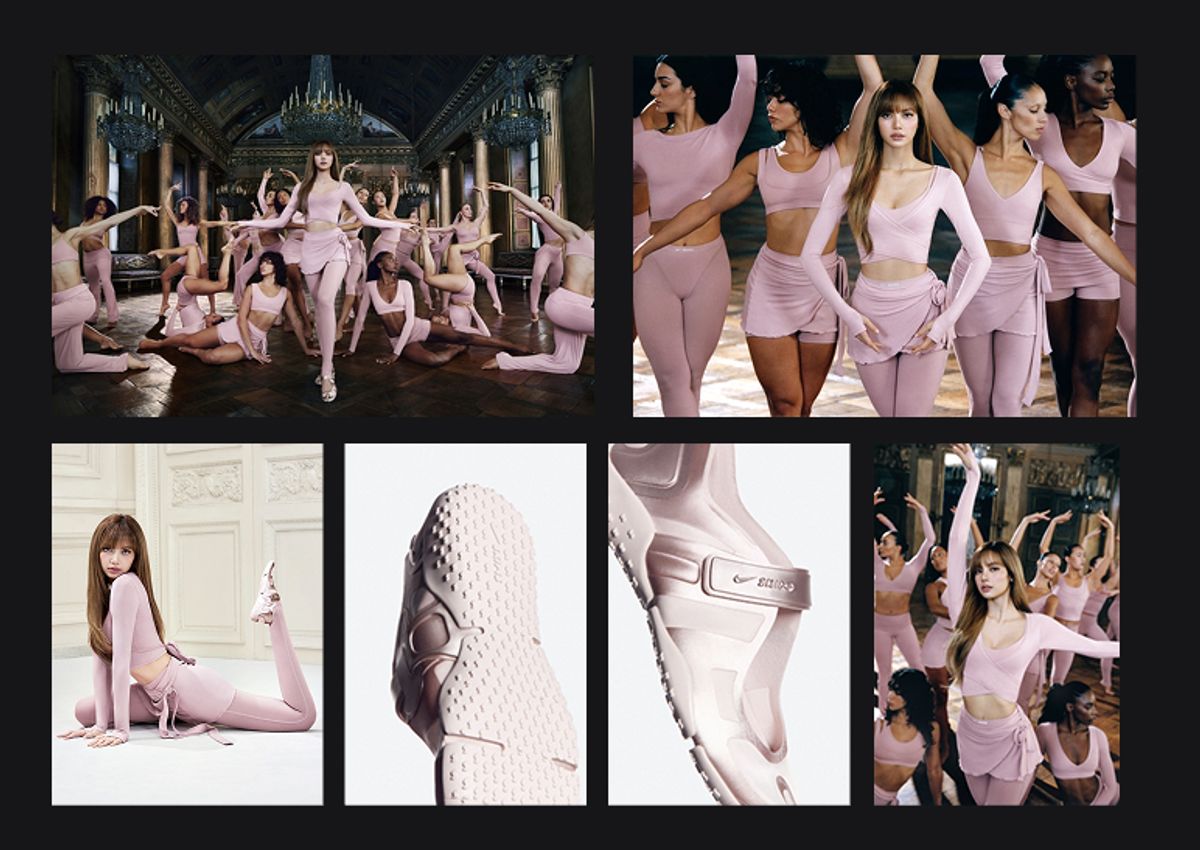
NikeSKIMS — Spring '26 Campaign with LISA
When launching a genuinely new product category, build a visual world that demonstrates the concept rather than describing it. Cast someone whose identity already bridges the two ideas you are trying to connect. The creative does the explaining so the copy does not have to.
Collaborations between large brands carry dual audience expectations. The static campaign needs to satisfy both communities simultaneously without feeling like a compromise. NikeSKIMS does this by choosing a campaign concept - ballet-inspired movement - that is culturally aspirational to both brand's core audiences at once.
Gucci's first campaign under Demna's creative direction could have done anything. It chose to do almost nothing — and that restraint became the entire statement.
Shot by Catherine Opie, the campaign positions itself as a portrait of characters rather than a narrative - a family album rendered in studio light, gestures paused mid-thought. The images are stripped back: neutral studio backdrops, frontal poses, and a compositional discipline that prioritises clarity over drama. Each subject is styled as a distinct type, defined through attitude and dress rather than action.
Figures like Primadonna, Gallerista, Miss Aperitivo, L'Influencer, and La Bomba appear not as stereotypes but as personas - with instantly recognisable behaviours and traits found on the streets of Milan.
The clothes sharpen each character rather than define them. A vivid red coat carries temperament. Black tailoring is anchored by the Bamboo 1947 bag. Denim and leather signal studied nonchalance.
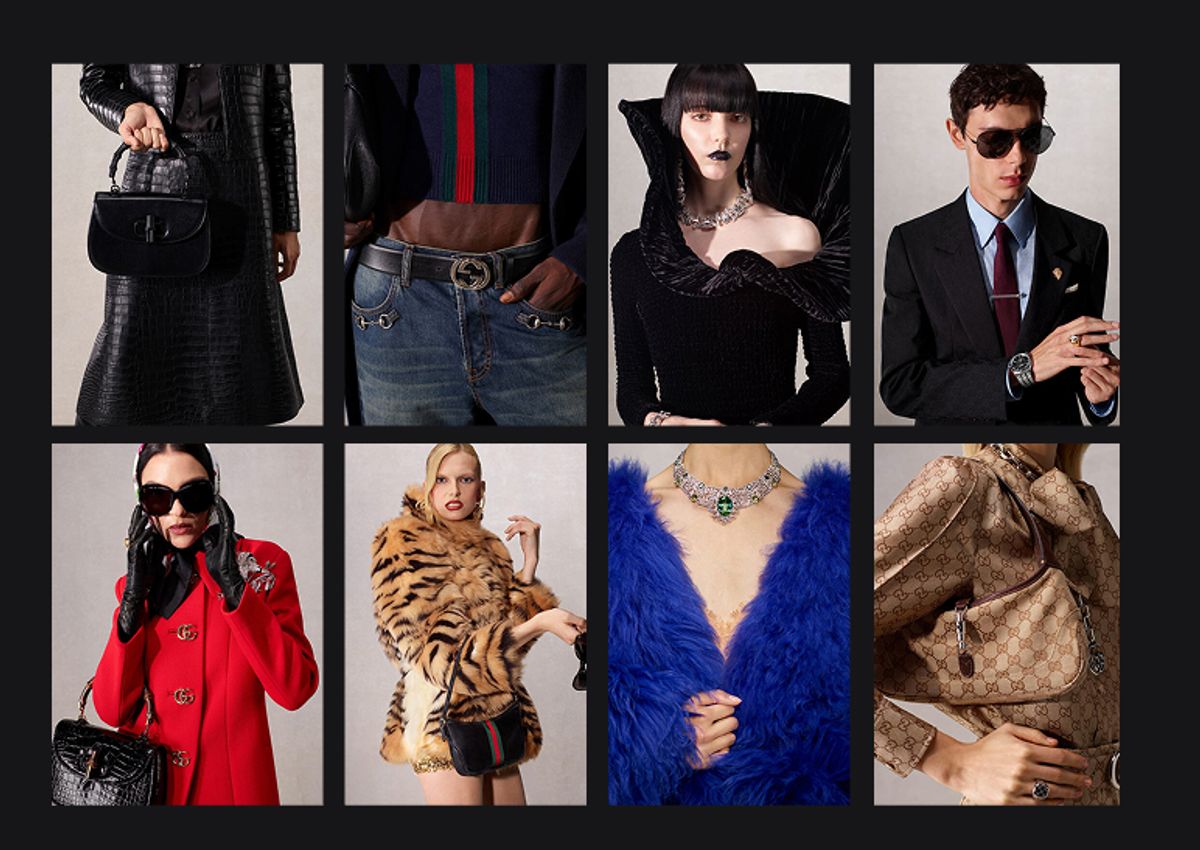
Gucci — "La Famiglia" SS26, Photographed by Catherine Opie
Character-based portrait photography is one of the most underused formats in fashion advertising below the luxury tier. Defining your customer as a persona - not a demographic - and building a campaign around that persona's attitude rather than your product's features is a creative approach that scales down in budget far more easily than it scales up.
A campaign announcing a new creative era needs to say something definitive without overpromising. La Famiglia does this by showing taste rather than making claims. The choice of photographer, the restraint of the composition, and the character logic of the casting all communicate "new direction" without a single line of copy needing to say it.
Loewe's new creative directors - Jack McCollough and Lazaro Hernandez - did something unusual for an incoming design team at a major house. They released their campaign before their runway show rather than after it.
The images were intended as an opening signal before the duo's debut runway show, described as the "outset of a new dialogue" for the Spanish fashion house. The campaign begins to define a tone, a spirit, and the beginnings of an intent. It was not selling a collection. It was declaring a point of view.
Photographed by Talia Chetrit, the campaign operates in deliberate contrasts — images shifting between harsh daylight that casts strong graphic shadows and nocturnal settings that heighten the interplay between garment and body. The visual narrative centres on what the designers describe as "carnal tension" — the sculptural relationship between clothing and silhouette.
Scenes of turquoise pools and tropical fruit set the tone for a collection equal parts sensual and modern. Each image centres physicality — a bright yellow heel crushes the top of a takeout container, and wet hair acts as a defining accessory. Sunlight glimmers on water droplets.
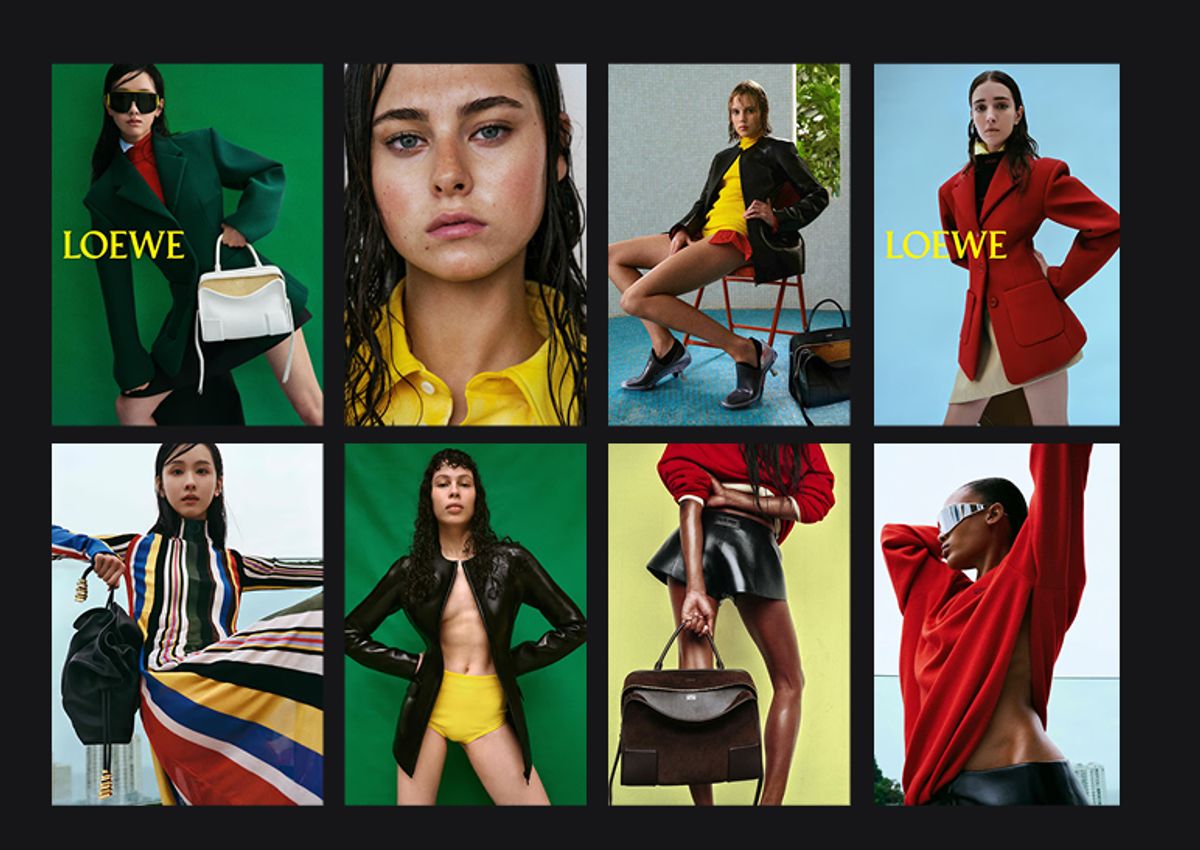
Loewe — SS26 Campaign, Photographed by Talia Chetrit
Outdoor midday daylight with intentional harsh shadows is one of the most distinctive visual signatures a fashion campaign can adopt right now, precisely because the industry default is studio lighting or soft natural light. Graphic shadows create structure in a static that post-production cannot replicate. Shoot in unforgiving sun and work with what it does rather than correcting it in edit.
If you are launching a new creative direction, consider releasing the campaign before the collection rather than after. The photography-first approach builds anticipation and establishes your visual language in isolation, allowing it to be understood on its own terms before the product context arrives.
Miu Miu took their Spring 2026 campaign above the clouds — literally — and the setting ended up doing more creative work than anything else in the frame.
The campaign is titled "On Cloud Nine" and shoots from dawn until dusk far above the city, light and shadow moving from distinct to diffuse. The mood is one of optimism contrasted with pragmatism, of lightness and extreme beauty with functionality, of romance and a touch of rebellion.
Photographed by Jamie Hawkesworth and styled by Lotta Volkova, the campaign places Olivia Rodrigo above the world, suspended between softness and strength. The setting feels surreal and serene at once — oceans and mountains stretching beneath a sky that fades from blush pink into clear blue.
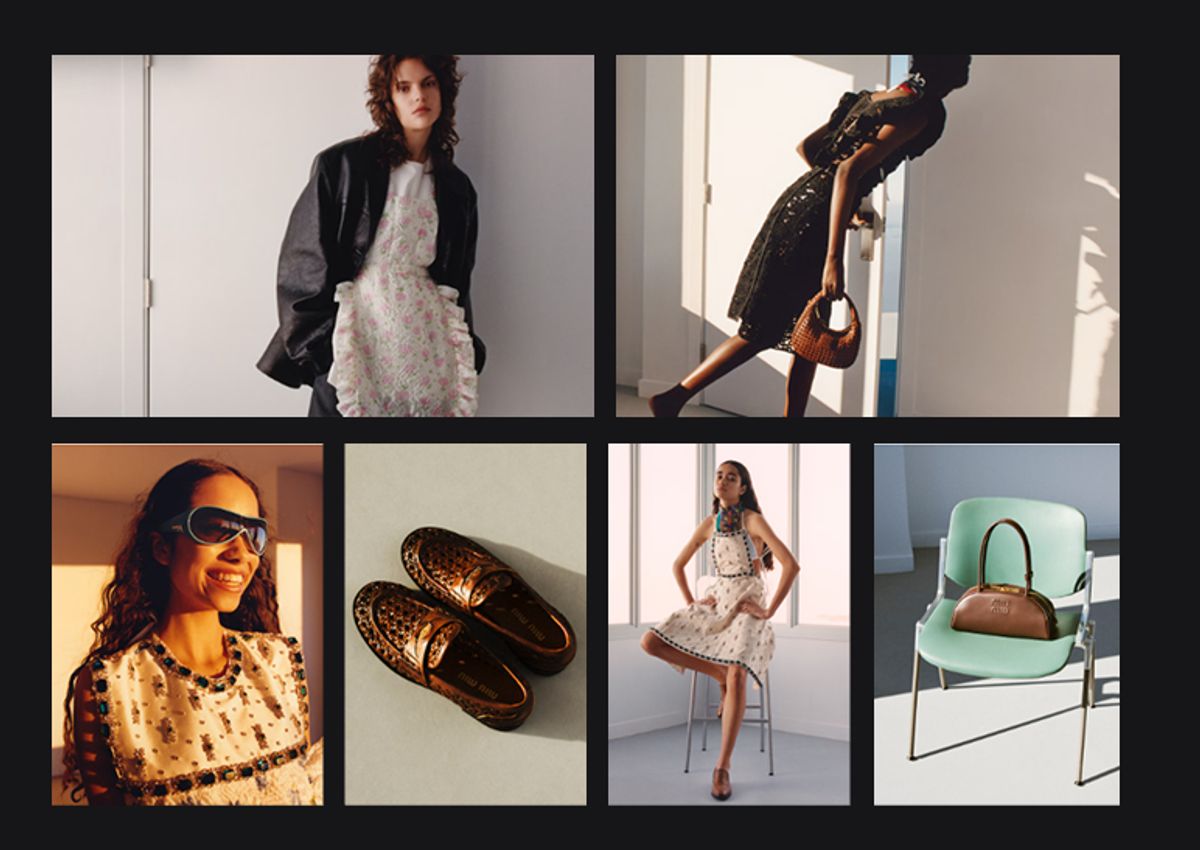
Miu Miu — "On Cloud Nine" SS26, Photographed by Jamie Hawkesworth
Setting and atmosphere can do more emotional work in a static than casting, product, or copy combined. If your creative concept is built on a contradiction -toughness and femininity, real and surreal, industrial and delicate, find a location that embodies the tension rather than trying to resolve it through styling.
Olivia Rodrigo is the right casting choice here not because of her follower count but because her public persona already carries the contradiction Miu Miu needed to photograph. Sweetness and defiance. Softness and strength. When the talent's identity mirrors the brand's creative argument, the campaign earns its casting in a way that no brief can manufacture.
This is the most instructive ad on the entire list for any brand not operating at a luxury budget — because H&M achieved something that money usually cannot buy, and they did it by simply showing up at the right place with the right photographers.
H&M hit the streets during Paris Fashion Week, capturing the world's top models wearing H&M's off-duty casual femininity between shows. Photographers Adam Katz Sinding and Melodie Jeng were behind the lens. The models enjoyed the freedom to produce their own scenes, resulting in images that look genuinely unstaged and entrepreneurial rather than produced.
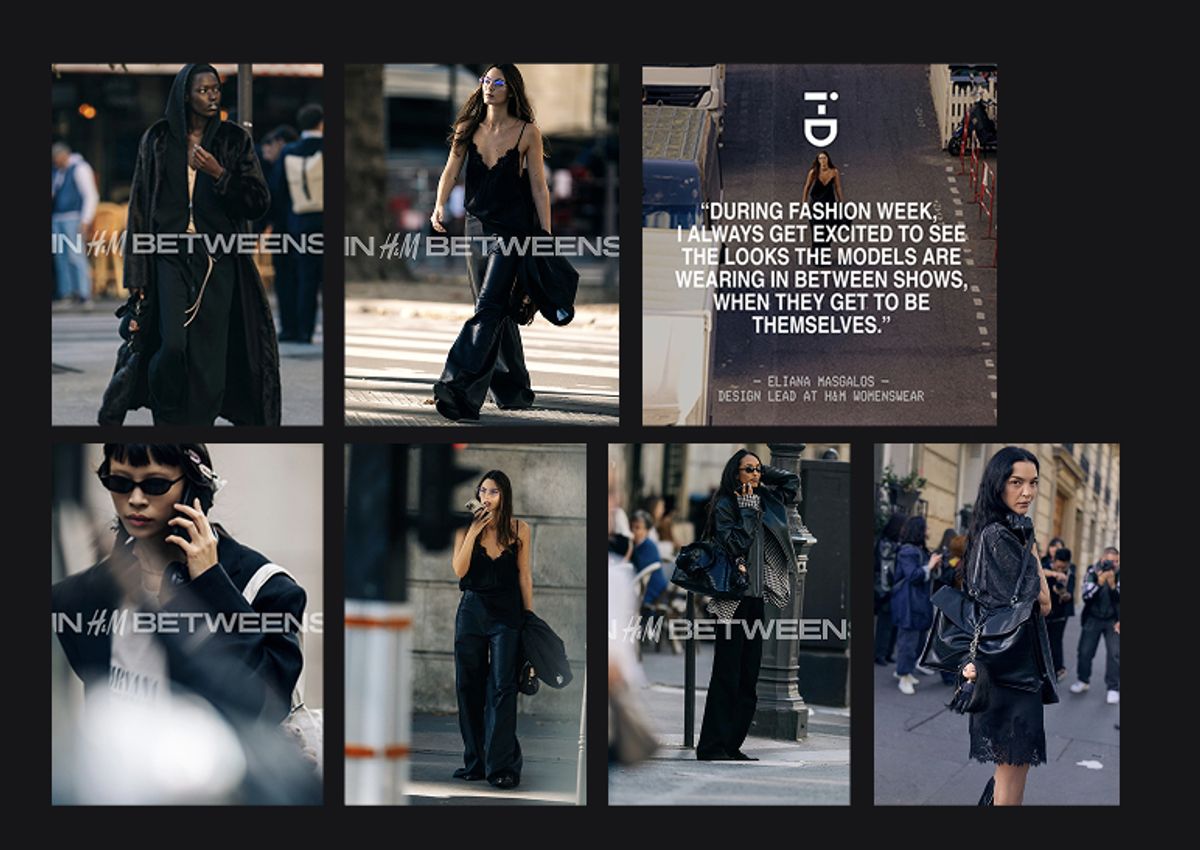
H&M — "In Between" Paris Fashion Week Campaign
Street photography during a cultural moment your target audience is already paying attention to is one of the highest-leverage creative approaches available. The authenticity of an unstaged environment does something a studio cannot. Find the moment, show up with a good photographer, and let the location do the work that a set would cost ten times as much to replicate.
H&M did not try to compete with luxury fashion week advertising. They placed their product inside the fashion week world by being physically present in it. Any brand can identify a cultural moment where their target audience's attention is already concentrated and find a way to put their product there authentically. This is a strategy, not a budget.
Zara hired Steven Meisel. That sentence is the campaign.
Steven Meisel has photographed Prada and Versace campaigns for decades. He is the most significant fashion photographer alive. When Zara — a fast fashion brand, however elevated its current Studio positioning — hires him to shoot a collection, the photographer choice communicates more about brand ambition than any campaign concept could.
Zara's approach has shifted toward editorial minimalism — muted tones, striking poses, subtle lighting that mirrors the feel of a high-fashion magazine. The content evolution shows how fast-fashion brands can embrace artistry while staying accessible. The Meisel campaign pushes that ambition as far as it has ever gone. The images are not trying to look like Zara ads. They are trying to look like Prada ads. And because Meisel shot them, they do.
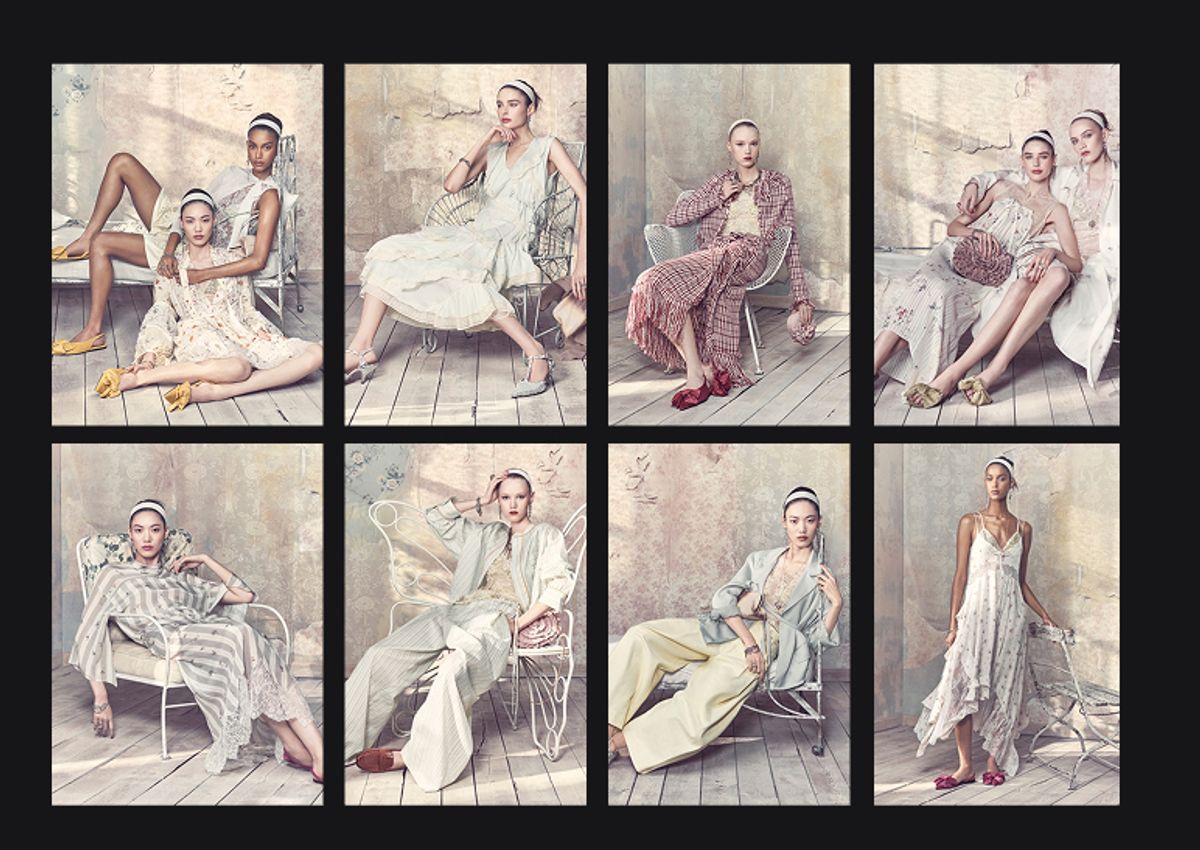
Zara Studio — Spring 2026, Photographed by Steven Meisel
Photographer choice is a creative statement with its own meaning before the image is even published. In fashion, the person behind the lens carries their own cultural equity. If your brand is signalling a shift upmarket, choosing a photographer whose work already lives at that level communicates the shift without a word of copy needing to say it.
Attribution matters in fashion advertising in a way it does not in most other categories. The audience for Zara's Studio collection knows who Steven Meisel is. That knowledge changes how they read every image before they have consciously processed the clothes in it.
Every ad on this list has been running long enough to confirm it is working. The real question for any beauty brand is not whether these formats convert - it is whether your competitors are already running them in your category, and whether the window to differentiate is still open.
Vibemyad Ad Vault
Vibemyad Ad Vault is a dynamic ad library where you track the brands that matter to your business and view every ad they are running, all in one place. For beauty brands, this means you are not manually checking the Facebook Ad Library brand by brand and screenshotting what you find. You track your competitors inside Vibemyad Ad Vault and their ads surface directly in your library, continuously updated as new creative goes live.
What makes it genuinely useful for the kind of creative research this blog is about is the filtering. Vibemyad Ad Vault supports performance-based filters - so instead of browsing everything a competitor is running, you can filter down to the ads that are actually performing.
You can also filter by same industry and market, which means you are not just looking at what one competitor is doing — you are seeing what the entire category is running, what formats are appearing repeatedly, and where the gaps are. A format showing up across multiple brands in your category is a signal the approach is validated. A format that nobody in your category is running is a gap worth moving into.
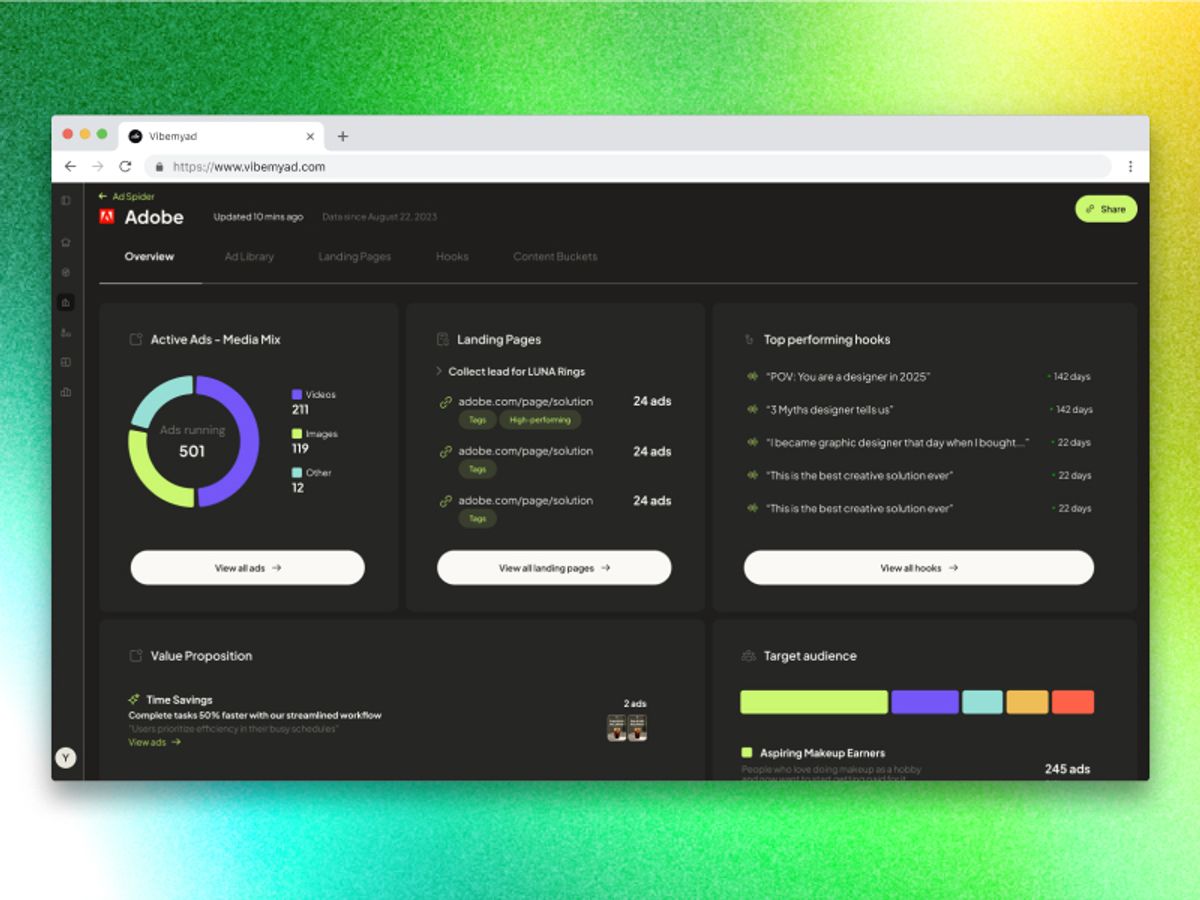
Vibemyad Ad Spider
Vibemyad Ad Spider sits alongside Ad Vault as the brand-level intelligence layer - tracking creative themes across competitor campaigns, mapping how a brand's messaging has shifted over time, and surfacing the whitespace in your category that no competitor has claimed yet.
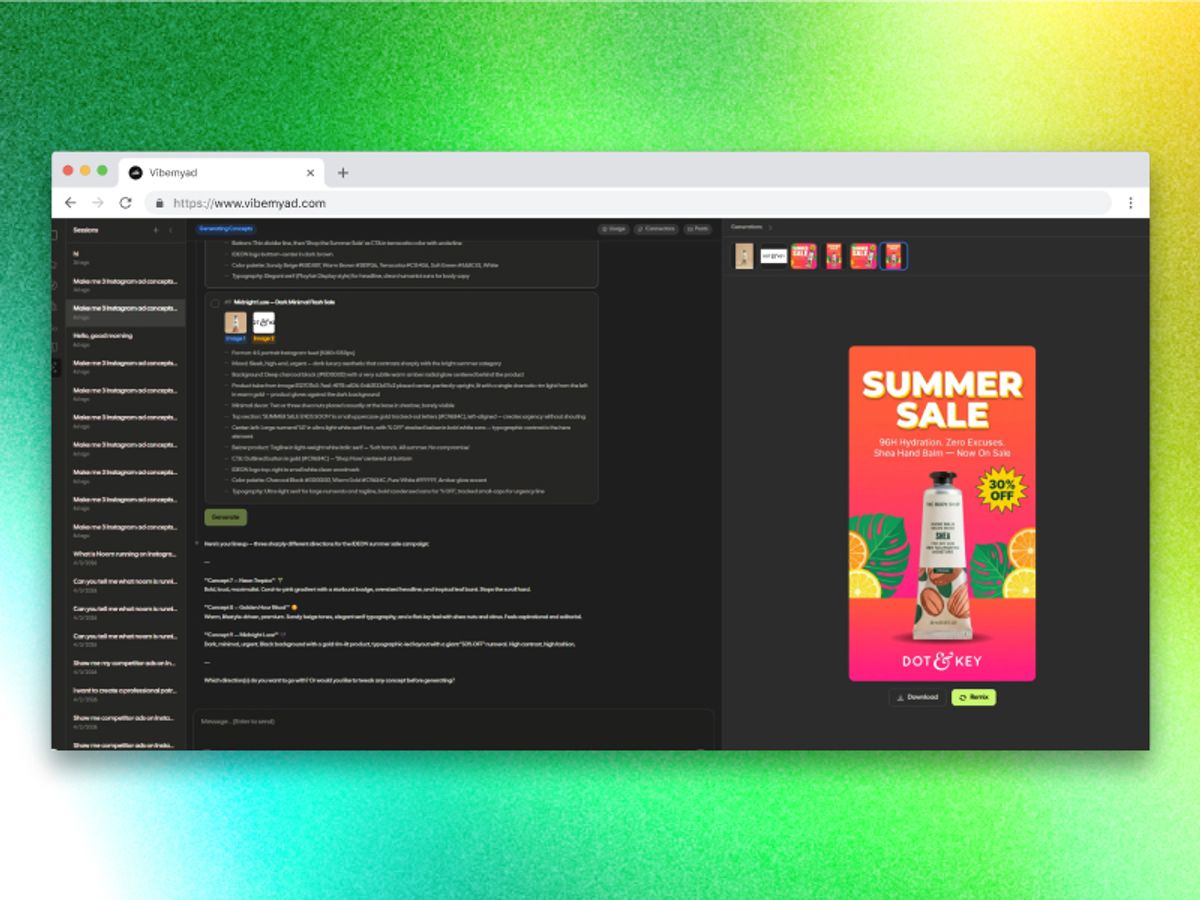
Vibemyad Ad Gen
Once you have found a format worth acting on - the ingredient-hero carousel, the extreme close-up, the editorial lifestyle integration - Vibemyad Ad Gen is where the production happens. Ad Gen has turned agentic. Rather than selecting from a preset menu of modes, you open a conversation with the Vibemyad Ad Gen agent and tell it what you want to create. You can describe the format, point to the concept you found in Vibemyad Ad Vault, explain your product and brand, and the agent handles the creative production through that conversation. It is ad creation through chat - which means the brief and the build happen in the same place, without switching tools or translating research into a separate design brief.
The workflow is straightforward.
Get notified when new insights, case studies, and trends go live — no clutter, just creativity.
Table of Contents


Rahul Mondal
Product, Design and Co-founder, Vibemyad

Rahul Mondal
Product, Design and Co-founder, Vibemyad

Rahul Mondal
Product, Design and Co-founder, Vibemyad