April 14, 2026 • 12 min read

April 14, 2026 • 12 min read
There is a reason UGC static ads keep showing up in every performance marketing conversation right now. It is not because they are cheap to produce, though they often are. It is because Meta's feed has become so saturated with polished studio creative that anything which looks genuinely real now commands disproportionate attention.
The viewer's brain has learned to filter. A perfect gradient background with a centred product shot and a benefit headline registers as an ad before the message has a chance to land. A customer holding a product in natural light, or a celebrity with a pimple patch on their face, or a raw Reddit review printed in billboard font, these register as content first. The ad part comes after, and by then the viewer is already engaged.
What makes 2026 different from previous years is that the best UGC static creative is no longer accidental. Brands are deliberately engineering the aesthetic of authenticity - casting real creators, shooting on phones, leaving in the imperfections, and running that creative as paid ads on Meta while it looks like something a friend posted. The ones doing it best are barely distinguishable from organic content, which is exactly the point.
The ten ads on this list were chosen because each one teaches a different lesson. No two formats are the same. No two creative decisions overlap. Together they map out the full range of what UGC static advertising looks like when it is done with genuine creative intelligence.
We are still in the first half of 2026. This list will be updated as more verified campaigns land and more performance data comes through.
Dove took unedited Reddit reviews of their Intensive Repair Hair Mask - including negative ones and printed them on Manhattan billboards. The copy read: "Their reviews. That's our campaign. No edits." The Reddit avatar icons sat next to each review so you knew exactly where they came from.
One of the featured reviews called the product "kinda smells like expired hotel shampoo."
Dove published it anyway. And that single decision, showing the unflattering review publicly, at billboard scale, in a major city - became the most powerful product confidence signal in the campaign. The viewer logic is immediate and airtight: if a brand is willing to show you the bad reviews, the good ones must be real. If they are willing to put the negative feedback on a Manhattan billboard, they must believe their product is genuinely good enough to survive the comparison.
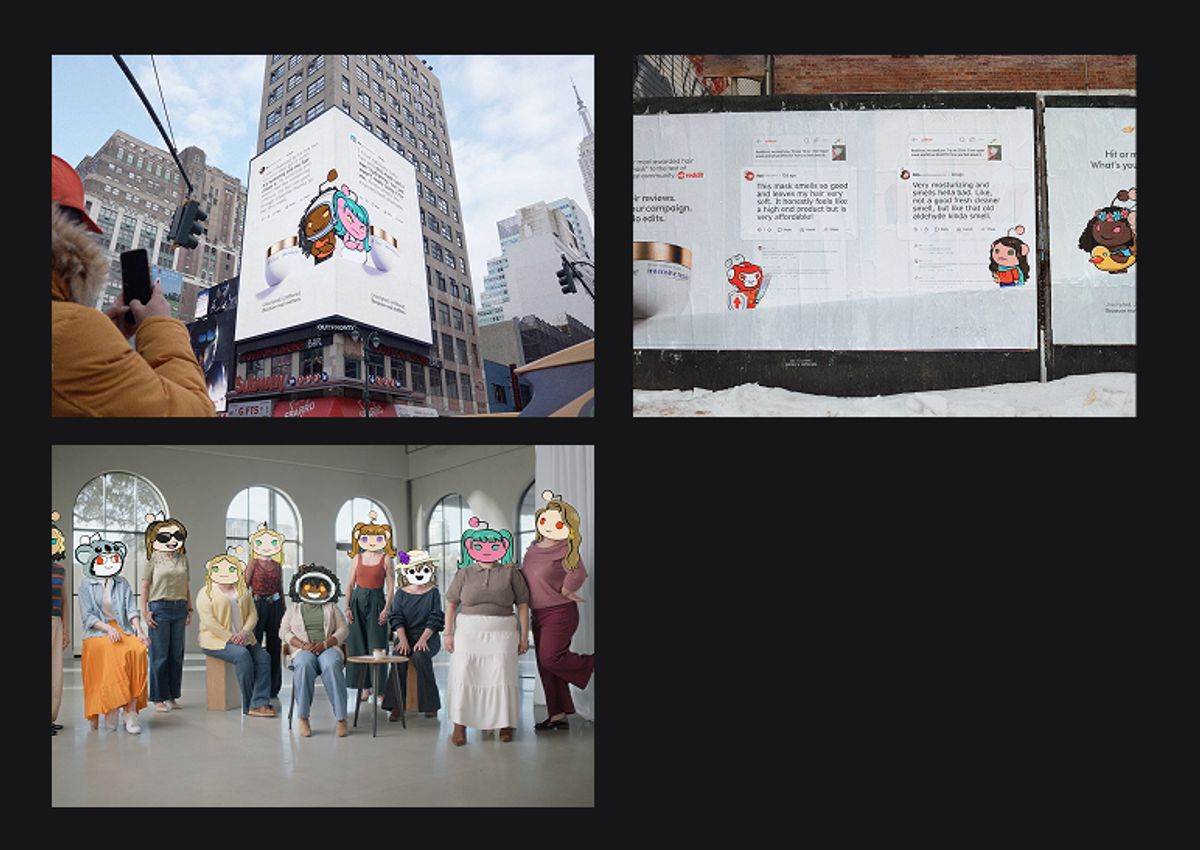
Dove — "Their Reviews. That's Our Campaign." Reddit UGC Billboard Static
Raw review text in platform-native format - Reddit's Snoo avatar, the upvote count, the timestamp - is more visually credible than any typographic treatment you could design from scratch. Preserve the source formatting. It is doing more trust-building work than a custom font ever could.
Publishing a negative review is the highest-confidence product claim a brand can make. You are telling the audience: we have read every single thing people say about us, including this, and we still believe in what we make. If you have genuine positive reviews that outweigh the occasional honest criticism, this format is available to you regardless of budget. The billboards are optional. The decision is not.
Pimple patches on a celebrity couple. Deliberately unglamorous. Visibly human. And the most magnetic thing Rhode put out in early 2026.
The power of this image is that it removes every layer of aspirational distance in a single frame. Hailey and Justin Bieber are two of the most photographed people on the planet, and they are showing up with patches on their skin the way everyone does on a normal morning. That honesty is what made the image travel organically before the paid campaign even needed to activate.
This is UGC creative logic applied at celebrity scale. The format is a candid. The styling is absent on purpose. The imperfection is the product claim, not a liability to be hidden but a feature being demonstrated in the most credible context possible. If these two people use pimple patches, the viewer's resistance to considering the product for themselves collapses almost immediately.
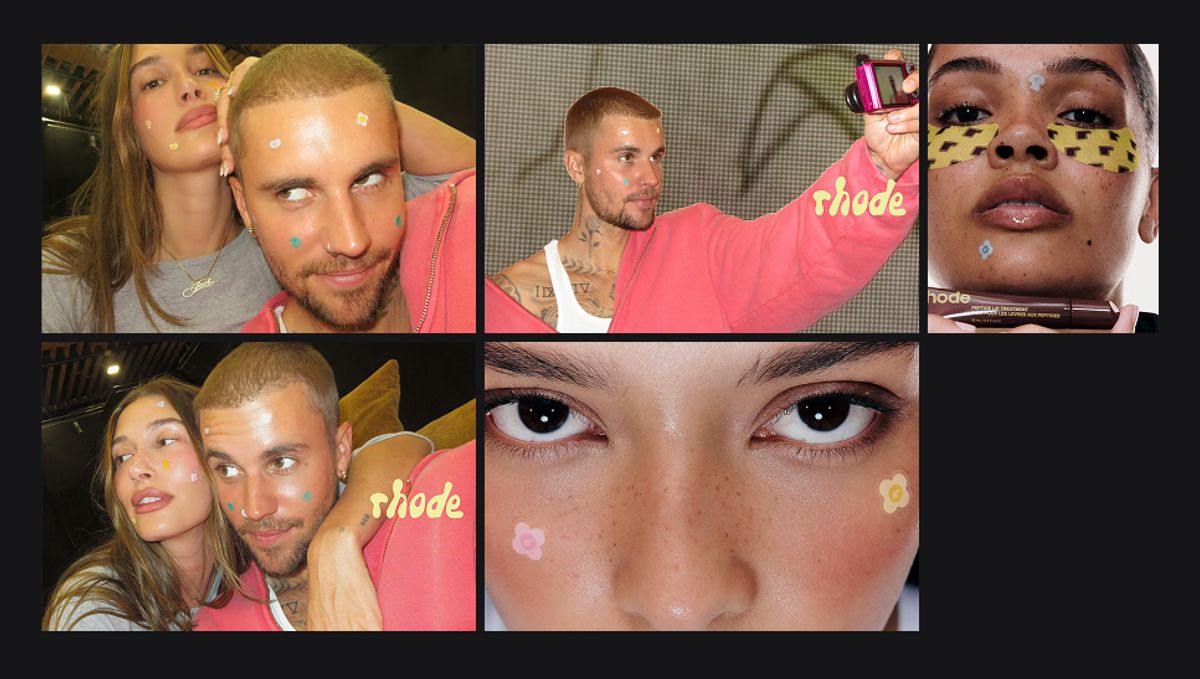
Rhode Skin — Celebrity Candid Static, Hailey and Justin Bieber Spotwear Patches
The candid aesthetic is a specific creative decision, not an accident. Low polish, real moments, unglamorous honesty — all of these need to be built deliberately to feel like they were not built at all. Study the difference between a badly lit candid and an intentionally stripped-down one. The latter has considered composition even when it looks like it does not.
For any acne, skin-condition, or skin-positive product, removing the glamour is the most powerful move available. An imperfect celebrity in your product earns more trust in a single frame than a perfect model earns across an entire polished campaign — because it gives the audience something real enough to believe in.
A real customer holding Cloud Paint blush in natural light. No studio. No retouching. Minimal text overlay. Copy: "I was skeptical at first, but after 2 weeks my skin routine changed forever."
That before/after arc in a single sentence - skepticism to conversion - is doing the same emotional work as a full testimonial video in under twenty words. The natural lighting confirms the image is not staged. The product in a real hand at an imperfect angle confirms this is not a brand shoot. The specific timeframe - two weeks, gives the claim a precision that "great results" never achieves.
Glossier has been running customer selfie UGC as paid Meta creative for years, and 2026 performance data consistently confirms it outperforms studio creative for beauty brands. The reason is structural. A selfie-style composition is native to the feed - it looks like something the viewer's own contacts would post. When the brain cannot quickly distinguish an ad from organic content, it processes the message before it has a chance to raise its guard.
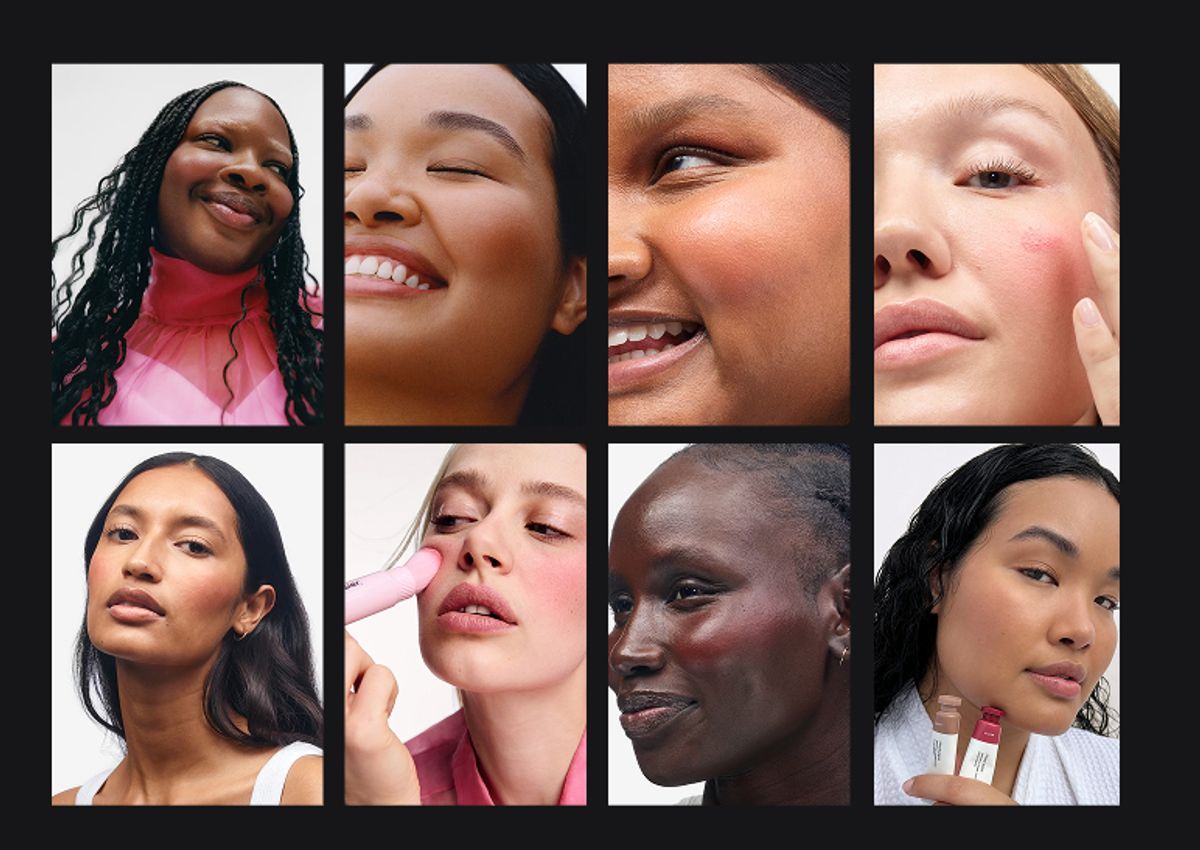
Glossier — Customer Selfie UGC Static, Cloud Paint
Customer selfie UGC works best when you preserve the native aesthetic of the source content - natural light, slight grain, realistic angles, no colour correction that reads as professional. The moment the image looks like it went through a brand retouching process, it stops being UGC and starts being a studio shot trying to look casual. Those are not the same thing and the viewer knows the difference.
The "skeptical to converted" copy structure is available to any brand with genuine positive reviews. Find the customer who was doubtful first and document their journey in their own words. That arc is more persuasive than any benefit claim because it starts from the viewer's current mental state rather than the brand's desired end state.
Casper ran a partnership ad through creator Polly Brindle's personal Instagram handle rather than their own brand page. Bedroom lifestyle setting. Natural product integration. Conversational caption. It looks completely indistinguishable from an organic post — because from the viewer's perspective, it essentially is one.
This is the most technically sophisticated UGC static format on this list — not because of the creative, but because of the distribution decision. Running paid creative through a creator's handle rather than a brand account removes the brand signalling that triggers ad recognition in the first place. The viewer sees a person they follow posting about something they use. The sponsored label is there if you look for it, but the default experience is organic content.
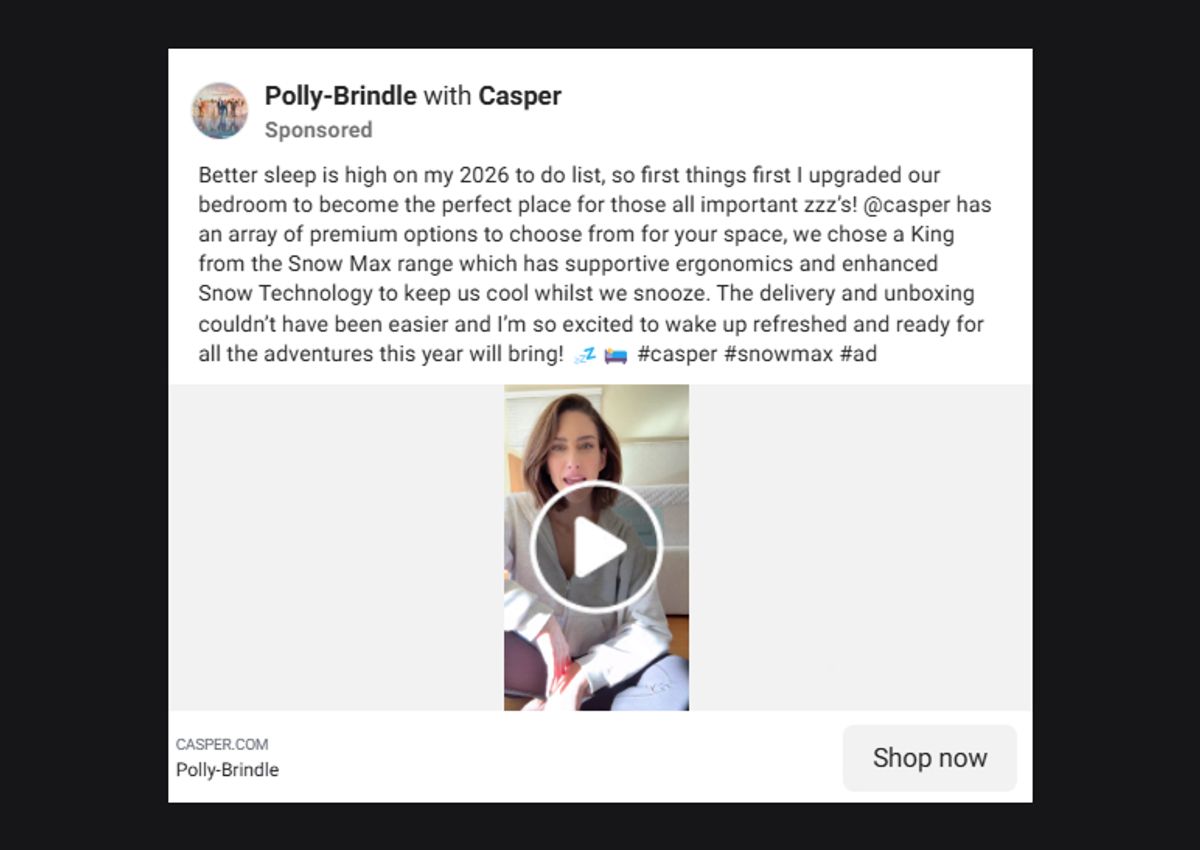
Casper — Partnership Ad Run Through Creator Handle
Partnership ad creative needs to genuinely fit the creator's existing aesthetic or the native-content illusion breaks immediately. Study the creator's organic posts before briefing the content. The lighting, caption style, framing, and tone all need to match what that person would naturally post. If it looks like a brand brief filtered through a creator's account, it performs like one.
The creator does not need a huge following for this format to work. What matters is the authenticity of the relationship between the creator and their audience — a 20,000-follower creator whose community trusts them will outperform a million-follower account whose endorsements are visibly transactional. Match the creator to the product and the audience, not to the follower count.
One extreme close-up of supermodel Anok Yai's lips with the Peptide Lip Treatment. No text. No background. No design elements. Just skin texture, product, and proximity.
This is the purest possible UGC static format — not because it was shot by a creator, but because it registers as content before the brain categorises it as an ad. The image is so close, so specific, and so stripped of advertising language that it bypasses the viewer's ad filter entirely. What you feel is the texture of the product on skin. What you want is to experience that texture yourself.
Sometimes a static does not need graphical elements at all. It just needs to capture the sensation of wanting something — and then trust that sensation to do the rest.
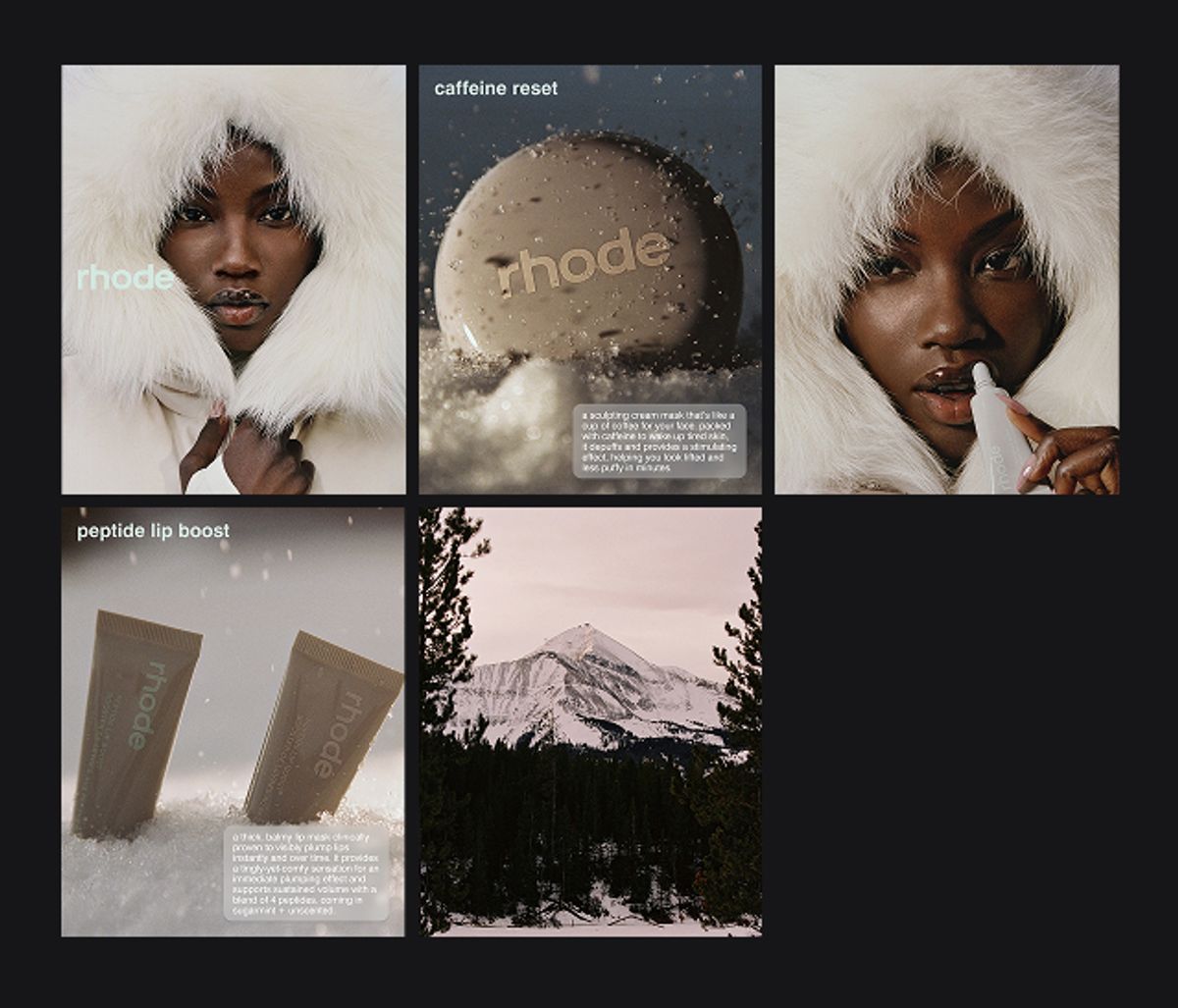
Rhode Skin — Extreme Skin Close-Up, Anok Yai Lip Treatment
Extreme close-up is one of the most underused static formats in beauty and skincare advertising below the luxury tier. The closer you get to the product on skin, the more the viewer can project themselves into the image. Remove the background, remove the copy, remove everything except the product and the skin it is on.
Permission to do less. This ad has nothing in it except the creative decision to get very close and show nothing else. That decision is the entire brief.
Every ad on this list has been running long enough to confirm it is working. The real question for any beauty brand is not whether these formats convert - it is whether your competitors are already running them in your category, and whether the window to differentiate is still open.
Vibemyad Ad Vault
Vibemyad Ad Vault is a dynamic ad library where you track the brands that matter to your business and view every ad they are running, all in one place. For beauty brands, this means you are not manually checking the Facebook Ad Library brand by brand and screenshotting what you find. You track your competitors inside Vibemyad Ad Vault and their ads surface directly in your library, continuously updated as new creative goes live.
What makes it genuinely useful for the kind of creative research this blog is about is the filtering. Vibemyad Ad Vault supports performance-based filters - so instead of browsing everything a competitor is running, you can filter down to the ads that are actually performing.
You can also filter by same industry and market, which means you are not just looking at what one competitor is doing — you are seeing what the entire category is running, what formats are appearing repeatedly, and where the gaps are. A format showing up across multiple brands in your category is a signal the approach is validated. A format that nobody in your category is running is a gap worth moving into.

Vibemyad Ad Spider
Vibemyad Ad Spider sits alongside Ad Vault as the brand-level intelligence layer - tracking creative themes across competitor campaigns, mapping how a brand's messaging has shifted over time, and surfacing the whitespace in your category that no competitor has claimed yet.
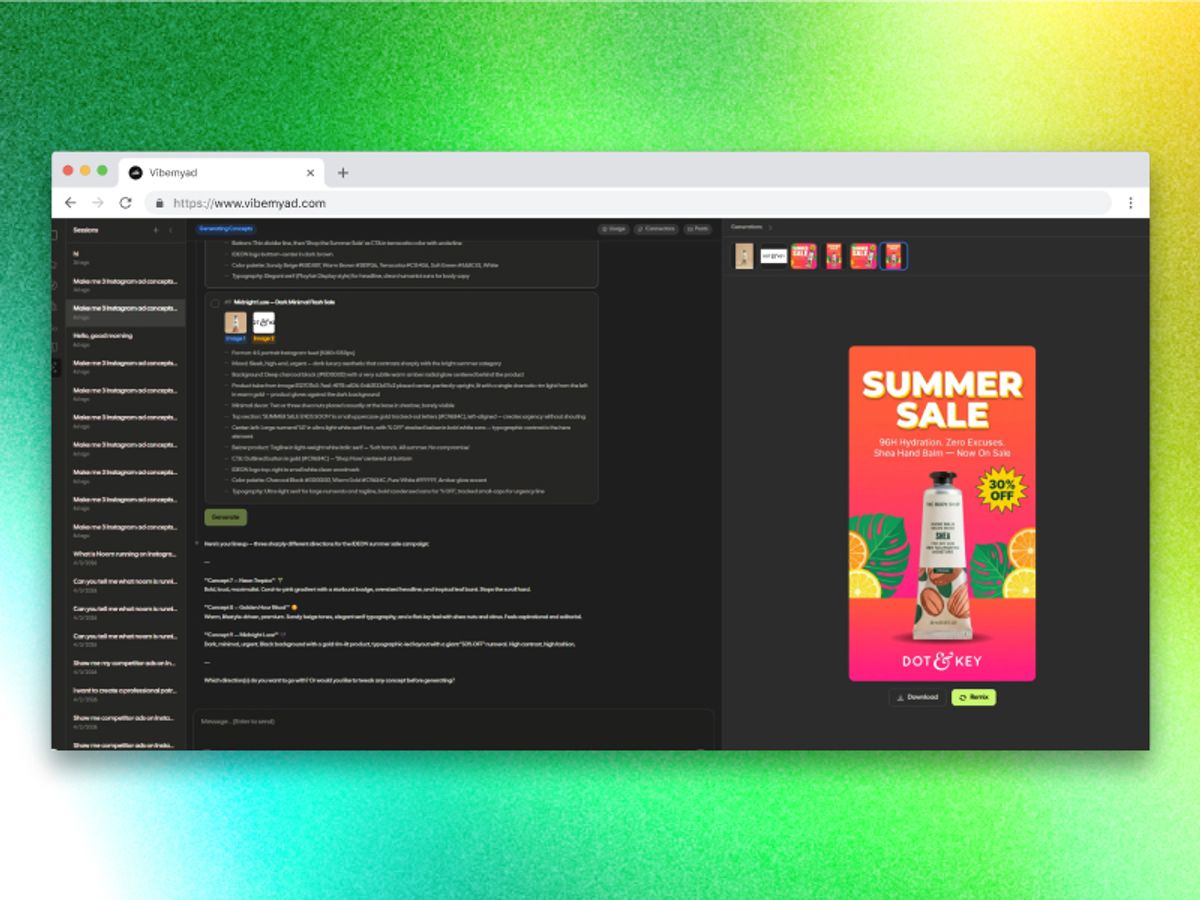
Vibemyad Ad Gen
Once you have found a format worth acting on - the ingredient-hero carousel, the extreme close-up, the editorial lifestyle integration - Vibemyad Ad Gen is where the production happens. Ad Gen has turned agentic. Rather than selecting from a preset menu of modes, you open a conversation with the Vibemyad Ad Gen agent and tell it what you want to create. You can describe the format, point to the concept you found in Vibemyad Ad Vault, explain your product and brand, and the agent handles the creative production through that conversation. It is ad creation through chat - which means the brief and the build happen in the same place, without switching tools or translating research into a separate design brief.
The workflow is straightforward.
Get notified when new insights, case studies, and trends go live — no clutter, just creativity.
Table of Contents


Rahul Mondal
Product, Design and Co-founder, Vibemyad

Rahul Mondal
Product, Design and Co-founder, Vibemyad

Rahul Mondal
Product, Design and Co-founder, Vibemyad