
February 28, 2026 • 10 min read

February 28, 2026 • 10 min read
A rejected baby monkey clutching a stuffed IKEA orangutan created a trend, and a live masterclass in emotional economics. The brands that understood narrative structure converted empathy into earned media at scale.
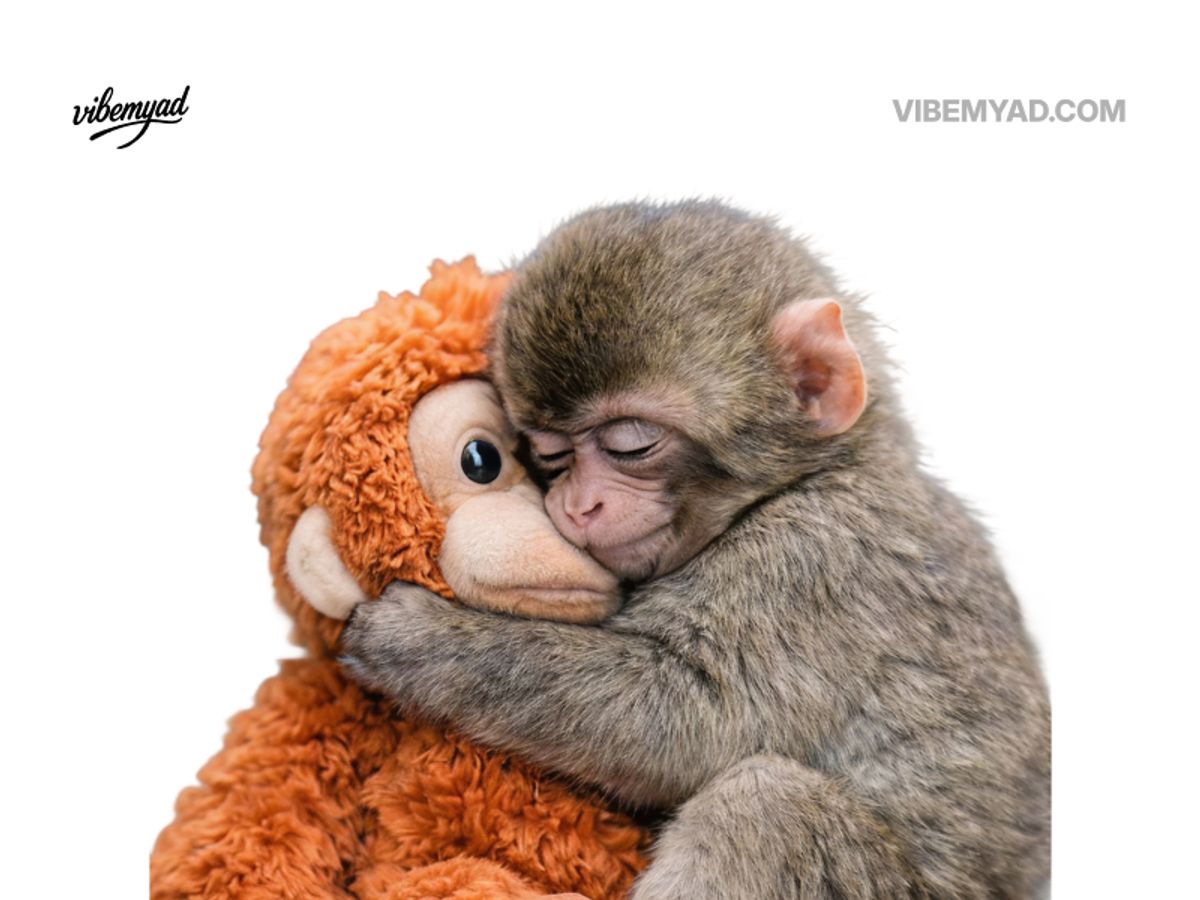
Abandoned Monkey Punch
As first reported by BBC and rapidly amplified across platforms such as Instagram, Facebook, and YouTube, a single image began circulating at extraordinary speed: a baby monkey, rejected by his mother, clutching a stuffed orangutan for comfort. Within hours, feeds synchronized around the same emotional stimulus. Millions paused. Millions shared. Millions felt the same thing at the same time.
Punch, a young Japanese macaque at Ichikawa City Zoo in Japan, had struggled to bond with other monkeys in his enclosure during the first months of his life. In the absence of maternal care, zookeepers provided him with a plush toy, an orangutan he carried, hugged, and dragged everywhere.
The symbolism required no explanation. It was abandonment and adaptation compressed into a single frame.
What elevated the story beyond momentary virality was its evolution. Subsequent footage showed Punch beginning to integrate, grooming other macaques, and even receiving affection, a critical marker of social acceptance in primate communities. The arc was unmistakable: rejection, coping, gradual belonging.
• For the public, it was a story that broke hearts before restoring hope.
• For marketers, it was something else entirely.
It was a high-velocity narrative asset, complete with vulnerability, absurdity, emotional deficit, and redemption trajectory. In a feed economy where attention is scarce, and meaning spreads faster than media budgets, Punch did not simply trend. He demonstrated how emotional capital can accumulate instantly, and how brands that understand narrative structure can recognize cultural moments not as memes, but as strategic opportunities.
When a moment like Punch’s spreads, what truly scales is emotional alignment. Research indexed by the National Library of Medicine shows that emotions are socially contagious. When people see others reacting similarly to a stimulus, their own emotional response intensifies. Engagement signals, comments, shares, and reactions act as validation cues, accelerating diffusion. Audiences respond not just to the image, but to the visible reaction around it.
“The observer’s tendency to automatically imitate and synchronize facial expressions, vocalizations, postures, and movements with those of another person, thereby leading to emotional convergence.” - Hatfield et al., as cited in research published in the National Library of Medicine
This creates synchronized empathy, a temporary state in which dispersed audiences experience a shared emotional frame simultaneously. That synchronization matters because attention in digital ecosystems is competitive. When a single narrative dominates the emotional bandwidth of a feed, adjacent content struggles to break through, and the moment becomes ambient context, not just a post.
From a marketing science perspective, this resembles what Jonah Berger’s research on virality has long highlighted: high-arousal emotions, whether awe, anger, anxiety, or empathy, are more likely to be shared. Punch’s story carried a high-arousal empathy trigger combined with incongruity (the stuffed orangutan), increasing transmission probability. The story did not merely travel; it accelerated. But scale introduces another dynamic: emotional compression.
In traditional brand building, emotional equity accumulates gradually through repeated exposures. In cultural flashpoints, it forms rapidly and collectively, as millions process the same narrative arc within hours. That density alters the economics of attention, and the “cost per emotional impression” effectively drops to zero for those who participate meaningfully.
However, aggregation creates fragility. Emotional waves crest and decay quickly, with peak engagement windows often lasting just 24 to 72 hours before a sharp decline. The strategic variable, therefore, is organizational readiness. When emotion aggregates at scale, attention centralizes, social proof compounds, and cultural memory begins forming in real time. For brands, the question is not whether to “join the trend.” The question is whether the moment contains transferable narrative equity that aligns with their long-term positioning.
• If it does, emotional aggregation becomes leverage.
• If it does not, participation becomes noise.
Punch’s moment demonstrates that in the age of algorithmic distribution, cultural capital forms in bursts. Brands that understand the mechanics of emotional aggregation are not chasing virality; they are evaluating when synchronized empathy creates strategic entry points, a distinction that separates reactive posting from deliberate brand building.
To understand why this moment traveled at exceptional velocity, we have to move beyond “it was cute” or “it was sad.” Virality at this scale is rarely accidental. It is structural. Punch’s image combined multiple narrative triggers that, when layered together, created disproportionate transmission power.
Infant mammals trigger what evolutionary psychologists describe as the baby schema effect: large eyes, small body proportions, and perceived helplessness activate protective instincts across species. Punch was not just a monkey; he was visibly young and visibly alone.
That visual configuration short-circuits rational filtering. Before viewers process context, they process vulnerability. For brands, vulnerability is one of the highest-converting emotional states in storytelling because it lowers cognitive resistance. When audiences feel protective, they are less skeptical and more receptive.
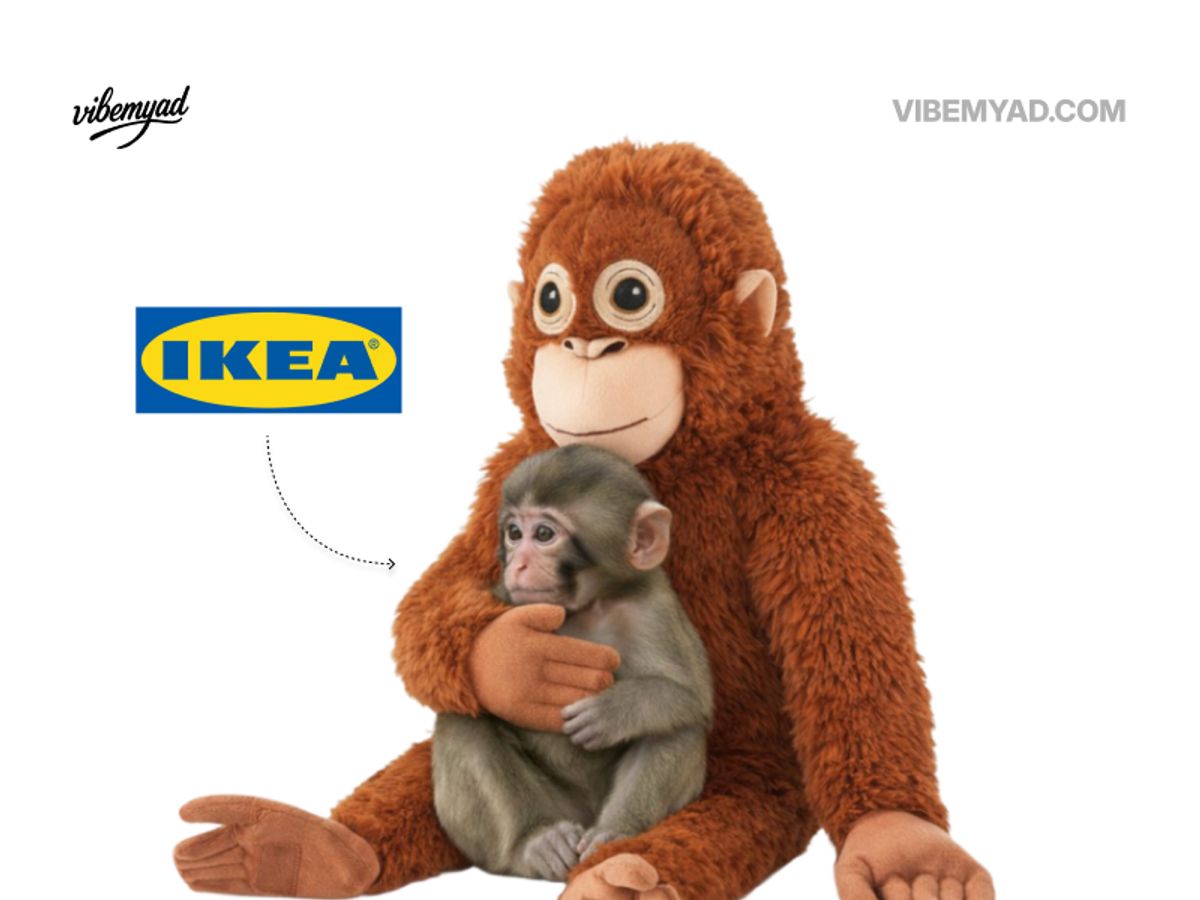
Ikea Orangutan
The stuffed orangutan was not incidental. It functioned as symbolic amplification. A plush toy replacing maternal comfort introduces absurdity without diminishing empathy. That incongruity increases memorability. It gives the image a narrative hook that survives scrolling speed.
In semiotic terms, the toy became a stand-in for absence. It visually encoded abandonment without requiring explanation. The story could be understood instantly, globally, across languages. In brand communications, symbolic substitution is powerful because it compresses complex emotional narratives into a single object. The toy was the headline.
Most viral images capture a moment. Punch’s story delivered progression.
• Rejection
• Coping
• Gradual belonging
The follow-up footage showing social integration transformed a static image into a serialized story. That shift matters because narrative continuation sustains engagement beyond the first emotional spike. Brands rarely benefit from one-off virality. They benefit from arcs. Punch’s trajectory provided an evolving storyline that extended cultural relevance beyond the initial post.
The internet amplifies outrage quickly, but outrage is polarizing. Punch’s story generated high emotional arousal without ideological division.
• No partisan framing.
• No cultural fault lines.
• No moral combat.
That neutrality allowed universal participation. Everyone could share without signaling tribe membership. This dramatically increases distribution efficiency. For brands, this is a crucial filter: the highest-yield cultural moments are those with strong emotion and low reputational risk.
Algorithmic feeds reward content that communicates instantly. Punch’s image required zero explanation. No headline necessary. No context block required.
In attention economics, comprehension latency matters. The faster a viewer understands the emotional frame, the higher the likelihood of engagement. Punch’s image had near-zero latency. Brands often overcomplicate storytelling. This moment demonstrated the opposite principle: compression wins.
Humans are wired to project human emotions onto animals. Punch was not interpreted as “a macaque experiencing social isolation.” He was interpreted as “a child feeling rejected.”
Anthropomorphic framing increases emotional accessibility. It collapses the cognitive distance between species and allows viewers to map their own childhood memories, insecurities, or social experiences onto the image. The result is emotional personalization at scale. When audiences see themselves in a narrative, they do not just consume it. They circulate it.
Emotional virality is context-dependent. The story surfaced in a digital environment already saturated with conversations about loneliness, belonging, and connection. When macro-cultural themes align with micro-stories, amplification accelerates. Punch’s narrative resonated because it mirrored broader human anxieties about isolation in a hyperconnected world.
Brands that monitor cultural undercurrents can identify when a seemingly minor story intersects with broader societal tensions. That intersection is where narrative leverage compounds.
• Execution: A Kuch Kuch Hota Hai clip in which Kajol symbolically threatens Punch’s bullies.
• Missing movement: Justice. Emotional wrongs receive cinematic correction.
• Why it worked: Netflix’s territory is storytelling. The brand solved a story using its own narrative language, perfect meta-commentary.

Ikea zoo donation
• Execution: “Punch chose wisely,” paired with an orangutan product shot and a zoo donation announcement.
• Missing movement: Gratitude. The toy that comforted him is celebrated.
• Strategic brilliance: They did not create Punch’s story; they completed it.
• Execution: Simba from The Lion King extends a paw to Punch with the line, “Hakuna Matata begins.”
• Missing movement: Found family. The circle of life welcomes the rejected.
• Why it worked: Disney owns redemption-through-belonging narratives.
• Execution: Punch sharing a Coke with the orangutan, captioned “Together tastes better.”
• Missing movement: Shared joy. A simple product becomes an emotional bridge.
• Why it worked: The universal red branding plus the monkey visual created instant recognition and emotional continuity.
• Execution: “Punch’s next adventure starts here,” paired with a zoo tour listing.
• Missing movement: Exploration. Isolation evolves into shared discovery.
• Why it worked: A perfectly on-brand experiential pivot.
BRAND TERRITORY + MISSING MOVEMENT = NARRATIVE OWNERSHIP
• IKEA: Toys - Companionship gratitude
• Disney: Stories - Found family resolution
• Coca-Cola: Refreshment - Shared joy moments
• Airbnb: Travel - Adventure belonging
When millions experience the same unresolved arc simultaneously, narrative direction becomes scarce territory. The first credible participant to provide that direction can shape how the moment is remembered.
Moments like Punch’s appear spontaneous, but they share identifiable characteristics:
• A high-empathy protagonist.
• A clear emotional deficit.
• A visually repeatable asset.
• Built-in incongruity.
• A trajectory toward hope.
• Rapid velocity acceleration across platforms.
These are measurable signals. AI-powered creative intelligence systems, including platforms such as Vibemyad, analyze creative ecosystems in real time, detecting emotional clustering, replication patterns, and velocity spikes.
This transforms participation from reactive improvisation into structured deployment. Instead of asking, “Is this trending?” High-performance teams ask, “Does this contain narrative capital?” And if it does: Which emotional bridge aligns with our brand architecture?
Cultural flashpoints compress years of brand equity formation into hours of concentrated empathy. Teams must assess emotional temperature and narrative alignment before participating.
The 24–72 hour window demands agility, but speed without alignment creates brand noise. Pre-defined territories and rapid approval systems determine whether the response becomes leverage.
Deep impressions do not guarantee brand recall; associative transfer does. Participation only works when the moment maps naturally to long-term positioning.
Emotional clustering, replication velocity, and meme stabilization are measurable signals. AI-enabled systems convert these signals into structured, timely deployment decisions.
When millions share an unresolved arc, emotional direction becomes scarce territory. Brands that credibly supply the missing movement shape how the moment is remembered.
Punch did not become culturally significant because he was a monkey. He became significant because he embodied rejection, adaptation, and fragile hope in a single, repeatable visual narrative.
Book a free demo with Vibemyad to stay ahead of cultural surges, detect emotional velocity before it peaks, and turn emerging moments into measurable brand advantage.
Get notified when new insights, case studies, and trends go live — no clutter, just creativity.
Table of Contents


Arpita Mahato
Content Writer, Vibemyad


Rahul Mondal
Product, Design and Co-founder, Vibemyad


Ananya Namdev
Content Writer, Vibemyad