March 03, 2026 • 4 min read

March 03, 2026 • 4 min read
The internet declared a winner the moment Nano Banana 2 launched. The actual results are more interesting than that.
GPT Image 1.5 is OpenAI's latest image generation model built natively into the GPT-5 ecosystem. Tighter instruction following, stronger text rendering, better consistency across iterative production workflows.
Nano Banana 2 - launched February 2026 delivering Pro-quality realism at Flash-tier speed. It dominated social media immediately with cinematic outputs that triggered a wave of "game over" comparisons.
Both are capable. Both are available now. They just optimise for different things — and that distinction matters significantly depending on what you're building. For the full breakdown of what Nano Banana 2 brings to marketing workflows, see our Nano Banana 2 guide for marketers.
Stronger micro-texture, more natural lighting, better depth perception. For lifestyle shots and social creative where the first half-second decides everything, Nano Banana 2 looks more photographic. GPT Image 1.5 is clean — just not as visually striking per prompt.
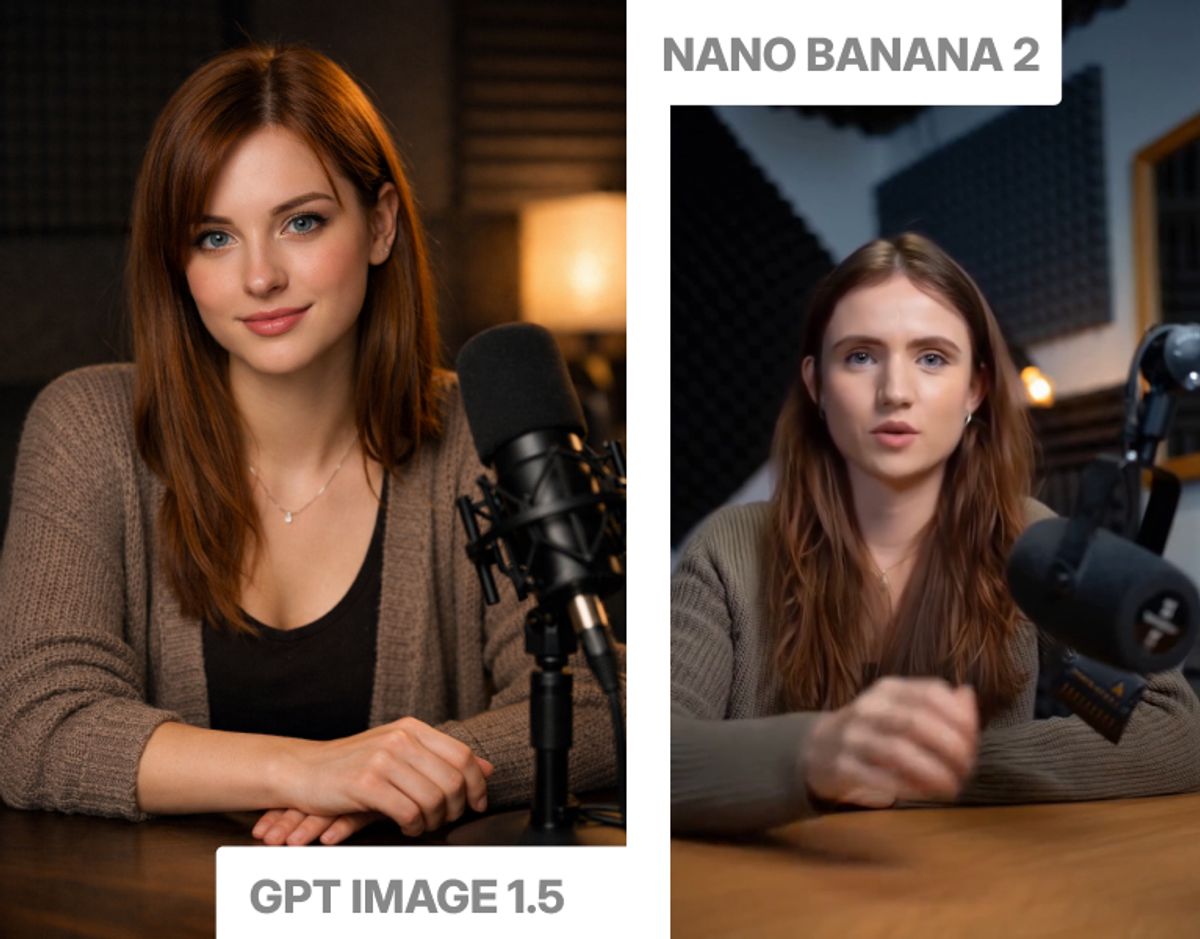
Skin Realism Image generated using two models
Exact object placement, controlled backgrounds, multi-element compositions that follow the brief precisely. For production ad assets built at scale, obedience beats aesthetics. Nano Banana 2 looks better. GPT Image 1.5 does what you asked.
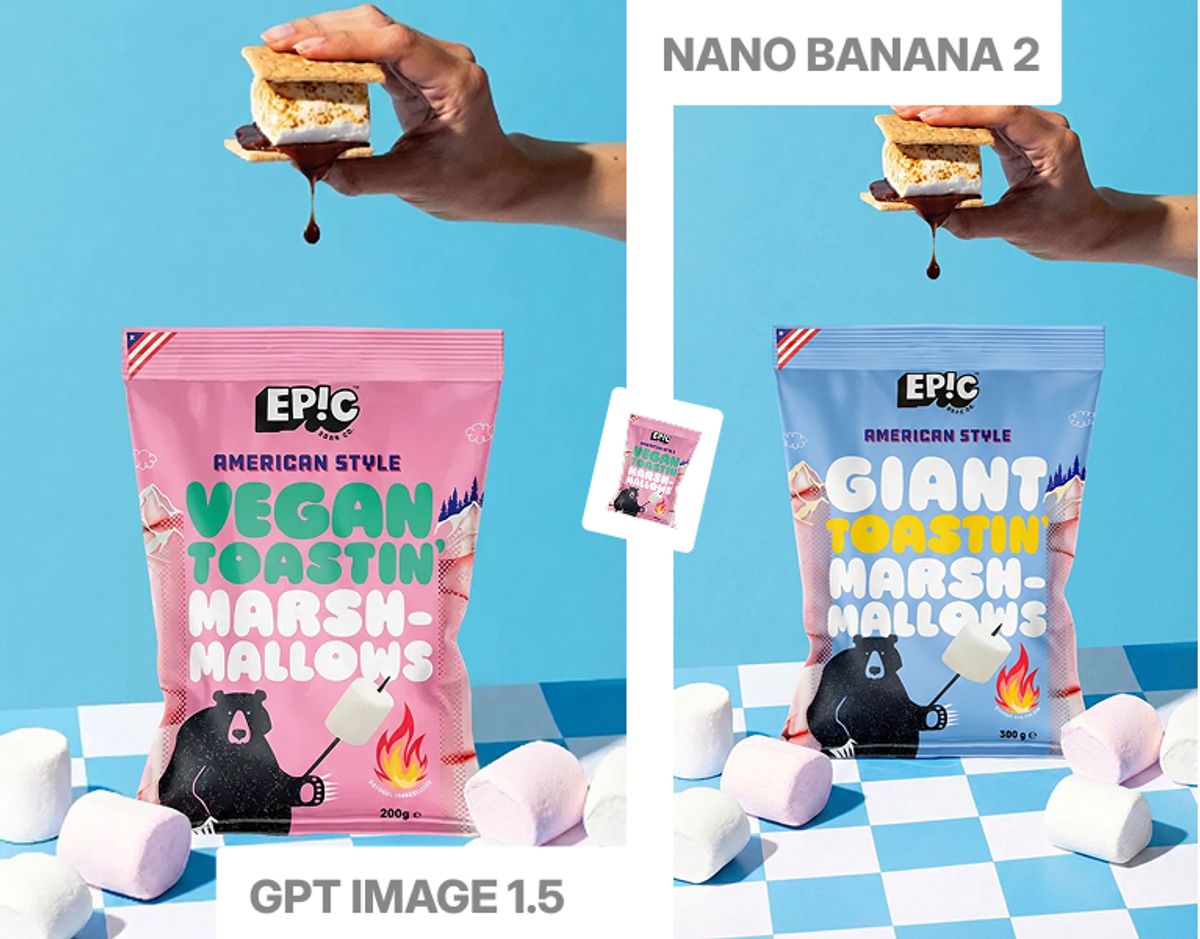
Product Mockup Ad made using two models
Logo mockups, ad copy overlays, poster typography — GPT Image 1.5 renders these with fewer distortions and spacing errors. Nano Banana 2 still struggles with character-level precision in certain contexts. A distorted headline or mis rendered price point is not a usable ad asset. For any creative with text inside the image, GPT Image 1.5 is the safer choice.
Complex structured prompts with specific placement, composition, and perspective? GPT Image 1.5 follows them. Nano Banana 2 interprets them - which is useful for loose, mood-driven briefs and a liability for production workflows where every element has a defined position. For advertising teams working from structured creative briefs, this difference compounds across an entire campaign.
Five product images for a campaign. Four brand visuals for a launch. A series of ad variants for testing. GPT Image 1.5 holds consistent geometry, lighting, and composition across all of them. Nano Banana 2 drifts between iterations — fine for one-off social posts, a significant rework problem for coordinated campaigns where visual consistency is non-negotiable.
Faster for ideation and exploration. When a team needs to explore twenty visual directions before committing to three, Nano Banana 2 shortens the loop. For the creative exploration phase of a campaign, that speed is a genuine practical advantage.
Use Nano Banana 2 when you need visual impact fast. Lifestyle imagery, cinematic hero shots, social creative where stopping the scroll is the primary goal. Early-stage ideation where you're exploring directions before committing to production.
Use GPT Image 1.5 when you're building production-ready ad assets. Product mockups with specific placement requirements. Campaign series where consistency across assets is non-negotiable. Any creative requiring readable text inside the image.
The honest verdict: neither wins everything. Nano Banana 2 for realism and exploration. GPT Image 1.5 for production and precision. The most effective advertising workflows use both - the right model for each specific task rather than one model for the entire workflow.
That is exactly what Vibemyad's Ad Gen does automatically. Both Nano Banana 2 and GPT Image 1.5 are available inside Ad Gen right now. Rather than requiring teams to choose manually - and risk using the wrong model for the job - Ad Gen selects the right image model based on what the task actually requires.
Building a structured product mockup? GPT Image 1.5. Generating a lifestyle hero image? Nano Banana 2. The selection is invisible. The output is better.
For a broader look at how this fits into an AI-powered advertising workflow, see our guide on AI tools for digital marketing.
Get notified when new insights, case studies, and trends go live — no clutter, just creativity.
Table of Contents


Rahul Mondal
Product, Design and Co-founder, Vibemyad


Ananya Namdev
Content Writer, Vibemyad

Ananya Namdev
Content Writer, Vibemyad