February 26, 2026 • 9 min read

February 26, 2026 • 9 min read
Why copycat strategies plateau, what's quietly draining your budget, and the 10 AI tools that change how the game gets played — from competitive intelligence to creative execution.
The most common mistake in digital advertising isn't a bad creative — it's a borrowed one. When a format works, the industry converges on it fast. UGC testimonials. Founder selfie hooks. Before-and-after splits. Red urgency CTAs. These formats proved themselves. Which is exactly why they stop working.
McKinsey's Technology Trends Outlook (2025) identifies creative homogenization as a structural risk for brands adopting widely distributed templates. When creative strategies converge across a category, differentiation collapses — and audience attention follows.
A 2025 meta-analysis on ResearchGate reinforces this: when dominant ad structures saturate a market, click-through rates decline measurably due to audience desensitization. The mechanism is simple — familiarity kills curiosity, and curiosity is what earns the click.
"This isn't an argument against proven frameworks. It's an argument for knowing when those frameworks have saturated your market."
In 2026, competitive advantage in advertising belongs to teams who use artificial intelligence tools for digital marketing not to mimic the market, but to read it — to detect saturation before performance declines, find whitespace before competitors do, and build creative systems that differentiate by design, not accident.
Modern marketing teams are not constrained by ambition or access to tools. They are constrained by structural friction inside the digital ecosystem. These five challenges are quietly compounding across most performance teams right now.
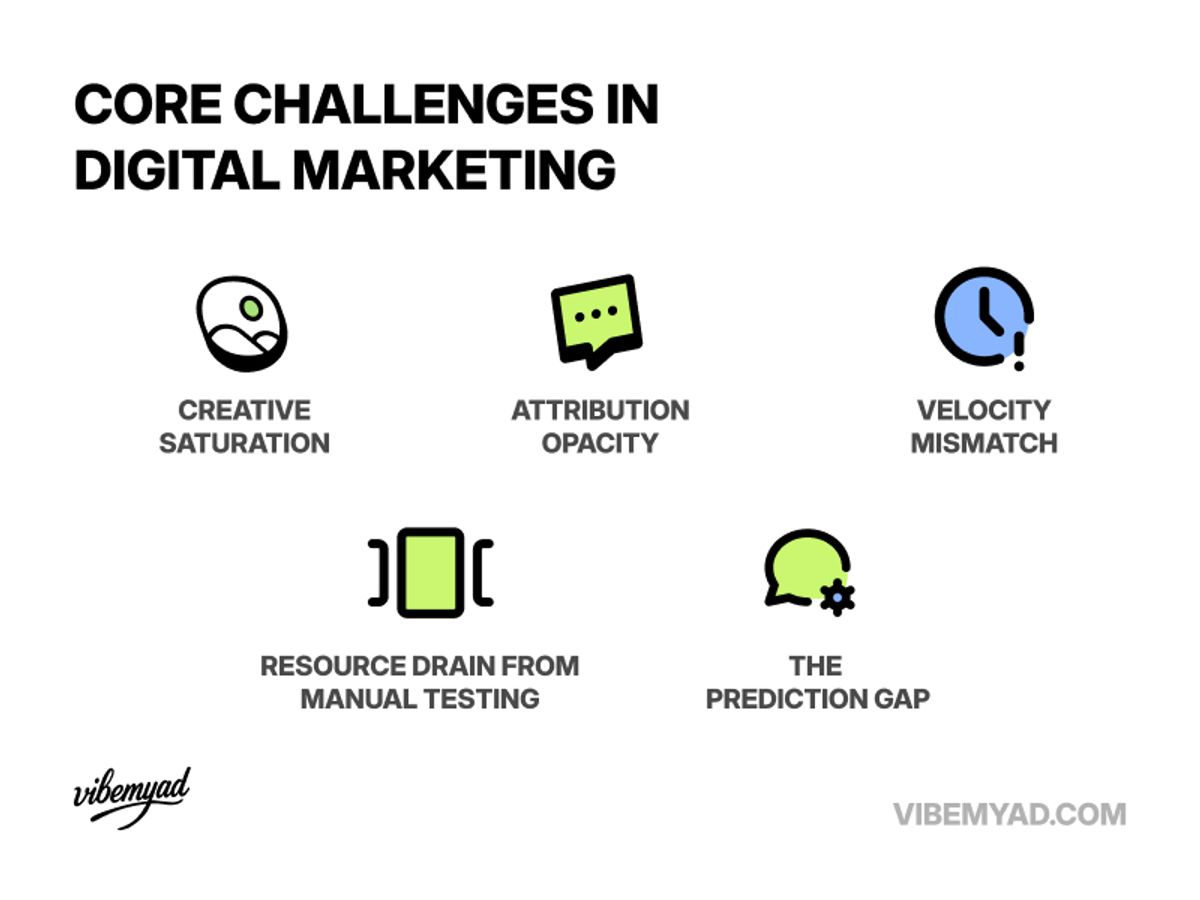
Core Challenges in Digital Marketing
Scroll through any Meta ad feed and the pattern is immediate — the same UGC testimonial structure, the same "three mistakes you're making" hook, the same before-and-after.
Initially, these formats work. They are proven. They convert. But fatigue sets in fast, often within 7-10 days. What marketers experience:
By the time the numbers signal a problem, significant budget has already been wasted on exhausted creative.
Automation has simplified campaign setup while complicating performance clarity. Performance Max and Advantage+ optimize across placements and audiences — but obscure causal drivers.
When performance improves, marketers are left asking:
Media buyers can't isolate structural gains from redistribution effects.
Digital culture operates in 24-hour cycles. Internal production typically runs on multi-week timelines. By the time a brief is written, scripts approved, assets produced, and campaigns uploaded — the moment has passed.
Marketers see trends in real time, viral hooks, emerging formats, and trending audio, but cannot operationalize at the same speed. The result:
A/B testing is foundational to performance marketing, but traditional models are structurally expensive. Launch 10 creatives and statistically only 2–3 will materially outperform.
From a leadership perspective, it creates tension:
Testing is necessary, but wasteful when executed without predictive filters that eliminate weak variants before they go live.
Perhaps the most overlooked challenge is the absence of a structured pre-launch evaluation. Most ads go live without formal scoring frameworks for:
Creative approval is often subjective. Stakeholder opinions dominate. True validation only happens after spending. This creates a reactive loop
McKinsey & Company: Companies that effectively embed AI into core marketing workflows see 20–30% productivity improvements and 5–15% revenue uplift. Yet fewer than 30% report fully integrating AI into their marketing decision-making. The gap between awareness and implementation is where competitive advantage currently lives.
Most marketers experience AI as a feature — auto-generated copy, smart bidding, automated targeting. That framing understates what modern AI for digital marketing does at scale.
Deployed properly, AI is not a tool. It is a closed intelligence loop that converts chaotic market signals into structured, repeatable decision systems.
Intelligence Ingestion
AI engines continuously analyze active ads across Meta, TikTok, and Google — capturing creative format, hook structure, offer positioning, CTA patterns, engagement velocity, and runtime duration.
This converts competitive research from anecdotal observation into quantitative market intelligence.
Performance Pattern Analysis
Raw data is not insight. AI evaluates ads across scroll-stop probability, emotional polarity, narrative tension, offer clarity, and visual dynamism.
High-performing ads rarely succeed randomly — they follow structural patterns that AI reverse-engineers and surfaces. Instead of "let's recreate that ad," AI answers: what architecture drove its lift?
Brand-Aligned Remixing
Once high-performing architectures are identified, AI adapts them to your brand system — injecting fonts, colors, design tokens, tone guidelines, and product visuals. What previously required a full production cycle can now be rebuilt in under 60 seconds.
The output is a structured adaptation of a proven framework through your own identity system.
Pre-Launch Prediction & Deployment
AI introduces pre-launch probability modeling — forecasting estimated CTR range, predicted CPA band, and fatigue timeline before a creative goes live. This filters low-probability variants before they consume budget.
Once validated, AI automates distribution: platform-specific resizing, format adaptation, dynamic headline testing, and budget allocation based on early signal strength.
Each tool is evaluated on what it does, when to deploy it, how to use it, and what it costs.
Most performance decay starts in the first three seconds. Foreplay filters low-performing hooks before you fund them, reducing testing waste and improving creative confidence.
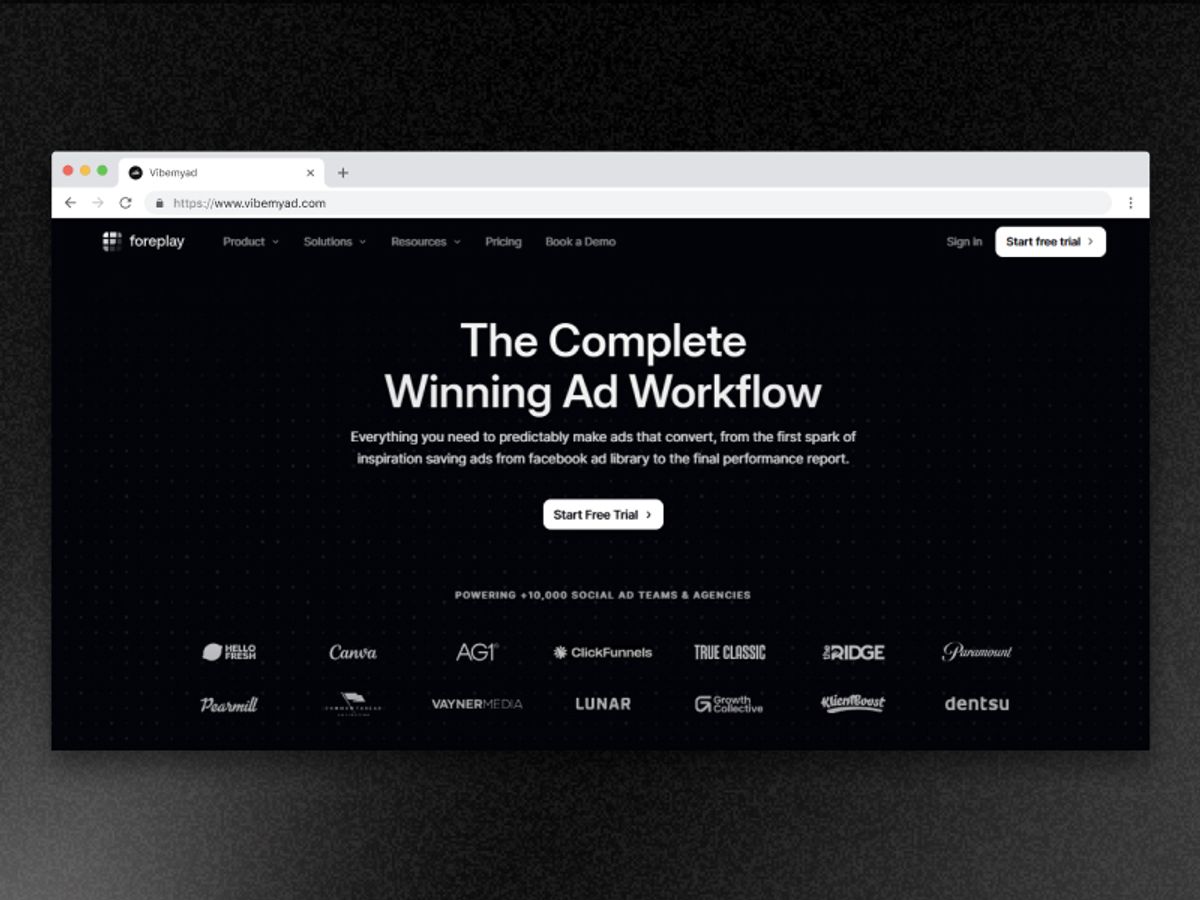
Foreplay
For brands struggling with creative velocity, Motion compresses editing cycles and aligns content with real-time social formats.
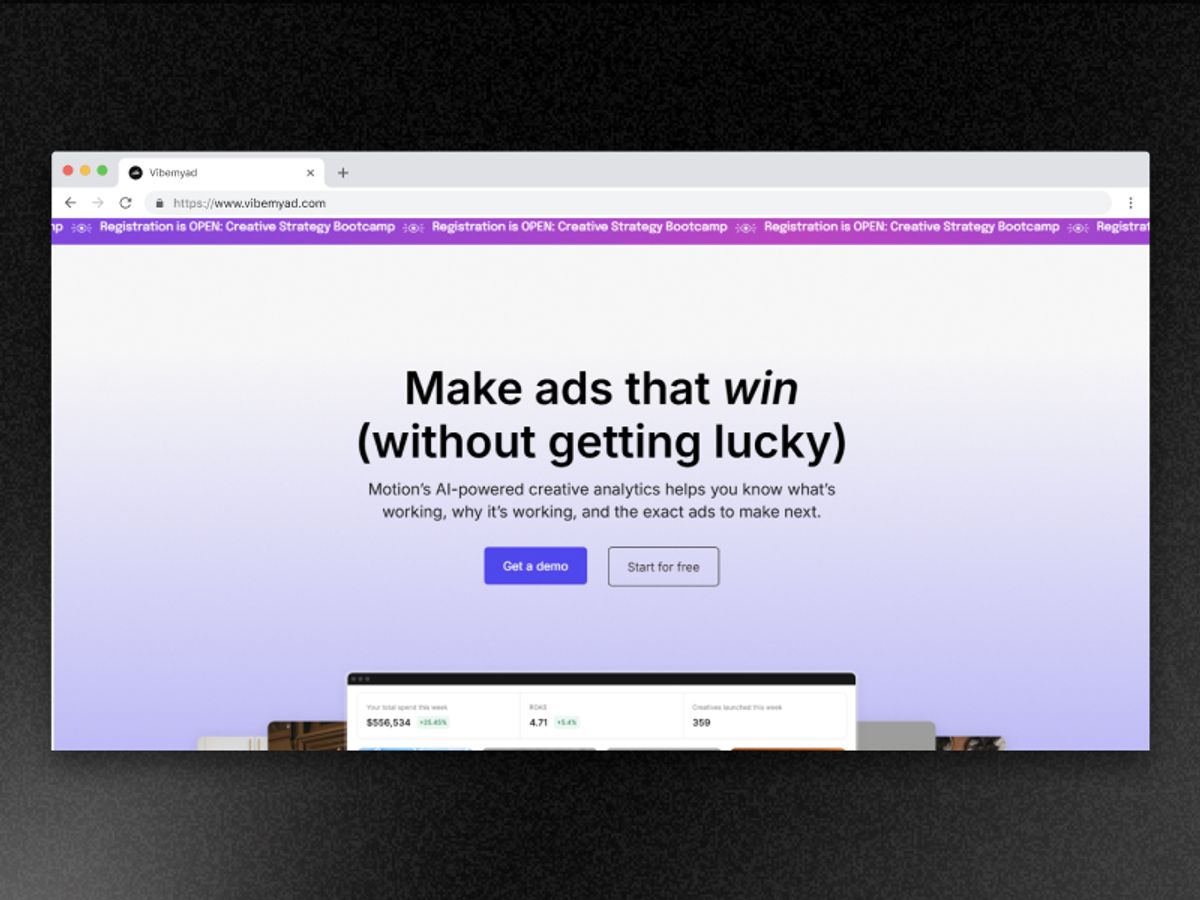
Motion App
Instead of guessing what works, you observe durability. Ads running 60-90+ days often signal structural strength.
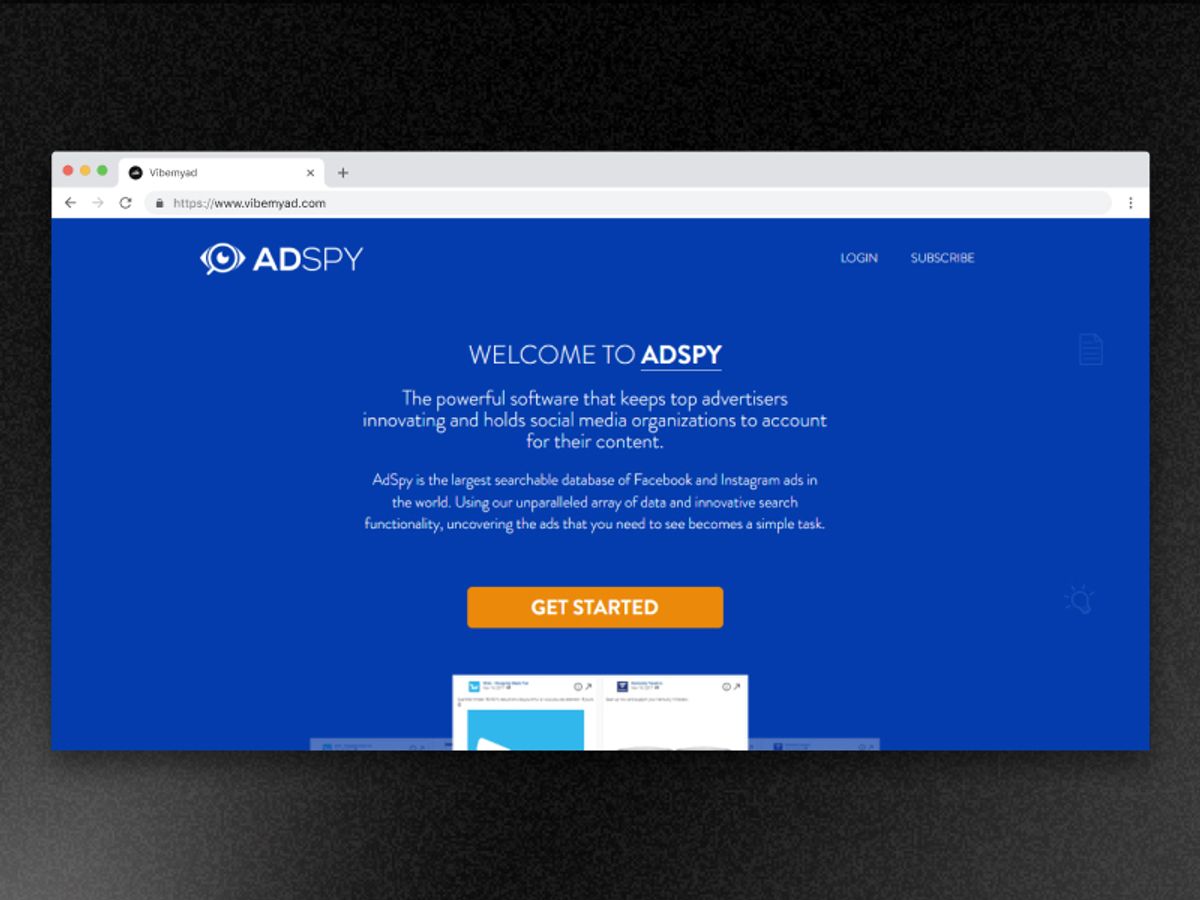
Ad Spy
Ideal for brands running multi-angle testing where speed determines learning velocity.
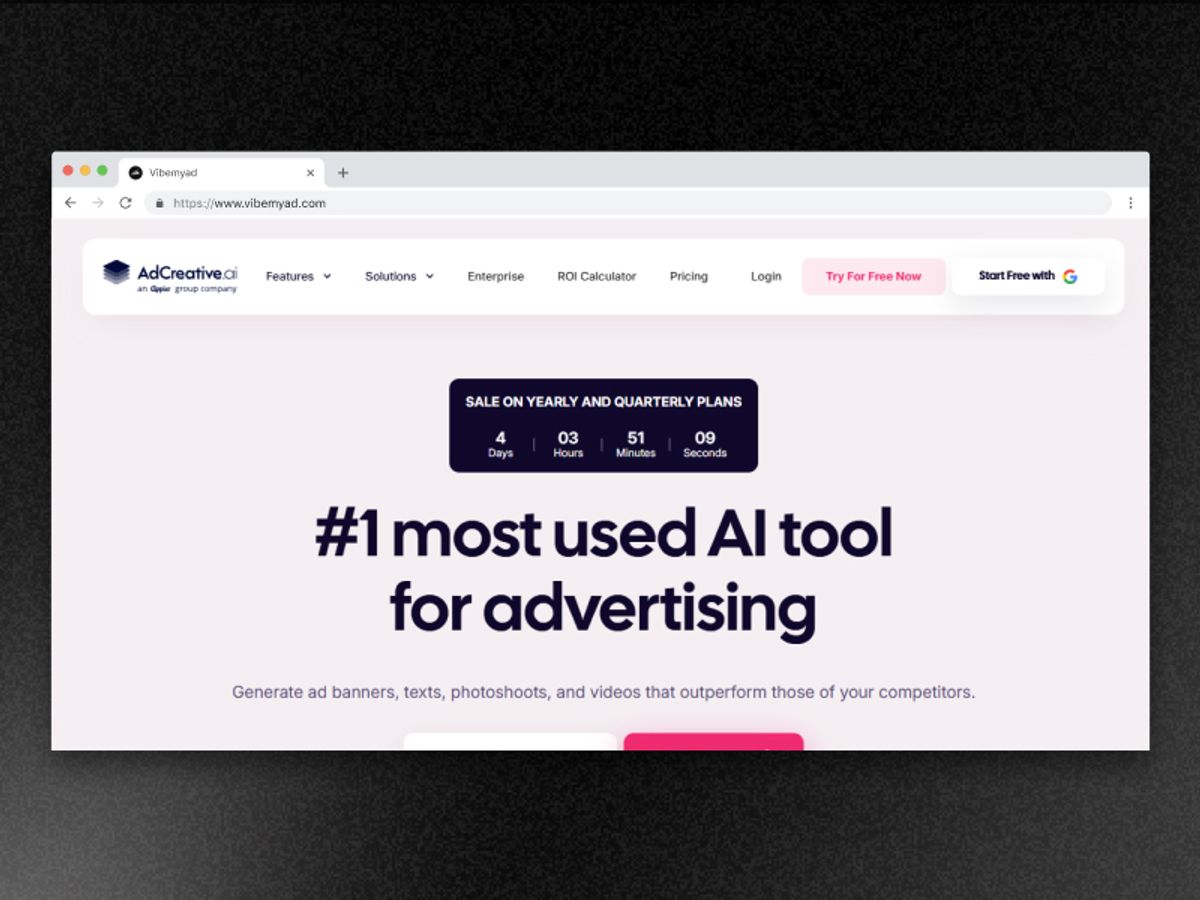
AdCreative.ai
In short-form ecosystems, timing influences cost as much as targeting.
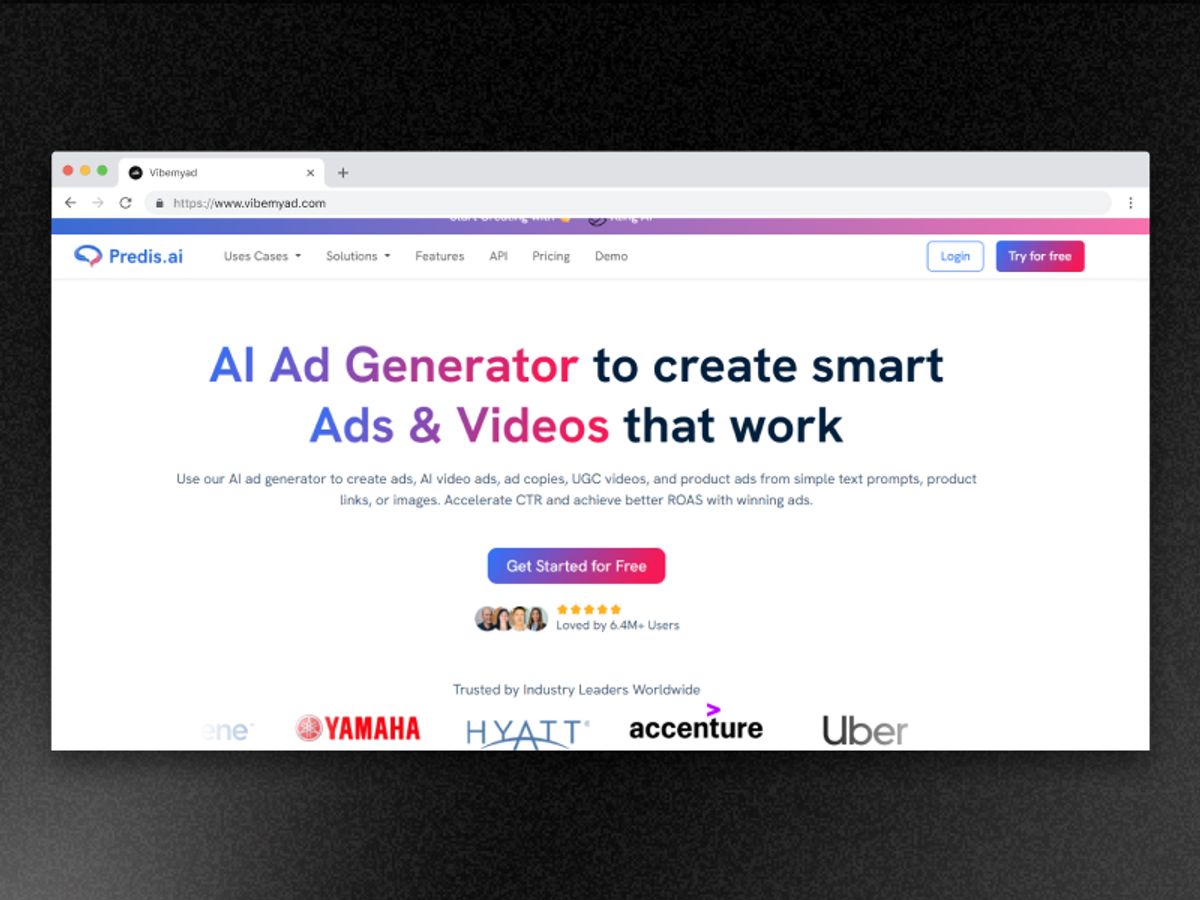
Predis.ai
If an ad survives 90+ days, it likely has structural efficiency, not just temporary virality.
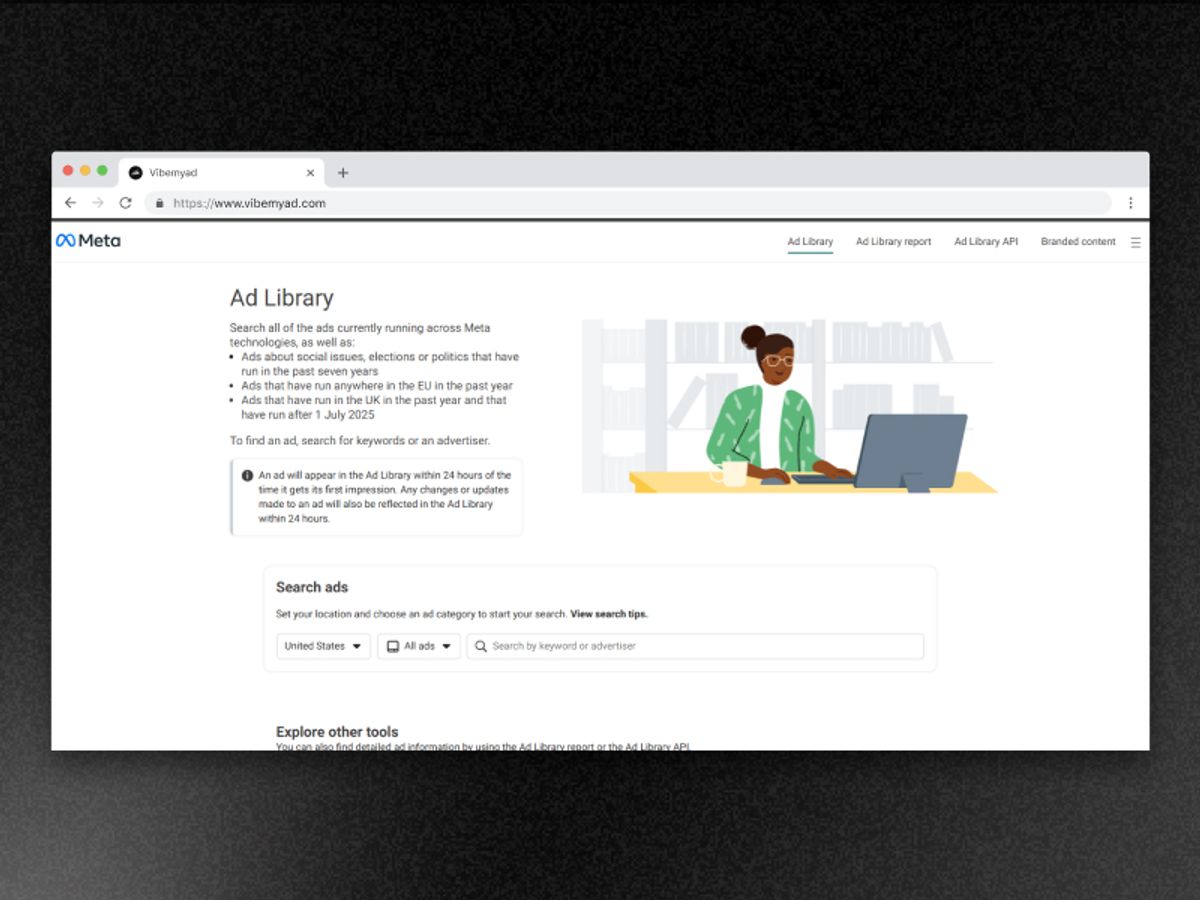
Meta Ad Library
Unlike traditional ad spy tools, Vibemyad integrates research + analysis + generation into a single workflow, closing the intelligence loop.
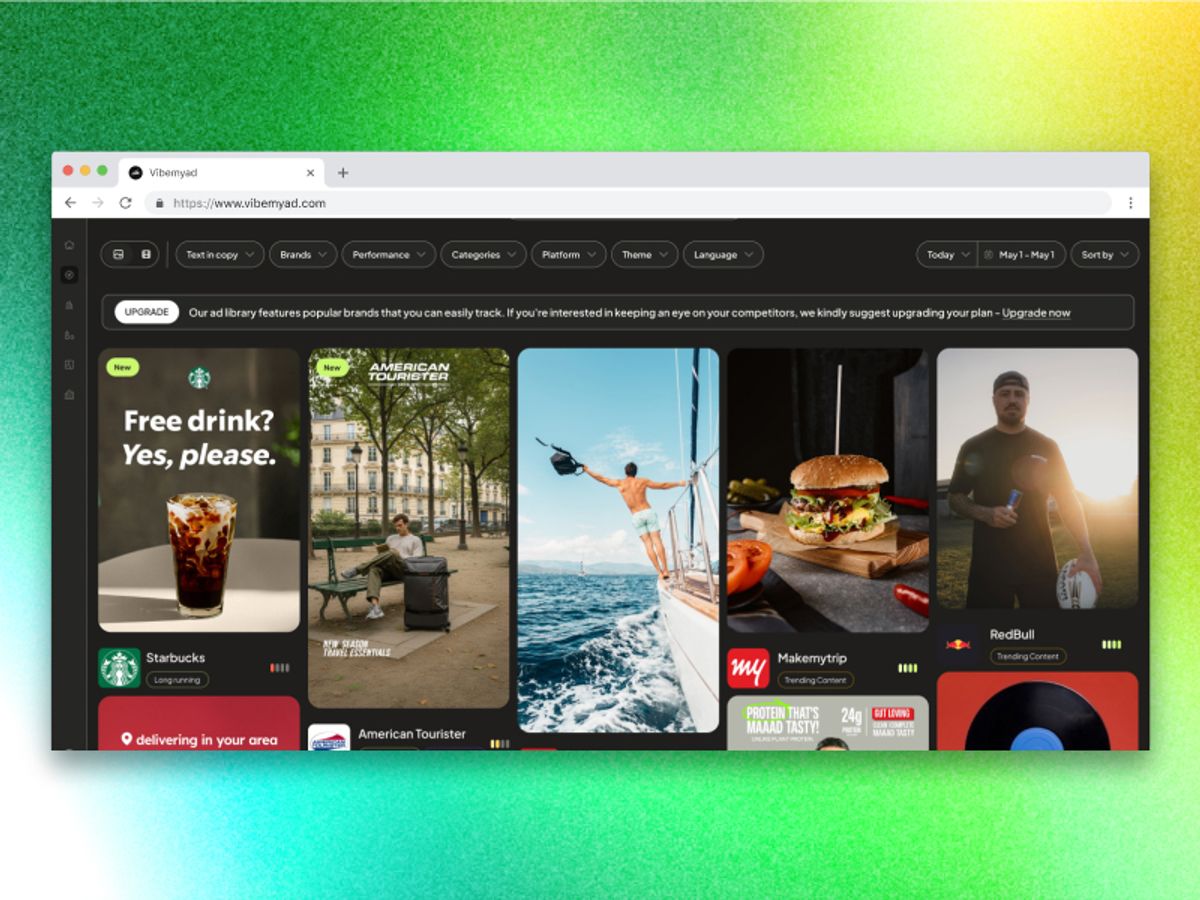
Vibemyad
Perfect for scaling display without expanding design headcount.
Segmentation is no longer demographic; it’s behavioral and predictive.
Critical for brands operating across search, social, and display ecosystems.
By combining predictive creative scoring with automated variant generation, brands can achieve:
When creative waste drops and performance confidence rises, capital turns faster. In some cases, brands see a potential 12-day payback window on AI investment. This is not marginal optimization. It is financial acceleration.
One skilled marketer can now manage:
Instead of scaling teams linearly with budget, you scale systems. Operational bottlenecks shrink while output expands. This is particularly transformative for SMBs running lean growth teams.
AI introduces pre-launch modeling:
This eliminates blind experimentation. The result is controlled deployment rather than hopeful deployment.
AI enables behavioral micro-segmentation. Modern systems combine:
Instead of one ad per audience group, you deploy dynamically tailored narratives. Engagement lift typically ranges between 20% and 47%, depending on the vertical and funnel stage.
This aligns with findings from McKinsey & Company, which report that personalization leaders significantly outperform peers in revenue generation and marketing efficiency.
AI-powered intelligence systems continuously analyze:
These signals allow brands to detect saturation up to three weeks before measurable performance decline. Instead of reacting to falling CTR, marketers preemptively rotate and remix.
When AI tools are deployed across research, creative, prediction, and attribution — not just content generation — performance doesn't improve incrementally. It compounds.
Your competitors are already building intelligence-led creative systems. The question is whether you're reacting to that or getting ahead of it.
Get notified when new insights, case studies, and trends go live — no clutter, just creativity.
Table of Contents


Arpita Mahato
Content Writer, Vibemyad


Rahul Mondal
Product, Design and Co-founder, Vibemyad

Rahul Mondal
Product, Design and Co-founder, Vibemyad