
January 09, 2026 • 11 min read

January 09, 2026 • 11 min read
"In the world of advertising, what you learn from your competitors is often more valuable than what you learn from your own campaigns."
-Vibemyad
Creating a competitive ad analysis report for stakeholders doesn't need to be overwhelming. Focus on the metrics that matter: ad spend trends, messaging patterns, creative performance, and market positioning. Use a clear framework that maps insights to business decisions, not just data dumps. Tools like Vibemyad can cut your research time from days to minutes by analysing competitor ads automatically. The key? Make your report actionable, visual, and tied directly to ROI. Stakeholders want answers, not spreadsheets.
Raise your hand if you've ever been asked to "pull together a competitive analysis" by Friday, and it's already Thursday afternoon.
You're not alone. Competitive ad analysis reports are one of those tasks that sound simple until you're drowning in screenshots, spreadsheets, and educated guesses about what your competitors are actually spending on Meta ads.
Here's the thing: stakeholders don't want a 40-slide deck filled with vanity metrics. They want clarity. They want to know what competitors are doing differently, what's working, and, most importantly, what your team should do next.
This guide walks you through creating a competitive ad analysis report that actually gets used, not filed away in a Google Drive folder titled "Reports_Final_v7."
A competitive ad analysis report is a structured document that breaks down how your competitors are advertising, what platforms they're using, what messages resonate, how often they're running campaigns, and what creative strategies drive performance.
It's not about copying your competitors. It's about understanding the landscape so you can make smarter decisions.
According to HubSpot's State of Marketing Report, 69% of marketers say competitive intelligence directly impacts their strategy. Yet most teams still treat competitive analysis as a one-time project rather than an ongoing discipline.
Why does this matter for stakeholders? Because executives care about market share, positioning, and efficiency. A good competitive ad analysis report shows them where you stand, where opportunities exist, and how to allocate budget more effectively.
Creating a competitive advertising analysis isn't about stalking your rivals on every platform. It's about being strategic with your time and focusing on insights that drive action.
Start by defining who you're actually competing against. This includes:
Direct competitors: Companies selling similar products or services to the same audience
Indirect competitors: Brands solving the same problem differently
Aspirational competitors: Industry leaders you're benchmarking against
Pro tip: Don't analyse more than 3-5 competitors at once. More than that, and your report becomes noise.
You can't track everything, so prioritise the platforms where your audience actually lives. For most B2C brands, that's Meta (Facebook and Instagram) and Google. For B2B, add LinkedIn to the mix.
According to Statista, Meta platforms still dominate with over 3 billion monthly active users, making them critical for competitive intelligence.
This is where most people get stuck. Manually screenshotting ads is tedious and incomplete. Instead, use tools designed for ad intelligence.
Platforms like Meta's Ad Library let you see all active ads from any advertiser, for free. But pulling insights from raw ad data? That's the hard part.
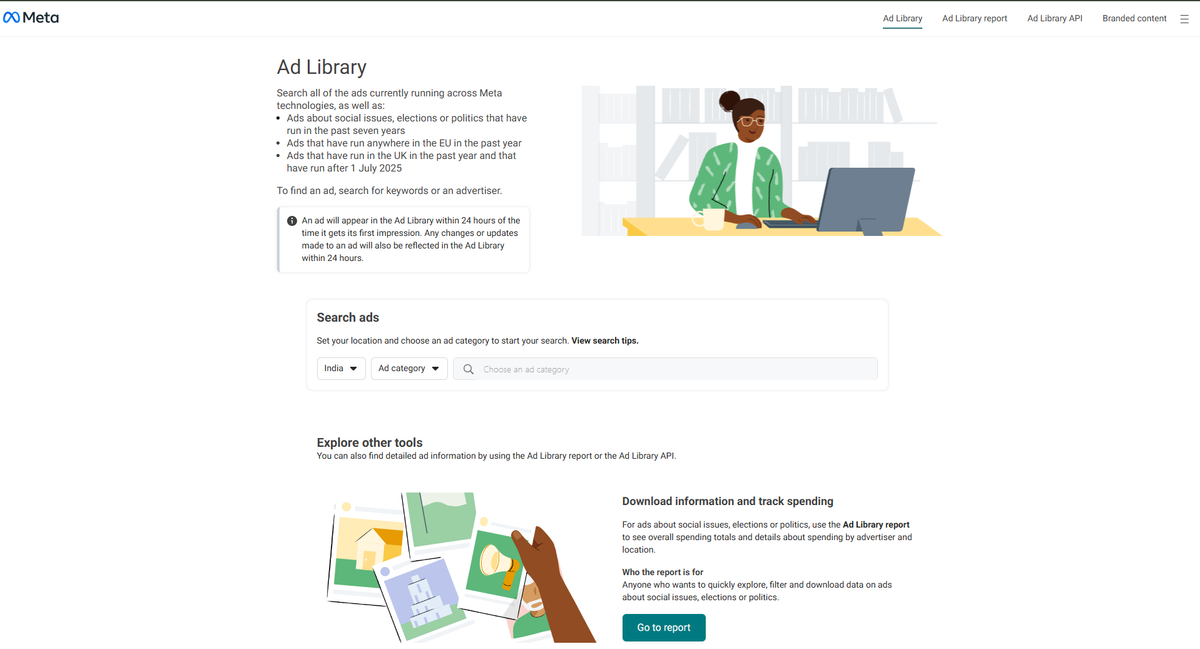
Meta's Ad Library
This is where tools like Vibemyad shine. Instead of manually categorising ads, you can browse a curated ad library, analyse creative patterns, and even remix proven concepts for your own campaigns, all in under 60 seconds.
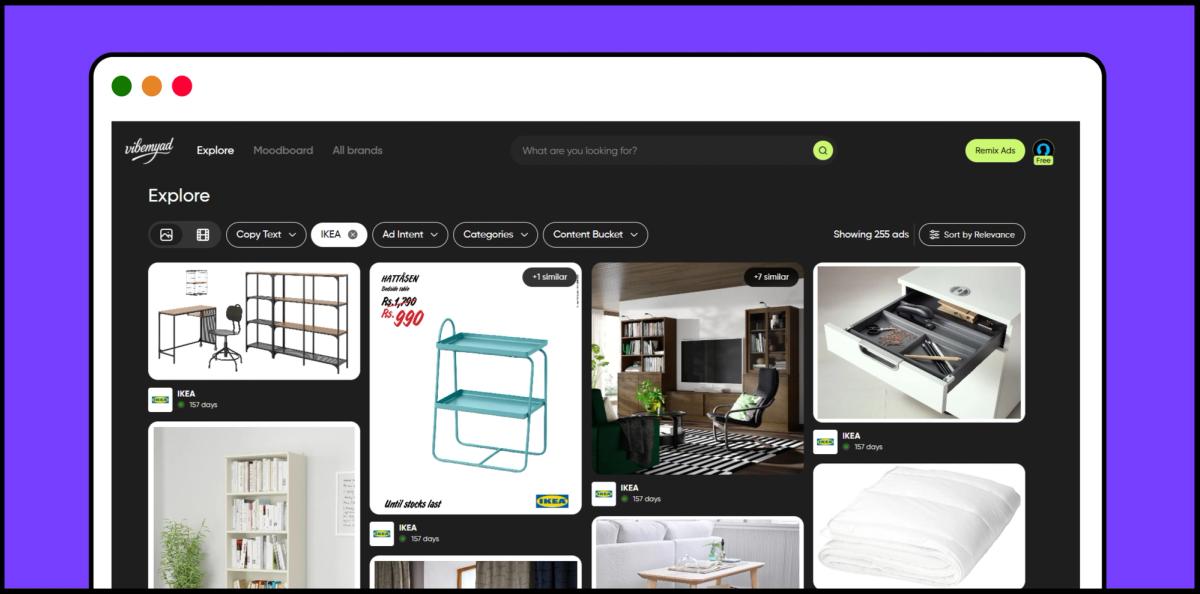
Vibemyad Explore Page
How often are competitors running ads? Are they seasonal? Do they spike around product launches or holidays?
Tools like SEMrush and Ahrefs can show you paid search patterns, but for social advertising, you'll need a dedicated ad intelligence platform that tracks historical data.
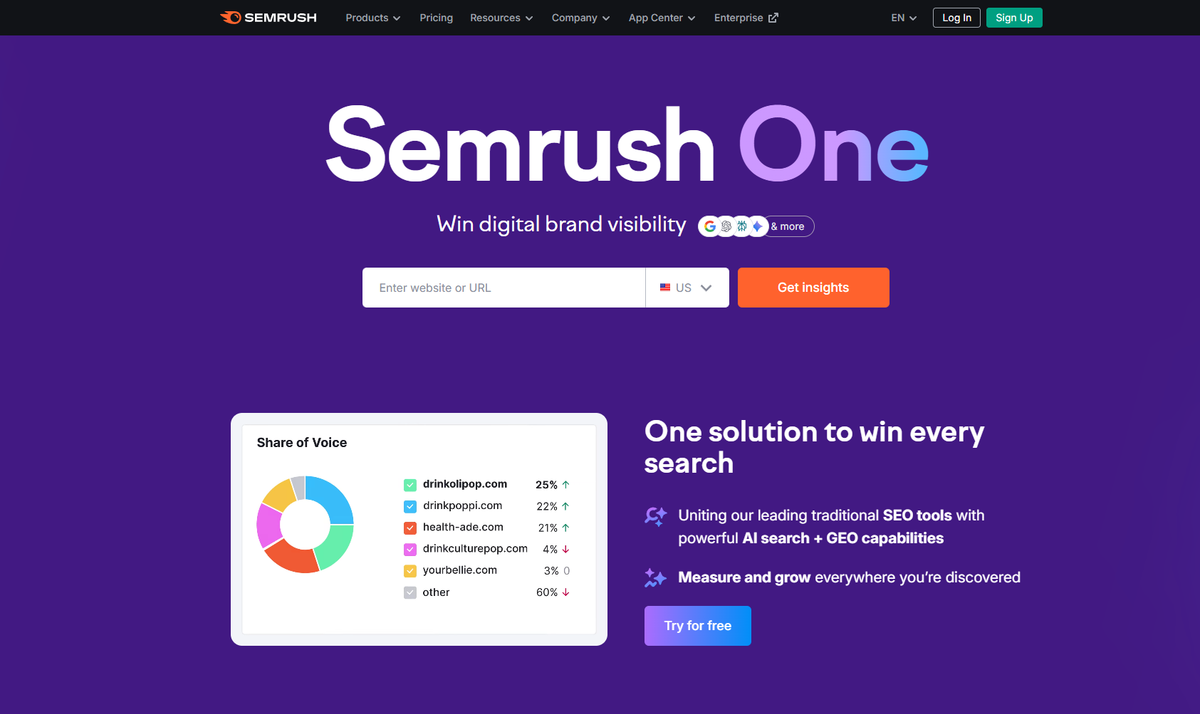
SEMrush Platform
What's the hook? Is it a discount? A problem-solution angle? Social proof?
Break down:
Your stakeholders don't care about impressions or click-through rates in isolation. They care about what those numbers mean for revenue, market share, and competitive positioning.
Instead of saying "Competitor X ran 47 ads last month," say this:
"Competitor X increased ad volume by 40% in Q4, focusing heavily on retargeting with discount-driven messaging. This suggests they're prioritising customer acquisition before year-end. We should consider accelerating our own Q4 budget to maintain visibility."
See the difference? One is a fact. The other is an insight.
Stakeholders process visual information faster than text. Instead of listing competitors' strategies in bullet points, show:
Vibemyad's visual ad library works like Pinterest for ads, making it easy to compare creative strategies at a glance and spot trends your competitors are leveraging.
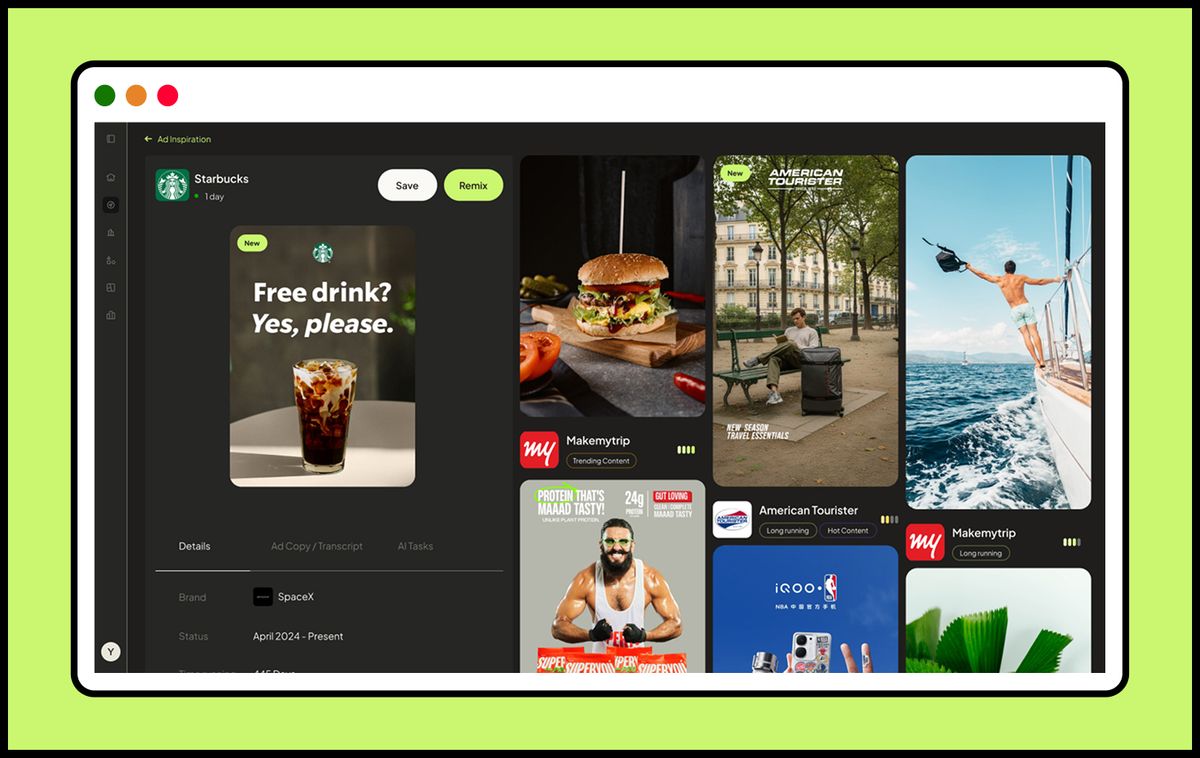
Vibemyad's Visual Ad Library
Not all metrics belong in a stakeholder report. Prioritize:
The best competitive advertising analysis report is the one that actually gets read and used.
Your stakeholders are busy. Structure your report so they can extract value in under 5 minutes:
Don't reinvent the wheel every time you create a report. Build a template that covers:
Market overview: Who's advertising and where
Creative analysis: What messaging and visuals dominate
Tactical breakdown: Campaign types, frequency, and offers
Opportunity gaps: What competitors aren't doing (yet)
Recommendations: Specific actions your team should take
Replace text-heavy explanations with:
Gut feelings don't cut it when you're presenting to leadership. Your competitive ad analysis needs to be backed by real data.
Track these core metrics to build a complete picture:
Estimated ad spend: Tools like AdClarity by Similarweb provide spend estimates across platforms (There are various alternatives for AdClarity as well.)
Ad volume: How many active ads are running at any given time?
Creative diversity: Are they testing multiple concepts or betting on one big idea?
Landing page analysis: Where do their ads send traffic, and what's the conversion strategy?
Sentiment indicators: What are people saying in the comments or reviews?
Ad spend analysis for stakeholders requires context. It's not just about how much competitors spend, it's about ROI efficiency.
According to Nielsen's research, brands that consistently analyse competitive ad investment see 23% higher campaign effectiveness.
Compare your cost-per-acquisition (CPA) against industry benchmarks and competitor patterns. If a competitor is outspending you 3:1 but their creative is stale, that's an opportunity to win on efficiency, not budget.
Should your competitive advertising report focus on paid search, paid social, or both? The answer depends on where your business derives most of its value, but for a complete picture, you need both.
Paid Search (PPC): Best for intent-driven keywords where users are actively searching for solutions. Use tools like SEMrush or Ahrefs to see what keywords competitors are bidding on and what ad copy they're testing.
Paid Social: Best for demand generation and brand awareness. Platforms like Meta, TikTok, and LinkedIn let you target specific demographics before they've even searched for you.
For stakeholders, the key insight is this: PPC tells you what your competitors think converts. Paid social tells you how they're building demand. Together, they reveal the full customer journey.
You don't need a six-figure MarTech stack to run competitive ad intelligence. But you do need the right tools for the job.
Free tools:
Paid intelligence platforms:
AI-powered ad platforms:
The difference? Traditional tools show you what's happening. Vibemyad helps you act on it faster.
Benchmarking isn't about proving your ads are "better." It's about understanding performance in context.
Use this simple table to structure your competitive ad benchmarking:
This single table gives stakeholders everything they need to see where you stand and where to improve.
Once you've benchmarked, ask:
At the end of the day, stakeholders care about one thing: return on investment.
Every competitive insight should connect to a business outcome:
"Competitor X is running high-frequency video ads targeting mid-funnel audiences. Based on industry benchmarks, video ads drive 30% higher conversion rates than static images. Recommendation: Allocate 40% of next quarter's budget to video production and testing."
The best competitive advertising strategy isn't about doing what your competitors do. It's about finding the white space they're ignoring.
Look for:
Before you hit "send" on your competitive ad analysis report, run through this checklist:
✅ Clarity: Can a non-marketer understand your key points?
✅ Relevance: Are insights tied to business goals?
✅ Actionability: Does every section end with a recommendation?
✅ Timeliness: Is your data current, or months old?
✅ Consistency: Does your report follow a repeatable format?
If you're reading this, you're likely in the middle of your funnel (MOFU), you understand why competitive analysis matters, and now you're evaluating how to do it efficiently.
At this stage, you're comparing manual research processes against automated intelligence platforms. You're asking: "Can I build this myself, or should I use a tool?"
Here's the reality: Manual competitive analysis takes 10-15 hours per report. With ad intelligence platforms like Vibemyad, it drops to under an hour, freeing your team to focus on strategy instead of spreadsheets.
For MOFU marketers and designers, Vibemyad bridges the gap between insight and execution. You don't just analyse competitor ads, you remix them, test them, and launch your own campaigns faster than your competitors can refresh theirs.
Try it with 3 free credits daily. No commitment required.
Creating a competitive ad analysis report for stakeholders isn't about assembling data; it's about telling the story of your market position and what to do about it.
The marketers who win aren't the ones with the biggest budgets. They're the ones who understand the landscape, spot opportunities faster, and execute with precision.
Whether you're building reports manually or using tools like Vibemyad to speed up the process, the goal is the same: turn competitive intelligence into competitive advantage.
Now stop reading and start analysing. Your next breakthrough campaign is hiding in your competitor's ad library; you just need to find it.
Ready to turn competitive insights into winning ads? Explore Vibemyad's AI-powered ad intelligence at vibemyad.com/explore and get 3 free credits daily to remix competitor concepts into your own high-performing creatives.
Get notified when new insights, case studies, and trends go live — no clutter, just creativity.
Table of Contents


Ananya Namdev
Content Writer, Vibemyad

Ananya Namdev
Content Writer, Vibemyad

Ananya Namdev
Content Writer, Vibemyad