March 05, 2026 • 6 min read

March 05, 2026 • 6 min read
A hook should give the right person a reason to keep looking. That sounds obvious until you read an ad that opens with “This changes everything” and still cannot tell what it sells.
My starting point would be the buying situation. What is frustrating the customer? What are they comparing? What would they need to see before believing the product could help? Answer one of those questions and you have something more useful than another dramatic opening line.
For a D2C brand, finding good Facebook ad hooks means turning those questions into words and visuals, then testing them. A competitor's ad can supply a reference. It cannot tell you in advance which opening will sell your product.
An ad hook is the opening message or visual that gives someone a reason to pay attention. In a static ad, it might be a headline, a product demonstration or a comparison. In video, it is the opening scene and line working together.
The hook is not the whole sales argument. It earns the opportunity to explain one. If the opening promises an answer the rest of the ad never supplies, you have created curiosity without a convincing reason to buy.
I would rather see a plain opening that identifies a useful product benefit than a clever line that could advertise anything. Our guide to what makes an effective ad explains how clarity, evidence and the next action fit together.
Read your reviews, support messages and product questions. Look for situations, not just praise. “Great bag” gives you little to work with. A comment about finding keys without emptying the bag points to a specific frustration you could demonstrate.
Keep the original customer wording in your research notes. Then write the buying question underneath it: is this about convenience, fit, price, durability or uncertainty about using the product? Use genuine quotes only with the permissions and context they require. Never turn invented copy into a customer testimonial.
For a new product with few reviews, start with customer conversations and questions about comparable products. Treat those as ideas to investigate, not proof that your own buyers share every concern.
Before drafting the opening, write down what your product can actually show. A pocket can be demonstrated. A delivery promise needs operational support. A claim about results needs evidence. If the product cannot support the hook, change the hook.
These static ads come from the Vibemyad ad archive. The breakdowns examine their visible messages, not private campaign results.
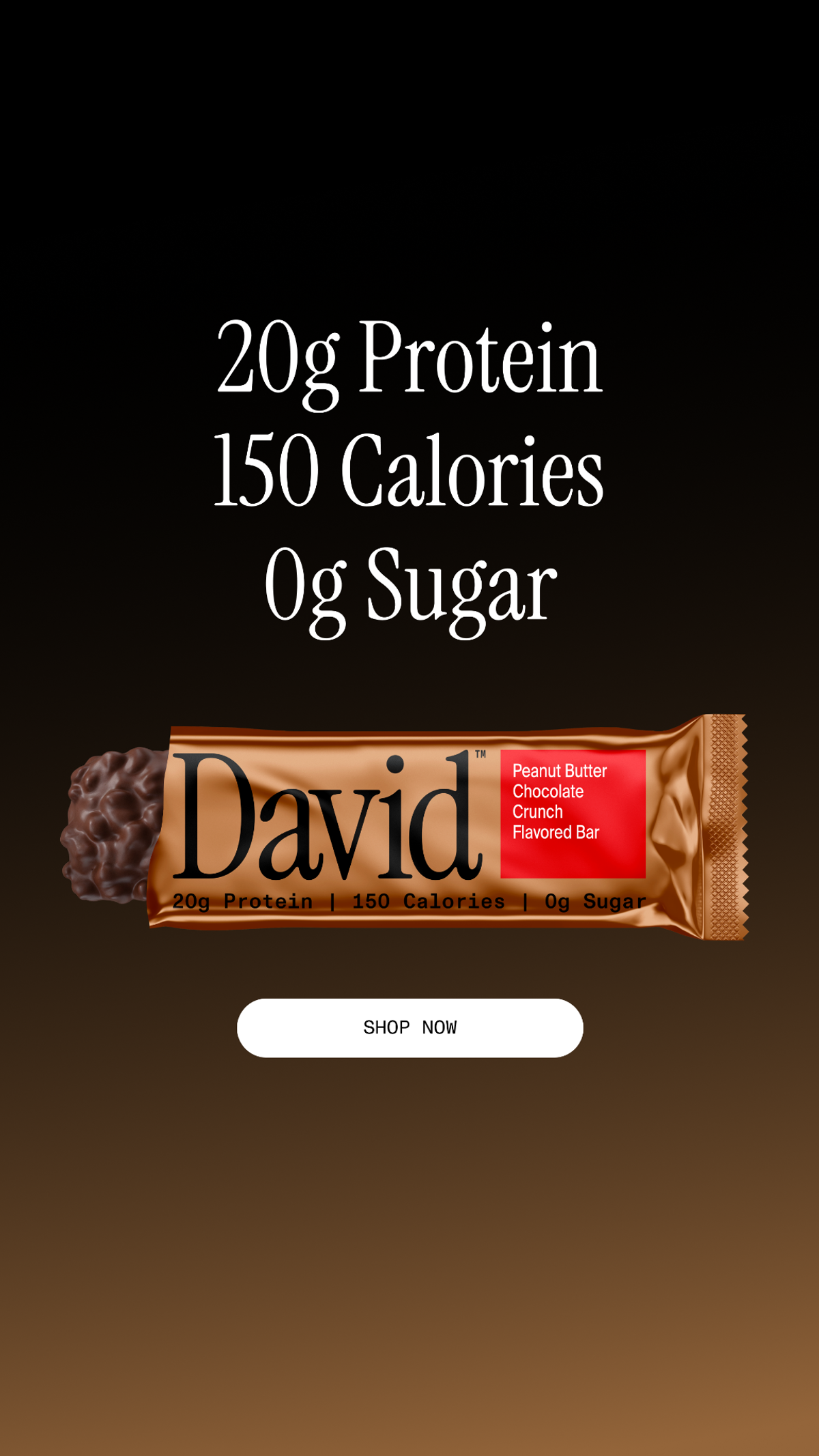
David Protein static ad. Source: Vibemyad ad archive, img-8f537a85a5785aa1. Figures are claims displayed in this creative.
The largest copy gives three product figures: protein, calories and sugar. The bar appears below them. For someone comparing protein snacks, the ad immediately supplies information they can use. The hook is the product proposition itself.
Notice what this approach asks of the brand: a specific, supportable fact. The lesson is not to put three numbers on every ad. It is to identify the criteria your customer uses to choose, then make the relevant evidence easy to see.
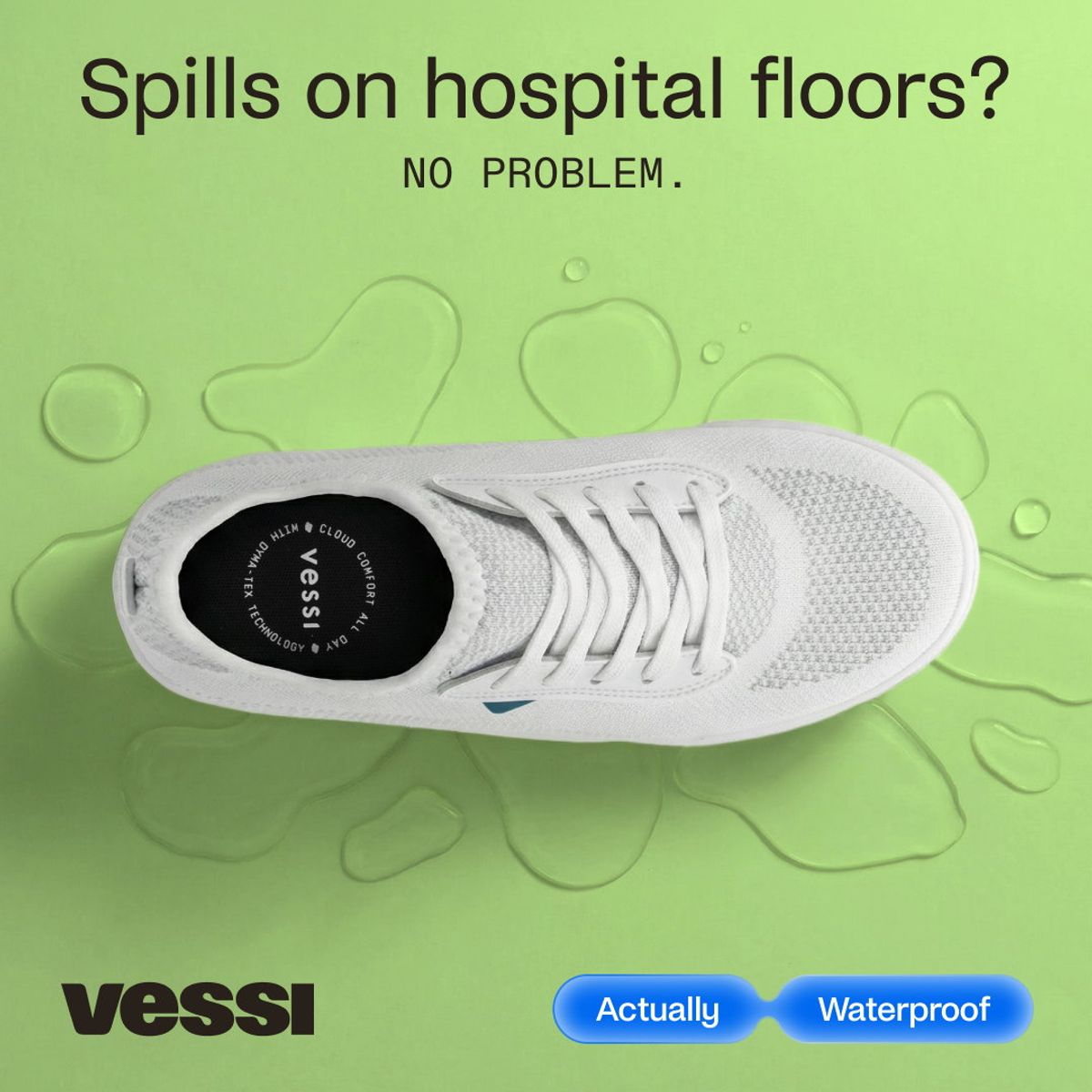
Vessi static ad. Source: Vibemyad ad archive, img-bce147381ce7c398. Shown for message analysis, not as evidence of sales performance.
“Spills on hospital floors?” gives the waterproof message a setting. The shoe and water imagery connect the opening question to the product. A broad feature becomes a recognisable use case.
That does not establish who the advertiser targeted or how many shoes it sold. It does show a useful writing choice: name the moment when a feature matters. A commuter and a hospital worker could encounter water in different situations, even if the product benefit is the same.
For more ways to connect a situation with a product, see our problem-solution ad examples.
Save the opening, the product shown, the supporting evidence and the destination. Ask what makes the message specific. Is it a measurable feature, a familiar situation, an objection or a visible demonstration?
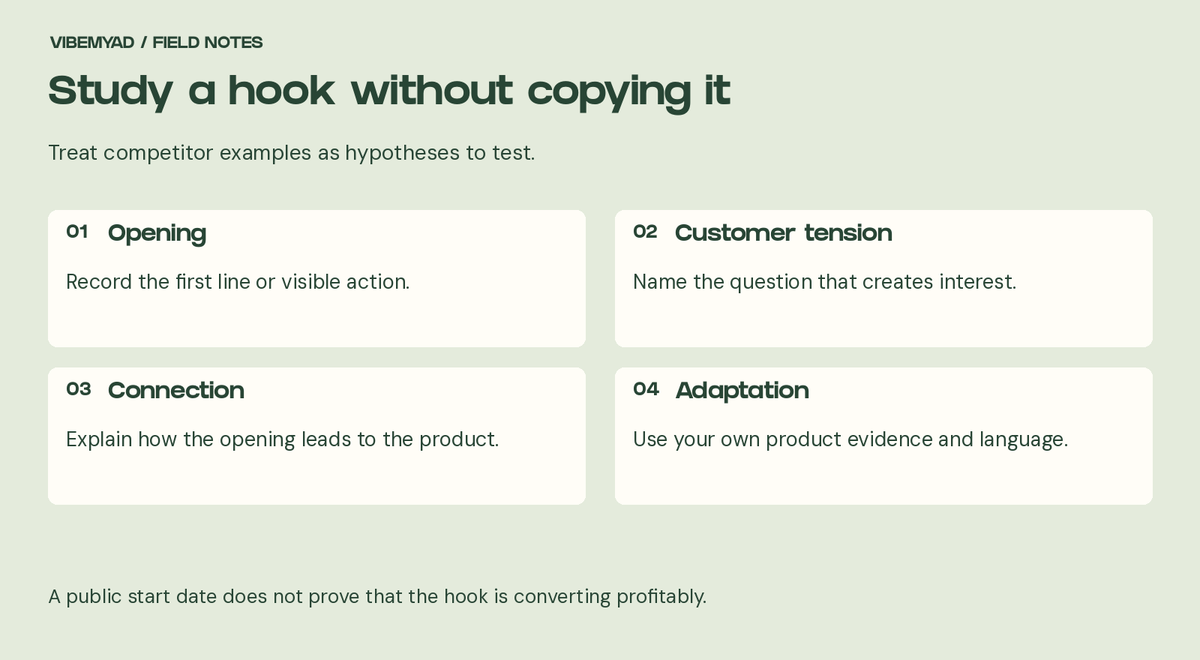
Study a hook without copying it
A public start date or a repeated appearance can make an ad worth studying. Neither establishes continuous spend or profitability. Several brands repeating a message also does not make it statistically validated. Your research should end with a hypothesis you can test using your own product.
Our competitor ad analysis guide shows how to turn those observations into a production brief.
Consider a hypothetical commuter backpack with a separate key pocket. Suppose customer interviews suggest that finding small items is a recurring frustration. The following are illustrative openings, not customer quotes or tested winners.
Problem opening: “Still emptying your bag to find your keys?” Show a messy search, then demonstrate the key pocket.
Demonstration opening: “Keys, without the rummaging.” Start with a hand retrieving the keys from the pocket. Let the action explain the line.
Situation opening: “At your front door. Keys already in hand.” Show someone arriving home and reaching directly for the keys.
All three connect to the same product feature. They enter the story differently. If the bag has no useful organisation feature, none of these is a good brief, however appealing the wording sounds.
For a focused hook comparison, keep the main demonstration, offer and destination consistent while changing the opening. If you change the product argument, video length and offer together, treat that as a comparison of whole ads. You will not know that the hook alone caused the difference.
Choose a batch your budget can meaningfully support. There is no universal dollar amount or number of days that makes a hook test valid. Decide your spending limit, purchase-cost target and review criteria before launching. Check that the purchase tracking works too.
Watch whether people continue viewing or click, then inspect what happens after the click. Attention helps diagnose an opening; it does not replace purchases and acquisition cost in a sales campaign. Uneven delivery and very few purchases can leave the result inconclusive.
If an opening attracts clicks but sales remain weak, inspect the promise, offer and landing page before assuming you need a louder hook. Our guide to which Facebook ads perform best for D2C brands explains how to develop variations from promising concepts.
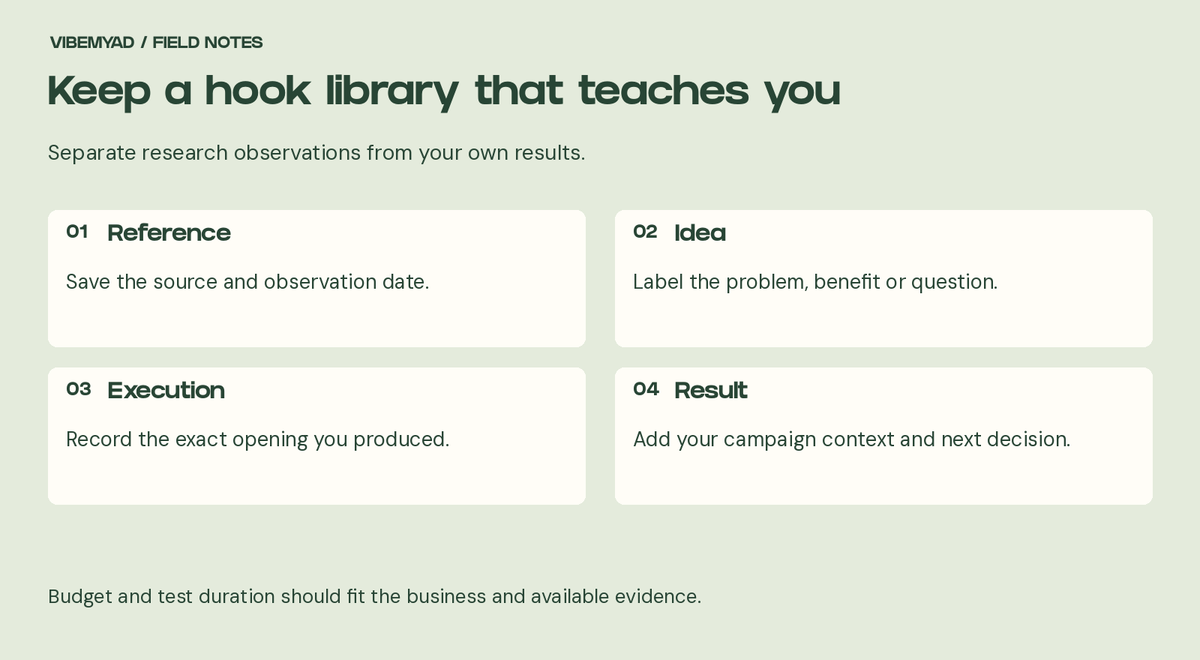
Keep a hook library that teaches you
Record what you tested, why you tested it, the spend and results, and the next decision. “Organisation message, useful purchase signal, try a clearer demonstration” is more actionable than a folder called “Winning hooks.”
If you want help with the work behind the opening, Vibemyad Marketing Agency can handle customer and competitor research, scripting, production and campaign testing. Bring your product, current ads and results. We can work out what the next batch needs to answer.
Get notified when new insights, case studies, and trends go live — no clutter, just creativity.
Table of Contents


Rahul Mondal
Product, Design and Co-founder, Vibemyad

Rahul Mondal
Product, Design and Co-founder, Vibemyad


Ananya Namdev
Content Writer, Vibemyad