January 08, 2026 • 7 min read

January 08, 2026 • 7 min read
"In marketing, your competitor's playbook is written in their ad spend."
- Vibemyad
Tracking competitor ad spend isn't about espionage; it's about smart marketing. Use free tools like Meta Ad Library and Google Ads Transparency Centre for basic insights. For deeper intelligence, platforms like Semrush, Similarweb, and Vibemyad offer ad creative analysis, spend estimates, and performance patterns. The key? Don't just track numbers, analyse intent, messaging, and creative strategies to inform your own campaigns.
You're past the "why should I care about competitors" stage. Now you're evaluating how to do it efficiently. This is classic MOFU territory; you need workflows, tools, and actionable frameworks that save time and deliver ROI. Whether you're pitching a new campaign or defending your budget, competitor ad intelligence gives you the data to back your strategy. Think of this as moving from guesswork to informed decision-making.
Here's the uncomfortable truth: your competitors are spending money to steal your customers right now. The question isn't if you should track their ad spend, it's how efficiently you can do it without turning into a full-time spy.
Most marketers make one critical mistake: they chase vanity metrics. They obsess over how much competitors spend but ignore where, when, and why they're spending it. A competitor dropping $50K on Meta ads sounds scary until you realise half of it is going to a cold audience with a generic creative that converts at 0.2%.
What actually matters:
• Ad creative strategy, what hooks, formats, and messaging are they testing?
• Placement patterns, are they dominating Instagram Stories or LinkedIn carousel ads?
• Seasonal spikes, when do they ramp up spend (and why)?
• Audience signals: What pain points and demographics are they targeting?
Before diving into tools, let's define what "competitor ad spend analysis" means in practice.
Layer 1: Surface Metrics Estimated monthly spend, active campaigns, and platform distribution. This is your baseline, useful but incomplete.
Layer 2: Creative Intelligence Ad formats, visual styles, copy patterns, CTAs, and promotional strategies. This is where differentiation happens. If five competitors are running carousel ads with discount codes, maybe that's your cue to test video testimonials instead.
Layer 3: Strategic Intent Customer journey mapping, content bucket analysis, and brand positioning. This separates tactical copying from strategic insight. Understanding why a competitor launched a retargeting campaign for abandoned carts tells you more than knowing they spent $12K on it.
Let's cut through the noise. Here's what actually works.
Meta Ad Library Meta's Ad Library is your first stop for Facebook and Instagram ad tracking. Search any brand and see:
• Active ads across Meta platforms
• Start dates (though not spend amounts for most advertisers)
• Creative variations
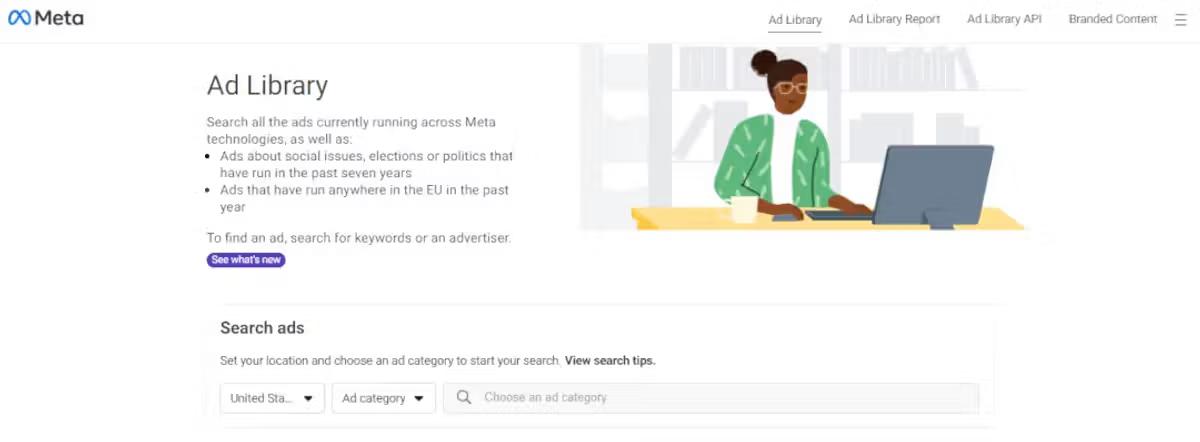
Meta Ad Library
Limitation: No spend data for non-political ads. You'll see what they're running but not how hard they're pushing it.
Google Ads Transparency Centre Google's transparency tool shows display, search, and YouTube ads. Similar limitations, great for creative inspiration, less useful for budget intelligence.
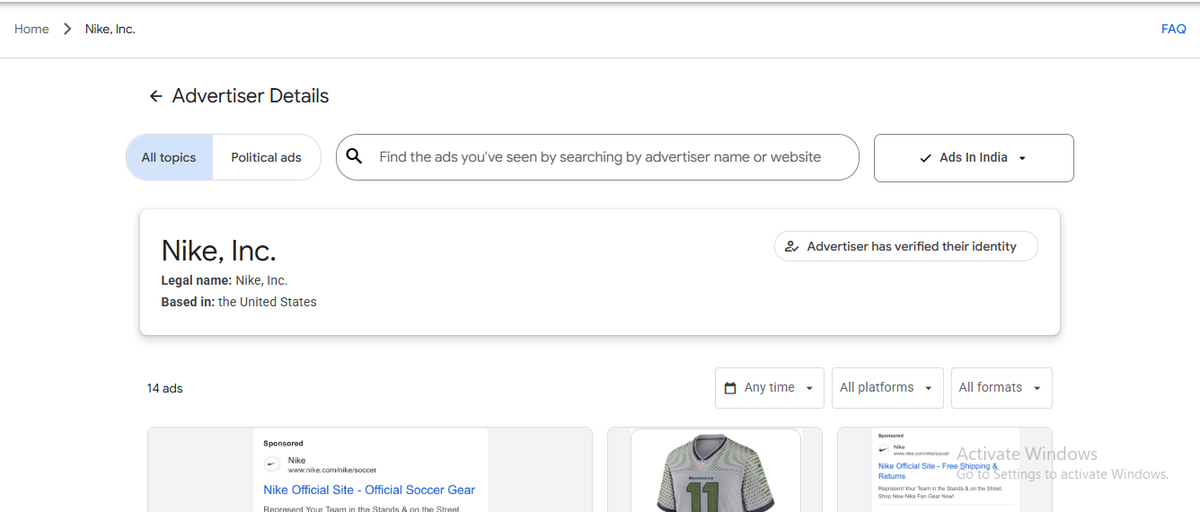
Google Ads Transparency Centre
LinkedIn Ad Library Less robust than Meta's, but LinkedIn's ad transparency page shows ads from company pages. Useful for B2B competitive research.
Semrush Advertising Research Estimates competitor ad spend on Google Ads, tracks keywords, and monitors landing pages. Semrush's platform excels at PPC intelligence but doesn't cover social ads deeply.
Similarweb Digital Marketing Intelligence Strong for cross-channel spend estimates and traffic sources. Similarweb aggregates data from multiple ad networks, useful for macro-level budget planning.
Pathmatics (by Sensor Tower) focuses on display and social ad spend estimates. Better for large brands with significant digital budgets.
Tracking spend is step one. Extracting strategy is the actual skill.
You can't get exact Facebook ad spend numbers for most brands, but you can triangulate:
Frequency analysis, Screenshot ads weekly. If you see the same creative for 8+ weeks, it's probably performing.
Ad volume, Brands with 20+ active ads are testing aggressively (and spending accordingly).
Placement diversity, Ads running across Feed, Stories, Reels, and Audience Network suggest higher budgets.
Use Meta Ad Library as your base, then layer in tools like Foreplay or Swipe File for organised tracking.
Most marketers search for a competitor, scroll through ads, and call it a day. Here's how to go deeper:
• Look for testing patterns. Are they running multiple versions of the same ad with different headlines? That's split testing in action.
• Identify offer cycles, screenshot promos over 3-6 months. When do they run discounts? What triggers urgency?
• Analyse disclaimers. Small text reveals a lot. "Limited time" suggests scarcity tactics. "New customer only" indicates aucquisition focus.
If you're running multiple campaigns across channels, manual tracking becomes a bottleneck. Here's where specialised platforms shine.
Vibemyad's Ad Intelligence Layer
While most tools stop at "here's what your competitors are running," Vibemyad goes further with:
Ad Spider - Competitor Tracking Track your competitors systematically using Ad Spider, our dedicated competitor monitoring feature. Once you've added competitors to track, you gain access to:
• Hooks analysis - See the exact hooks and attention-grabbers your competitors are using
• Landing page tracking - Monitor where they're sending traffic and how pages are structured
• Value proposition mapping - Understand the core benefits and offers they're promoting
• Target audience insights - Identify which demographics and customer segments they're pursuing
• Content bucket categorisation - We automatically group competitor ads into thematic categories based on timing and ad intent, revealing their content strategy patterns
AI Research Agent (Coming Soon) Beyond basic tracking, we're building an intelligent research agent that answers your strategic questions about competitor campaigns. Instead of manually analysing data, ask questions and get insights, turning competitor intelligence into an actionable strategy.
The difference? You're not just collecting screenshots, you're building a strategic understanding of the competitive landscape at scale. Think of it as turning competitor ads into an intelligent, queryable strategy library.
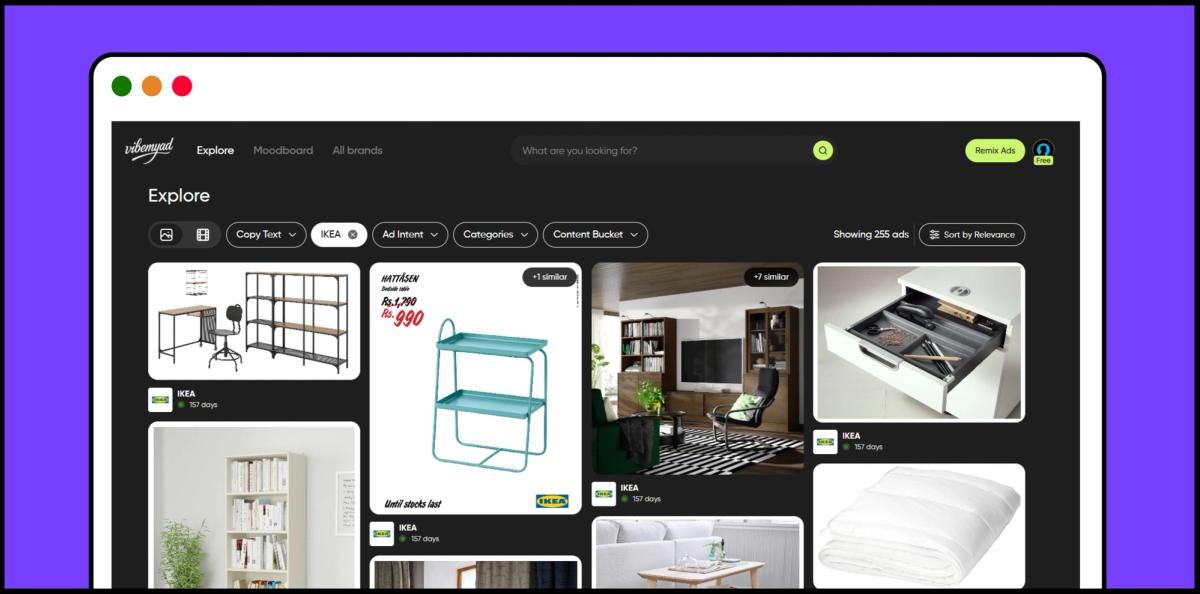
Vibemyad Ad Library
Foreplay Great for saving ads into mood boards. Useful for designers building swipe files, but lacks deep analytics.
Swipe File: Similar to Foreplay, curation-focused rather than intelligence-focused.
Data without action is just noise. Here's the workflow:
What are competitors not doing? If everyone's running static images, video might be your edge. If all ads are product-focused, try storytelling.
Don't copy, remix. If a competitor's "before/after" ad format is crushing it, adapt the concept to your brand voice and audience.
Set a monthly review cadence. Track shifts in competitor messaging, especially around product launches or seasonal campaigns.
According to HubSpot's 2024 Marketing Benchmarks, brands that conduct quarterly competitive analyses improve campaign ROI by an average of 23%.
Chasing competitor strategies without understanding your own differentiation is marketing suicide.
If you see five competitors running aggressive discount campaigns, your instinct might be to match their pricing. But what if your brand's strength is premium positioning? Copying their playbook dilutes your value.
The antidote: Use competitor insights to inform context, not dictate strategy. Ask:
• Why are they making this move?
• What audience problem are they solving?
• How does this fit (or not fit) our brand positioning?
The goal isn't to become your competitor. It's to understand the market well enough to carve out your own space.
Track their spend. analyse their creativity. Map their strategy. Then build something better.
And if you want to skip the manual work? Vibemyad's ad intelligence tools let you search, analyse, and remix competitor ads in minutes, not hours. Plus, you get 3 free credits daily to test it out.
Smart marketers don't just watch the competition. They learn, adapt, and outmanoeuvre.
Get notified when new insights, case studies, and trends go live — no clutter, just creativity.
Table of Contents


Rahul Mondal
Product, Design and Co-founder, Vibemyad

Rahul Mondal
Product, Design and Co-founder, Vibemyad


Ananya Namdev
Content Writer, Vibemyad