What is an Ad Library? A Complete Guide to Ad Intelligence Platforms

December 08, 2025 • 14 min read

What is an Ad Library? A Complete Guide to Ad Intelligence Platforms

Rahul Mondal

Rahul Mondal

Product & Strategy, Ideon Labs

Ever scrolled through social media and wondered, "How much is my competitor spending on ads?" or "What messaging are they testing right now?" You're not alone. Every marketer has tried to peek behind the curtain of their competitors' advertising strategies.

Here's the good news: You don't need to guess anymore. Ad libraries have transformed competitive research from speculation into science.

An ad library is a searchable database of advertisements running across digital platforms. Think of it as a public archive where you can view active and historical ads from any brand, analyze their creative strategies, and understand what's working in your industry—all without spending a rupee on your own campaigns first.

In this guide, you'll discover what ad libraries are, how they work, why they exist, and how marketers use them to gain competitive advantages. Whether you're launching your first campaign or managing million-rupee budgets, understanding ad libraries is essential for modern digital marketing.

Quick Summary: Ad libraries are transparent databases that display current and past advertisements from brands across social platforms. Originally created for political ad transparency, they now help marketers research competitors, discover creative trends, validate strategies, and reduce ad testing costs.\

What Exactly is an Ad Library?

An ad library is a publicly accessible repository of advertisements that brands and businesses are running (or have run) on digital platforms. These databases contain the ad creative, copy, targeting details, runtime dates, and sometimes performance metrics.

The concept is simple: Instead of ads disappearing into the digital void after their campaigns end, they're archived in a searchable format. Anyone can look up a brand name and see every ad they're currently running or have run in the past.

Key characteristics of ad libraries:

  • Searchable by brand: Type in any company name and see their ad history
  • Multi-format coverage: Includes image ads, video ads, carousel ads, and stories
  • Transparent information: Shows when ads started running and on which platforms
  • No login required: Most native platform libraries are completely free and public
  • Historical data: Access to past campaigns, not just current ones

For example, if you wanted to see how Nykaa promotes its seasonal sales, you could search their name in an ad library and view every variation they're testing—different images, headlines, and calls-to-action.
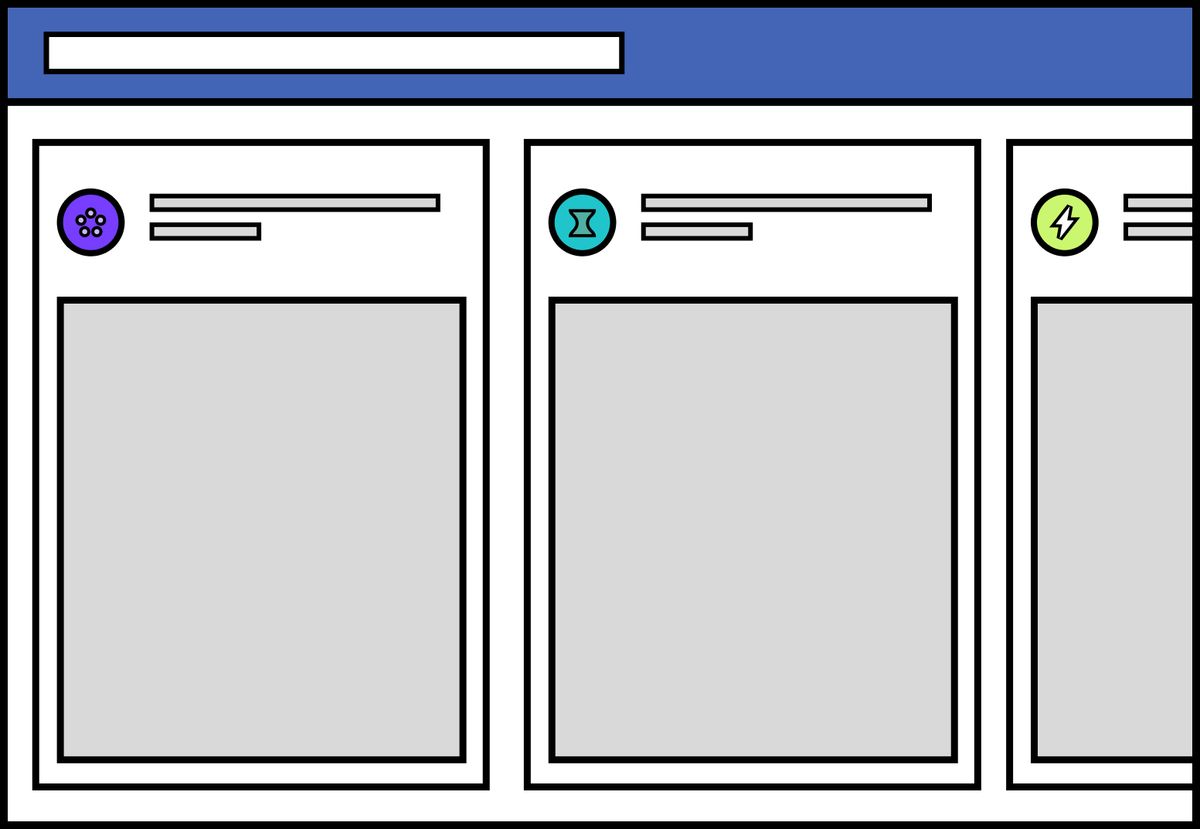
Layout of Meta Ad Library

Layout of Meta Ad Library

Why Do Ad Libraries Exist?

Ad libraries weren't created for marketers. They were born from political pressure and regulatory requirements.

The Transparency Movement

In 2018, following controversies around political advertising and misinformation on social platforms, Facebook (now Meta) launched its Ad Library to increase transparency. The idea was simple: If political ads can influence elections, the public deserves to see who's paying for them and what messages they're spreading.

The regulatory drivers:

  • Political advertising scrutiny: After the 2016 US elections, governments demanded visibility into political ad spending
  • Consumer protection laws: Regulations like GDPR in Europe pushed for advertising transparency
  • Platform accountability: Social networks needed to demonstrate responsible advertising practices
  • Public trust: Platforms wanted to rebuild credibility by opening their ad ecosystems

Other platforms quickly followed suit. TikTok, Google, LinkedIn, and others launched their own ad libraries, each with varying levels of detail and accessibility.

Beyond Politics: The Marketing Goldmine

While ad libraries were designed for transparency, marketers immediately recognized their value for competitive intelligence. What started as a regulatory requirement became one of the most powerful free research tools available.

Today, ad libraries serve dual purposes: They satisfy regulatory requirements while providing marketers with unprecedented visibility into competitor strategies.

How Do Ad Libraries Work?

Ad libraries function through a combination of automated tracking systems and platform databases. Here's what happens behind the scenes:

Data Collection Process

When an advertiser launches a campaign on a social platform, the system automatically logs specific information:

Ad submission: Advertiser creates and submits ad creative with targeting parameters

Approval process: Platform reviews ad for policy compliance

Library entry: Once approved, ad details are added to the public library

Real-time updates: Active status, start dates, and sometimes spend ranges are updated continuously

Historical archiving: Even after campaigns end, ads remain searchable for months or years

What Information Gets Captured

The depth of information varies by platform, but most ad libraries include:

Basic information:

  • Ad creative (images, videos, text)
  • Headlines and body copy
  • Call-to-action buttons
  • Landing page URLs
  • Brand/advertiser name

Campaign details:

  • Date the ad started running
  • Platforms where it appears (Facebook, Instagram, Messenger, etc.)
  • Active or inactive status
  • In some cases, estimated impression ranges

Political/social issue ads get additional scrutiny:

  • Detailed funding information
  • Precise spending amounts
  • Geographic targeting details
  • Demographic reach data

Search and Filter Capabilities

Most ad libraries offer several ways to find relevant ads:

  • Brand search: Look up specific companies by name
  • Keyword search: Find ads containing specific terms or phrases
  • Category filters: Sort by industry, ad format, or campaign objective
  • Date ranges: View ads from specific time periods
  • Geographic filters: See ads targeted to particular countries or regions

The user experience is straightforward: Enter a search term, browse results, and click through to view full ad details. No special access or technical knowledge required.

Search Filters applied in Meta Ad Library

Search Filters applied in Meta Ad Library

Types of Ad Libraries

Ad libraries come in two main categories, each serving different needs:

Native Platform Ad Libraries

These are the official, free ad libraries operated by the platforms themselves.

1. Facebook/Meta Ad Library

  • Covers Facebook, Instagram, Messenger, and Audience Network
  • Most comprehensive for social media ads
  • Includes political ad spending data
  • Seven-year retention for most ads
  • Available globally without login

2. Google Ads Transparency Center

  • Covers Google Search, YouTube, and Display Network
  • Political ads get detailed spending breakdowns
  • General ads show creative and basic targeting
  • 30-day to several-year retention depending on ad type

3. TikTok Creative Center

  • Shows top-performing TikTok ads by region and industry
  • Includes engagement metrics and trending hashtags
  • Requires free account to access full features
  • More focused on inspiration than comprehensive competitive research

4. LinkedIn Ad Library

  • LinkedIn doesn't offer a comprehensive public ad library yet
  • You can see some ads a page is running by visiting their LinkedIn page
  • Less transparent than other platforms

Third-Party Ad Intelligence Platforms

These are specialized tools that aggregate data from multiple sources and add advanced analytics.

What makes them different from native libraries:

  • Cross-platform coverage: View ads from Facebook, TikTok, YouTube, and more in one place
  • Advanced filtering: Search by ad performance, spend estimates, engagement metrics
  • AI-powered analysis: Automatic categorization by customer journey stage, ad intent, and content themes
  • Save and organize: Create collections of inspiring ads for your team
  • Alerts and monitoring: Get notified when competitors launch new campaigns
  • Creation tools: Some platforms let you create ads based on your research

Tools like Vibemyad and others in the ad intelligence space help marketers monitor campaigns systematically across multiple platforms, though you can also start with free native libraries like Facebook Ad Library to understand the basics.

When to use native vs. third-party libraries:

  • Use native libraries when: You're researching ads on a single platform, need the most up-to-date data, or want completely free access
  • Use third-party platforms when: You need cross-platform insights, want deeper analytics, need to track multiple competitors, or want to streamline your research workflow

What Can You Find in an Ad Library?

The level of detail varies significantly depending on the platform and ad type. Here's what you can typically discover:

For All Ads

Creative elements:

  • Images and graphics used in ads
  • Video content (complete with playback)
  • Ad copy including headlines and descriptions
  • Call-to-action buttons and their specific text
  • Carousel ad sequences showing all slides

Campaign information:

  • Active or inactive status
  • Date the ad started running
  • Platforms where the ad appears
  • Ad format types (single image, video, carousel, collection)
  • Multiple variations of the same campaign

Brand details:

  • Official page/account name running the ad
  • Page category and verification status
  • All active campaigns from that advertiser

For Political and Social Issue Ads

Ads about elections, politics, or social issues receive enhanced scrutiny with additional data:

  • Precise spending amounts: Exact budgets spent on campaigns
  • Geographic targeting: Countries, states, or cities targeted
  • Demographic targeting: Age ranges and gender targeting details
  • Impression counts: Number of times the ad was shown
  • Funding source: Who paid for the ad with verification

What You Won't Find

Ad libraries have important limitations:
  • Detailed targeting parameters: You won't see the specific interest-based or behavioral targeting used (except for political ads)
  • Performance metrics: Click-through rates, conversion rates, and ROI data aren't public
  • A/B test results: You can see multiple variants but not which performed better
  • Exact budget allocation: Spending is shown in ranges or not at all for commercial ads
  • Landing page content: You'll see the URL but not the full landing page experience
  • Email or offline campaigns: Ad libraries only show digital platform ads, not comprehensive marketing strategies
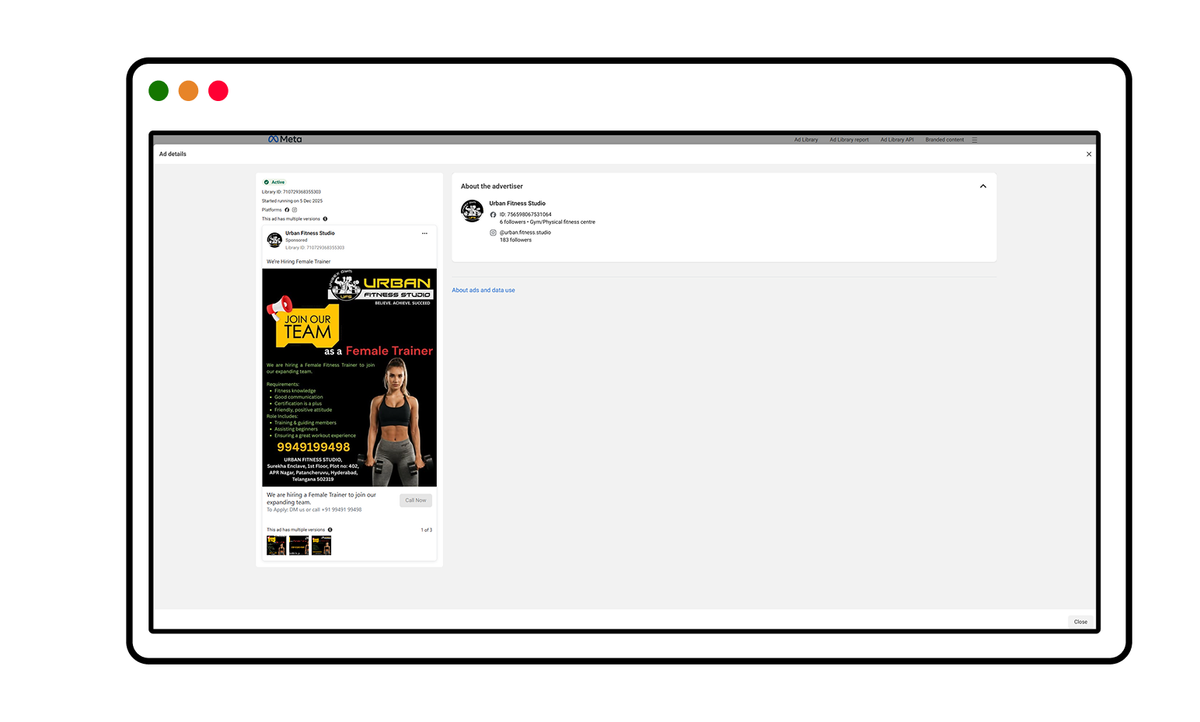
Ad Details | Meta Ad Library

Ad Details | Meta Ad Library

Why Marketers Use Ad Libraries

Ad libraries have become essential tools in the modern marketer's arsenal. Here's why thousands of marketing professionals consult them daily:

Uses of Ad LibraryDescription
Competitive IntelligenceUnderstanding what your competitors are doing helps you make smarter decisions.
Market positioning See how competitors position their products. Are they emphasizing price, quality, convenience, or exclusivity? For instance, if you're launching a food delivery app, checking Zomato and Swiggy's ads shows you their messaging hierarchies and promotional strategies.
Campaign timingDiscover when competitors launch major campaigns. Notice they're running heavy promotions before Diwali? That's intelligence you can act on for your own seasonal planning.
Budget indicators While exact spending isn't always visible, the number of ad variants and campaign longevity suggest budget commitment. A brand running 50+ ad variations simultaneously is clearly investing heavily.
Messaging evolutionTrack how competitor messaging changes over time. Has their tone shifted from feature-focused to emotion-driven? That evolution reveals strategic pivots worth understanding.
Creative InspirationAd libraries are treasure troves of proven creative concepts.
Format trendsDiscover which ad formats competitors favor. Are carousel ads dominating in your industry? Are video ads becoming standard? This helps you allocate creative resources effectively.
Design patternsAnalyze visual trends—color schemes, typography, layout structures. If all successful e-commerce brands in India use bold colors and lifestyle imagery, there's a reason.
Copywriting approachesStudy how top brands write headlines and calls-to-action. The difference between "Shop Now" and "Discover Your Style" reveals strategic thinking about customer psychology.
Offer structuresSee how competitors frame their promotions. Are they using percentage discounts, free shipping, or bundle deals? This informs your own promotional strategy.
Campaign ValidationBefore investing thousands of rupees, validate your approach.
Concept testingPlanning to run user-generated content in your ads? Check if competitors in your space have tried it. Their continued use suggests it works.
Risk reductionAvoid expensive mistakes by learning from others. If no successful brand in your category uses a particular ad style, there might be a good reason.
Best practicesIdentify industry standards. In the fashion category, for example, you'll notice most brands use minimal text overlays and lifestyle photography—a proven approach worth following.
Market ResearchAd libraries reveal broader market trends and opportunities.
Emerging nichesWhen multiple new brands start advertising similar products, that signals growing market demand. Noticed many plant-based food brands advertising lately? That's a trend indicator.
Geographic expansionTrack when brands start targeting new regions. If a Mumbai-based brand begins advertising in Bangalore, they're expanding—valuable information if you're in the same space.
Seasonal patternsUnderstand how ad volume and messaging shift throughout the year. E-commerce brands dramatically increase advertising before festivals, while educational services peak during admission seasons.
Learning and Skill DevelopmentFor newer marketers, ad libraries serve as free training grounds.
Study successful patterns Learn from brands spending crores on testing. Their winning formulas are on display for free.
Understand platform best practices See how professional ads are structured for each platform. TikTok ads look dramatically different from Facebook ads for good reasons.
Develop critical analysisRegular ad library research trains your eye to spot effective vs. ineffective advertising elements.

How to Use an Ad Library Effectively

Simply browsing ads randomly won't deliver insights. Here's a systematic approach:

Step 1: Define Your Research Objective

Start with a clear question:

  • "What creative styles are working in skincare advertising?"
  • "How do competitors promote their app downloads?"
  • "What offers are fashion brands running this month?"

Focused research questions lead to actionable insights.

Step 2: Identify Relevant Competitors

Create a research list including:

  • Direct competitors: Brands selling similar products to similar audiences
  • Aspirational competitors: Larger brands you want to emulate
  • Adjacent competitors: Brands in related categories targeting similar customers
  • International leaders: Top global brands in your category

For example, if you run a premium tea brand in India, research both local competitors like Vahdam Teas and international leaders like Twinings.

Step 3: Conduct Systematic Research

Approach your research methodically:

For each competitor, document:

  • Total number of active ads
  • Ad formats being used (video, carousel, single image)
  • Primary messaging themes
  • Offer types and promotional strategies
  • Visual style patterns
  • Call-to-action approaches

Use a spreadsheet to track patterns across multiple brands. This structured approach reveals trends that casual browsing misses.

Step 4: Analyze Patterns and Trends

Look for commonalities:

  • Unanimous approaches: If all successful competitors do something, it's likely effective
  • Unique differentiators: Note what makes one brand stand out from others
  • Temporal patterns: How messaging shifts from weekday to weekend, or month to month
  • Platform differences: How the same brand adapts creative for different platforms

Step 5: Apply Insights Strategically

Transform research into action:

For campaign planning: Use discovered patterns to inform your creative briefs. If competitors successfully use customer testimonials, incorporate them in your strategy.

For creative development: Share specific competitor ads with your design team as reference points. "Something like this, but adapted to our brand" is clearer than abstract descriptions.

For budget allocation: If competitors run more video ads than image ads, that format likely performs better. Weight your budget accordingly.

For testing hypotheses: Use competitor ads to develop test variations. If they're testing blue vs. orange backgrounds, you can run similar tests.

Common Mistakes to Avoid

While ad libraries are powerful, many marketers misuse them:

Copying Instead of Learning

The mistake: Directly copying competitor ads with minor brand swaps.

Why it fails: What works for one brand may not work for yours. Their audience, positioning, and brand equity differ from yours. Plus, blatant copying damages your credibility.

The better approach: Understand the principles behind successful ads. If a competitor's ad works, analyze why—is it the emotional appeal, the offer structure, or the visual hierarchy? Apply those principles in your unique way.

Ignoring Context

The mistake: Seeing a competitor run an ad once and assuming it's successful.

Why it fails: Brands test many ads, including ones that fail. An ad running for two days might have been killed for poor performance.

The better approach: Look for patterns over time. Ads that run for months with multiple variations are proven winners. Those are the ones worth studying closely.

Focusing Only on Big Brands

The mistake: Only researching established brands with massive budgets.

Why it fails: Their strategies often require resources you don't have. A brand spending ₹50 lakh monthly on ads can afford approaches that won't work on a ₹50,000 budget.

The better approach: Research brands at similar scale to yours. Their constraints match yours, making their strategies more applicable. Also study scrappy challengers disrupting your category.

Neglecting Your Own Testing

The mistake: Using ad libraries as a replacement for testing your own campaigns.

Why it fails: Your audience is unique. What works for competitors may not resonate with your specific customers.

The better approach: Use ad library research to inform your testing, not replace it. Develop hypotheses from competitor analysis, then validate them with your audience through structured A/B tests.

Overlooking Smaller Details

The mistake: Only looking at the main creative and missing subtle elements.

Why it fails: Success often hides in details—specific word choices, button colors, or offer framings that make the difference.

The better approach: Analyze ads systematically. Note everything: emoji usage, punctuation choices, whether prices include symbols (₹999 vs. 999), and how offers are structured (20% off vs. ₹200 off).

The Future of Ad Libraries

Ad libraries continue evolving as regulations tighten and technology advances:

Increasing Transparency Requirements

Governments worldwide are pushing for more advertising transparency. Expect:

  • Expanded disclosure requirements: More platforms may be required to offer public ad libraries
  • Deeper spending visibility: Commercial ads might receive similar spending transparency as political ads currently do
  • AI ad labeling: Requirements to disclose when AI generates ad content or targets users

Enhanced AI Analysis

Third-party platforms are integrating artificial intelligence to provide deeper insights:

  • Automatic categorization: AI systems that classify ads by customer journey stage, emotional tone, and strategic intent
  • Performance prediction: Machine learning models that estimate which ads likely perform best based on historical patterns
  • Trend detection: Algorithms that spot emerging creative trends before they become obvious
  • Personalized recommendations: Systems that suggest relevant competitor ads based on your industry and goals

Cross-Platform Consolidation

As marketers run campaigns across multiple channels, demand grows for unified ad intelligence:

  • Single-dashboard monitoring: Track competitor ads across Facebook, TikTok, YouTube, and LinkedIn from one interface
  • Omnichannel insights: Understand how brands coordinate messaging across platforms
  • Comprehensive competitive profiles: See a complete picture of competitor advertising strategies, not just platform-by-platform fragments

Privacy Balance

The future will balance transparency with privacy protection:

  • Aggregated data: More platforms may show trend data without revealing individual user targeting
  • Consent-based tracking: Evolving privacy regulations will shape what information can be displayed
  • Anonymized insights: Technologies that provide competitive intelligence while protecting personal data

Key Takeaways

Ad libraries have transformed from regulatory requirements into essential marketing tools:

  • What they are: Public, searchable databases of digital advertisements that provide transparency into brand advertising strategies across platforms
  • Why they exist: Created for political transparency but now serve as powerful competitive intelligence tools for marketers
  • How to use them: Conduct systematic research with clear objectives, analyze patterns across multiple competitors, and apply insights to inform (not replace) your own creative testing
  • Best practices: Focus on learning principles rather than copying, look for long-running campaigns that indicate success, research brands at similar scale to yours, and combine insights with your own A/B testing
  • Future direction: Expect more transparency requirements, AI-powered analysis tools, and cross-platform consolidation as ad libraries evolve

Whether you're a solo entrepreneur or managing campaigns for major brands, ad libraries give you visibility that was impossible just a few years ago. The playing field has leveled—small brands can now access the same competitive intelligence as agencies with massive research budgets.

Start Your Ad Intelligence Journey

Ready to discover what your competitors are really doing? Begin with the free Facebook Ad Library—it's the most comprehensive starting point for social media advertising research.

For deeper insights across multiple platforms with AI-powered analysis and organization tools, explore dedicated ad intelligence platforms. Try Vibemyad free for 7 days to access ads from Facebook, Instagram, TikTok, YouTube, and more in one dashboard—plus get AI-powered ad intent detection and customer journey analysis that native libraries don't provide.

The best marketers don't guess what works. They research, analyze, and apply proven patterns. Your competitive advantage starts with understanding what's already working in your market.

What will you discover in your first ad library search?

Frequently Asked Questions

Similar articles

Love what you’re reading?

Get notified when new insights, case studies, and trends go live — no clutter, just creativity.

Table of Contents