February 23, 2026 • 6 min read

February 23, 2026 • 6 min read
Five ads can look different and still make exactly the same argument. Change the background, move the product and swap the headline, and you may still be asking people to buy for the same reason.
That is where I would start a creative testing plan: what are we trying to learn about the customer? If nobody knows which benefit makes the product worth buying, polishing five versions of one message feels premature.
Creative testing means comparing ad ideas and variations against a defined objective, then using the results to decide what to make next. For a D2C sales campaign, that decision needs purchase evidence as well as attention metrics.
A concept is the central selling idea. A variation changes how you express that idea. A format is the container, such as a static image, carousel or video. Keeping those separate makes the brief much clearer.
Imagine a fictional commuter backpack with a dedicated key pocket, a water-resistant compartment and adjustable padded straps. These are assumed product features for this example, not claims about a real brand.
I would start by comparing a small set of genuinely different buying reasons. Once a concept shows promising purchase results, I would test ways to express it more clearly. That might mean a different opening, a closer product shot or stronger evidence.
A before-and-after layout, testimonial or product demonstration is a possible execution. None is automatically the right answer for every category. Our guide to which Facebook ads perform best for D2C brands explains that starting point.
These ads are references from the Vibemyad ad archive. We can analyse the visible selling ideas, but we do not have their purchase results. They are not a head-to-head test: they advertise different products to potentially different buyers.

BURGA static ad. Source: Vibemyad ad archive, img-be99c4f03c13c9c6. Analysis concerns the visible creative, not campaign results.
BURGA gives most of the frame to a close-up of its phone case. Shells and pearls repeat the pattern on the product, while "New collection" and "Goddess" introduce the range. The visible idea is design appeal. There is no performance demonstration in this creative.
For an accessories brand, this suggests a concept test: a style-focused presentation versus a protection-focused demonstration, provided the product can support the protection claims. A different crop of the same case and collection message would be a variation. Neither direction is a guaranteed winner.
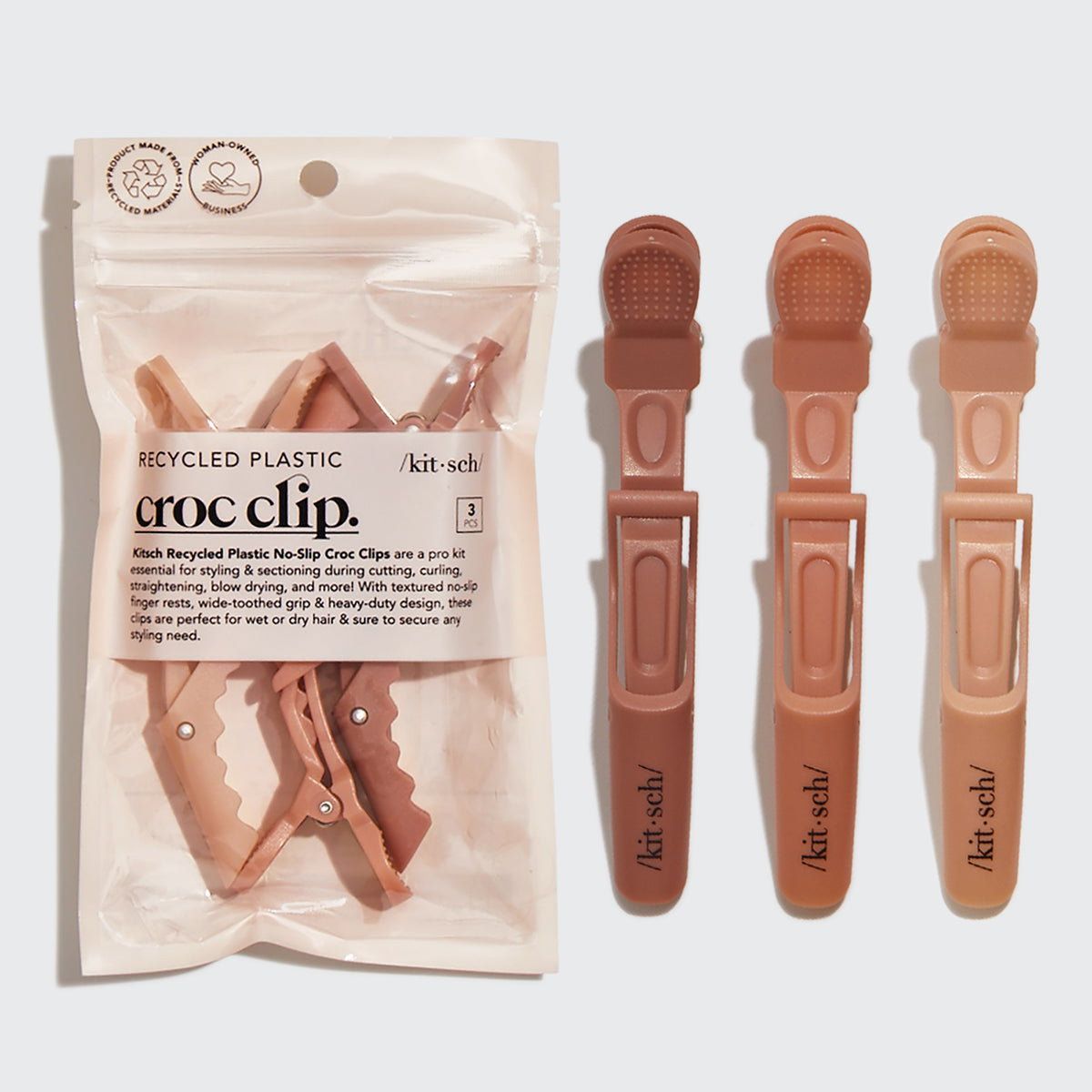
Kitsch static ad. Source: Vibemyad ad archive, img-ecc7933c93786843. Suggested tests are our ideas, not reported brand experiments.
Kitsch places three croc clips beside their packaging. The image makes the product shape, colours and pack contents easy to inspect. The packaging carries feature copy, but much of it is small. I would test whether showing the clips holding a section of hair makes their purpose clearer on a phone screen.
That would compare two executions of the same product-use idea: a pack shot and an in-use demonstration. Keep the offer and headline consistent to narrow the comparison. A separate concept test could compare styling convenience with recycled-material messaging, using only claims the brand can substantiate.
Notice the difference between these briefs and “make it more eye-catching.” A useful brief names the buying reason and what the ad needs to show. See our breakdown of what makes an effective ad for more on that connection.
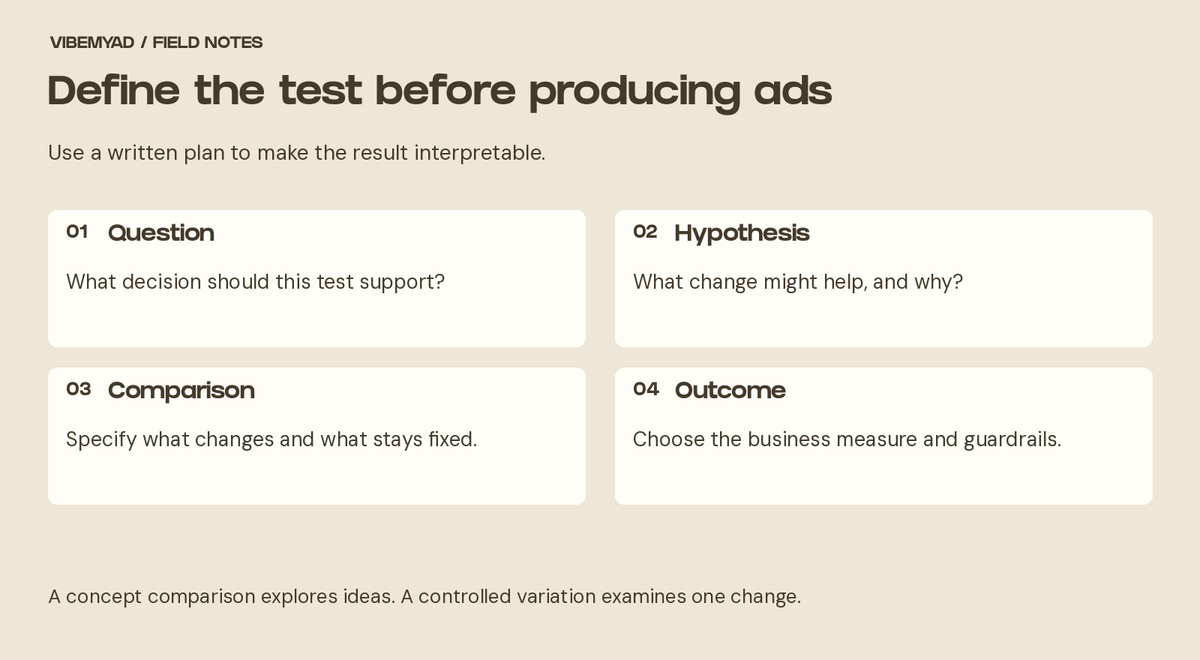
Define the test before producing ads
For the fictional backpack, a useful brief would say: “We think commuters will respond to seeing the key pocket in use because finding small items is a buying frustration. Compare an organisation concept with a rain-protection concept. Judge them on purchases and acquisition cost.”
That prediction should come from customer questions, reviews or research. If it is only an internal hunch, record it as one. The test is meant to challenge the idea, not justify something the team already wants to make.
Choose what stays consistent: the product, price, offer, destination and campaign objective. Keep audience and delivery conditions comparable. If you change the offer alongside the message, you are testing the combined package and cannot credit the message alone.
Comparing complete concepts can be useful even when several creative elements differ. To investigate a specific headline or image, narrow the comparison to that element. A controlled experiment needs a suitable allocation of people to test groups; simply changing one element does not by itself establish causality.
I would rather launch a smaller batch that can receive meaningful spend than produce fifteen ads that barely get seen. More versions create more production work and more comparisons to fund.
Before launch, agree on a spend limit, a review point and what would make the result inconclusive. Base those choices on your acquisition economics, expected purchase volume and how long customers tend to take to buy. There is no universal dollar amount or number of days that makes every test reliable.
Check purchase tracking and order values first. Duplicate events, test orders or missing purchases can distort the decision before creative quality enters the discussion.
If one option receives very little delivery, record that limitation. You have less evidence about it, not proof that its idea cannot sell.
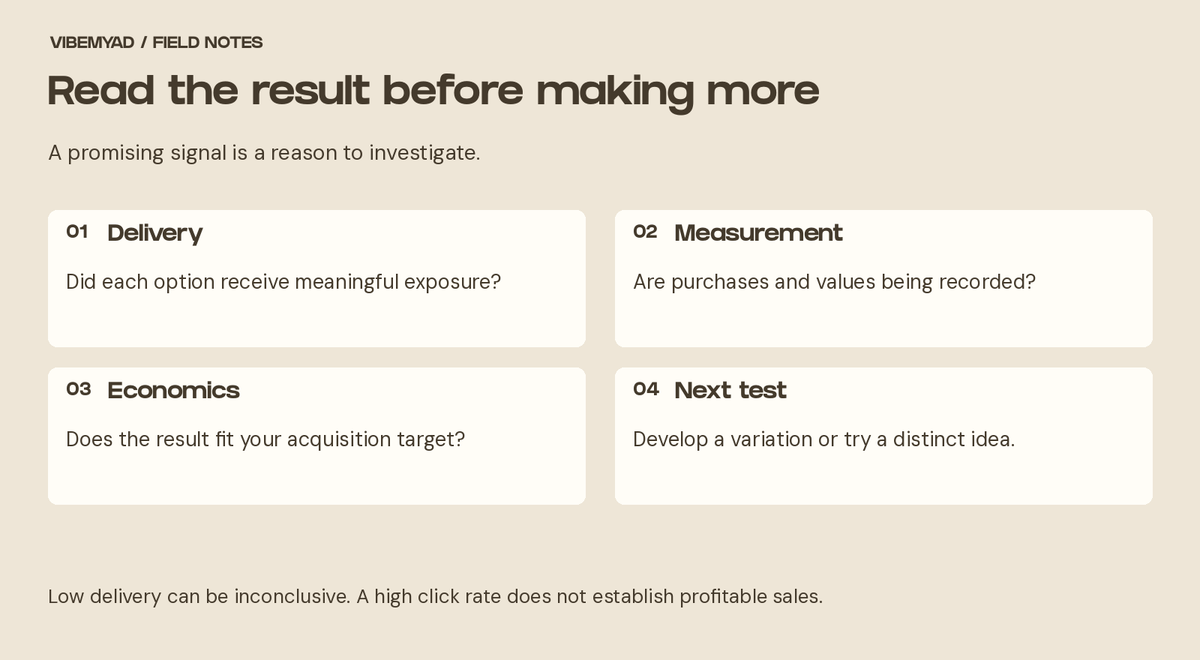
Read the result before making more
For a sales campaign, clicks help explain behaviour but cannot replace the sales outcome. Use the same reporting window and attribution settings when comparing results, and check reported purchases against store data.
If one ad attracts more clicks but produces fewer purchases, inspect whether the opening makes a promise the product page fails to support. Price, shipping, stock and checkout problems also deserve a look. A falling conversion rate does not diagnose the creative on its own.
Cost per acquisition is spend divided by attributed acquisitions. Return on ad spend compares attributed revenue with spend. Neither tells you profit without accounting for product and fulfilment costs, discounts and returns.
Small purchase counts deserve restraint. One extra order can change the ranking. A result can be commercially useful enough to guide the next test while still being too uncertain to call a proven winner.
Suppose the backpack's organisation concept produces a promising purchase signal within your target cost. Your next brief could keep the key-pocket demonstration and compare two openings: “Still searching for your keys?” and “Your keys, right where you need them.” These are hypothetical variations, not reported test results.
Keep the demonstration, offer and destination consistent for that comparison. Our guide to finding Facebook ad hooks worth testing covers how to develop those openings.
Record the question, assets, dates, spend, purchase results, limitations and next action. “Organisation looks promising; test a clearer demonstration” tells the next person what to make. “Ad B won” leaves them guessing.
If you want someone to handle the research, briefs, production and testing, Vibemyad Marketing Agency can help. Bring your current ads and results so the next batch starts with a specific question about your customers.
Get notified when new insights, case studies, and trends go live — no clutter, just creativity.
Table of Contents


Rahul Mondal
Product, Design and Co-founder, Vibemyad

Rahul Mondal
Product, Design and Co-founder, Vibemyad


Arpita Mahato
Content Writer, Vibemyad