July 08, 2026 • 9 min read

July 08, 2026 • 9 min read
Fast & Up has figured out something most brands never do: how to make an ad that runs for a year. Its single most durable ad, a promise to help you lose 4 kilos in 4 weeks, has been live for more than 400 days. And yet the same brand pours most of its creative budget into ads that die in a day.
We read all 512 of the Indian sports-nutrition brand’s live ads from Meta’s public ad library, tagging every one by actually looking at the creative. What comes back is a genuine masterclass in performance-advertising discipline, wrapped around a few habits that are quietly costing it.
• We analyzed 512 live Fast & Up ads from Meta’s ad library, tagged one by one.
• Fast & Up sells across sports-nutrition categories, but its advertising is concentrated on one line: about 79% of its ads are for weight loss and fat burning.
• Its most durable ad, “Lose 4 Kilos in 4 Weeks,” has run 400 plus days and is still live.
• Bold, shock value claims are its most durable hook. They stay live roughly five times longer than its discount ads.
• It makes the most versions of the ads that last the least: 24 cuts of one “35% OFF” promo, the best of which survived a single day.
• The growth engine leans on aggressive weight loss claims that invite both buyer skepticism and regulator scrutiny.
• The lesson for any brand: let winners run, build a repeatable formula, and do not let a promo and claim machine stand in for a real brand.
Before the critique, the scale. Fast & Up is one of the most prolific advertisers in the whole category we studied.
Fast & Up’s range spans electrolytes, effervescent tablets, plant protein, an L-Carnitine fat burner, a blood sugar product, and apple cider vinegar supplements. But its ad budget is not spread evenly across that range. When we sorted every live ad by the product it actually promotes, the split was stark:
This is not an accident, it is a strategy: put the spend where the demand is. But it means that when you study Fast & Up’s advertising, you are really studying how it sells one thing. The L-Carnitine “Lean Body” fat burner is the engine. Almost every finding below flows from that.
We cannot see Fast & Up’s sales or ad spend. But advertisers kill ads that do not work, so how long an ad stays live is a strong signal of what is paying off. When we say an ad is “working,” we mean the brand has chosen to keep running it. By that measure Fast & Up is patient. Its median ad has been live 38 days, while most brands in the category sit closer to two weeks.
They find winners and let them run. Most brands churn through creative and kill ads before they know whether they work. Fast & Up does the opposite. Seven in ten of the ads we found are still active, and the best performers have been live for over a year. That is rare discipline, and it compounds.
They have a formula, and it is tight. Their most durable ads follow one shape: a specific, numbers first promise, a layer of proof, and a real person or a clear diagram. It is not glamorous, but it is a machine, and a year of runtime says the market keeps rewarding it. Whether those claims should be made at all is a separate question, and we get to it below.
They produce for the feed, at volume. Ninety percent of their ads are video, most of it creator style, phone shot content that is cheap to make and native to the platform. With 512 live ads they out produce almost every hydration brand we looked at, which means more shots on goal and more chances to find a winner.

Not every hook earns its keep. Sorting Fast & Up’s ads by how long each type stays live shows a clear hierarchy:
The pattern is blunt. Their boldest claims last longest, roughly five months, while discount hooks vanish in about a week. Fast & Up has effectively learned that, for them, a big number and a shock promise outlive everything else. It is also telling that their story led and problem led ads die fastest. This is a brand that is very good at asserting, and not yet good at storytelling.
Three ads capture the whole strategy.
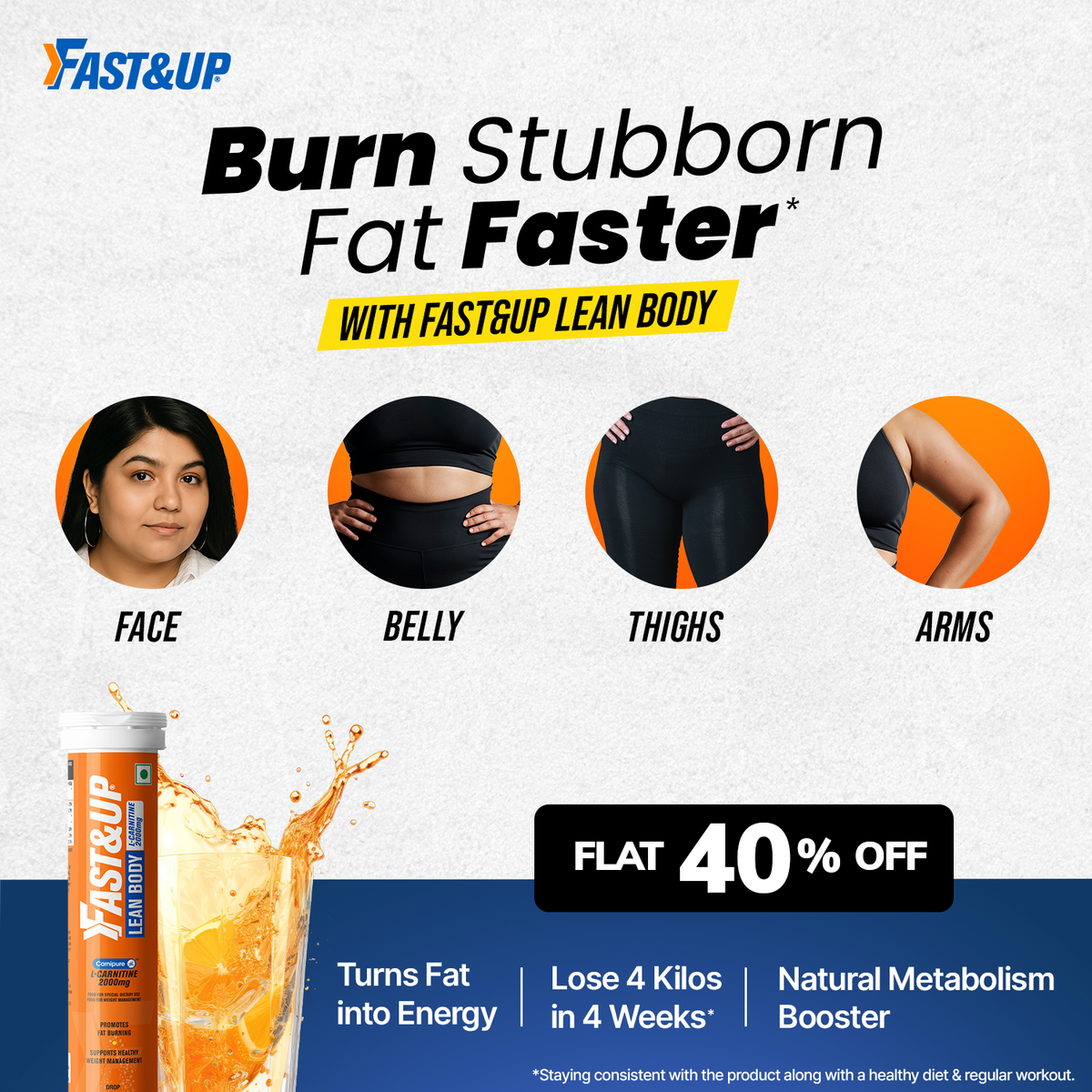
The ad at the top of this piece is a body-map infographic for the Lean Body L-Carnitine drink, arrows pointing at belly, thighs and arms under a “Burn Stubborn Fat Faster” headline. It has been live 414 days. It is neither subtle nor beautiful, but it does one job perfectly: a specific, visual, shock promise with a mechanism attached. It is the template every other winner copies.
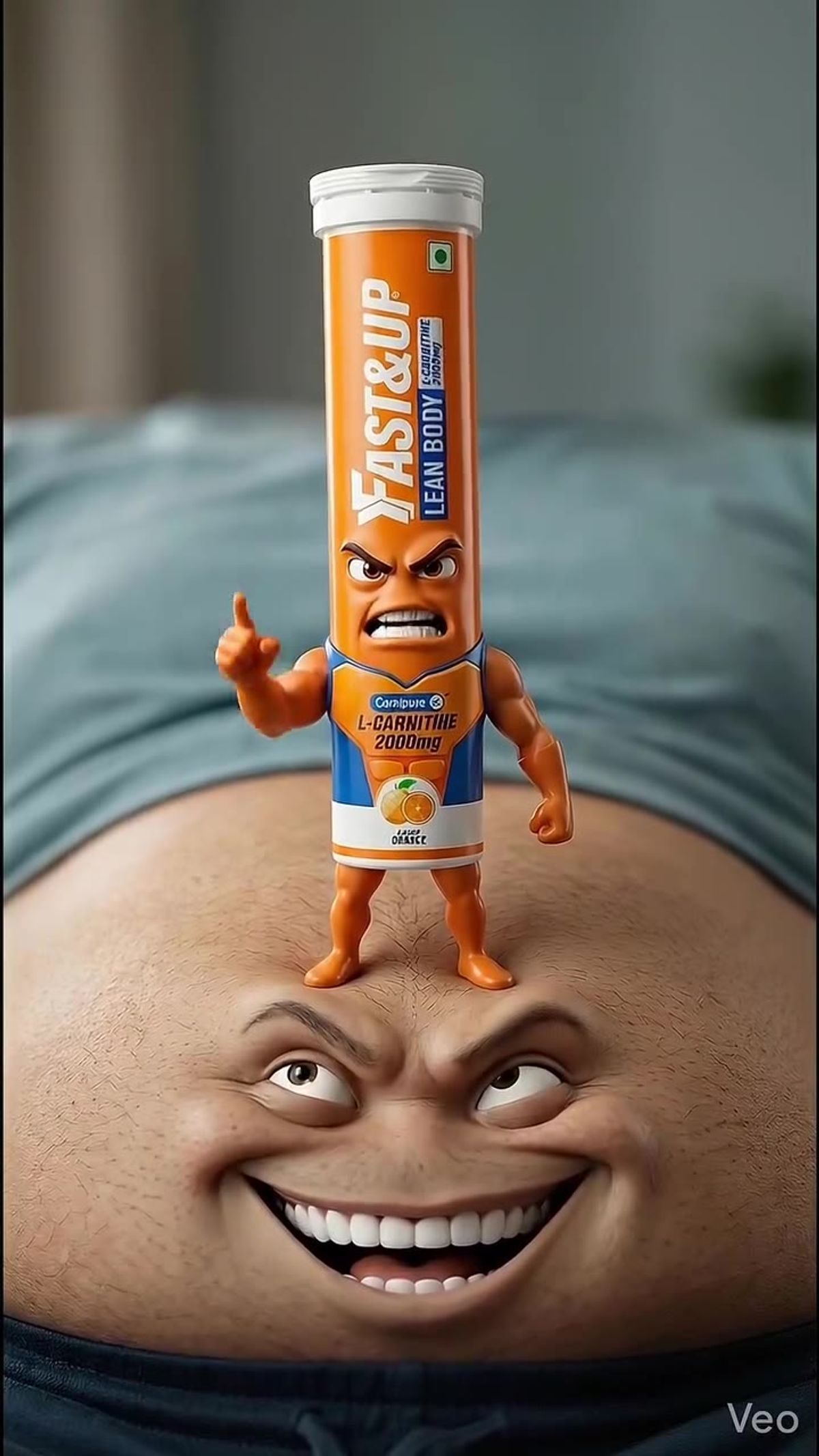
Fast & Up’s most interesting creative is also its weirdest. An angry animated tube mascot stands on top of a giant grinning belly, then the animation walks through a 40 day before and after transformation. The cartoonish opener stops the scroll, and it has run 131 days. It is the rare Fast & Up ad that entertains before it explains, and the longevity suggests that is worth doing far more often.
This one shows the full playbook in a single frame: “Clinically Proven Weight Loss Drink,” “Lose 4 Kilos in 4 Weeks,” “92% of users experienced improved energy,” “87% saw visible changes,” a number one best seller badge, and a flat 40% off. Claim, proof, social validation and a deal, all stacked. It has run 402 days. It is also, as we are about to discuss, the most legally exposed thing they run.
It is all one note. Seven in ten Fast & Up ads are “how it works” explainers: ingredient breakdowns, benefit lists, mechanism walk throughs. There is almost no storytelling and very little brand building. Scroll their library and every ad blurs into the next.
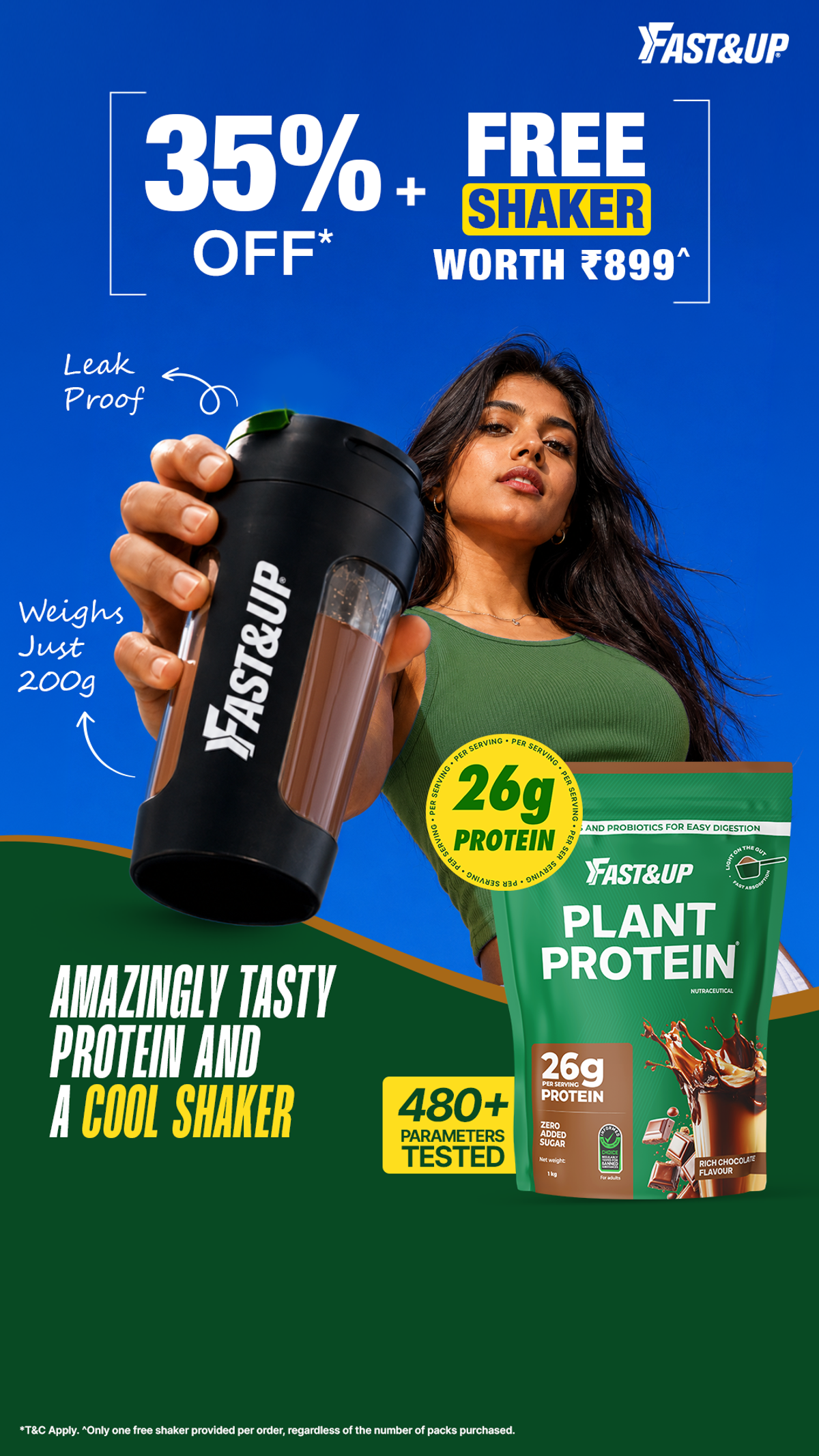
They are not just on the discount treadmill. They are sprinting on it. You only see this when you count the near duplicate versions of each ad. Fast & Up made 24 separate cuts of a single “35% OFF and Free Shaker” promo. The longest surviving one lasted one day. They made another 23 versions of a “50% off and free gifts” ad. Their real winners, the weight loss ads, run for over a year on six or seven versions. The effort is inverted. The most production goes to the shortest lived creative.
Here is where their creative effort actually goes, and how long the best version of each ad survived:
The positioning is a muddle. Under one name, Fast & Up sells electrolytes, protein, an L-Carnitine fat burner, a blood sugar product and ACV supplements, and it lets the weight loss line dominate the ad budget. Weight loss is the most commoditized and most claim heavy corner of the category. Anchoring a premium sports nutrition brand to “Lose 4 Kilos in 4 Weeks” trades long term equity for short term sales.
“Lose 4 Kilos in 4 Weeks.” “Burn Stubborn Fat.” “Clinically proven weight loss drink.” These are outcome guarantees that most credible brands will not put in writing. Fast & Up does not hedge them. It has built its single most durable ad around one of them. That is bold, and it is exactly the kind of promise that invites two things at once: buyers who have learned to distrust it, and India’s advertising regulator, the ASCI, which scrutinizes precisely these efficacy claims. Running lines like “92% of users saw results” for 400 plus days is either backed by strong substantiation or a standing risk. Either way, it is a bet the brand is making every single day.
There is no top of the funnel. Everything is bottom of funnel: claim, proof, discount, buy. We found almost no brand building, nothing that makes you feel something about Fast & Up or remember it tomorrow. The brand is renting demand, not building it.
Set against the other D2C beverage and supplement brands we studied, Fast & Up sits at one clear end of a spectrum. It is unusually explainer heavy, with seven in ten ads walking through how a product works. It is unusually claim heavy, built on efficacy promises many brands avoid. And it is unusually discount dependent, with a constant churn of percentage off promos. Where a brand like Nuun or LMNT sells a feeling and an identity, Fast & Up sells an outcome and a price. That is a legitimate and often effective way to win a first order. It is a weak one for building something customers come back to on their own, without a coupon.
• Let your winners run. Fast & Up’s biggest strength is boring. They do not kill ads that work. Most brands leave money on the table by churning creative out of boredom.
• Build a repeatable formula. Their promise, proof, person template is easy to copy and durable. Find the version that is true for your product.
• Count your versions against their lifespans. If the ads you make the most of are the ones that die the fastest, your creative team is a promo factory. Measure production against durability, not just volume.
• Earn attention before you explain. Fast & Up’s most entertaining ad, the animated one, is also one of its most durable. The brand does this rarely and most brands never do it. A little craft at the top of the ad buys it a longer life.
• Do not let the performance machine eat the brand. You can drive sales with claims and discounts forever and still have no brand anyone cares about. And be careful what you promise. Bold claims convert, right up until they do not.
How we did this: we analyzed 512 live Fast & Up ads from Meta’s public ad library. Each ad was tagged by content type, hook, visual style, product and claimed benefit by examining the actual creative. What is “working” is inferred from how long each ad has stayed live.
Get notified when new insights, case studies, and trends go live — no clutter, just creativity.
Table of Contents


Arpita Mahato
Content Writer, Vibemyad

Arpita Mahato
Content Writer, Vibemyad


Rahul Mondal
Product, Design and Co-founder, Vibemyad