June 23, 2026 • 13 min read

June 23, 2026 • 13 min read
Three of the biggest fast food brands on earth are running completely different playbooks on Meta right now. We pulled their live fast food meta ads with the Vibemyad Agent and broke down exactly what each one is doing, so you can steal the parts that fit your kitchen.
• McDonald's, Domino's, and KFC are running three opposite creative strategies on Meta at the same time, and the contrast between these fast food advertising examples is the entire lesson of this teardown.
• McDonald's plays emotional range, swinging from meme-native social posts to seasonal illustration to stripped-down coupon ads without ever feeling off-brand.
• Domino's leans into social provocation, pairing dating-app language and playful chaos with dense, high-contrast food photography built to be screenshotted and shared.
• KFC hammered the price on red, repeating one loud, product-first deal creative until it sticks, and its June 2026 global rebrand doubled down on that discipline rather than abandoning it.
• We surfaced all of these QSR creative ads in minutes by asking Vibemyad Ad Vault to pull each brand's top fast food meta ads at vibemyad.com/sessions, then rebuilt the lanes in Vibemyad Ad Gen.
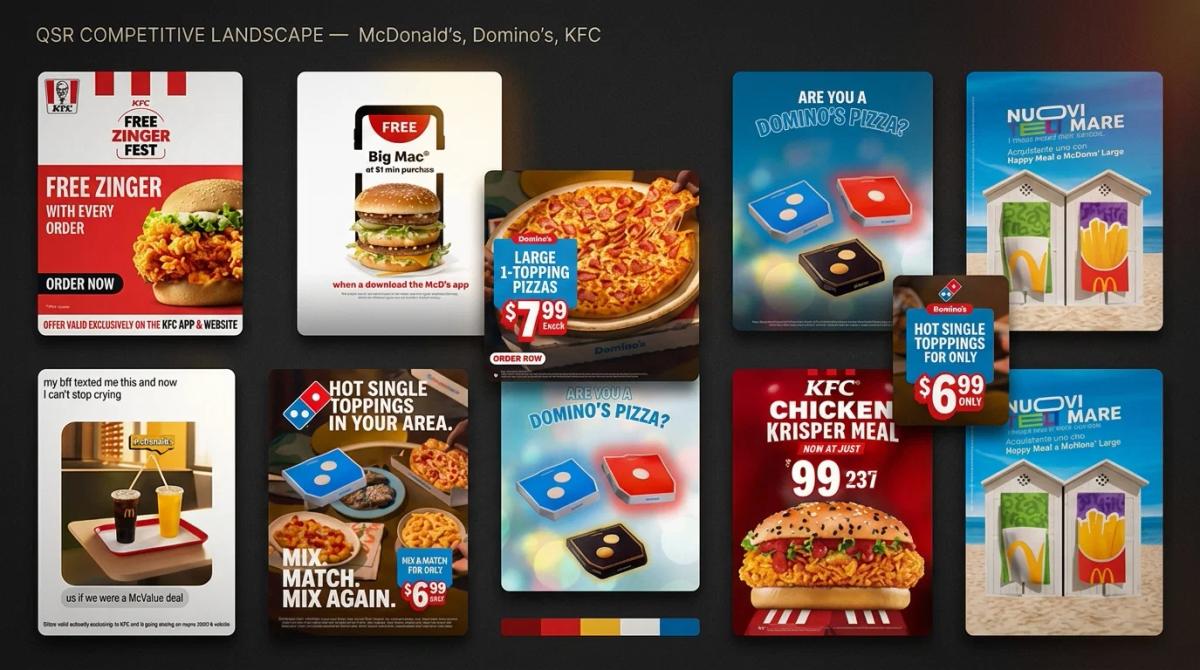
What Big Fast Food Brands Are Running on Meta
You do not have to guess what McDonald's or KFC is advertising this week, and you do not have to scroll the Meta Ad Library by hand for an hour. You can ask. We opened a session at vibemyad.com/sessions, named the three brands, and asked the Vibemyad Agent to pull the top fast food meta ads for each.
• The agent searched the ad library, returned the live ad set for all three brands, then inspected nine ads and analyzed the creative angles and hooks running across them, all inside a single session.
• That is Vibemyad Ad Vault working as a research agent, which means instead of manually browsing a library, you brief the agent and it surfaces the real QSR creative ads brands are running on Meta, by market, then breaks down what each one is doing.
• One detail is worth noting because it is a feature and not a quirk: the ads it surfaced were region-specific, with McDonald's pulling mostly from France and KFC pulling a ₹99 India deal, which matters because the same brand advertises very differently depending on the market you look at.
Here is the side-by-side, pulled from the live ads. Read down the "what it's doing" column, because these fast food advertising examples barely overlap in strategy.
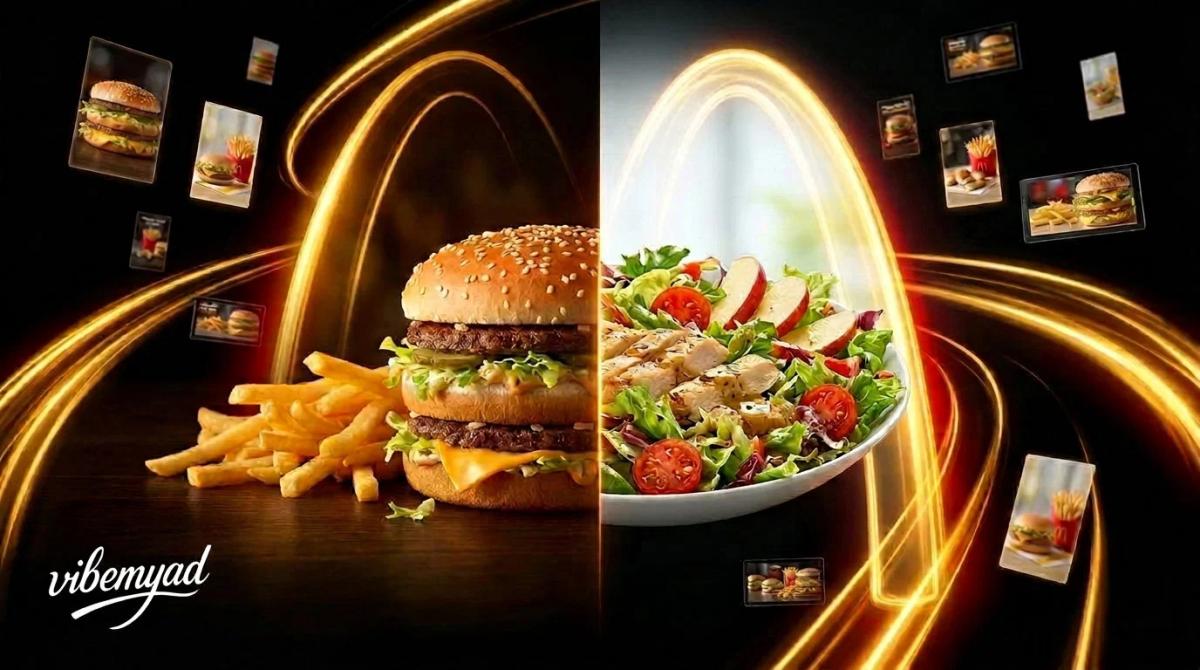
McDonald's
McDonald's is the most interesting of the three because its fast food marketing strategy refuses to pick one lane.
• In the same window, it runs an emotional, meme-native social post, the "my bff texted me this" creative, which is warm and casual with the product sitting on a textured background and the feeling carried entirely by the caption.
• It simultaneously runs a fully illustrated seasonal launch, the bright beach-hut creative with a summery palette tied to an Italian campaign, which exists to make the brand feel timely and current.
• And it runs a clean, minimalist coupon ad on a gradient background with nothing but the pure offer, which exists to do one job: drive the order.
That is not indecision, it is range. McDonald's has the budget and the brand permission to be funny on Monday, seasonal on Wednesday, and transactional on Friday, hitting different emotional triggers for different moments while the pattern stays the same: emotional meme, seasonal illustration, and stripped-down coupon, cycling so no single tone ever gets stale.
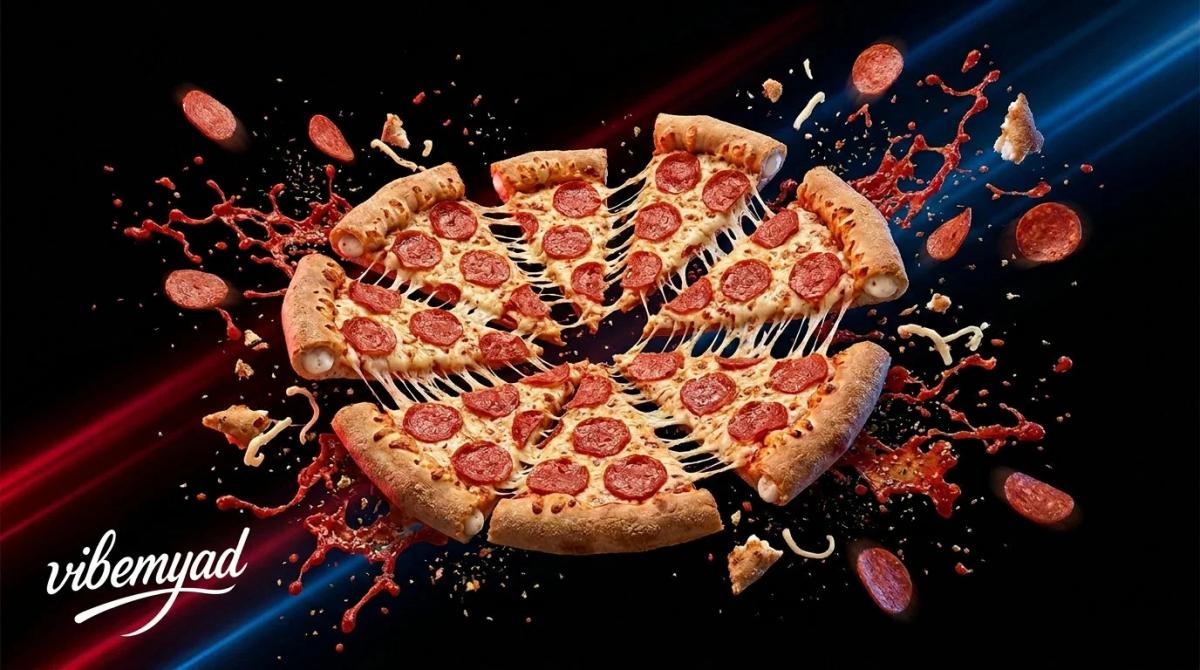
Domino's
Domino's runs a tighter personality than McDonald's, but a louder one, and the thread across everything is social provocation, copywritten to make you stop, screenshot, and send to a friend.
• "Hot Single Toppings in Your Area" borrows dating-app phrasing over a dark, dramatic close-up of pizza in all-caps white type, turning a topping list into a joke people want to share.
• "Mix. Match. Mix Again." is a maximalist collage of pizzas, wings, and brownies at deliberately chaotic density, selling variety through sheer visual abundance.
• "Are you a Domino's Pizza?" is a flirty pickup-line meme on a soft pastel gradient with floating pizza boxes, which is barely about pizza at all and entirely about being shareable.
The pattern is consistent even when the visuals are not: Domino's is playful, provocative, and engineered to be shared, heavy on meme-forward copy and dense food photography, because it is buying engagement and organic reach, not just attention.
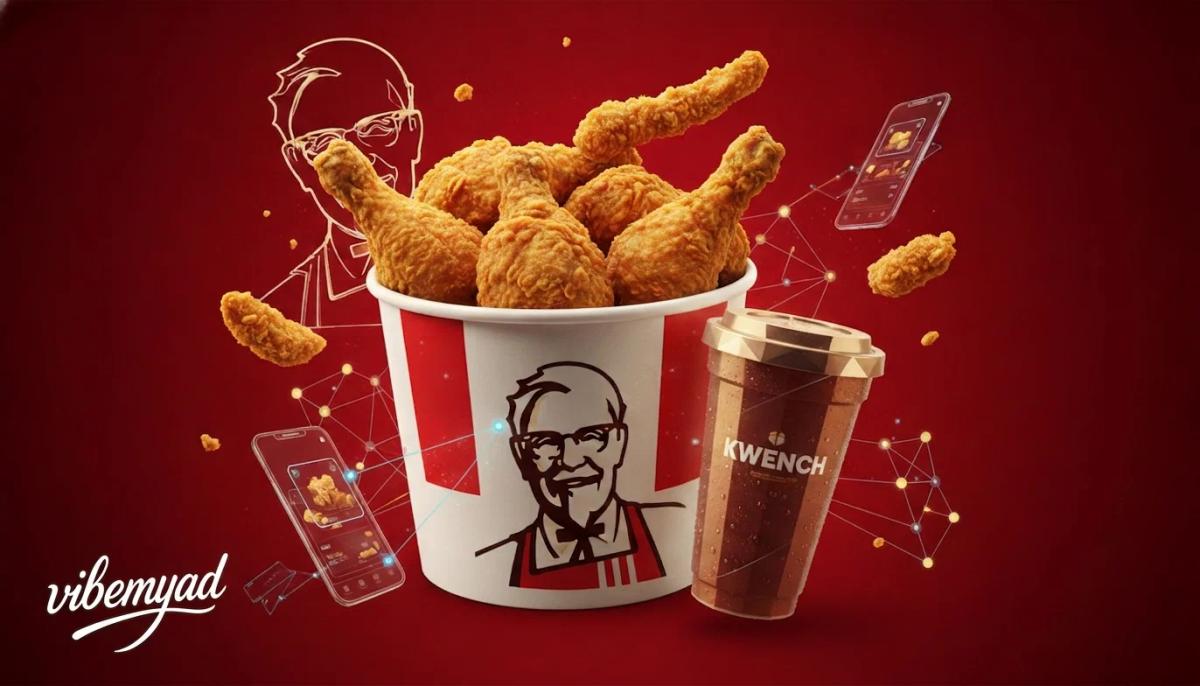
KFC
KFC is the opposite of McDonald's, because where McDonald's spreads across tones, KFC narrows to one and repeats it.
• Every ad is the same aggressive, on-brand red with a straightforward product hero shot and a high price or free-item hook, so the deal is the message and the message is impossible to miss.
• The Chicken Krisper Meal deal runs at a hard price point in huge white type over deep red, with the burger, fries, and Pepsi all in frame, leaving no doubt about what you get for the money.
• The Free Zinger Fest is the same playbook with a free-item twist, stark red-and-white, Zinger hero, Colonel Sanders logo anchoring it.
And the timing here is worth pausing on, because in June 2026, KFC rolled out its biggest global rebrand in years.
• The refresh updated the Colonel Sanders illustration, redrew the bucket to feel more dimensional, streamlined the typography, and introduced a connected "Bucketverse" system tying restaurants, digital ordering, and marketing together, alongside new boneless lines and the KWENCH by KFC drinks platform.
• Here is the opinionated read, and it is the most important point in this section: notice what the rebrand did not do, because it did not change the red, did not move the Colonel off center, and did not trade the price-hero formula for something cleverer.
• KFC evolved its identity rather than replacing it, sharpening the same assets it has always owned, which means the pattern holds even through a global refresh: relentless, on-brand red, product-first, and price-led, and that consistency through change is the exact discipline most brands lack.
You do not have a McDonald's budget, and that is fine, because the lesson in these fast food advertising examples is not about spending; it is about clarity. Each of these brands knows exactly what it is, and the fast food ads flow from that.
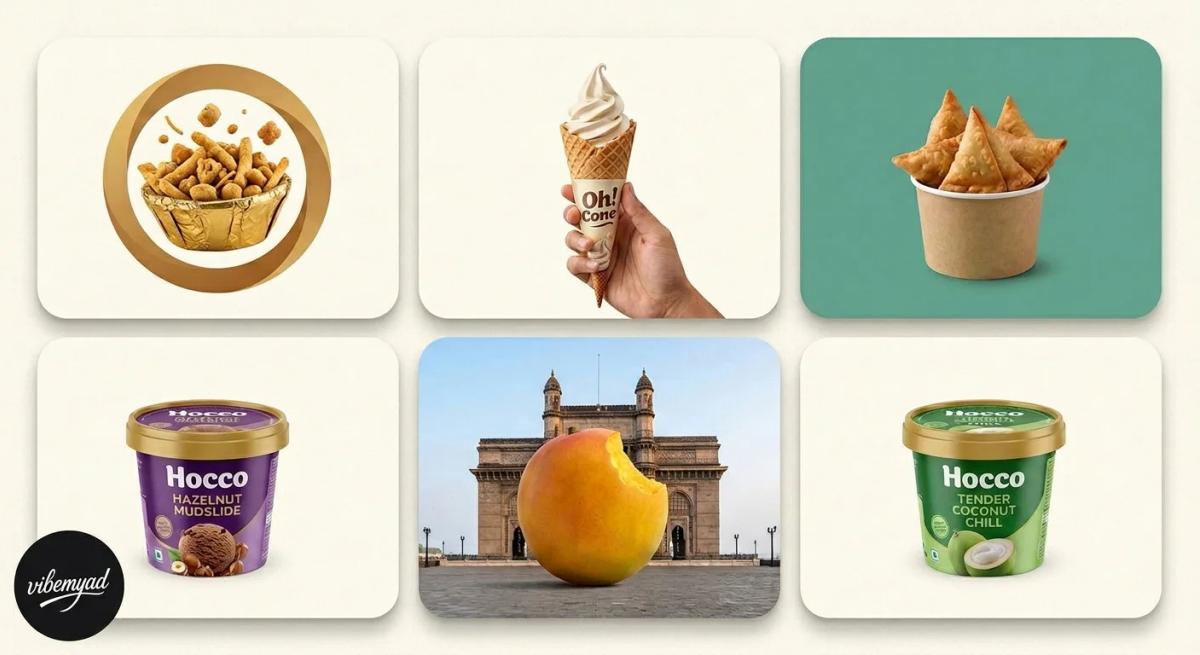
Fast Food Advertising Examples
• From McDonald's, take the idea of lanes, which means recognizing that an emotional post, a seasonal launch, and a plain offer are three different jobs, and that you should stop trying to make one ad do all of them and instead run a warm story post to build affection, a seasonal ad to create urgency, and a coupon to drive the order, as a deliberate set.
• From Domino's, take the permission to have a voice, because the reason its ads get shared is that they sound like a person with a sense of humor rather than a brand reading a press release, and while you do not have to do dating-app jokes, you do have to sound like someone, since a provocative, specific, human line will out-travel a polished generic one every single time.
• From KFC, take the discipline of repetition and the lesson its rebrand just taught, because the instinct for a small brand is to reinvent the creative every time and to treat a refresh as a reason to throw everything out, while KFC proves the opposite works by owning a small set of strong assets, the red, the Colonel, the price hero, and sharpening them even when it modernizes rather than swapping them, so you should pick your color, your offer structure, and your hero shot and hammer them until people recognize you from the corner of their eye.
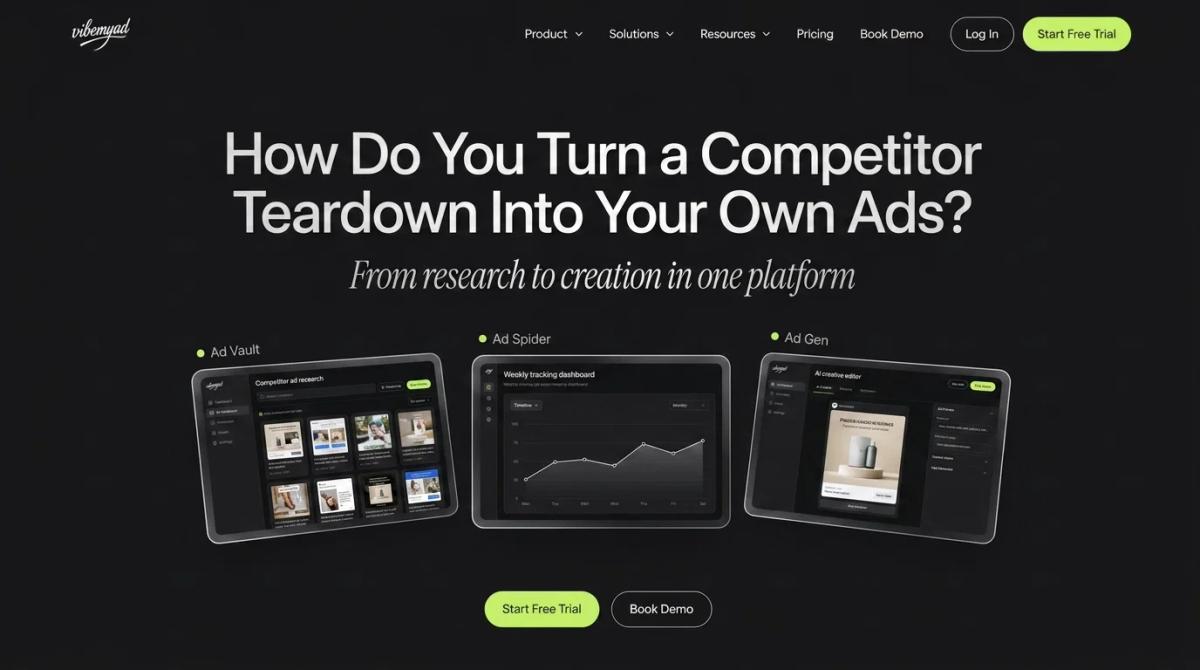
Generate Fast Food Ads with Vibemyad
This is where the research stops being interesting and starts being useful, because seeing what McDonald's, Domino's, and KFC run is only step one, and the point is to act on it without a studio or an agency.
• Vibemyad Ad Vault is the research half, the agent that pulls these ads, tracks the brands you care about, and surfaces the real Meta creative running in your market, so you are never guessing what actually works.
• Vibemyad Ad Spider extends that, tracking competitor brands with a weekly sync so you see how their creative shifts over time, which is exactly how you would have caught KFC's rebrand the week it dropped instead of months later.
• Vibemyad Ad Gen is the act-on-it half, where once you have decided which lane fits your fast food marketing strategy, you brief the agent in one session, ground it on a real photo of your own dish, and it generates accurate, on-brand static images and carousels at every Meta and delivery-platform spec.
Studying the teardown is the easy part. The real question is whether a kitchen without an agency can actually produce fast food ad creative in these three lanes, and it can, in one session at vibemyad.com/sessions. The trick is that each brand's strategy maps to a different step in the same flow, so you are not asking for "an ad," you are asking for a McDonald 's-style emotional post, a Domino 's-style provocation, or a KFC-style price hammer.
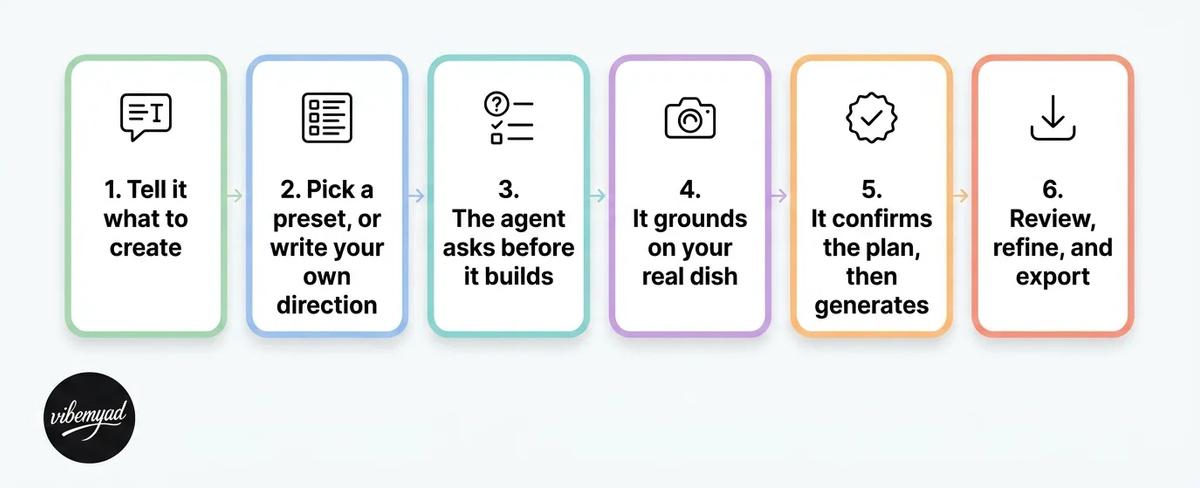
Generate Fast Food Ads With Vibemyad
• Step 1 · Tell it what to create: The session opens on "What would you like to create?", with tabs for Research, Images, and Videos. You type your request in plain language and name the lane you want, for example, "a warm, product-only ad image of my double cheeseburger for a weekend delivery offer," and attach a phone photo if you have one. Naming the lane up front is what steers the whole build, an emotional McDonald 's-style post, a dense Domino 's-style spread, or a loud KFC-style price hero.
• Step 2 · Pick a preset, or write your own direction: Instead of a blank prompt, you open the preset menu and choose a ready-made look the agent already knows how to make: Flat Lay, Close-Up Detail, To Scale, Outdoors, Styled Corner, and others. This is where the lanes diverge: Close-Up Detail or Styled Corner for the warm McDonald's look, a dense food-forward direction for the Domino's collage, a tight product-hero crop for the KFC red-and-white system. The preset guides the generation, so a good result does not depend on you knowing how to write a photography brief, and you can still refine in plain language on top of any preset.
• Step 3 · The agent asks before it builds: Rather than guessing, the agent asks a short set of tap-to-answer questions: whether you have a dish photo to feature as the hero or want the scene from scratch, the kind of venue, the type of dish. This step locks the brief with you before a single credit is spent, and it is the difference between a usable ad and twenty random regenerations. For a KFC-style system, this is where you fix the palette and the hero framing so every future Remix stays on-system.
• Step 4 · It is based on your real dish: If you uploaded a photo, the agent works from it, keeping the real color, shape, and detail of your food intact rather than inventing a new dish. Give it several shots, and it picks the cleanest one to anchor on and tells you why. This grounding is the whole reason your output stays your dish and not a generic look-alike, which matters most in the dense Domino 's-style scenes, where generic tools tend to drift and start inventing food the Evaluator would otherwise have to catch.
• Step 5 · It confirms the plan, then generates: The agent plays back the creative direction in plain language, the scene, mood, lighting, and what stays the hero, before rendering. You approve, the Image Generator runs, and the visual appears in the Generations panel beside the chat. Seeing the plan in words first is what lets you hold a McDonald 's-style frame deliberately minimal, or push a Domino 's-style frame deliberately busy, before any credit is spent.
• Step 6 · Review, refine, and export: Each generation lands in the Generations panel with its reference thumbnails and a step-by-step trail. Download it, or hit Remix to spin variations, a tighter crop, a different surface, a moodier vibe, a new offer, without starting over. Because the session holds context, the same dish stays consistent across every variation, which is exactly how you build a KFC-style repeatable campaign or a full Domino 's-style menu set, and exactly what a carousel needs. Export at the dimensions you need for Meta feed, Stories, Instagram, and delivery thumbnails.
Under the hood, that flow is several specialized agents working in sequence: a Creative Director and Router that interpret your brief, a Planner that asks the right questions and builds the plan, an Image Generator grounded on your reference, and an Evaluator that audits each output on four criteria: accuracy to your dish, brief adherence, structural integrity at ad scale, and brand consistency. You experience it as one conversation.
The honest boundary holds throughout: Vibemyad Ad Gen produces the static images and carousels that fill each lane, and your Pixel, targeting, and budget stay in your Ads Manager. The creative system is what you are building here. The media buy is still yours to run.
The gap between you and these brands was never talent; it was production capacity, because McDonald's can fill three lanes only because it has the team to make the creative for three lanes. The moment you can ground one real dish photo and remix it into a full, consistent set, that capacity gap closes, and what is left is the part you were always good at: knowing your food, your customers, and your voice. The big brands just handed you their playbooks for free, and the only question left is which lane is yours.
• The three biggest QSR brands pursue three opposite fast-food marketing strategies: McDonald's emotional range, Domino's social provocation, and KFC price-hammering.
• The shared lesson across these fast food advertising examples is clarity, not budget, because each brand knows exactly what it is, and the creative follows from that.
• KFC's June 2026 global rebrand proved the point by evolving its core assets rather than replacing them, a consistent approach through change.
• Each strategy maps to a specific Vibemyad Ad Gen build, a preset, a grounding approach, and a Remix pattern, so you produce the fast food ads on purpose rather than by luck.
• Vibemyad Ad Vault and Ad Spider research the market, and Vibemyad Ad Gen turns what you learn into accurate, on-brand creative.
Good ad research is not a guess about big brands; it is their live creative, pulled in minutes and broken down for you to use. McDonald's, Domino's, and KFC showed you three ways to win on Meta, study them with Ad Vault, and build your own in Ad Gen, in one session.
Get notified when new insights, case studies, and trends go live — no clutter, just creativity.
Table of Contents


Arpita Mahato
Content Writer, Vibemyad

Arpita Mahato
Content Writer, Vibemyad

Arpita Mahato
Content Writer, Vibemyad