
October 19, 2025 • 10 min read

October 19, 2025 • 10 min read
Content buckets are strategic categories that organize your ad content by purpose and audience intent. Using the MECE framework ensures no overlap and complete coverage. Top brands use 6-8 buckets with optimal distribution: 60% value/education, 20% inspiration, 10% social proof, 10% promotion. Reverse-engineer successful brands' bucket strategies to accelerate your content planning and improve consistency.
Content buckets (also called content pillars) are strategic categories that organize your advertising content by purpose, topic, or audience intent. Instead of posting whatever "feels right," you systematically rotate through predefined categories.
Why content buckets matter:
• Eliminate daily decision fatigue
• Balance value creation with promotion
• Ensure consistent brand messaging
• Make quarterly planning efficient
• Track performance by category
The transformation:
Before buckets: Random posts, inconsistent messaging, heavy promotion
After buckets: Strategic distribution, predictable planning, balanced value-to-sales ratio
This structured approach aligns with Meta's Andromeda algorithm, which rewards creative diversity. Content buckets naturally provide the variety algorithms crave.
Start by mapping your audience's needs across their journey:
Awareness Stage:
• Educational content (teaches concepts)
• Inspiration/aspiration (shows possibilities)
• Entertainment (builds brand affinity)
Consideration Stage:
• Social proof (testimonials, reviews)
• Comparison content (vs alternatives)
• Behind-the-scenes (builds trust)
Decision Stage:
• Product features/benefits
• Limited offers/promotions
• Objection handling
The fastest way to identify winning buckets? Study successful brands in your industry.
Using Vibemyad's competitive intelligence:
• Go to Vibemyad's Brands page
• Add 3-5 top competitors in your niche
• Browse their ad library in Explore page
• Categorize their content by theme
• Identify their 6-8 most common buckets
• Note the frequency/distribution of each
• Example: Analyzing a skincare brand
After reviewing 50+ ads, you might notice:
• 35% Product education (ingredients, benefits)
• 25% User results (before/after, testimonials)
• 20% Tutorials (application tips, routines)
• 10% Brand values (sustainability, mission)
• 10% Promotions (sales, new launches)
This gives you a proven framework to adapt.
Review your last 30-50 ads and naturally group them:
• What themes emerge?
• What performs best?
• What's missing?
• Where's the overlap?
This reveals your intuitive buckets—now make them intentional.
MECE (Mutually Exclusive, Collectively Exhaustive) is a strategic principle from consulting that ensures complete, non-overlapping coverage.
Mutually Exclusive: No overlap between buckets. Each piece of content clearly belongs to ONE bucket.
Collectively Exhaustive: Together, your buckets cover ALL possible content needs. No gaps.
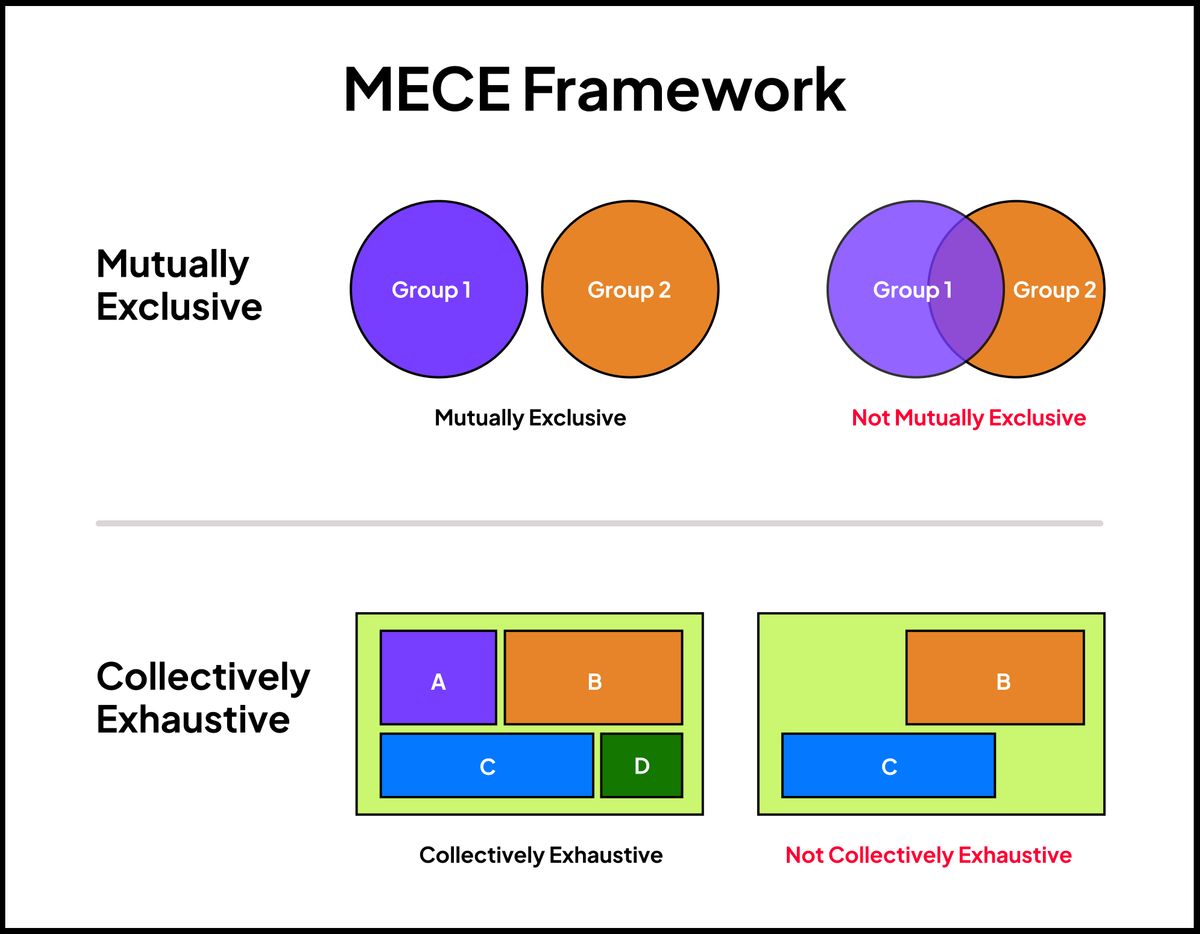
MECE Framework
Without MECE:
• ❌ Bucket overlap creates confusion ("Is this education or tutorial?")
• ❌ Gaps leave audience needs unmet
• ❌ Performance tracking becomes messy
• ❌ Planning lacks strategic clarity
With MECE:
• ✅ Clear categorization
• ✅ Complete audience coverage
• ✅ Clean performance analytics
• ✅ Strategic distribution control
Ask these questions for each bucket:
Mutually Exclusive Test: "Could this content fit into another bucket?" If yes, refine your definitions.
Collectively Exhaustive Test: "Is there content we need to create that doesn't fit any bucket?" If yes, add a bucket or broaden definitions.
Example of Non-MECE Buckets:
• ❌ "Educational Content" and "How-To Tutorials" (overlap)
• ❌ "Product Features" and "Product Benefits" (overlap)
• ❌ Missing "Social Proof" bucket (gap)
Example of MECE Buckets:
• ✅ "Problem Education" (identifying pain points)
• ✅ "Solution Tutorials" (how to solve with your product)
• ✅ "Social Proof" (customer results)
• ✅ "Brand Values" (mission, ethics)
• ✅ "Promotions" (offers, launches)
Here are the most effective content buckets used by high-performing brands:
Purpose: Teach concepts, build authority, provide value
Examples:
• "5 Signs Your Skin Barrier Is Damaged"
• "What Actually Causes Ad Fatigue?"
• "The Real Reason Your Coffee Tastes Bitter"
Why it works: Education builds trust before asking for the sale. This is the foundation of content strategy.
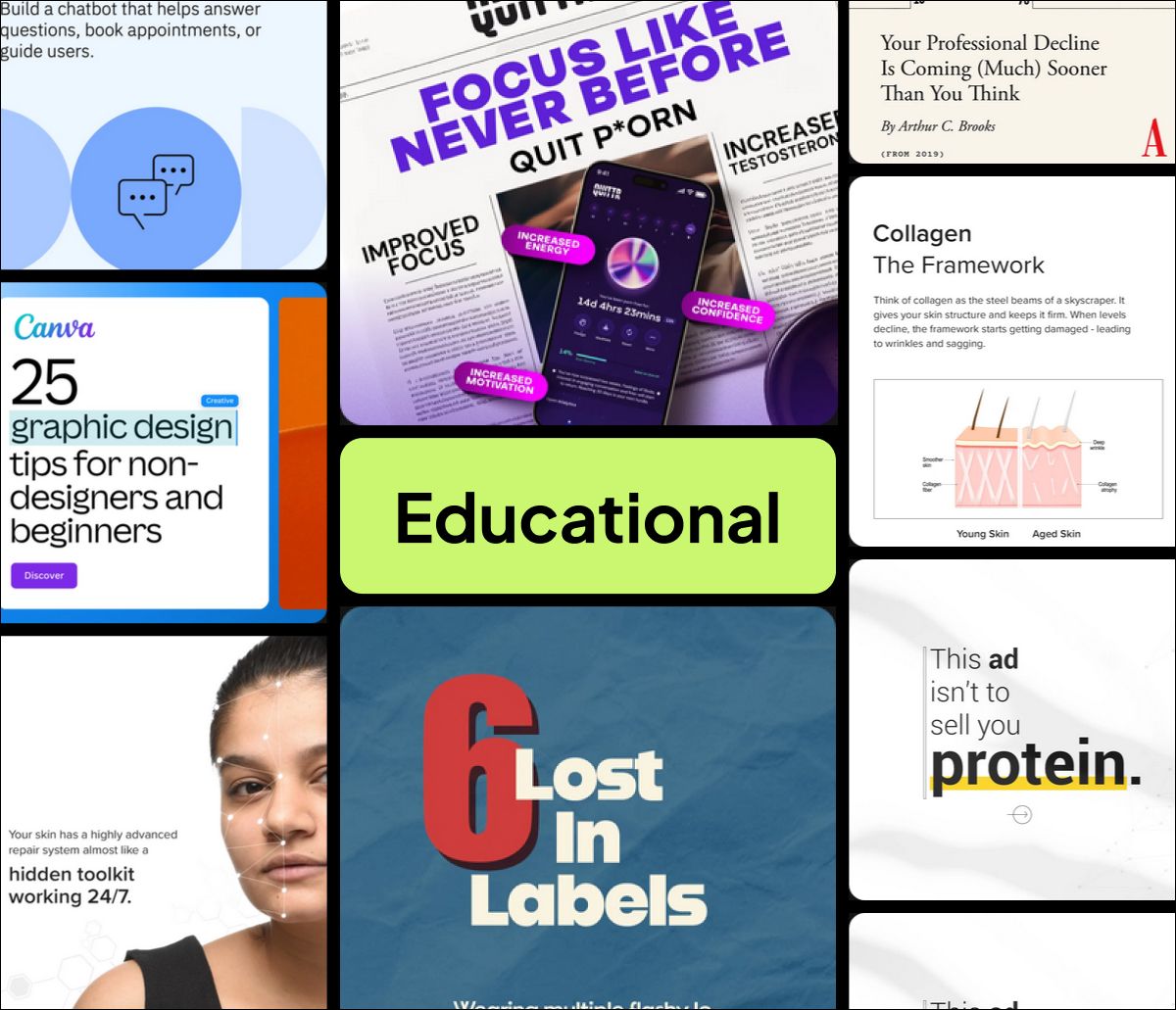
Educational Content Bucket Examples
Purpose: Show real results, testimonials, user-generated content
Examples:
• Customer before/after transformations
• "Here's what our customers are saying..."
• Case studies with metrics
Vibemyad tip: Use Explore to find high-performing testimonial ad formats in your industry.
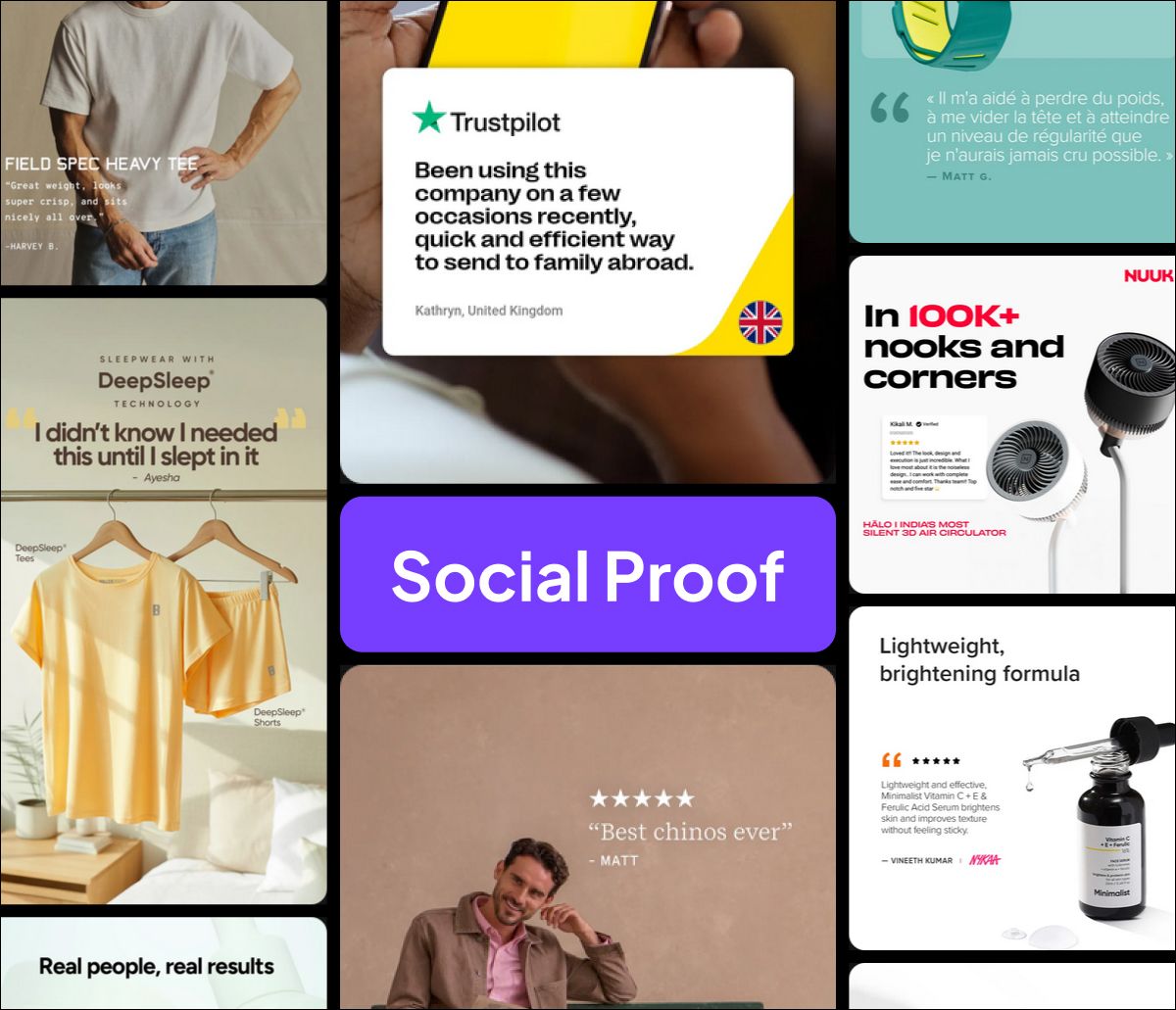
Social Proof Content Bucket Examples
Purpose: Humanize brand, build connection, show process
Examples:
• Product development process
• Team introductions
• "How we source our ingredients"
• Manufacturing/creation process
Why it works: Transparency builds trust and differentiates from competitors.
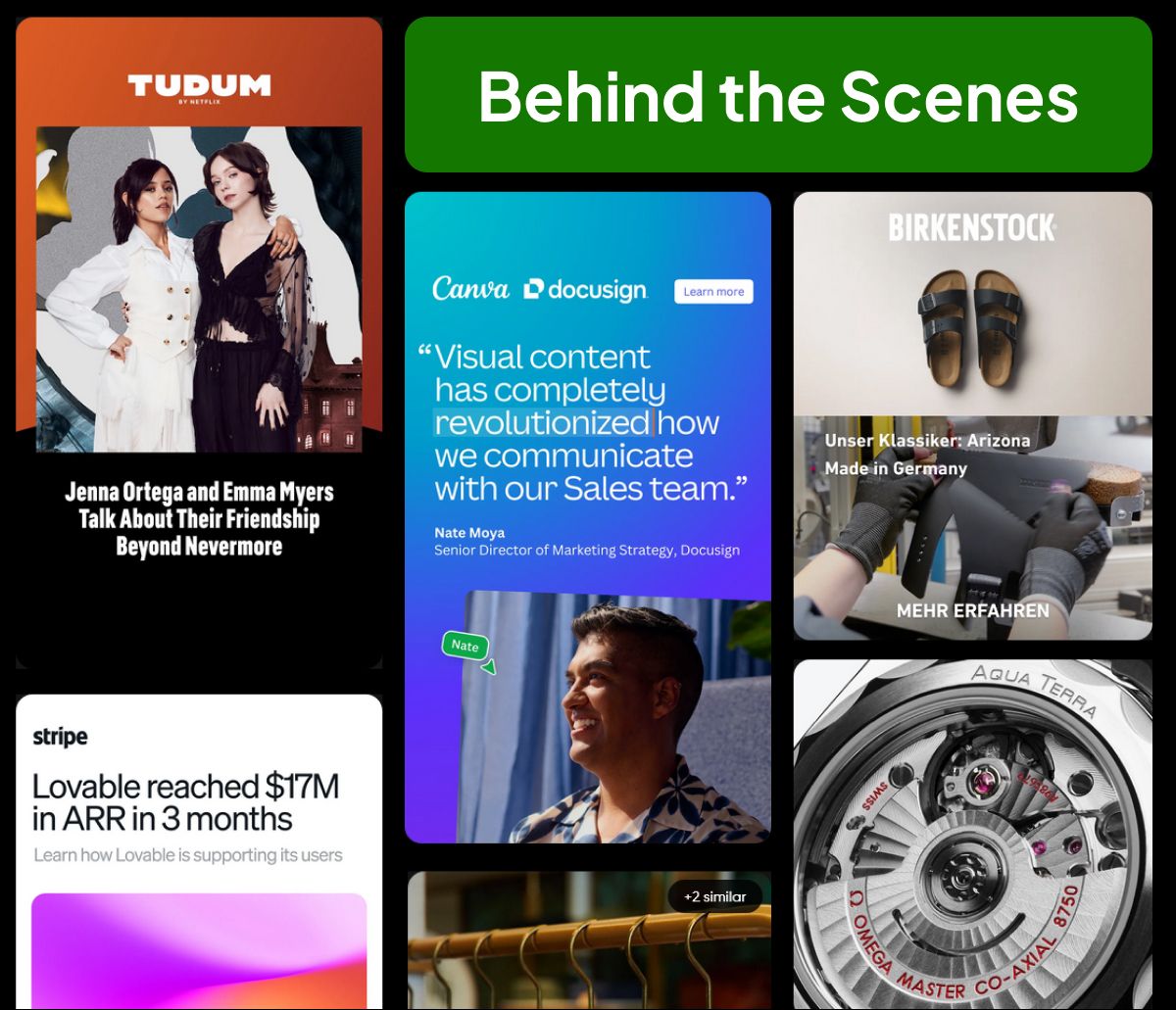
Behind the Scenes Content Bucket and its Examples
Purpose: Demonstrate product use, provide actionable value
Examples:
• "3 Ways to Style This Jacket"
• "How to Use Our App in 60 Seconds"
• "The Perfect Morning Routine with [Product]"
Pro tip: Tutorial content performs well when it solves specific problems, not just showcases features.
Purpose: Show desired outcomes, lifestyle positioning
Examples:
• "The Life You Deserve"
• Aspirational lifestyle imagery
• "Imagine waking up to..."
• Goal-state visualization
Note: Balance inspiration with authenticity—overly polished can feel inauthentic.
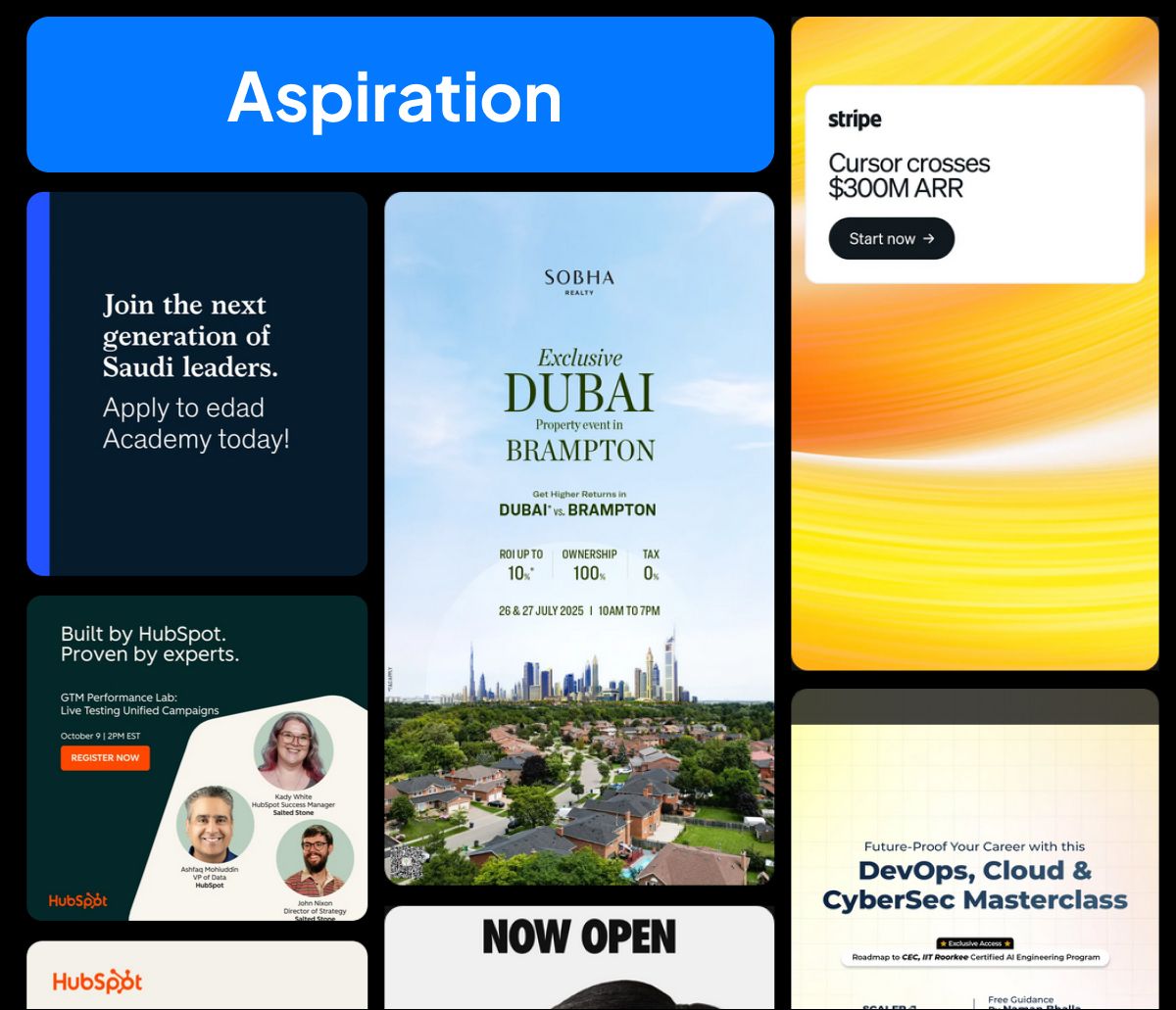
Inspiration & Aspiration Content Bucket and its Examples
Purpose: Highlight unique selling points, specifications
Examples:
• "3 Features That Make Us Different"
• Comparison charts
• "What Makes Our [Product] Superior"
Best practice: Focus on benefits (what customer gets) over features (what product has).
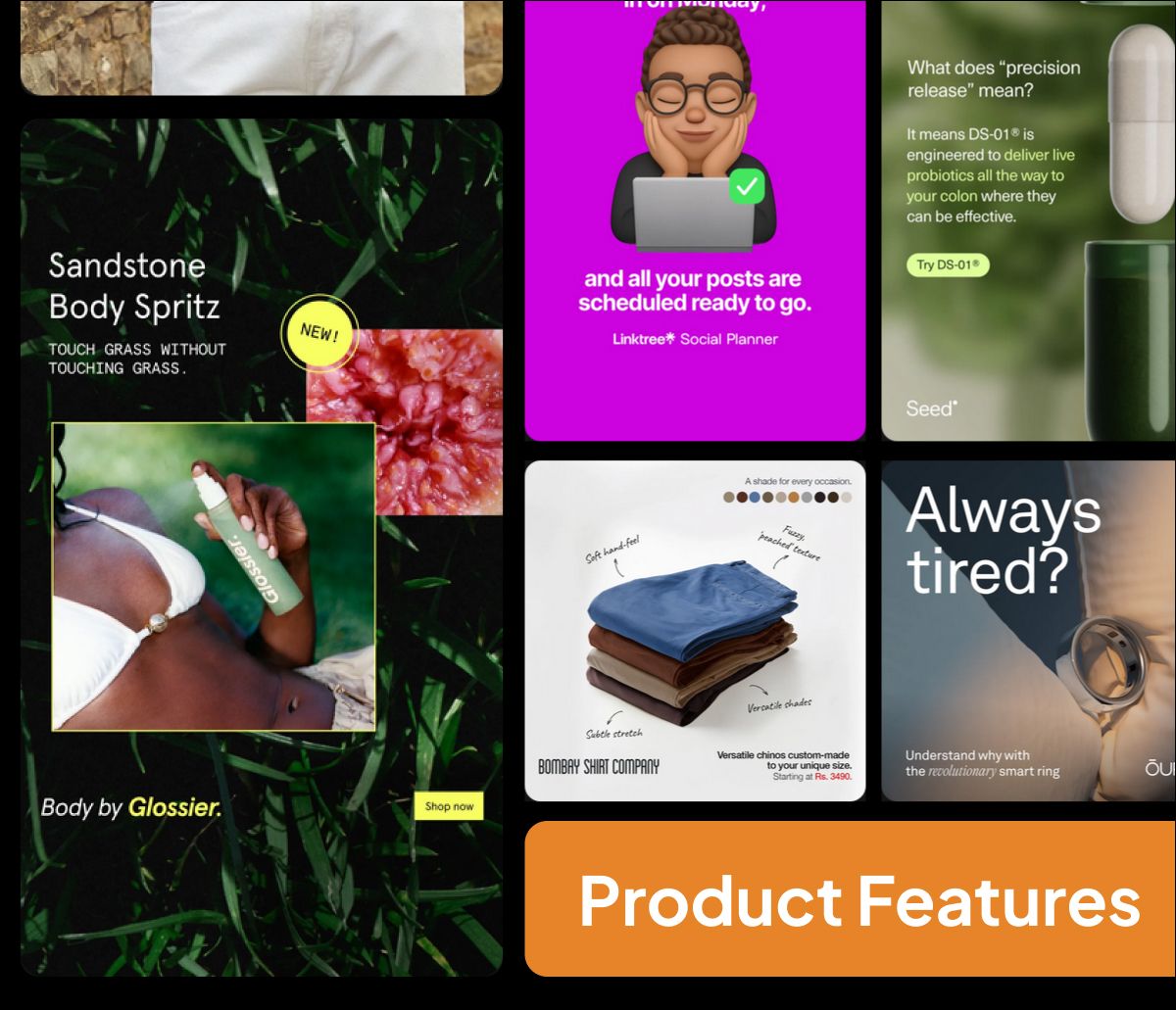
Product Features & Explainer Content Bucket and its Examples
Purpose: Share company ethics, mission, values
Examples:
• Sustainability initiatives
• Community giving programs
• Founder's story
• "Why We Started This Company"
Why it matters: Values-driven content resonates with conscious consumers, building long-term loyalty.
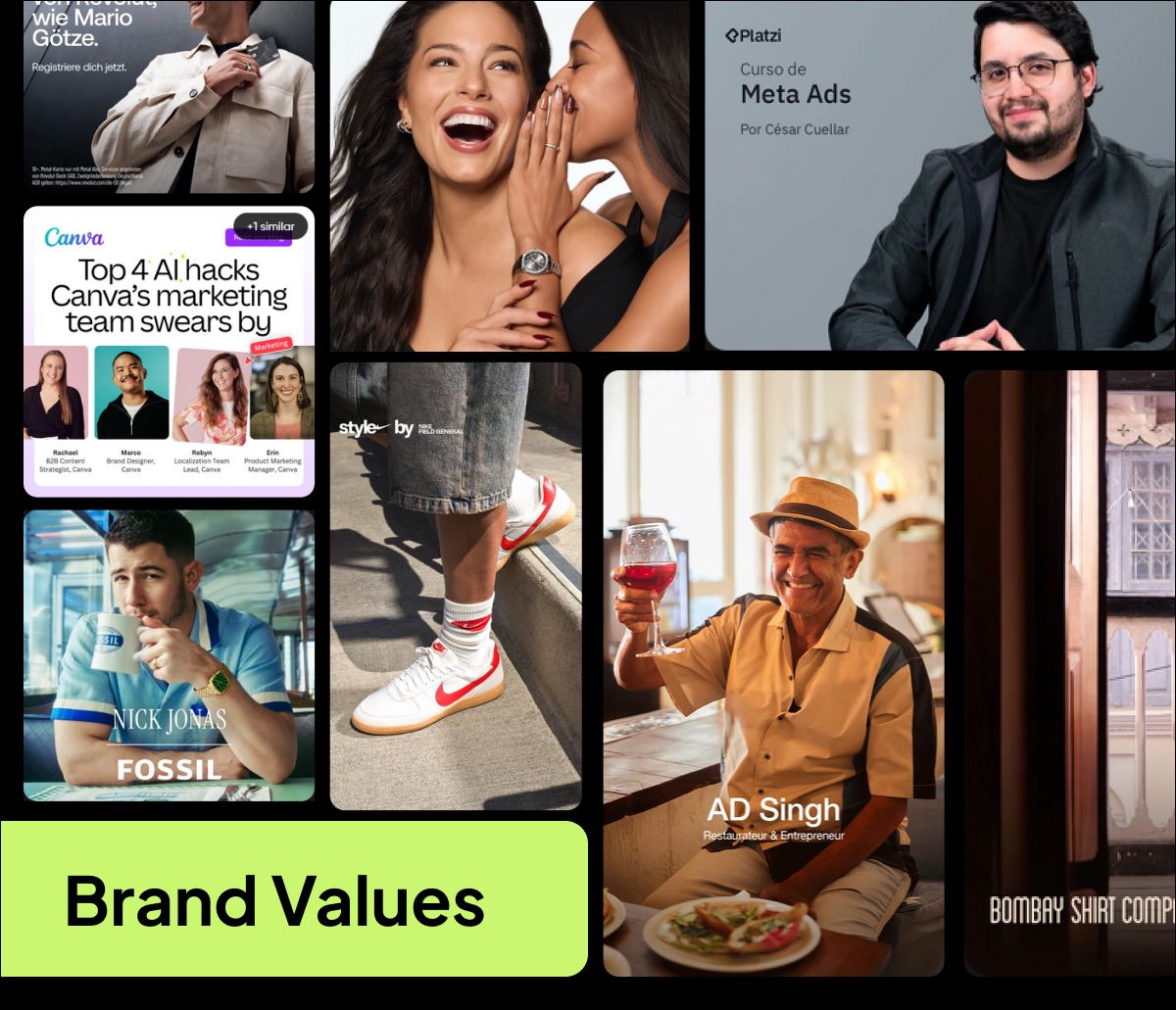
Brand Values Content Bucket and its Examples
Purpose: Leverage holidays, events, trends
Examples:
• "Summer Essentials"
• "Holiday Gift Guide"
• "Back to School Solutions"
• Industry event tie-ins
Planning tip: Map these out quarterly. Use Vibemyad's seasonal campaign optimizer for holiday planning.
Purpose: Identify pain points, create urgency
Examples:
• "Still Struggling With [Problem]?"
• "The Hidden Cost of [Common Mistake]"
• "Why [Old Solution] Doesn't Work Anymore"
Warning: Don't over-agitate. Balance problem awareness with solution optimism.
Purpose: Drive direct sales, limited offers
Examples:
• "24-Hour Flash Sale"
• "New Product Launch"
• "Exclusive Discount for [Segment]"
• "Bundle & Save"
Golden rule: Keep promotional content to 10-15% max. Over-promotion decreases trust and engagement.
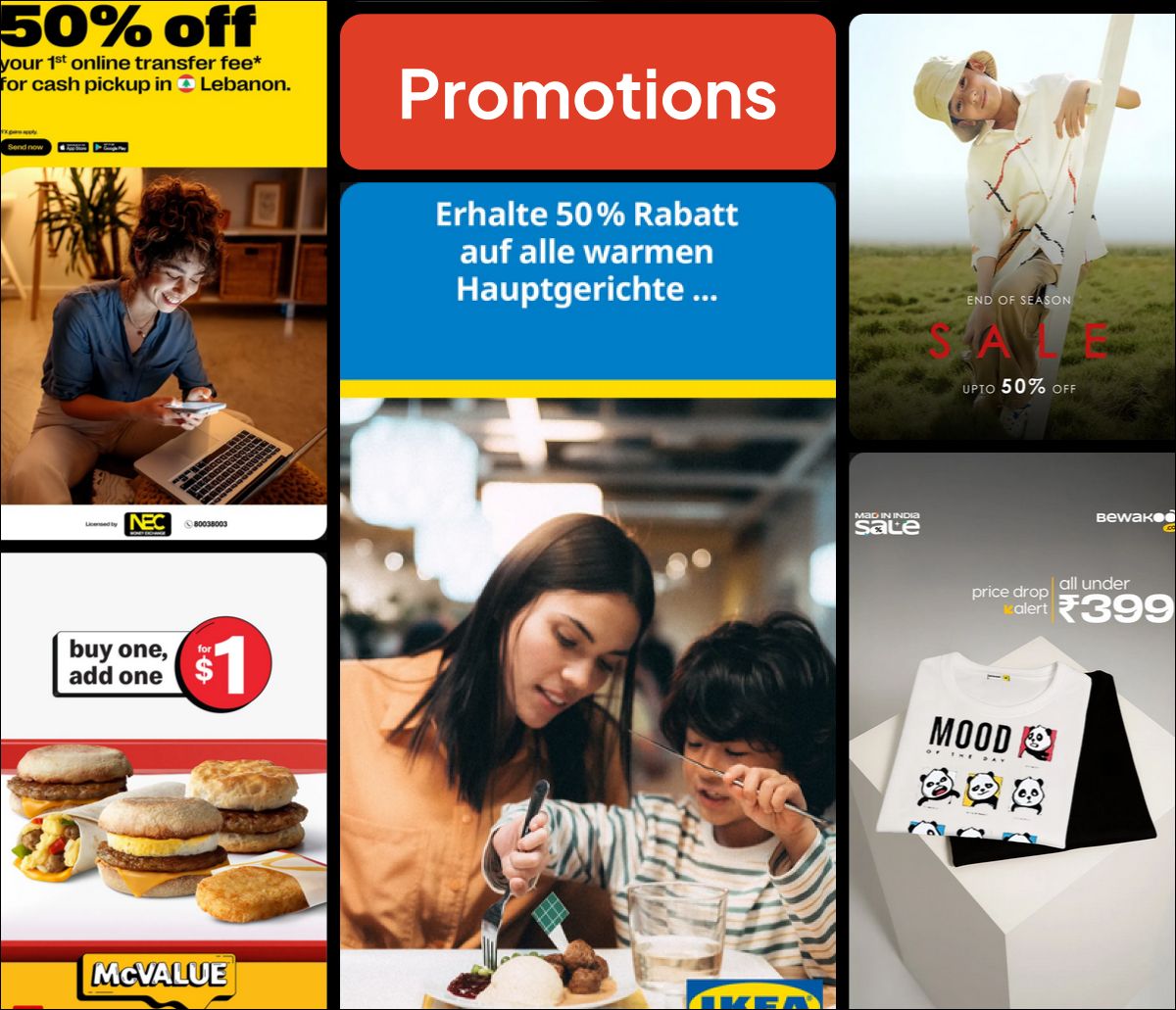
Promotions & Offers Content Bucket and its Examples
Beyond the top 10, here are specialized buckets for specific industries or strategies:
E-commerce:
• Unboxing experiences
• Styling/pairing suggestions
• Size guides and fit advice
B2B/SaaS:
• ROI calculators
• Industry benchmarks
• Integration tutorials
D2C Brands:
• Ingredient deep-dives (skincare, food)
• Sourcing transparency
• Community spotlights
Service Businesses:
• Client transformation stories
• Process walkthroughs
• Expert tips/insights
• User-Generated Content (UGC): Customer-created content reshared
• Newsjacking: Timely commentary on industry news
• Myth-Busting: Debunking common misconceptions
• Data/Research: Original studies or data visualizations
• Interactive Content: Quizzes, polls, calculators
1. Start with the top 5 universal buckets (Education, Social Proof, Tutorials, Inspiration, Promotions)
2. Add 1-3 buckets specific to your industry/audience
3. Test performance for 90 days
4. Refine based on data
Pro tip: More buckets ≠ better. 6-8 well-defined buckets are more effective than 15 unclear ones.
Understanding competitors' content bucket strategies gives you a roadmap to success. Here's how to reverse-engineer their approach:
Choose 3-5 brands that are:
• In your industry/niche
• One size bigger than you (aspirational)
• Consistently posting content
Using Vibemyad's Brands feature:
• Go to Vibemyad Brands
• Add each competitor brand
• Browse their ad library chronologically
• Take notes on recurring themes
Using Vibemyad's Explore:
• Go to Explore
• Filter by your industry
• Sort by engagement/performance
• Identify patterns in top-performing ads
Review 30-50 recent ads and group them into categories:
Key questions:
• What's their promotional vs. value ratio? (Should be 10-20% promo)
• How often do they post each bucket? (Pattern recognition)
• Which buckets get the most engagement? (Performance analysis)
• What's missing from their strategy? (Your opportunity)
Don't copy their exact buckets. Instead:
✅ Adopt successful frameworks: If they use 60% education, test similar ratios
✅ Identify gaps: What buckets are they NOT using? (Your differentiation opportunity)
✅ Improve execution: Take their bucket concept, execute it better
✅ Add your unique angle: What can you do that they can't?
Example adaptation:
Competitor's strategy:
• 40% Product features
• 30% Promotions
• 20% Tutorials
• 10% Social proof
Your improved strategy:
• 50% Education (they're under-educating)
• 25% Social proof (capitalize on their weakness)
• 15% Tutorials (match their strength)
• 10% Promotions (less is more)
Based on competitive analysis + your brand strengths:
Your final bucket framework:
Define 6-8 MECE buckets
Set distribution percentages (add up to 100%)
Create content calendar mapping buckets to dates
Generate variations using Vibemyad Remix
Track performance by bucket
Refine quarterly
Set up monthly reviews:
• Check competitors' new ad strategies
• Identify emerging bucket trends
• Adjust your distribution based on performance
• Stay ahead of market shifts
Vibemyad makes this effortless: Save competitor brands, check their feed monthly, spot new patterns instantly.
This systematic approach transforms guesswork into strategy. You're not just creating content—you're executing a data-informed content bucket system that compounds over time.
For more on analyzing competitor strategies, see our guide on reverse-engineering winning ads.
Content buckets transform your ad strategy from reactive chaos to proactive planning. The MECE framework ensures complete coverage without overlap, making your content strategy both efficient and effective.
Key takeaways:
✅ Start with 6-8 MECE content buckets covering your audience's journey
✅ Use the 60/20/10/10 distribution rule (value/inspiration/social proof/promotion)
✅ Reverse-engineer successful brands using competitive intelligence tools
✅ Test and refine your buckets quarterly based on performance data
✅ Plan in batches using your bucket framework for 90-day calendars
Stop guessing. Start strategizing.
With Vibemyad, you can:
✅ Analyze competitors' content bucket strategies with Brands monitoring
✅ Discover top-performing content types in your industry via Explore
✅ Generate bucket-specific ad variations instantly with Remix
✅ Track performance by bucket to optimize your distribution
The brands winning in 2025 aren't working harder—they're working smarter with strategic content frameworks.
👉 Start analyzing winning content strategies free →
• Instagram Reels Algorithm Update 2025 – How originality signals align with content bucket diversity
• Meta's Andromeda Update: How to Adapt and Scale – Why creative diversity (content buckets) matters for algorithms
• AI-Powered Seasonal Campaign Optimizer – Planning seasonal content buckets
• When TikTok Trends Outperform Your Million-Dollar Campaign – Brand monitoring strategies
• How to Create Ads for Facebook Without a Designer – Execute your content bucket strategy at scale
• The 3R Method for Original D2C Skincare Ad Concepts – Creative ideation within content buckets
• The Power of Still Ads – Choosing ad formats for each bucket
Get notified when new insights, case studies, and trends go live — no clutter, just creativity.
Table of Contents


Arpita Mahato
Content Writer, Vibemyad

Arpita Mahato
Content Writer, Vibemyad


Rahul Mondal
Product, Design and Co-founder, Vibemyad