March 27, 2026 • 11 min read

March 27, 2026 • 11 min read
• Color is a competitive variable, not a design preference — brands that choose colors based on category gap analysis consistently outperform those choosing colors based on aesthetics
• Research from the University of Loyola, Maryland shows color increases brand recognition by up to 80%, and 85% of consumers cite color as a primary factor in purchasing decisions
• Pinterest's official 2026 Palette — Persimmon, Cool Blue, Plum Noir, Wasabi, and Jade — is derived from real search and save behavior, making it a direct signal of consumer intent
• High-contrast ads outperform low-contrast ads regardless of specific hue — a 7:1 contrast ratio is the performance threshold that separates visible ads from ignored ones
• Orange CTAs convert 2.4% higher than green and 3.1% higher than blue in e-commerce contexts, but the more powerful lever is differentiation: picking colors your category has not claimed yet
• Vibemyad Ad Spider, Vibemyad Ad Vault, and Vibemyad Ad Gen give Meta advertisers the intelligence to find color gaps, validate them against live competitor data, and generate variants in seconds
Most ad creative decisions start with the wrong question. Teams ask "what looks good?" when the question that actually moves performance is "what does no one else in this category look like?"
Color is not decoration. In the context of a paid ad — where a user is scrolling a feed in under two seconds and making a subconscious judgment about whether to stop — color is often the first signal your creative sends. It determines whether the ad registers as worth pausing on or blends into the visual noise of everything else running in that category. The brands that understood this in 2025 and 2026 did not just choose better colors. They chose strategically different colors, backed by competitive data on what their category was already saturated with.
The shift in thinking is straightforward: color intelligence means knowing what your competitors are running, identifying what nobody has claimed, and moving into that gap before anyone else does. The result is not just a more distinctive ad — it is a measurable lift in CTR and a lower CPA, because an ad that breaks pattern in a predictable category commands disproportionate attention.
Before getting into what worked specifically in 2025–2026, it is worth grounding the conversation in what the research has consistently shown across decades.
A study from the University of Loyola, Maryland found that color increases brand recognition by up to 80%.
This is not a marginal effect. An 80% lift in recognition means that color is doing more than making your brand look distinctive — it is literally making it more memorable to the people who see it.
According to research aggregated by Straits Research, 85% of buyers say color is the main factor in their decision to select one product over another, and up to 90% of snap judgments made about products can be based on color alone. The implication for advertising is direct: color is not the last step in creative production, it is the first strategic variable.
Research from the CCICOLOR Institute for Color Research shows that people make a subconscious judgment about a product within 90 seconds of initial viewing, and between 62% and 90% of that assessment is based on color alone.
For a display or feed ad where total viewing time may be under two seconds, that means the color decision is effectively the entire first impression.
These are not new findings. What changed in 2025–2026 is how the most sophisticated advertisers started using this research — not as permission to pick bold colors, but as justification for treating color as a data-driven competitive decision.
The advertising landscape from 2025 into 2026 saw a sharp move away from pandemic-era minimalism.
Consumers craved visual stimulation and emotional uplift, and brands responded with dopamine colors — bright pinks, electric blues, sunny yellows, and vibrant greens that trigger pleasure responses and create positive brand associations.
This wave produced real performance lifts in categories that had been running muted, desaturated palettes for years. A brand entering a feed full of beige and off-white with full-saturation neon green stood out simply by being visually different.
But the trend created its own problem. By late 2025 and into 2026, the prediction among analysts was that dopamine color fatigue was coming — when every brand uses the same intensely saturated palette, none of them stand out, and the next wave would swing toward more sophisticated, nuanced color combinations that still feel optimistic but with more depth and complexity.
This is precisely the dynamic that makes color gap analysis valuable. The brands that still win with dopamine colors in 2026 are not the ones that followed the trend — they are the ones that identified which saturated hues their specific category had not yet adopted.
In a fitness supplement category dominated by electric blue and neon green, a brand running Persimmon stands out. In a D2C skincare category running warm neutrals, electric mint cuts through. The color matters less than the gap.
Pinterest's annual color forecast is one of the most useful publicly available signals for ad creative strategy, because it is built from real behavioral data — not designer preference or trend forecasting opinion.
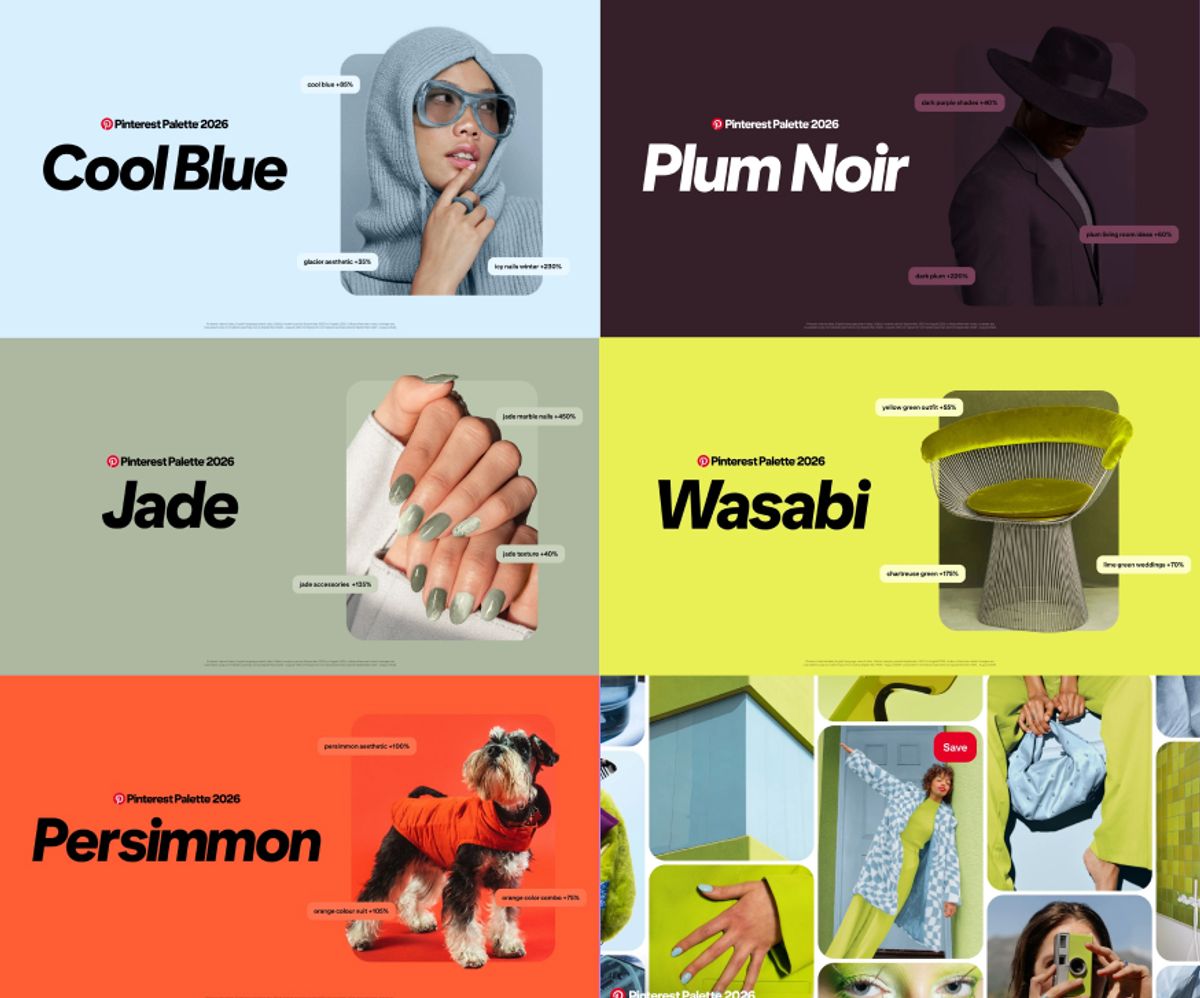
Pinterest 2026 Palette
Pinterest's 2026 Palette was derived from internal search and save data collected from September 2023 through August 2025, combining quantitative analysis of color-related search terms with cultural trend research. The five colors selected — Persimmon, Cool Blue, Plum Noir, Wasabi, and Jade — emerged from millions of actual user actions, not editorial choices.
The search data behind the palette is specific: searches for "cool blue" were up 85%, "persimmon aesthetic" was up 100%, "orange color suit" searches climbed 105%, and "dark plum" searches surged 220% with saves up significantly. These are not trend predictions — they are records of consumer intent already in motion.
Pinterest's VP of Global Creative, Xanthe Wells, described the shift directly: "For a long time, the safest choice was to keep things quiet and neutral. Now people are ready for more.
For Meta advertisers, the signal is actionable. These colors are gaining momentum in consumer search behavior now, which means they will appear in competitor Meta creatives in the months ahead. The window to run them before they become saturated in your category is open today, not six months from now. An advertiser who identifies that Persimmon has zero usage in their category and launches a creative test this month is operating ahead of the curve. One who waits until Persimmon appears in competitor ads is following, not leading.
Performance data revealed winning formulas across industries:
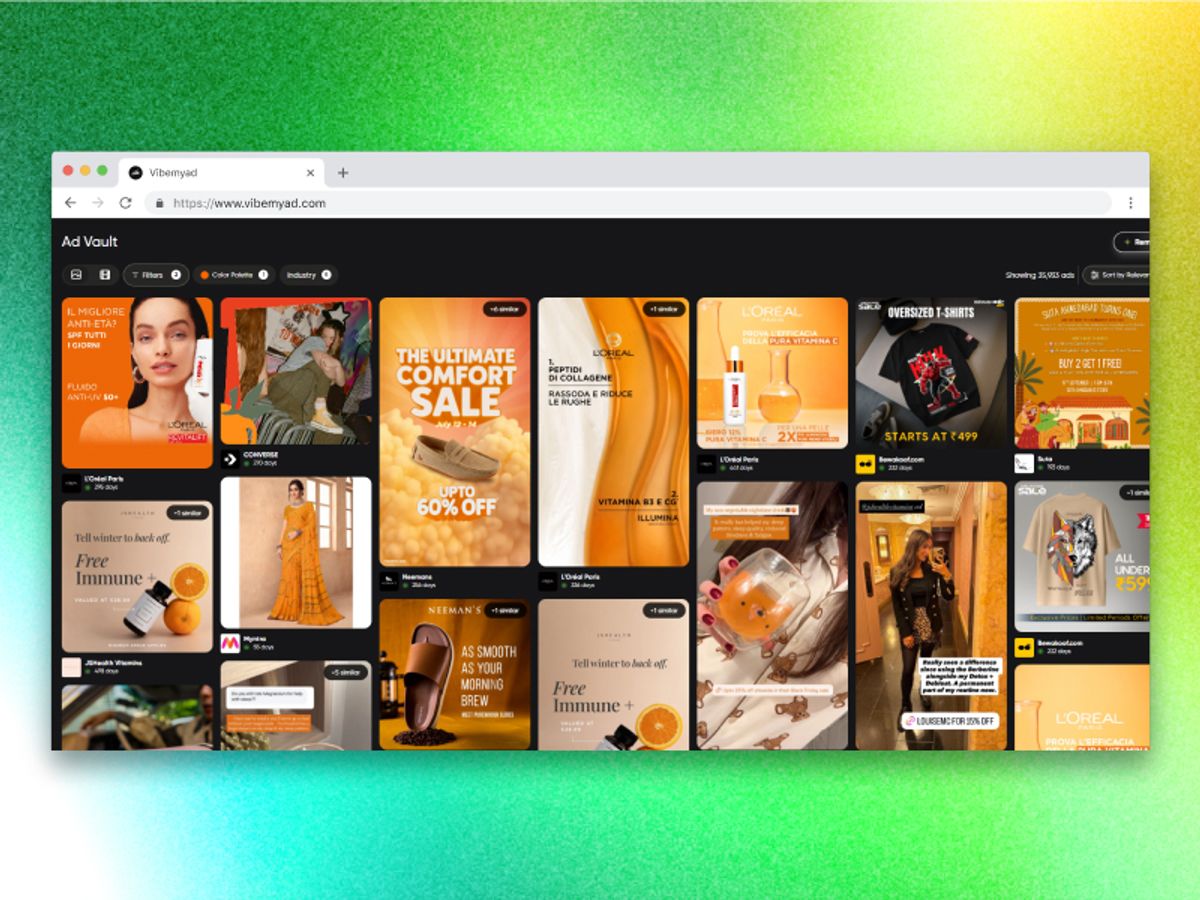
Ads with orange tone on Vibemyad Ad Vault
E-Commerce: Orange CTAs dominated with conversion rates 2.4% higher than green and 3.1% higher than blue. The color's friendly urgency hit the psychological sweet spot.
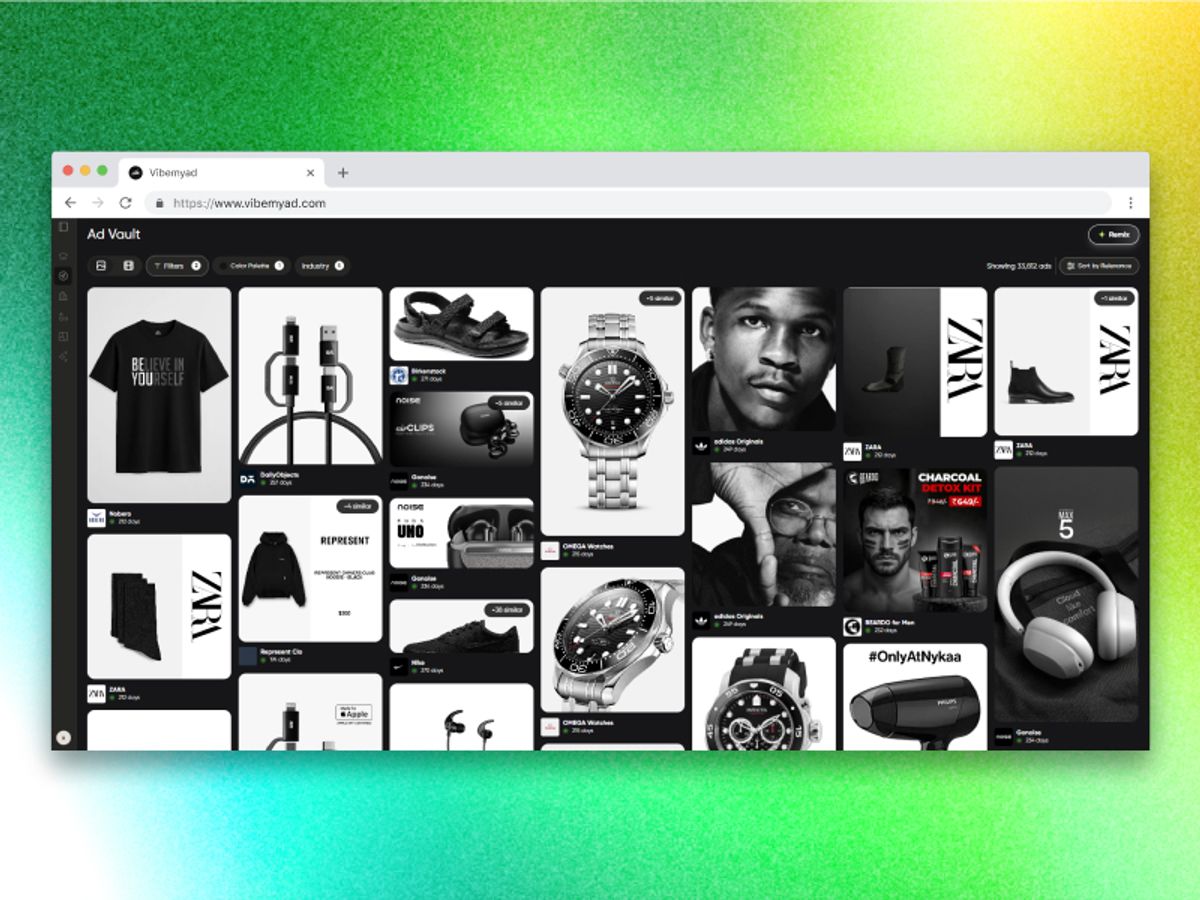
Luxury ads on black color palette on Vibemyad Ad Vault
Luxury/Premium: Dark backgrounds (navy, Plum Noir) + metallic accents (gold, copper) signaled exclusivity. Brands reported 40% higher average order values despite similar traffic.
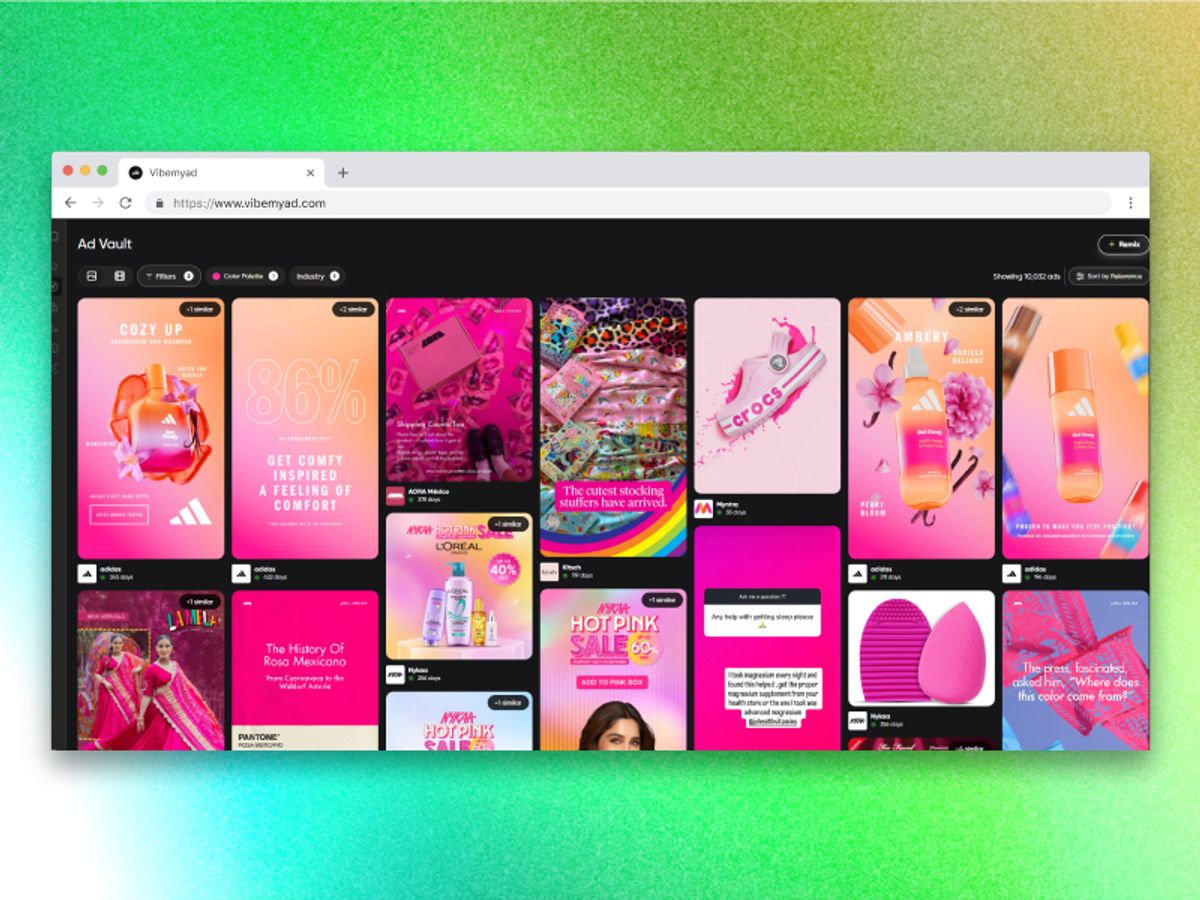
Ads on Pink Color Palette targeting Gen-Zs on Vibemyad Ad Vault
Youth/Gen Z: Electric pink backgrounds + bright blue accents + yellow CTAs created triple-threat dopamine stimulation. Engagement rates doubled versus muted minimalism.
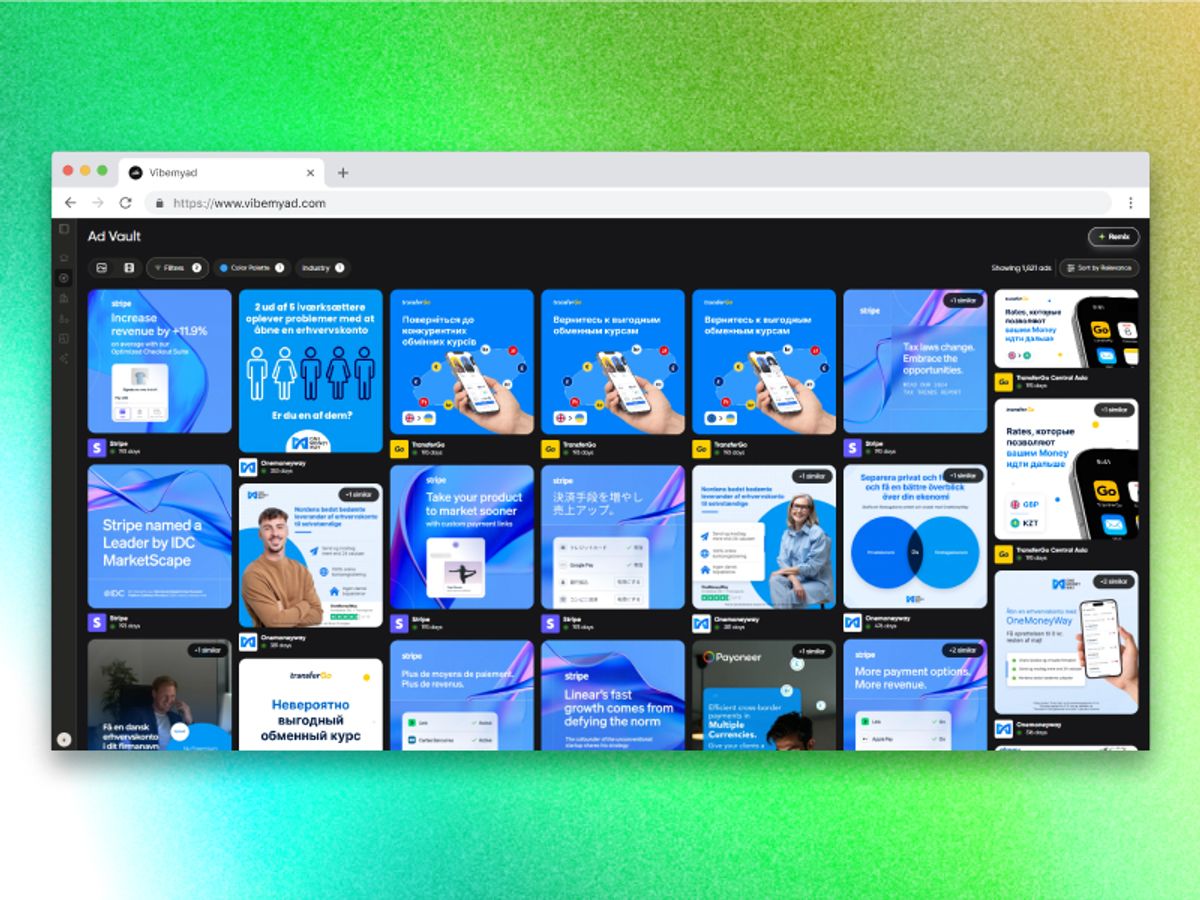
Ads on Blue Color Palette on Vibemyad Ad Vault
Professional/B2B: Navy backgrounds (trust) + orange CTAs (urgency) ran 90+ days—validation of sustained performance.
Seasonal Trending: Cool Blue (up 215% in Pinterest saves) + Persimmon accents capitalized on seasonal preferences while maintaining brand recognition.
Winning by Differentiation
The single most underused principle in ad color strategy is competitive differentiation. Most teams optimize for "what looks best" without asking "what does no one else look like."
The logic is straightforward.
Competitive brand audits that document which colors competitors are using allow advertisers to identify opportunities for differentiation - choosing colors that no rival has claimed in a given category - Ignyte Brands
A brand that maps the color distribution across its top 20 competitors and finds that 80% of them use blue as their primary color has just discovered that blue is the last place to stand out. The opportunity is in the 20% who are not blue - or better, in the colors that have zero representation.
This is not a theoretical advantage. A category where every brand runs blue trains the consumer eye to filter out blue. An ad running Plum Noir in that environment registers as new, unexpected, and worth a second look - regardless of whether the creative itself is stronger. Differentiation does work that better creative cannot always compensate for.
The practical execution requires three things: a complete map of competitor color usage across primary color, CTA color, and background tone; identification of colors running at zero to ten percent category saturation; and a disciplined testing process that launches gap color variants quickly before competitors notice and respond.
The color gap process described above is sound in theory, but it breaks down at speed. Manually tracking competitor color across 20 brands in real time, filtering by color trend, and generating enough variants to test simultaneously is a significant operational challenge for any lean marketing team.
This is where Vibemyad Ad Spider, Vibemyad Ad Vault, and Vibemyad Ad Gen change the workflow for Meta advertisers specifically.
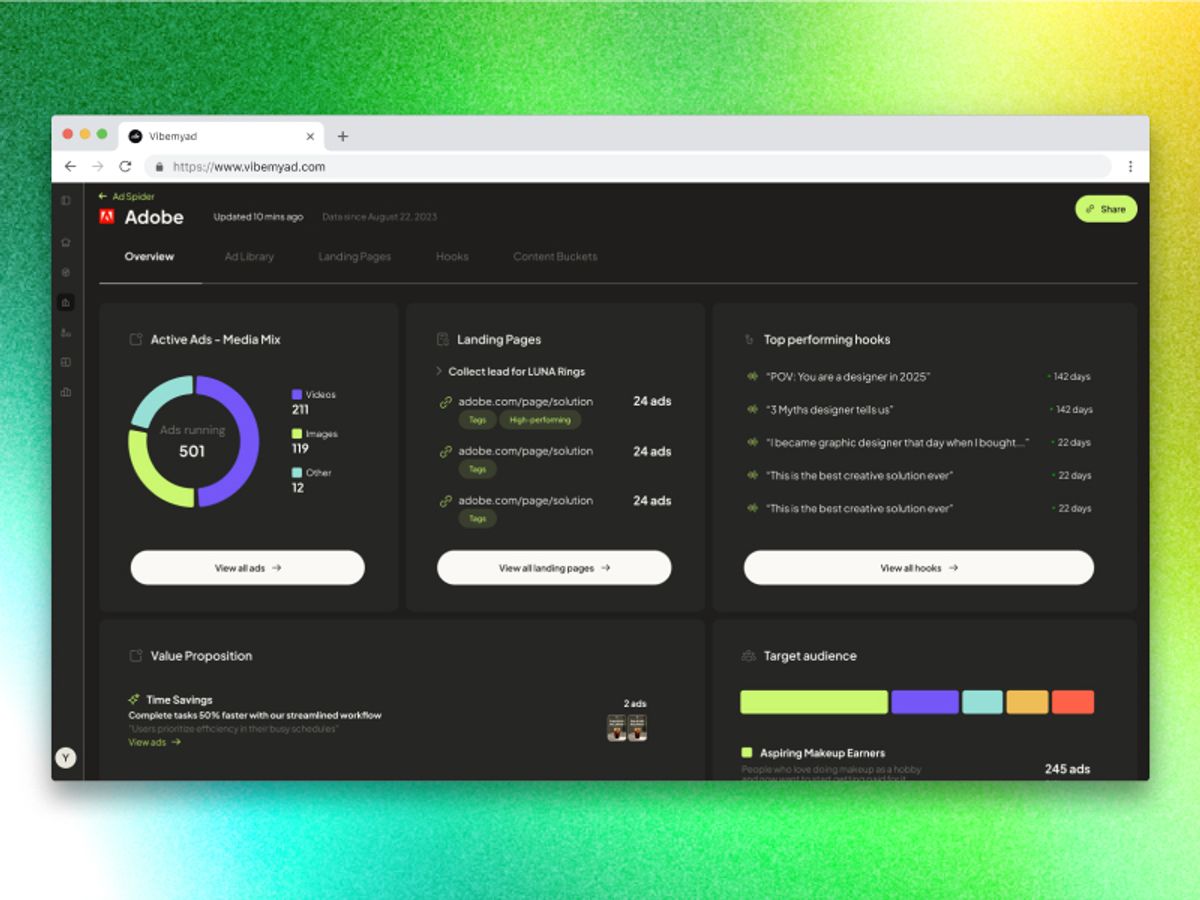
Vibemyad Ad Spider
Vibemyad Ad Spider tracks what competitors are actively running on Meta in real time. For color strategy, this means you are not building your category color map from memory or periodic manual checks — you are seeing which creatives are currently live, which have been running for 30 days or more (the threshold that signals a working ad), and which color combinations are appearing repeatedly across category players. An ad running for 60 days in a competitive category is not running by accident. It is producing results. Vibemyad Ad Spider makes those patterns visible.
Filter ads by colors in Vibemyad Ad Vault
Vibemyad Ad Vault takes that competitive data and lets you filter it by color palette directly. Instead of auditing competitors one by one, you can surface all ads across your category running a specific color, assess how saturated that color is in your space, and identify which hues are genuinely unclaimed. It is the difference between guessing at a color gap and confirming one with live ad data before you produce a single asset.
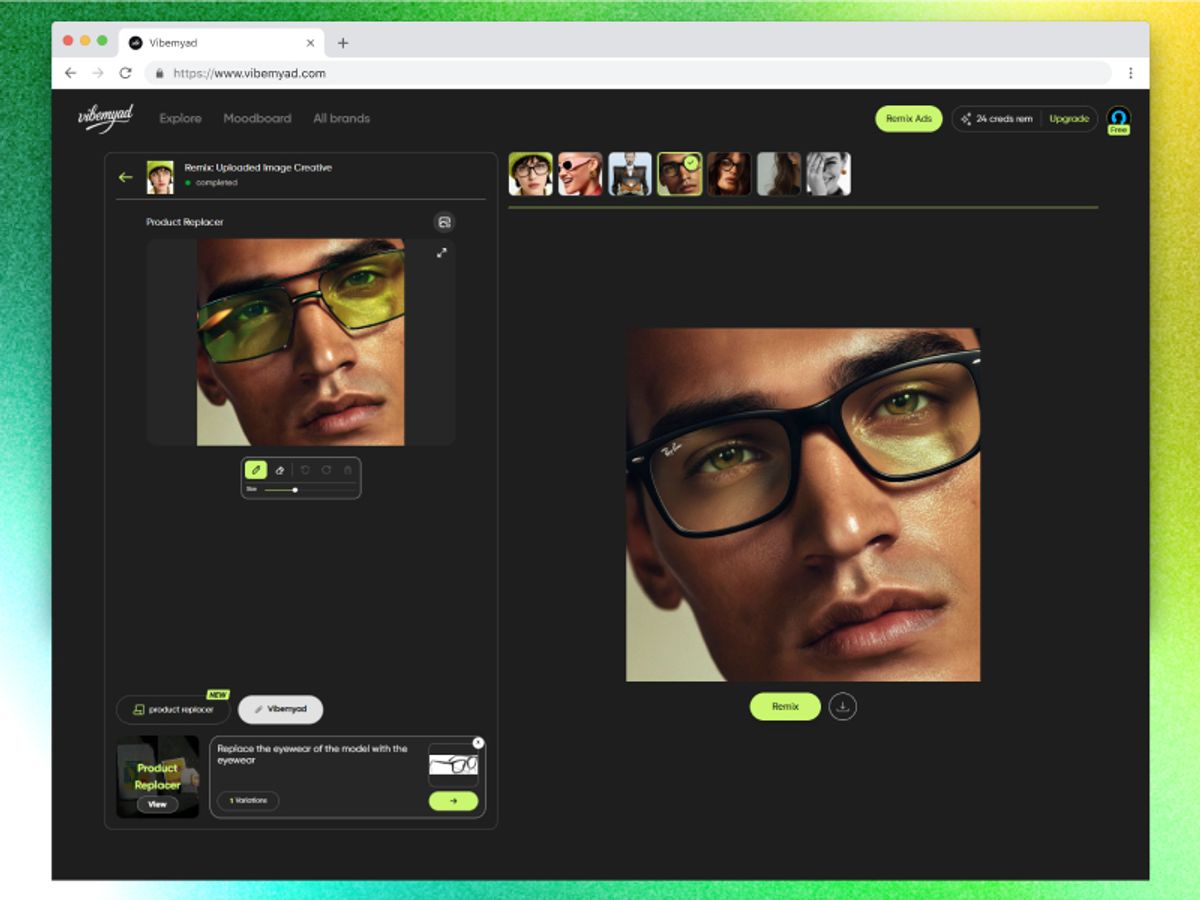
Vibemyad Ad Gen
Vibemyad Ad Gen then closes the loop between intelligence and execution. Once you have identified a gap color validated by competitor data and Pinterest trend signals, Ad Gen generates creative variations built around that palette in seconds. Instead of a two-to-three week production cycle to test a single color direction, you enter the test with multiple variants ready to run simultaneously.
The competitive advantage is not just speed. It is the combination of knowing which color gap to target and being able to launch against it before the category catches up. By the time a competitor notices your Persimmon creative is performing and begins their own production cycle, you have already used Vibemyad Ad Vault to identify the next unclaimed color and briefed Vibemyad Ad Gen for the follow-on test.
Color is a competitive intelligence decision, not a design decision. The brands that outperformed in 2025–2026 were not the ones with the most talented designers — they were the ones that mapped their category's color distribution and moved into the gap before anyone else did.
Research consistently shows that color influences purchasing decisions before any other element of creative registers. A 90-second subconscious judgment window, with 62% to 90% of that judgment based on color, means the strategic value of getting color right cannot be overstated.
Pinterest's 2026 Palette — Persimmon, Cool Blue, Plum Noir, Wasabi, and Jade — is derived from real search and save behavior across millions of users. For advertisers, it is a forward-looking signal of where consumer visual interest is already moving, not a trend forecast to act on later.
Contrast outperforms color choice. A 7:1 contrast ratio between text and background is the performance baseline. No color strategy works if the execution fails this threshold.
Speed is the moat. Color trends move from unclaimed to saturated faster than most creative cycles can respond. The ability to identify a gap and launch variants within days — not months — is what separates brands that lead their category from those that eventually follow.
Get notified when new insights, case studies, and trends go live — no clutter, just creativity.
Table of Contents