April 03, 2026 • 8 min read

April 03, 2026 • 8 min read
• The best AI ad creator depends on your workflow: AdCreative.ai (data-backed volume), Predis.ai (social scheduling), Quickads.ai (URL-to-ad speed), Canva Magic Studio (zero learning curve), Vibemyad Ad Gen (intelligence-first remixing)
• Template-first tools average 5-8% testing hit rates; intelligence-first approaches hit 18-24% by adapting pre-validated concepts that competitors have already proved work
• 58% of Meta advertisers now use AI creative features (Meta Q4 2025), while 63% report AI-generated ads perform equal to or better than human-designed (HubSpot 2024)
• Vibemyad Ad Gen bridges competitive intelligence to execution: Vibemyad Ad Spider tracks competitor ads running 60+ days, Vibemyad Ad Vault checks saturation, Vibemyad Ad Gen remixes into your brand in 60 seconds
• Intelligence-first delivers 3.2x hit rate improvement and $1,200-$2,000 cost per winner vs template-first $3,000-$5,000 cost per winner
You've found a competitor's Meta ad running for 93 days, $80K+ in validated spend proving it's profitable. Your designer says, "I can recreate something similar in 2-3 weeks." By then, 47 other brands will be testing the same concept.
According to Gartner's 2025 CMO Spend Survey, 71% of performance marketers plan to increase AI tool spending in 2026, but the critical shift isn't just adoption; it's which AI tools deliver measurable ROI versus which ones simply automate guesswork at scale.
Here's what changed: Image quality plateaued. Speed plateaued. Meta's Q4 2025 earnings revealed 58% of advertisers now use at least one AI creative feature. The competitive advantage shifted from having AI generation to how you use it.
The 2026 landscape splits into two camps: template-first generators (start with generic templates) and intelligence-first generators (start with market data on what's working). Both create professional ads. Success rates differ dramatically: template-first averages 5-10% hit rates, intelligence-first averages 16-24%, because you're adapting concepts competitors have already validated through sustained profitable spend.
What is an AI Ad Generator? An AI Ad Generator is a tool that automates creating ads using AI by generating visuals, copy, and formats for platforms like Meta. Advanced tools like Vibemyad Ad Gen go further by analyzing high-performing ads and adapting proven concepts to improve success rates.
A fitness brand on r/e-commerce described it perfectly: "We used to generate 50 'original' concepts and pray. Now we track which competitor concepts ran 90+ days, and remix those. We're finding winners 3x faster with 60% less testing budget."
This matters for Meta because its algorithm rewards early engagement. Validated concepts, proven engagement patterns, get algorithmic momentum. Unvalidated concepts risk an algorithmic penalty from the start.
What makes it different: Vibemyad Ad Gen is the only platform that starts with competitive intelligence rather than blank templates. While every other tool asks "what do you want to create?", Vibemyad Ad Gen asks "what has your competitor already validated through sustained ad spend?"
Vibemyad Ad Vault
Layer 1: Vibemyad Ad Vault (Validation Tracking)
Vibemyad Marketing Agency can review competitor messaging and use the findings to brief original ads. For the research method, read our Meta Ad Library guide.
• Flags ads that cross the 60-day threshold
• Why 60 days matter: Brands don't waste money running ads for 60+ days unless they're generating positive ROI
• If a competitor's ad is still live after two months, it's working
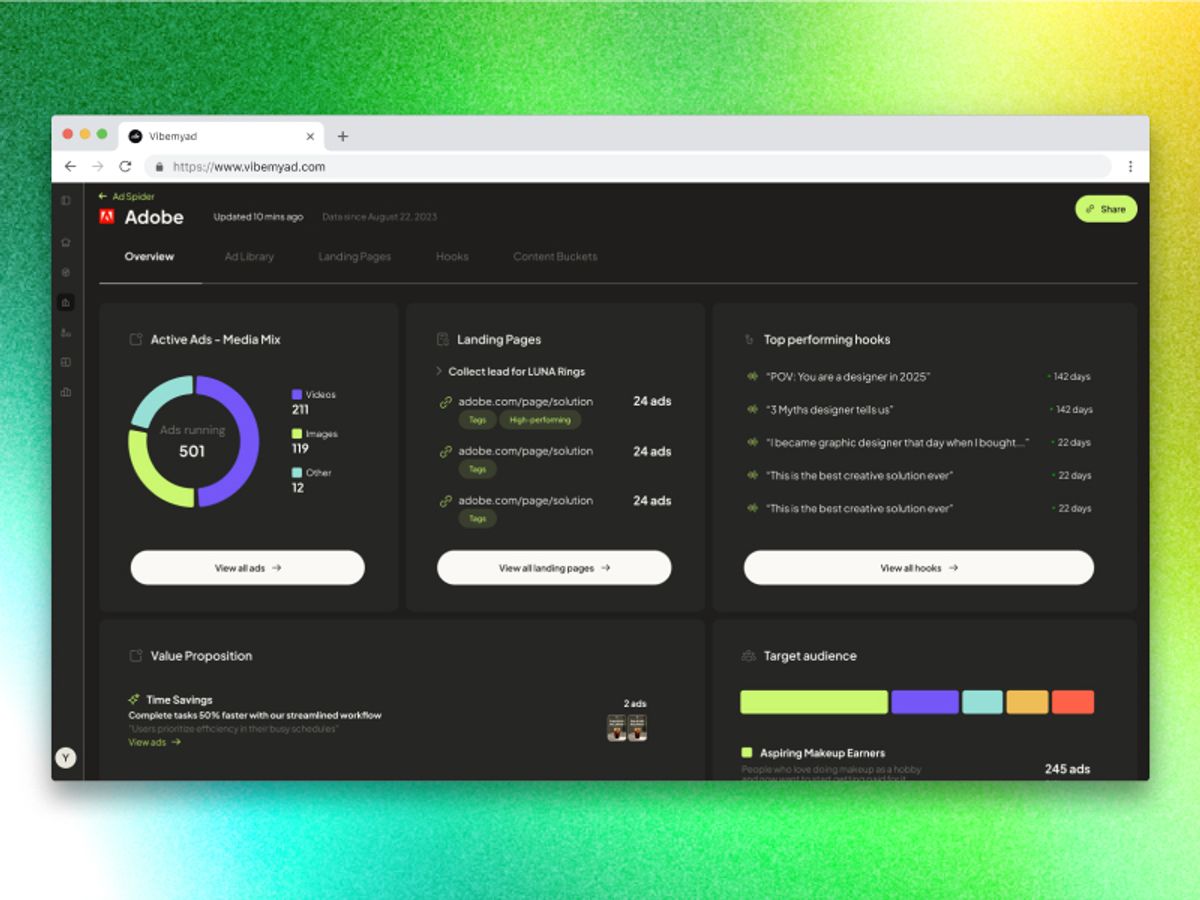
Vibemyad Ad Spider
Layer 2: Vibemyad Ad Spider (Saturation Intelligence)
• Checks category saturation through adoption rates
• 15-40% category adoption = Validated but not saturated (sweet spot)
• 70%+ adoption = Too late, trend exhausted
• Prevents you from launching concepts that are already played out
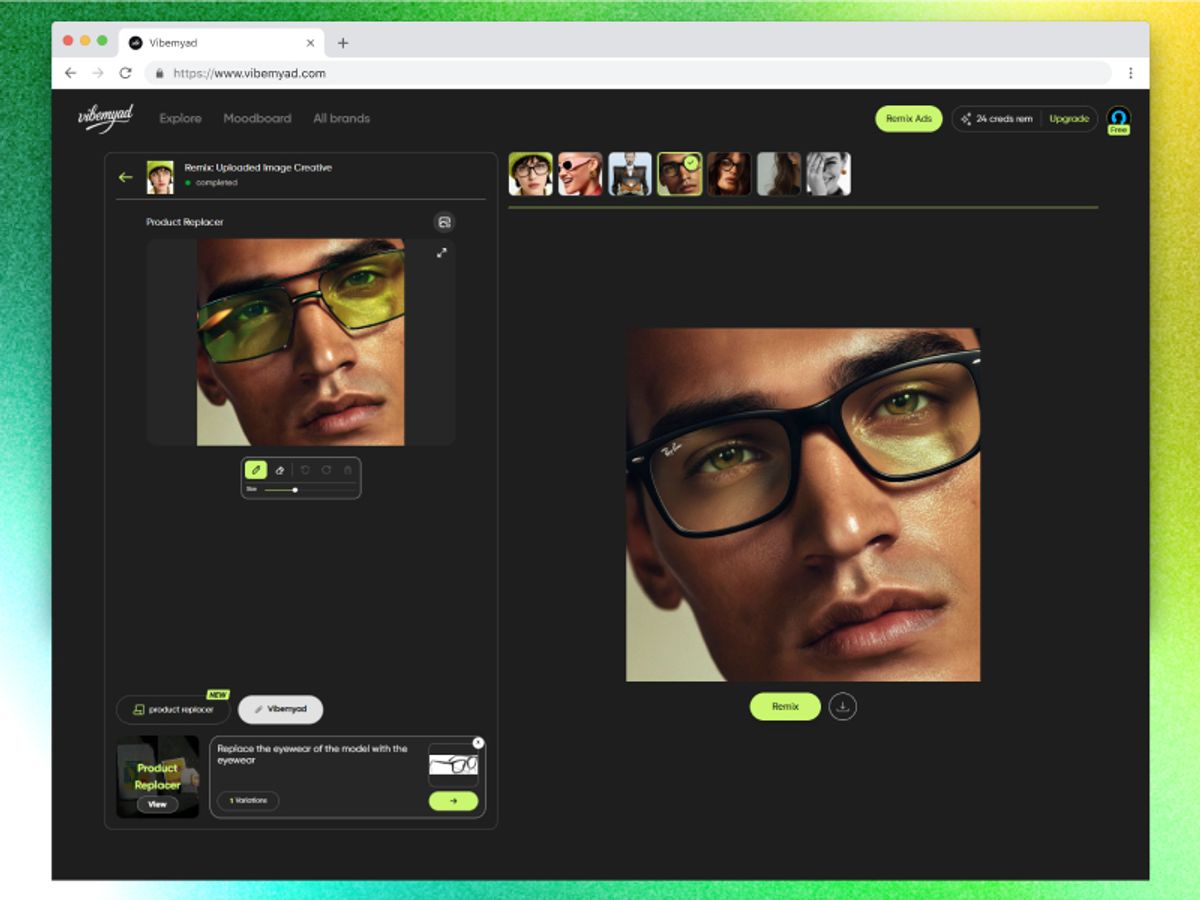
Vibemyad Ad Gen
Layer 3: Vibemyad Ad Gen (Remix Execution)
Choose from 12 adaptation modes:
• Product Replacer: Their protein shake becomes yours (preserves winning structure)
• Reimagine Location: Gym setting becomes home workout
• Model Swap: 25-year-old model becomes 45+ demographic
• Ramadan/Christmas Mode: Cultural adaptation for different markets
• Aspect Ratio: Feed to Story to Reels conversion
• Plus: Pose Variation, Upscale, Translate Copy, and more
Real workflow example: A fitness supplement brand sees a competitor's transformation ad running for 94 days. Vibemyad Ad Vault shows 23% category adoption (validated but not saturated). Designer selects "Product Replacer" and "Reimagine Location." Sixty seconds later: 50 branded variations ready to test. Launch same day.
When it wins: You track 5-20 competitors, limited testing budget, 1-2 person creative teams, and need a 48-hour competitive response time.
When it loses: Brand-new category with fewer than 5 active competitors, radical brand originality is your advantage, prefer full creative control over speed.
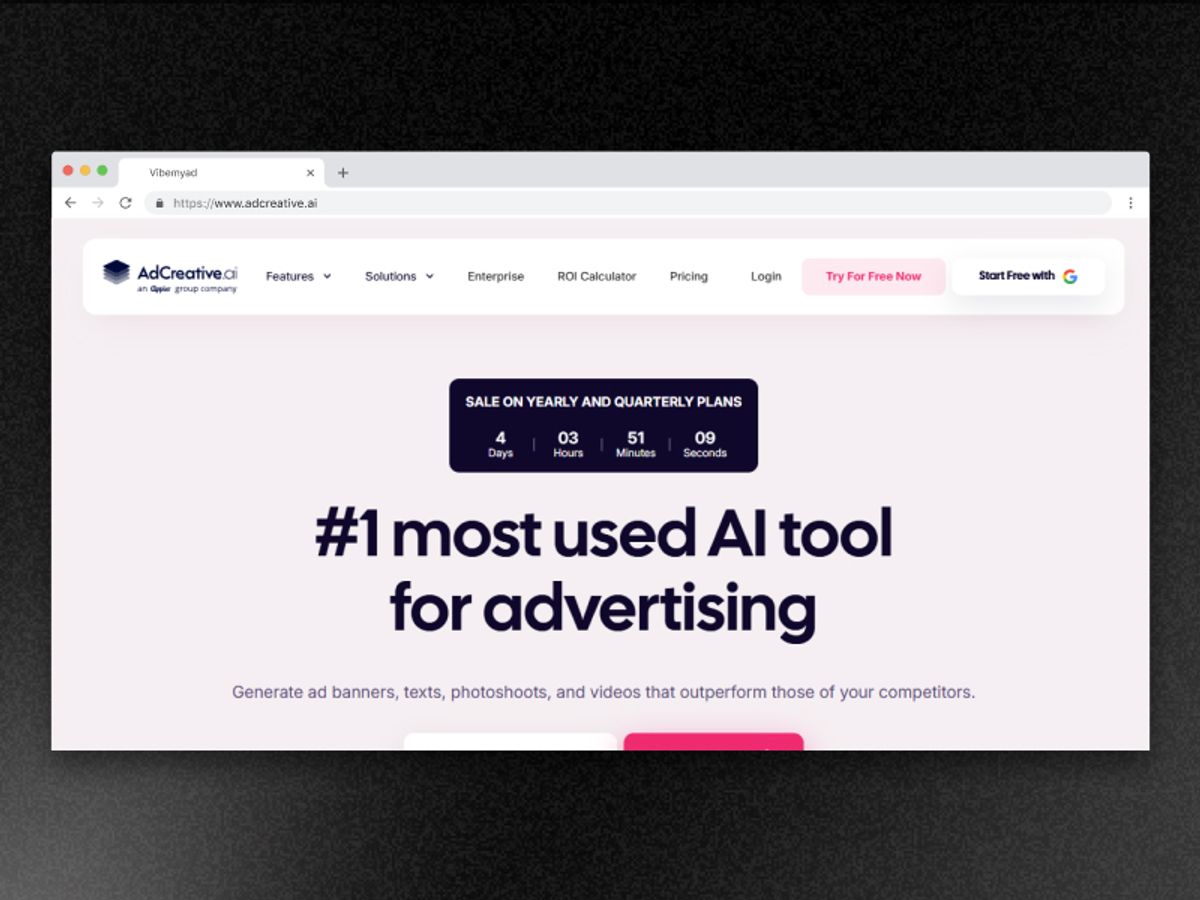
Adcreative.ai
What makes it different: Trained on millions of high-performing ad creatives with a conversion-focused engine that analyzes which layouts, colors, text placements, and fonts historically drive clicks and conversions.
The volume workflow:
• Upload logo, select brand colors, and describe your brand once
• Provide product image, background, or website URL
• The platform generates dozens to hundreds of variations instantly (square for Instagram, vertical for TikTok, landscape for Facebook)
The cross-match feature (unique advantage): Provide 5 headlines and 10 visual styles. The platform generates every combination = 50 unique ads, all branded consistently, all sized for every Meta placement.
Conversion scoring: Every creative receives a 0-100 score before launch. Test only the top-scoring 30%, cut testing waste by 70%.
When it wins: Aggressive testing phase (50+ concepts monthly), high testing budget, need predictive scoring before launch, value data-backed generation.
When it loses: Limited testing budget (can't afford 6-8% hit rates), highly specific brand visual identity, and needs competitive intelligence about what's working now.
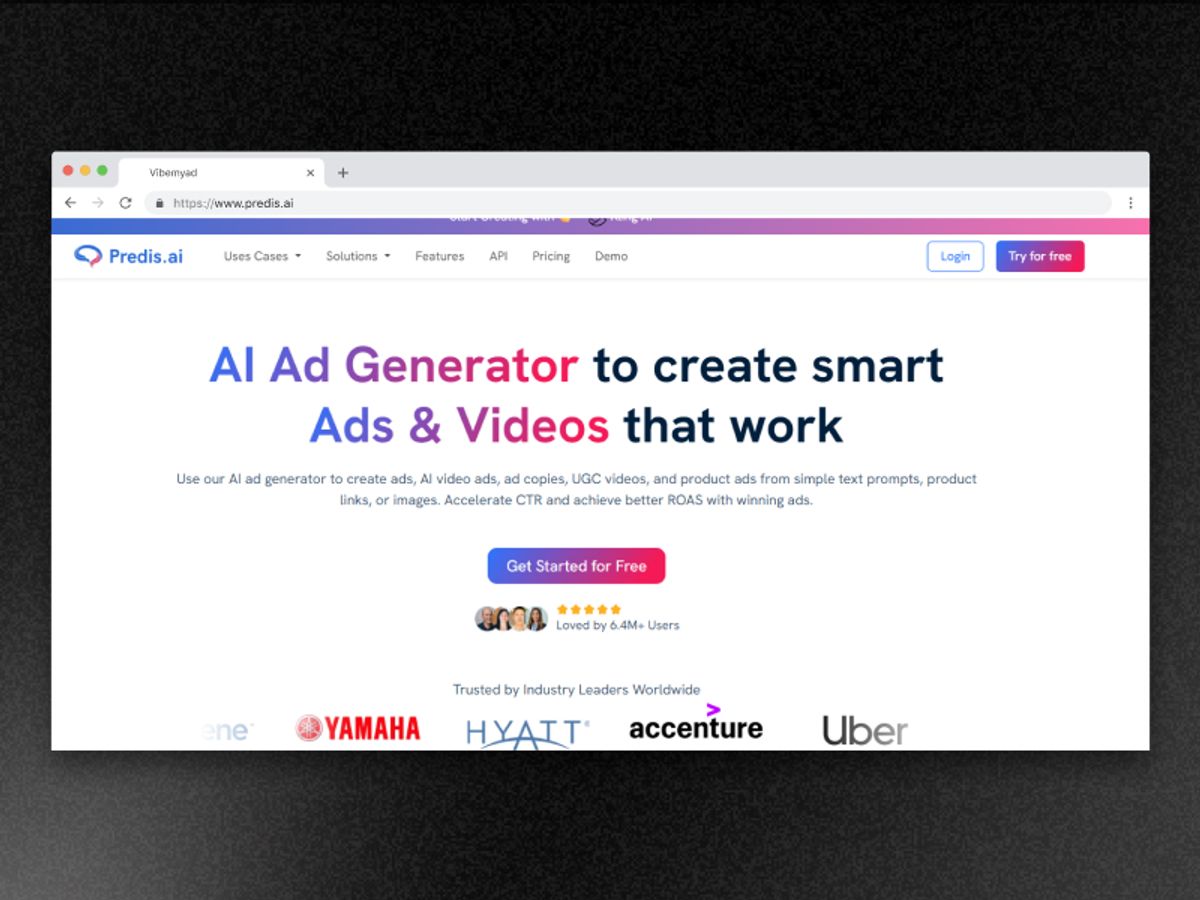
Predis.ai
What makes it different: Not trying to be the best ad generator, but trying to be the only tool small teams need for the entire social workflow.
The all-in-one consolidation:
• Replaces: Canva (creation), Hootsuite (scheduling), Sprout Social (analytics), and manual competitive monitoring
• One platform, one login, one learning curve
The workflow:
• Generate full posts from text prompts or blog links in 30 seconds
• Visuals, captions, hashtags included
• Supports: Videos, carousels, memes, UGC-style avatar videos
• Built-in content calendar for scheduling
• Competitor monitoring is built in
When it wins: 2-3 person team managing paid ads and organic social, need one tool for everything, scheduling automation as important as creation, value consolidation over best-in-class.
When it loses: Performance marketer focused exclusively on paid acquisition, needs deeper competitive intelligence (60-day validation tracking), and a large team where different people handle different functions.
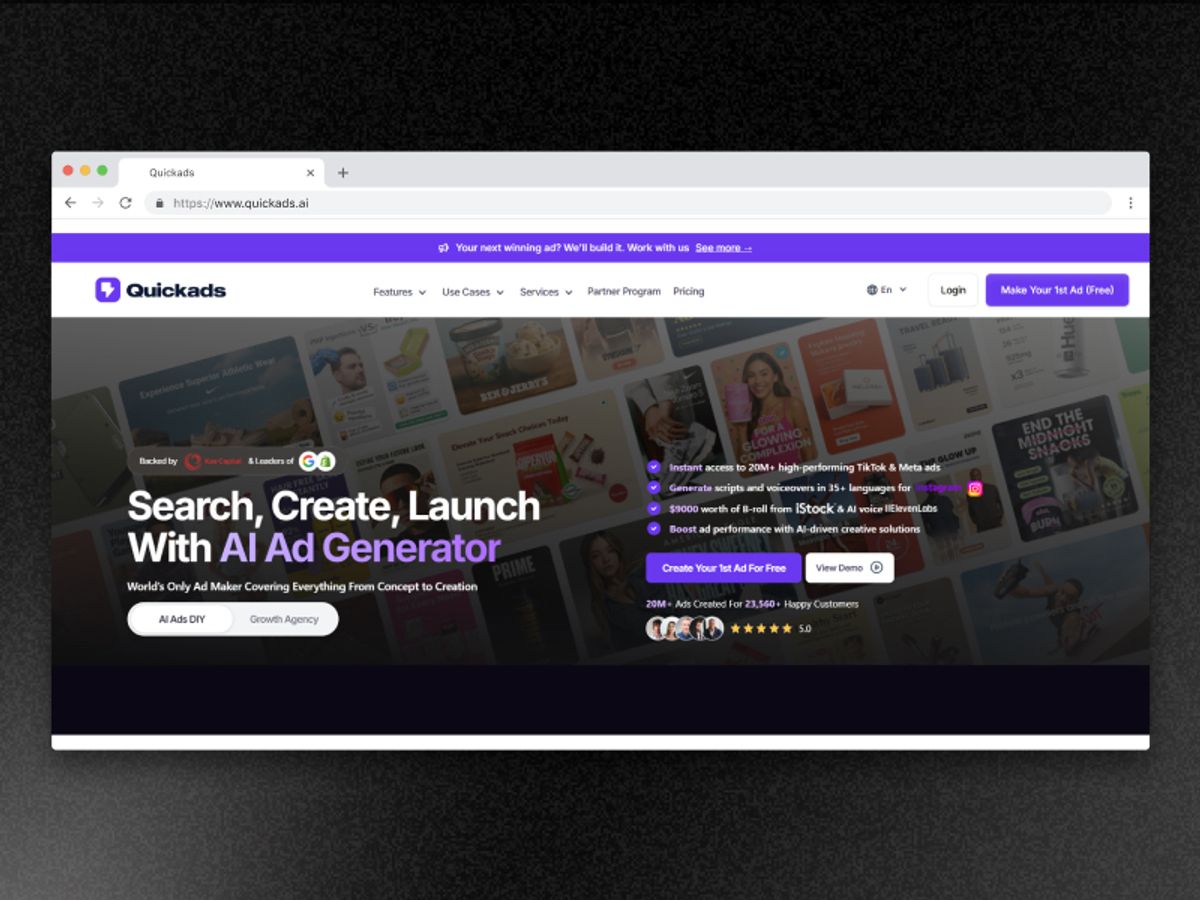
Quickads.ai
What makes it different: Speed matters more than sophistication. Generates studio-quality video and image ads in under 30 seconds from just a product URL.
The URL-to-ad workflow:
• Paste product page URL
• AI scrapes website, extracts images, reads descriptions
• Generates complete ads (image + copy) automatically
• 30 seconds, 10 ads ready
Virtual photoshoots (ROI advantage): Traditional product photography requires a studio, models, and a photographer ($5,000-$10,000). Quickads.ai generates professional-quality product photos for a fraction of that cost.
One-click ad cloning: Found 3 winning ads from 50 tests. Click winners, click "clone," get new variations with the same style but different copy angles.
20-million-ad library: Built-in competitive intelligence, search your category, see what's running, get inspired.
When it wins: Need ads today, testing many small concepts, product photography budget limited, simplicity over sophistication, launching new products frequently.
When it loses: Highly specific brand visual identity, need validation intelligence (60-day tracking), luxury category where "good in 30 seconds" underperforms "perfect in 3 weeks."
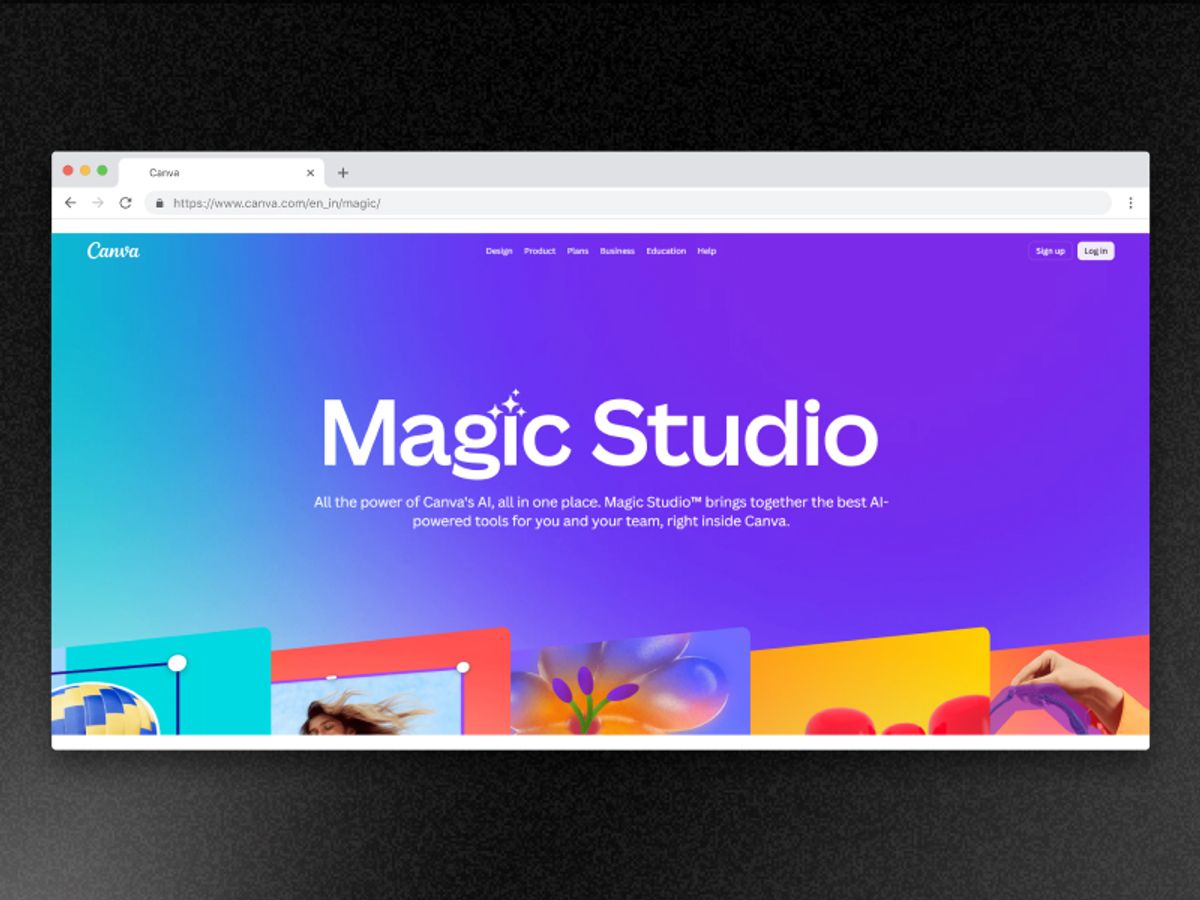
Canva Magic Studio
What makes it different: Not trying to replace the design workflow with AI, but trying to enhance the existing workflow. AI features are embedded into the design tool that 110 million people already use.
The familiar interface strategy:
• Other tools: Learning a new platform from scratch
• Canva Magic Studio: Adding AI to a tool your team already knows
• No onboarding friction, no retraining, no workflow disruption
How it works:
• Magic Studio tools are embedded in the standard editing toolbar
• Magic Edit, Magic Eraser, and Magic Write appear where you need them
• Type prompts in a familiar search interface
• AI outputs are starting points, feed into existing creative refinement
When it wins: Team already lives in Canva daily, wants AI assistance (not automation), design control matters more than speed, 5+ designers who value creative control.
When it loses: Need AI automation that handles volume (doesn't generate 50 variations in 60 seconds), need competitive intelligence, team doesn't use Canva, need speed more than control.
• Track competitors systematically? Vibemyad Ad Gen
• Monthly testing budget $5K-$15K? Intelligence-first (maximize hit rate)
• 1-2 designers? Vibemyad Ad Gen (curator role)
• Need 48-hour response time? Vibemyad Ad Gen
• Commoditized category? Intelligence-first (concepts matter most)
• With 58% of Meta advertisers now using AI creative features (Meta Q4 2025) and 71% of performance marketers increasing AI tool spending (Gartner 2025), the competitive edge shifted from adopting AI to using it strategically.
• Intelligence-first tools excel when you track competitors and need higher hit rates per dollar. HubSpot's data show that 63% of AI-generated ads perform as well as or better than human-designed ads, but the variance stems from concept selection, not execution quality.
• Concept trends move from unclaimed to saturated faster than traditional creative cycles respond. Identifying validated concepts and launching variants within days (not months) separates leaders from followers.
Get notified when new insights, case studies, and trends go live — no clutter, just creativity.
Table of Contents


Arpita Mahato
Content Writer, Vibemyad

Arpita Mahato
Content Writer, Vibemyad

Arpita Mahato
Content Writer, Vibemyad