July 02, 2026 • 8 min read

July 02, 2026 • 8 min read
You are shopping for an AI image tool and every one of them promises readable text. The real question for a packaged product is narrower than "which one spells best," and getting it wrong wastes a month of subscription credits. It is this: when you hand the tool your actual pack, does it reproduce your label, or does it generate a nice-looking one that isn't yours?
To find out, we took one real product, a "bum. ISO Protein" tub, and gave the same reference photo and the same prompt to Recraft, Ideogram, and Flux, then to Vibemyad Ad Gen. The results split the four tools into two groups, and the dividing line is not about spelling at all.
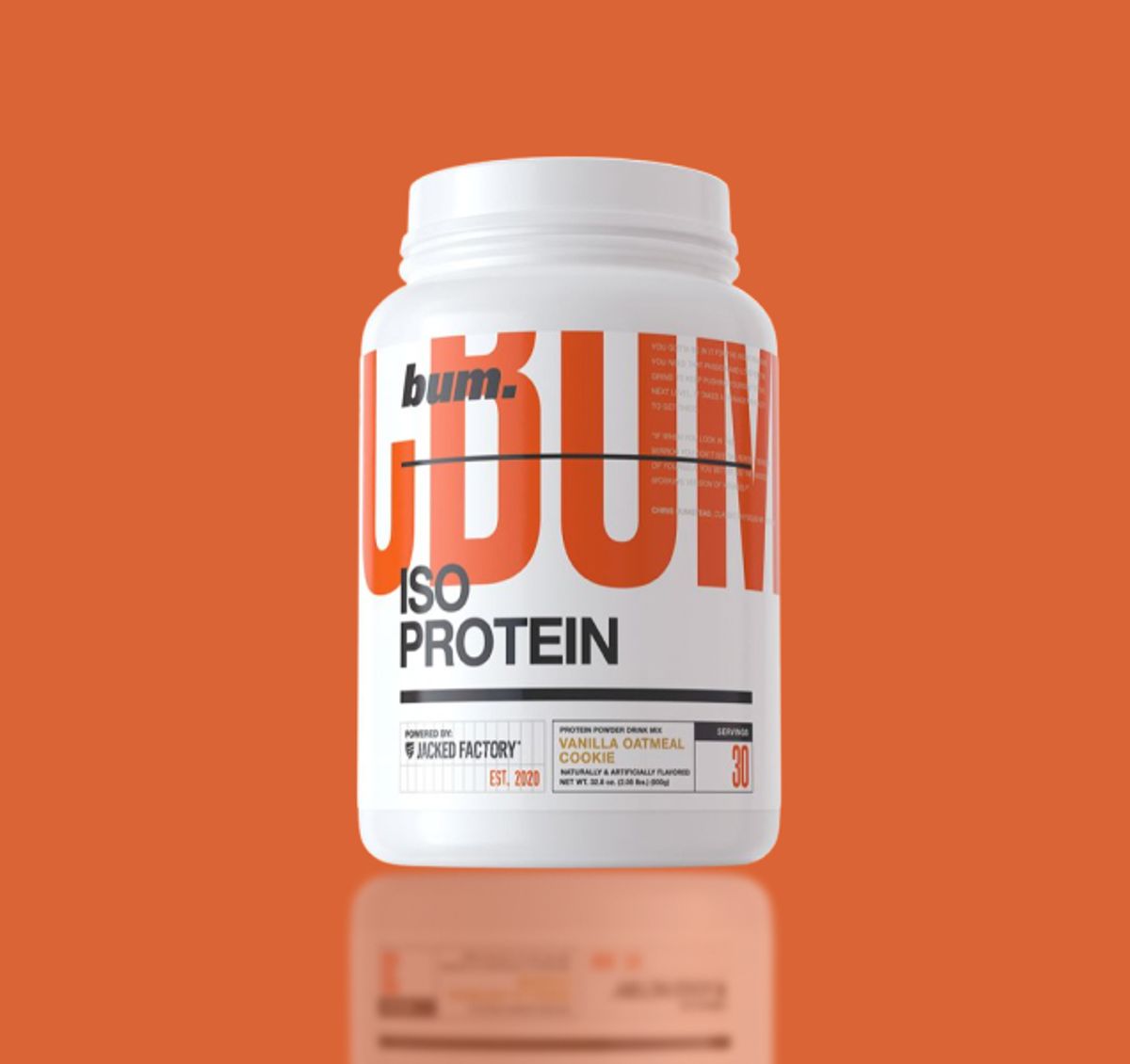
The real product we tested: the "bum. ISO Protein" tub, Vanilla Oatmeal Cookie flavor. Every tool below got this same reference photo and the same prompt.
• The choice for packaging is not "which AI spells best." It is whether the tool reproduces your real pack or generates an approximate one from your prompt, and that single difference decides whether the output is usable.
• Recraft is an excellent design and vector tool with benchmark-topping text, but given a real pack it generated a different product, inventing a brand that was never in the reference.
• Ideogram is the genuine text-rendering leader and did the best of the three prompt-based tools, holding the front logo, but it did not carry the flavor name or the dense side panel, so it reproduced the lockup rather than the label.
• Flux is the 2026 photorealism leader, but on this test it dropped the label entirely and returned a plain black tub.
• Vibemyad Ad Gen was the only tool that reproduced the actual pack, the flavor name, the dense panel, and the small tags included, because it grounds on your real product instead of generating text from a description.
• If you are creating text from scratch, a poster or a logo, Ideogram or Recraft is a strong pick. If you are reproducing a real product's label, you need a tool that grounds on the pack, which is what Vibemyad Ad Gen does best.
Pricing and model capabilities move quickly, so confirm the latest on each provider's own site before you decide. The row that matters most is the third one, because it is the difference in kind, not degree.
Here is the distinction that decides everything, and almost no comparison names it. Recraft, Ideogram, and Flux are prompt-to-text tools. You describe what you want, including the words, and they generate typography to match. That is a genuinely hard problem and these tools are good at it. For a poster, a logo, or a headline, where you are creating text from scratch, it is exactly the right approach.
A packaged product is the opposite job. The text on your pack is not text you are creating, it is text that already exists on a real object, and it has to be reproduced exactly, because it is the name of a real thing a customer will buy. That is not a spelling task, it is a reproduction task, and a tool built to imagine plausible typography is working against its own design the moment you ask it to copy your actual label.
This is why the failures in our test were not misspellings. They were the tool inventing or dropping your product, which is what happens when a model treats your label as something to reimagine rather than reproduce.
If you want the deeper mechanism behind why generated text drifts, we broke down exactly why AI image generators mangle packaging text in a separate piece, but the practical point stands on its own: creating text and reproducing a real pack are different capabilities, and packaging needs the second one.
Benchmark-topping text rendering, true vector and SVG output, and brand-consistent design assets. A serious professional tool for logos, posters, and illustrations.
Given the real "bum. ISO Protein" tub as a reference, Recraft generated a different product, a tub reading "Prime Fuel, 24g Protein," a brand that appears nowhere in the reference. The text was clean and readable. It was also for a product that does not exist.
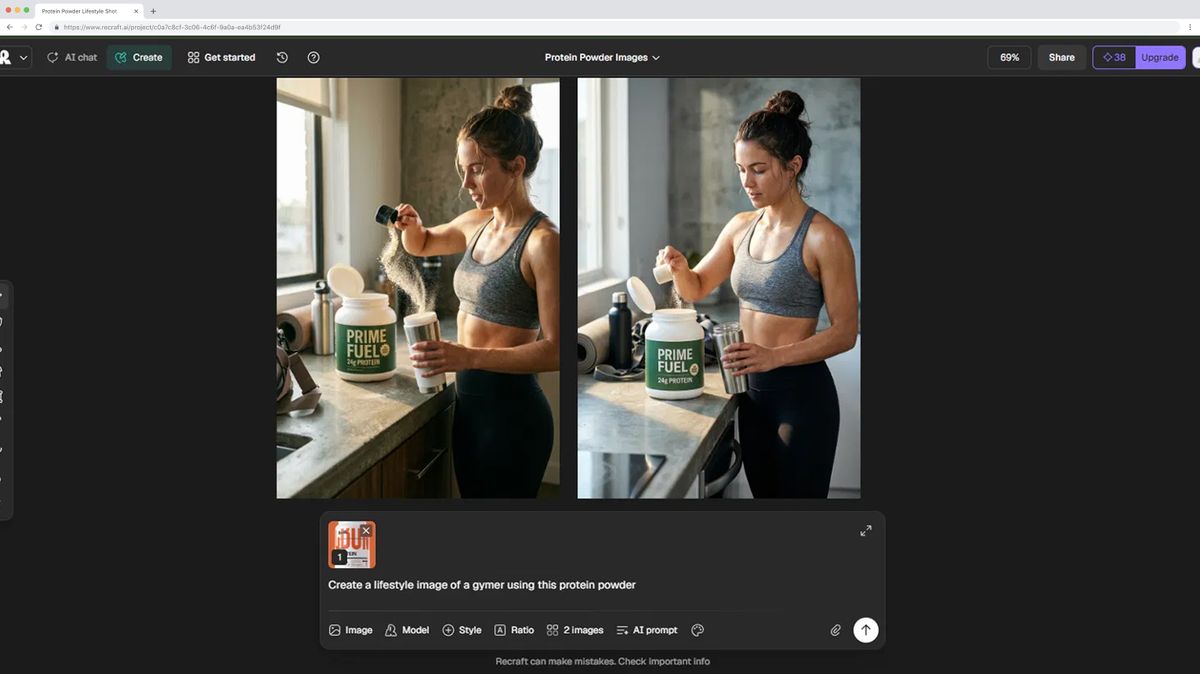
A lifestyle shot generated using Recraft
Excellent for creating design from scratch, wrong for reproducing your pack. A crisp label for the wrong product is unusable.
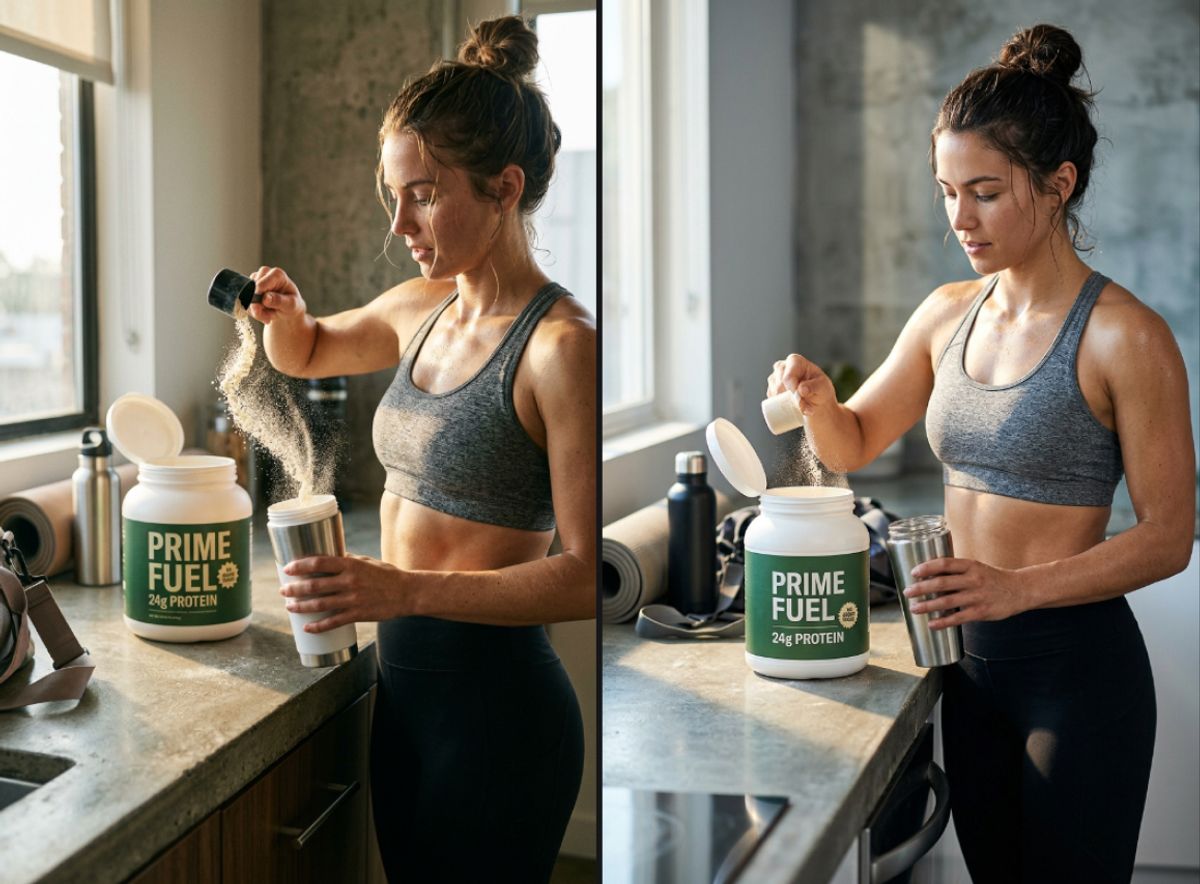
Recraft's result. Clean, readable text, for "Prime Fuel," a brand that was never in our reference. It generated a product instead of reproducing ours.
The text-in-image leader, with text accuracy far above older models, and it lists packaging and labels among its use cases.
The best of the three prompt-based tools. It worked from the reference and held "bum." and "ISO PROTEIN," the front lockup, legibly across several shots. But it dropped the flavor name, the dense side panel, and the small tags. It reproduced the logo, not the label.
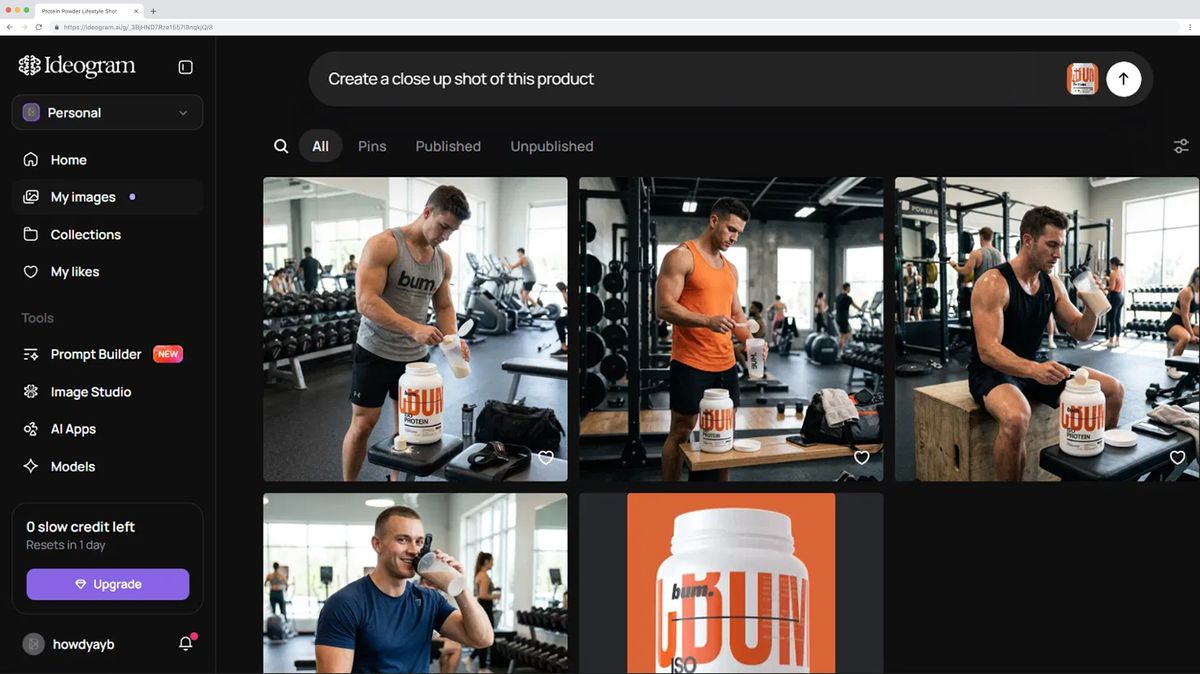
A lifestyle shot generated using Ideogram
The closest a prompt-based tool got, and genuinely strong at text. Still reproduces the recognizable front, not your full pack, and for a shopper the flavor is the product.
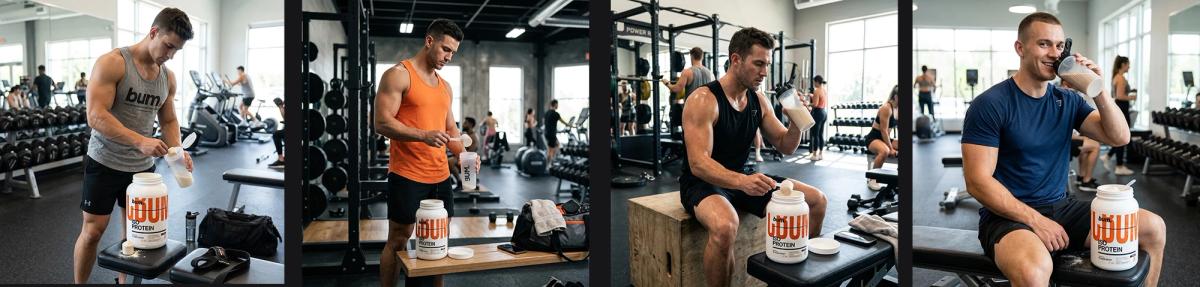
Ideogram, the text leader, did best of the three. It held "bum." and "ISO PROTEIN," but the flavor name and dense side panel from the real pack did not carry through.
The 2026 photorealism leader, best-in-class for photoreal humans, products, and scenes, with text rendering improved to roughly 60 percent first-attempt accuracy.
Given the real pack, Flux went furthest in the wrong direction. It returned a photorealistic athlete holding a plain black tub with essentially no label. It kept the idea of a protein tub and discarded the product.
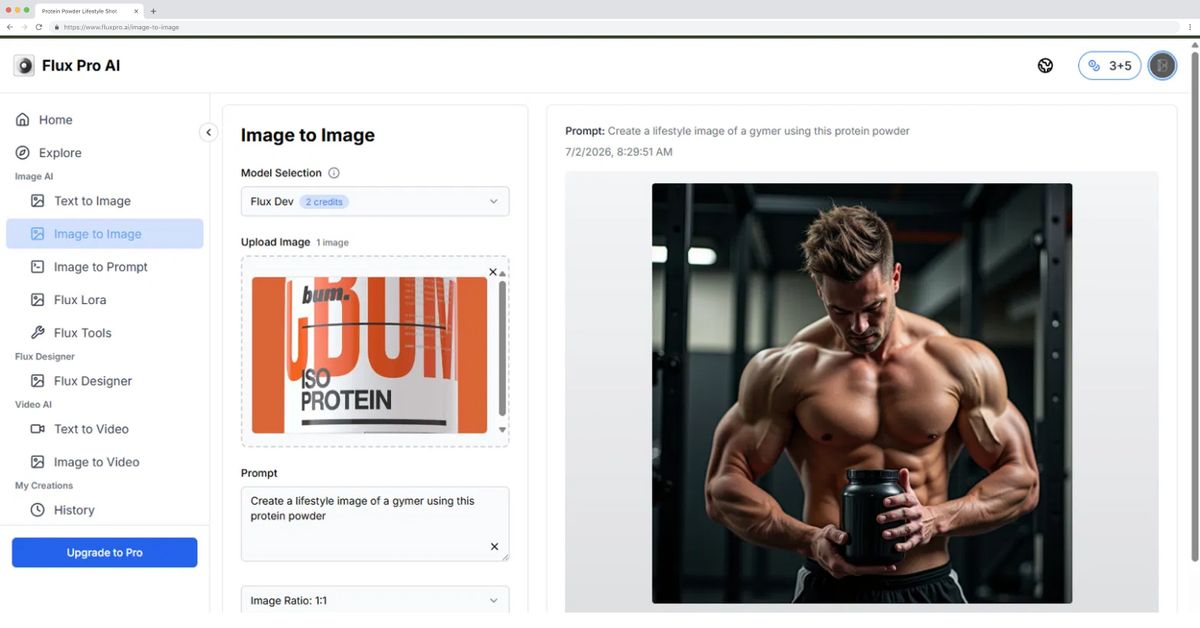
A lifestyle shot generated using Flux Model
Not your product. Strong when the scene matters and text is secondary, unsuitable when the label has to be yours.
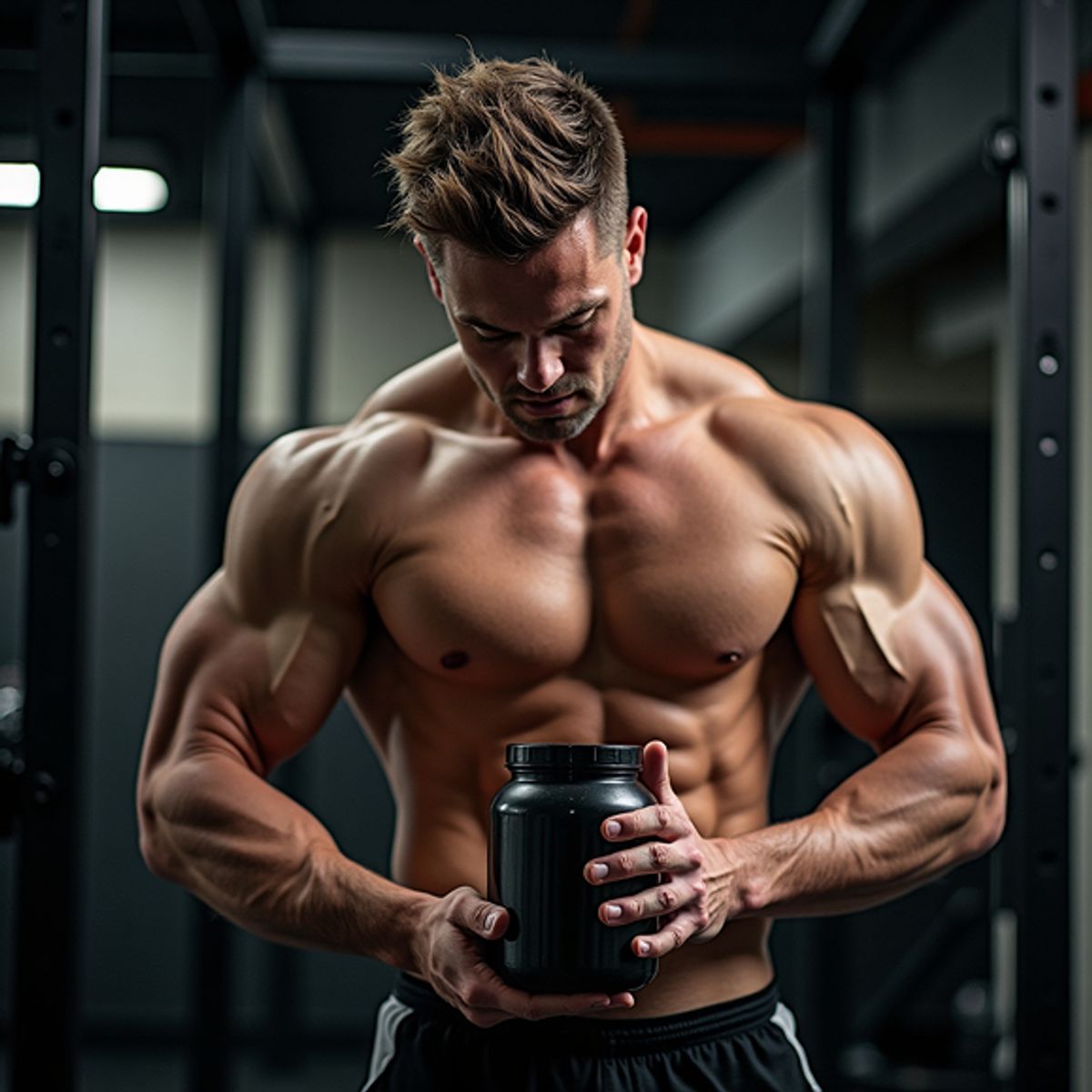
Flux-generated photorealistic image of a muscular athlete holding a plain black protein tub with no label, having discarded the branding from the real reference pack.
It grounds on a photo of your real product and reproduces the actual label, rather than generating text from a prompt, then exports at Meta and marketplace specs.
The only tool that reproduced the real pack. The output carried "bum." and "ISO PROTEIN," the "Vanilla Oatmeal Cookie" flavor, the dense side panel, and the small tags, standing in a genuine gym-floor scene. Not a lookalike, not the logo alone, the actual label. When a line is off, a "Fix Product Text" button regenerates with the real copy intact.
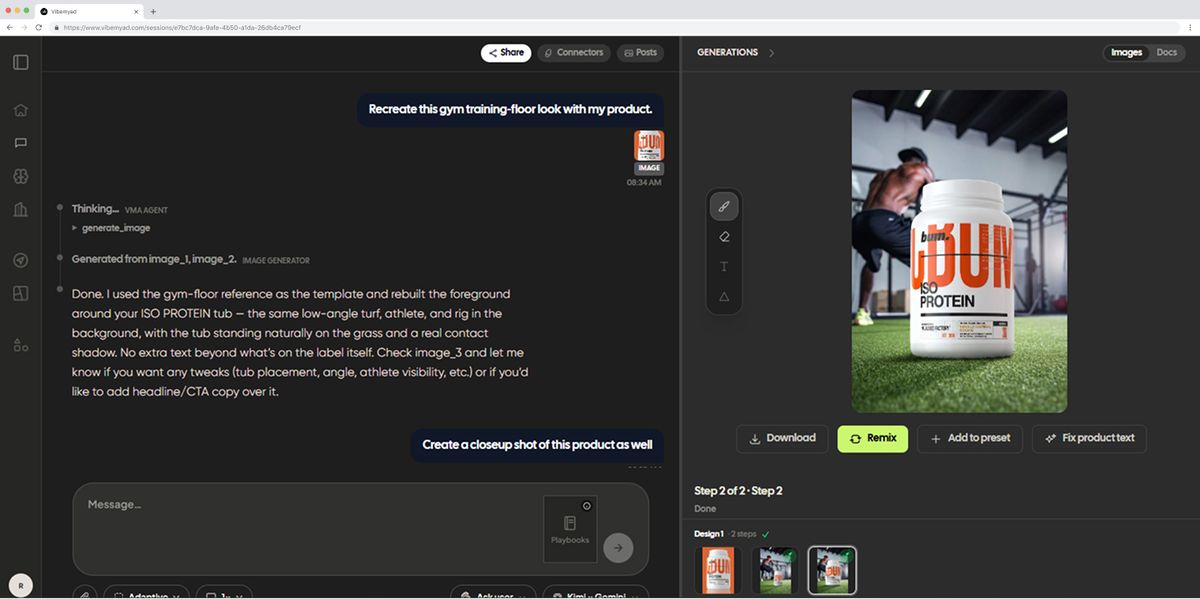
A lifestyle shot generated using Vibemyad Ad Gen
On the front lockup alone, Ideogram was close. On the full label, the flavor and dense panel, Vibemyad reproduced your pack and the others approximated or abandoned it. For a packaged product, that is the text that decides whether the image is your product or just resembles it.
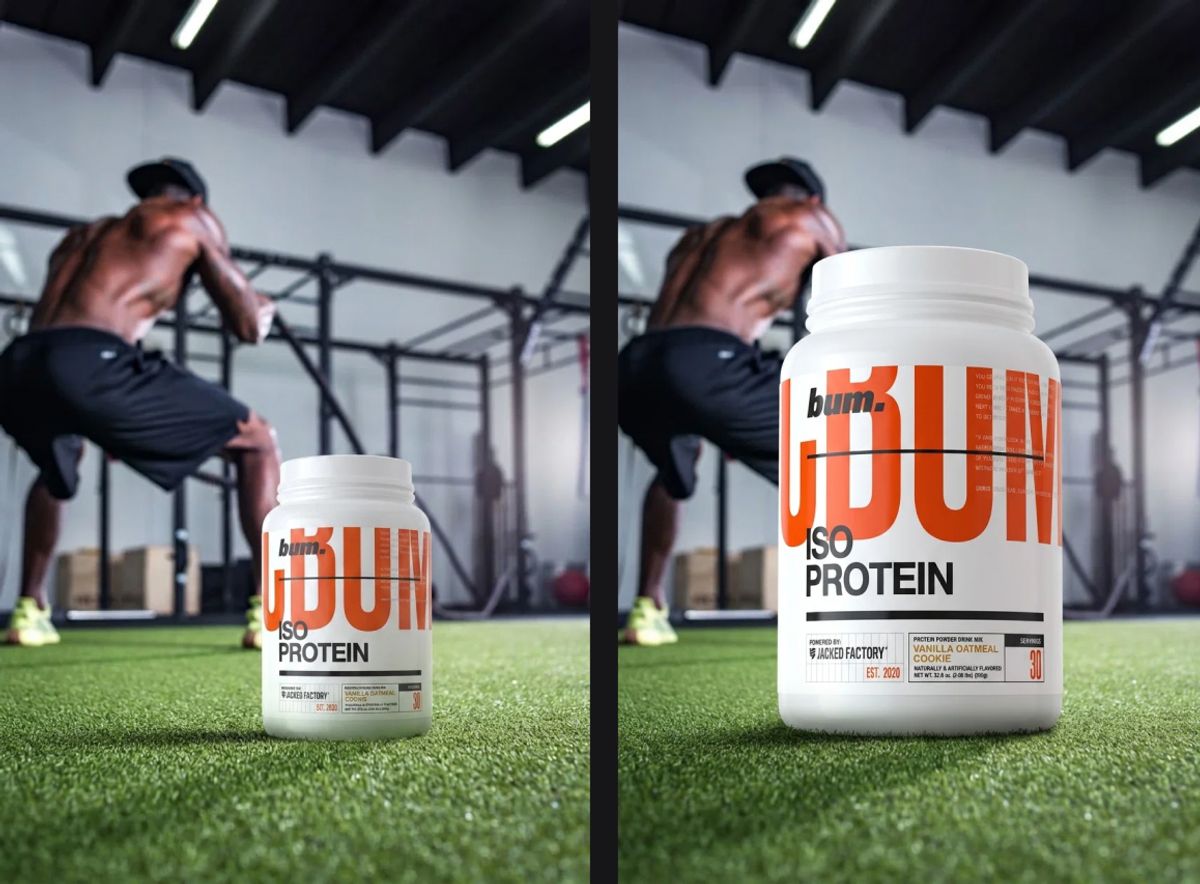
The same pack in Vibemyad Ad Gen. Grounded on the real product, it carried the full label, brand, ISO Protein, the Vanilla Oatmeal Cookie flavor, and the dense side panel, not just the front logo.
One honest boundary: Vibemyad Ad Gen makes static images and carousels. It does not manage your Pixel, targeting, or budget, which stay in your Ads Manager. What it removes is the hardest part for a packaged product, getting your real label, in full, onto an ad-ready image.
The tools are not ranked on a single line, because they are built for different jobs. The honest way to choose is by the task in front of you.
If you are creating text from scratch, a poster, a social graphic, a logo, a headline, then Ideogram is the strongest pick for typography, and Recraft is excellent when you also need vector output and brand-design assets. Flux is the one to reach for when you want a photoreal scene and the text is secondary. These are good tools, and for the work they are designed for they are the right answer.
If you are reproducing a real product's packaging, an ad or a listing where the label has to be your label, flavor and dense panel included, then a prompt-based tool is the wrong architecture no matter how good its typography is. That is the job Vibemyad Ad Gen is built for, because it grounds on your real pack instead of generating an approximation of it.
The same logic plays out in other categories too, we ran a real chips pack through the general tools and watched the flavor line fall apart, for the same reason it happened here.
• For packaging, the deciding question is reproduction, not spelling: does the tool reproduce your real pack, or generate a plausible one from your prompt?
• Given the same real pack, Recraft invented a different product, Flux dropped the label to a blank tub, and Ideogram held the front logo but lost the flavor and dense panel.
• Ideogram was the closest of the prompt-based tools and is a genuine text-rendering leader, but it reproduced the lockup rather than the full label.
• Vibemyad Ad Gen was the only tool to reproduce the actual label, because it grounds on your real product, with a "Fix Product Text" button to lock the copy.
Every tool here promises readable text, and for creating text, several deliver. But a packaged product is not created text, it is your real label, and the only tool in this test that reproduced it was the one built to ground on your pack. Pick for the job you actually have.
Get notified when new insights, case studies, and trends go live — no clutter, just creativity.
Table of Contents


Rahul Mondal
Product, Design and Co-founder, Vibemyad

Rahul Mondal
Product, Design and Co-founder, Vibemyad


Arpita Mahato
Content Writer, Vibemyad