December 11, 2025 • 3 min read

December 11, 2025 • 3 min read
An ad library is useful to a small business when it helps answer a question you already have: how do brands explain this type of product, what objections do they address, or what should our next ad demonstrate?
Open it without a question and it is easy to spend an afternoon collecting references you will never use. The benefits below describe a practical research workflow. They are not measured savings or results from a proprietary study.
Compare a few direct competitors and an adjacent brand. Read the promise in each ad before judging its design. Note whether the advertiser leads with price, convenience, product use or a customer concern.
If most brands make the same broad promise, ask what your own customers need explained more clearly. Your reviews and support conversations can supply that detail. Competitor repetition alone does not prove demand.
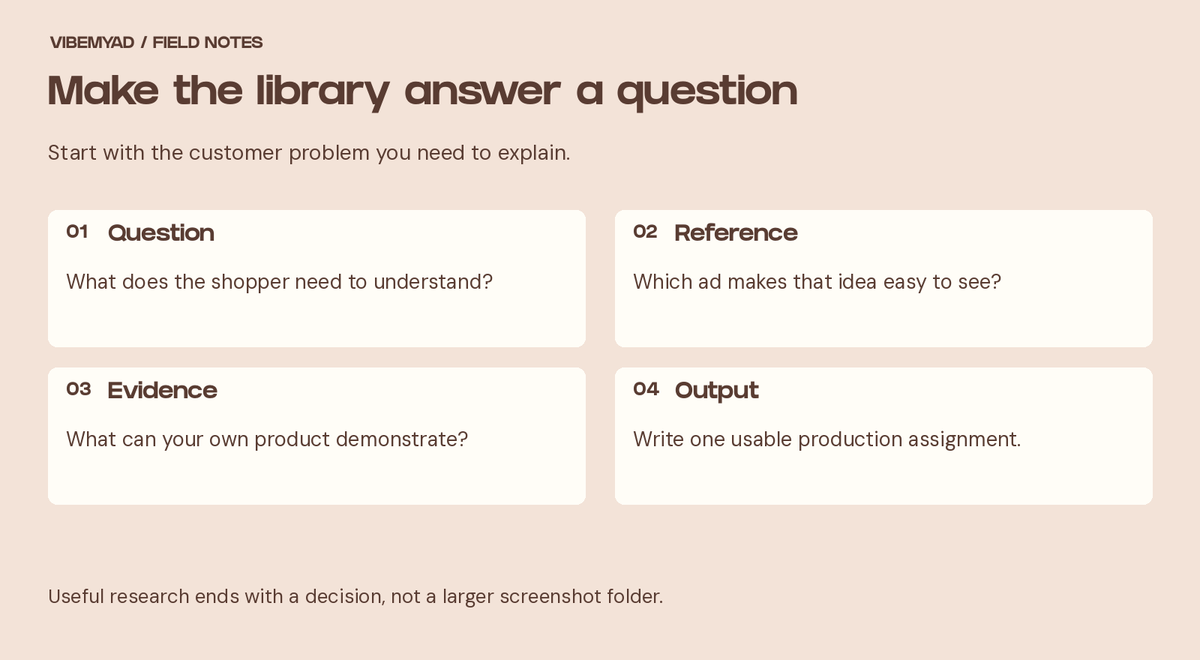
Make the library answer a question
A reference helps when you can name what it contributes. "Use a close-up to explain the mechanism" gives production direction. "Make it premium like this" leaves the buying argument unresolved.
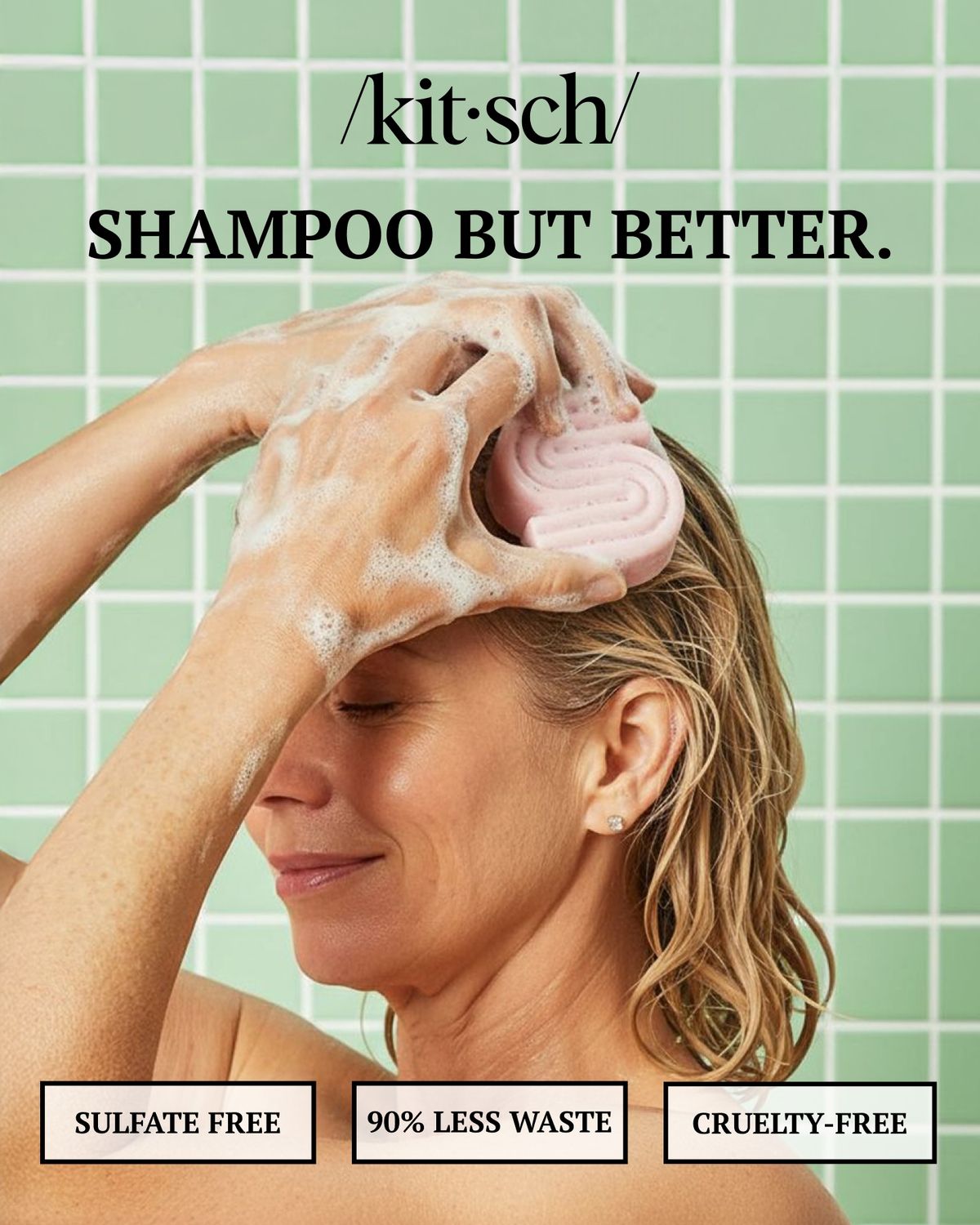
Kitsch shampoo bar used on wet hair. Source: Vibemyad ad archive. Reference img-e9969e6980c79cf0.
This archived Kitsch ad shows a shampoo bar in use. For a business selling an unfamiliar format, the useful idea is to demonstrate the action a new customer might hesitate over. You still need your own product footage and approved claims.
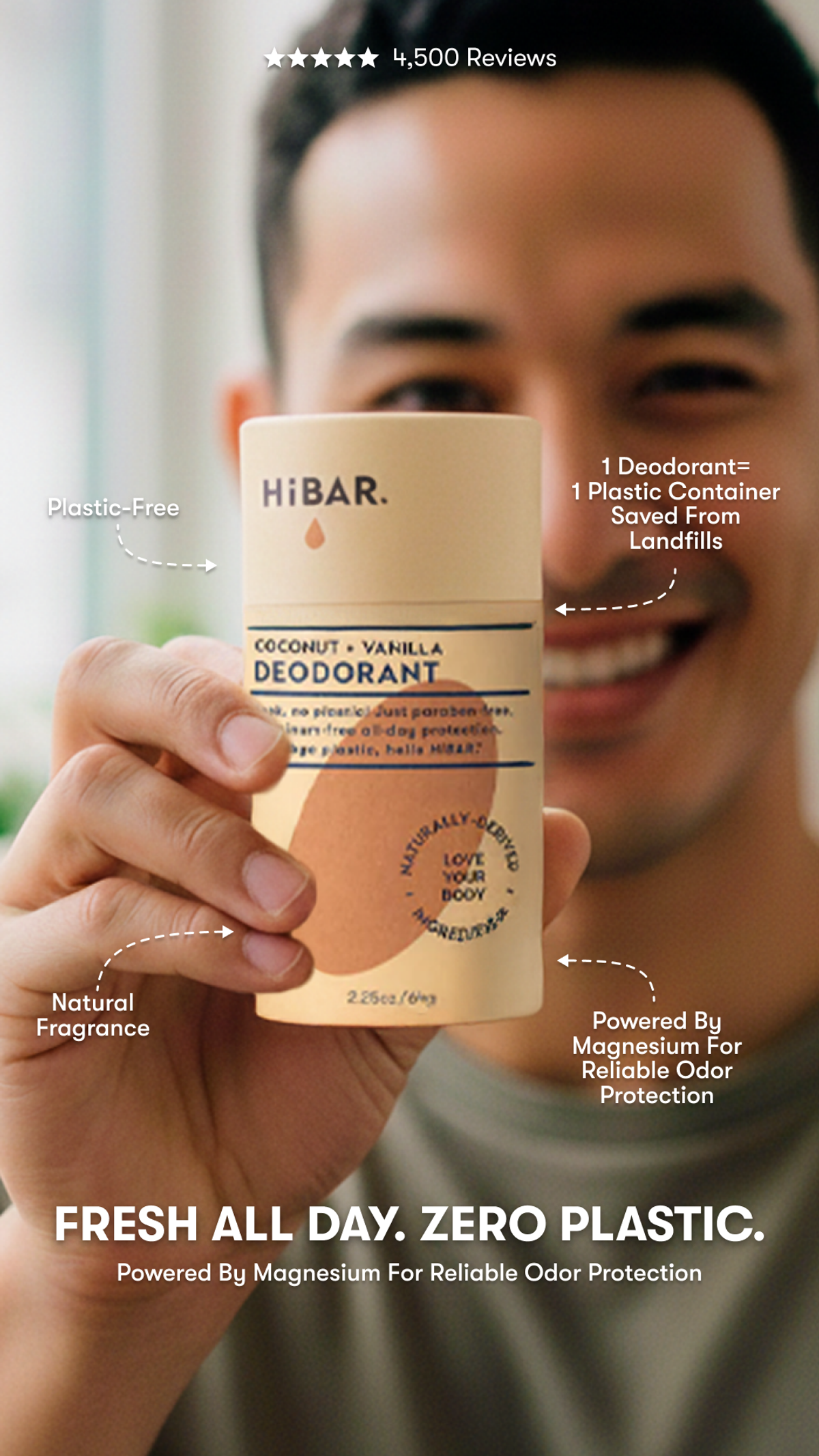
HiBAR plastic-free deodorant with product benefit callouts. Source: Vibemyad ad archive. Reference img-dfc2351963d32362.
The HiBAR reference pairs its packaging message with an everyday product benefit. It suggests a useful research question: what reassurance does a customer need before switching?
A product demonstration, a clear comparison and a relevant customer review can answer different concerns. Choose the format after deciding what the viewer needs to understand. Our testimonial examples examine review-led executions.
For each saved reference, record the advertiser, observation date, destination, customer question and the detail you want to study. Add a sentence describing what your brand could test with its own evidence.
Keep the distinction between an active ad and an archived reference clear. For a campaign you need to inspect today, check the original platform source. Our Meta and Instagram tutorial explains how to find the advertiser.
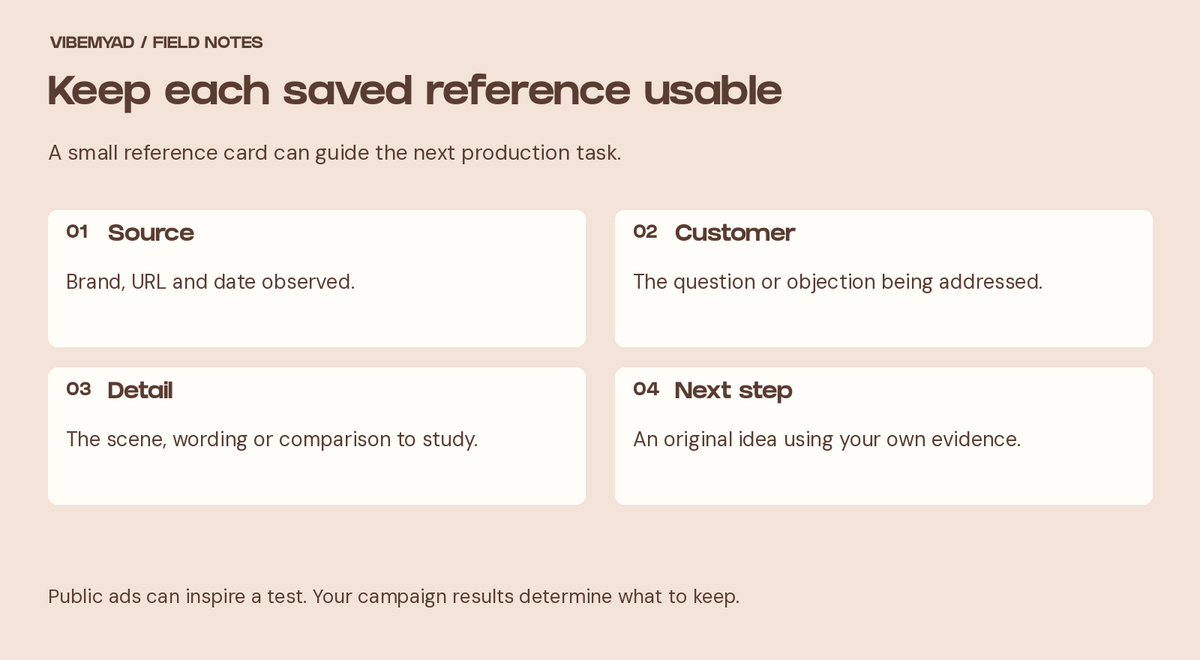
Keep each saved reference usable
A visible ad does not reveal the advertiser's margins or establish that your business will get similar results. Duration and repeated versions can guide further research, but they cannot replace your own campaign measurement.
Do not attach a savings percentage to the workflow unless you have actually measured it. If you want to assess its value, record the time spent researching and briefing, then review whether the resulting assets were usable and what the campaign established.
If your team can interpret references and produce the campaign, a library can support that work. If the work repeatedly stops at a folder of screenshots, an agency may be the more useful addition.
Vibemyad Marketing Agency can handle research, briefing, creative production and performance review within an agreed scope. Start with one product and a defined campaign question so the output is easy to assess.
Get notified when new insights, case studies, and trends go live — no clutter, just creativity.
Table of Contents


Rahul Mondal
Product, Design and Co-founder, Vibemyad

Rahul Mondal
Product, Design and Co-founder, Vibemyad


Ananya Namdev
Content Writer, Vibemyad