March 10, 2026 • 11 min read

March 10, 2026 • 11 min read
For decision-makers comparing Google Ads vs Facebook Ads, the difference lies in how each platform approaches customer acquisition.
In the global digital advertising ecosystem, Google Ads and Facebook Ads dominate marketing budget discussions, which is why the debate around Google Ads vs Facebook Ads remains central to digital strategy.
According to Wicked Reports, Facebook has over 2.3 billion active users worldwide, many of whom spend significant time scrolling feeds, watching videos, and engaging with content where ads appear. Meanwhile, Google processes more than 5.6 billion searches daily, and each query represents a moment when a user is actively looking for information, products, or services.
At first glance, comparing the two platforms seems straightforward. Both offer powerful targeting capabilities and access to massive global audiences. However, the comparison can be misleading because the platforms operate on fundamentally different advertising mechanics.
Google Ads functions as an intent-driven advertising platform. Users come to Google with a specific problem, question, or purchase intent, and ads appear in response to those searches.
Facebook Ads operates as an interest-driven advertising system. Users are not actively searching for products; instead, the platform introduces brands based on interests, behaviors, and demographic signals.
For marketing leaders conducting a PPC advertising comparison, the real strategic question is how each platform fits within the broader framework of paid search vs paid social advertising, and how both can work together to drive growth.
The Google Ads vs Facebook Ads debate ultimately comes down to intent vs discovery. Google Ads captures existing demand through search, while Facebook Ads creates demand through social exposure.
Google Ads is built around search intent. Every day, users turn to Google when they need information, want to solve a problem, or are ready to purchase a product or service. Their search queries reveal exactly what they are looking for. Common examples include:
These searches signal clear purchase or problem-solving intent. The user already recognizes a need and is actively seeking the best solution. Google Ads works by placing relevant advertisements directly alongside these search results, ensuring that businesses appear precisely when potential customers are looking. Key elements of the system include:
Advertisers bid on specific keywords related to their products or services. When users search those terms, the platform displays ads that match the query.
Rather than creating new interest, Google Ads focuses on capturing existing demand. It connects businesses with users who are already searching for a solution.
Because the user already intends to take action, Google Ads is highly effective for lead generation, service inquiries, demo bookings, and direct purchases.
Facebook Ads operate on a completely different model. When users browse Facebook or Instagram, they are typically not searching for solutions. Instead, they are scrolling through content, engaging with friends, or watching short-form videos. Advertising in this environment works by introducing products based on who the user is, rather than what they search for. Key mechanisms include:
Advertisers can target audiences based on interests, hobbies, pages followed, and types of content users regularly engage with.
Facebook analyzes behavioral signals such as post interactions, video views, clicks, and browsing activity to refine audience targeting.
Brands can reach entirely new users who share characteristics and behavioral patterns with their existing customers.
Because users are not actively searching for products, Facebook Ads are particularly effective for product discovery, brand storytelling, and awareness campaigns.
Audience targeting in Google Ads is primarily built around search intent and keyword signals. Advertisers reach users based on the terms they enter into the search engine. Key targeting mechanisms include:
Because Google relies on search queries, targeting is highly precise for intent-based traffic.
Facebook approaches targeting differently. Instead of search queries, it relies on extensive user data and behavioral insights to build audience segments. Key targeting options include:
By combining demographic, behavioral, and interest signals, Facebook enables deep audience segmentation and advanced targeting models.
Winner: Facebook Ads for targeting depth and audience segmentation.
The cost structures of Google Ads and Facebook Ads differ significantly because they operate in different advertising environments.
Google Ads typically involves:
Although CPCs can be higher, strong intent often leads to efficient cost per acquisition (CPA) when campaigns are optimized properly.
Facebook’s pricing model focuses on reach and engagement rather than search intent. Typical advantages include:
For brands focused on awareness and audience expansion, Facebook often delivers better cost efficiency at scale.
Winner: Facebook Ads for cost-efficient reach and awareness.
Creative formats strongly influence how brands communicate their message and capture attention.
Google offers several advertising formats designed to match different user contexts:
While Google does support visual formats, search advertising remains text-focused, prioritizing relevance and intent over visual storytelling.
Facebook’s platform is built around visual content and user engagement. Common ad formats include:
Because the platform prioritizes content consumption, Facebook excels in visual storytelling, emotional engagement, and brand narrative.
Winner: Facebook Ads for creative flexibility and visual storytelling.
Conversion intent is one of the most critical differences in the Google Ads vs Facebook Ads comparison.
Users on Google typically have a clear intent. They are actively searching for products, services, or information. This leads to:
Businesses such as local services, B2B software providers, and healthcare clinics often see strong results because Google captures customers who are ready to act.
Facebook users are usually in discovery mode rather than solution-seeking mode. This results in:
Facebook campaigns often introduce products to users who may not have previously considered them, gradually building interest and intent.
Winner: Google Ads for high-intent conversions.
For e-commerce businesses, both platforms contribute to different stages of the customer journey.
Google excels at capturing high-intent product searches. Key strengths include:
Shoppers who already know what they want often turn to Google first.
Facebook plays a powerful role in product discovery and engagement. Key advantages include:
Because of this, Facebook is highly effective for top- and mid-funnel eCommerce marketing.
Winner: Split depending on funnel stage.
The complexity of campaign setup and optimization also differs between the two platforms.
Google Ads campaigns typically require detailed configuration and ongoing optimization. Key tasks include:
These controls provide powerful optimization capabilities but require deeper expertise and active management.
Facebook campaign management places greater emphasis on creative testing and audience experimentation. Key optimization activities include:
The campaign structure:
Campaign → Ad Set → Ads
This makes Facebook easier to manage for smaller teams or marketers prioritizing creative experimentation.
Winner: Facebook Ads for simplicity and creative-driven optimization.
If customers are actively searching for solutions, Google Ads captures that existing demand. If customers are not yet searching but may become interested after exposure, Facebook Ads builds awareness first. In simple terms: Google captures demand, Facebook generates it.
Businesses that consistently produce strong visuals and short-form video often perform well on Facebook, where creative engagement drives algorithmic distribution. Companies that rely on keyword strategy and optimized landing pages typically see stronger performance from Google Ads.
Products with short purchase cycles, such as local services or urgent solutions, often perform best with Google Ads. Products requiring longer consideration frequently perform better on Facebook, where repeated exposure gradually moves users toward conversion.
Many high-performing marketing strategies combine Google Ads to capture demand and Facebook Ads to generate it, creating a more comprehensive full-funnel acquisition system.
For more on building a smarter ad research workflow, read our guide on how to spy on competitor Facebook ads and the best ad intelligence tools in 2026.
Running successful advertising campaigns involves far more than launching ads and setting a budget. In practice, many marketers struggle with the underlying strategic work that makes campaigns consistently perform — researching competitor advertisements, identifying creative angles that resonate, testing multiple ad variations quickly, and understanding which hooks, messaging styles, and visuals actually drive results.
This is where ad intelligence changes the equation.
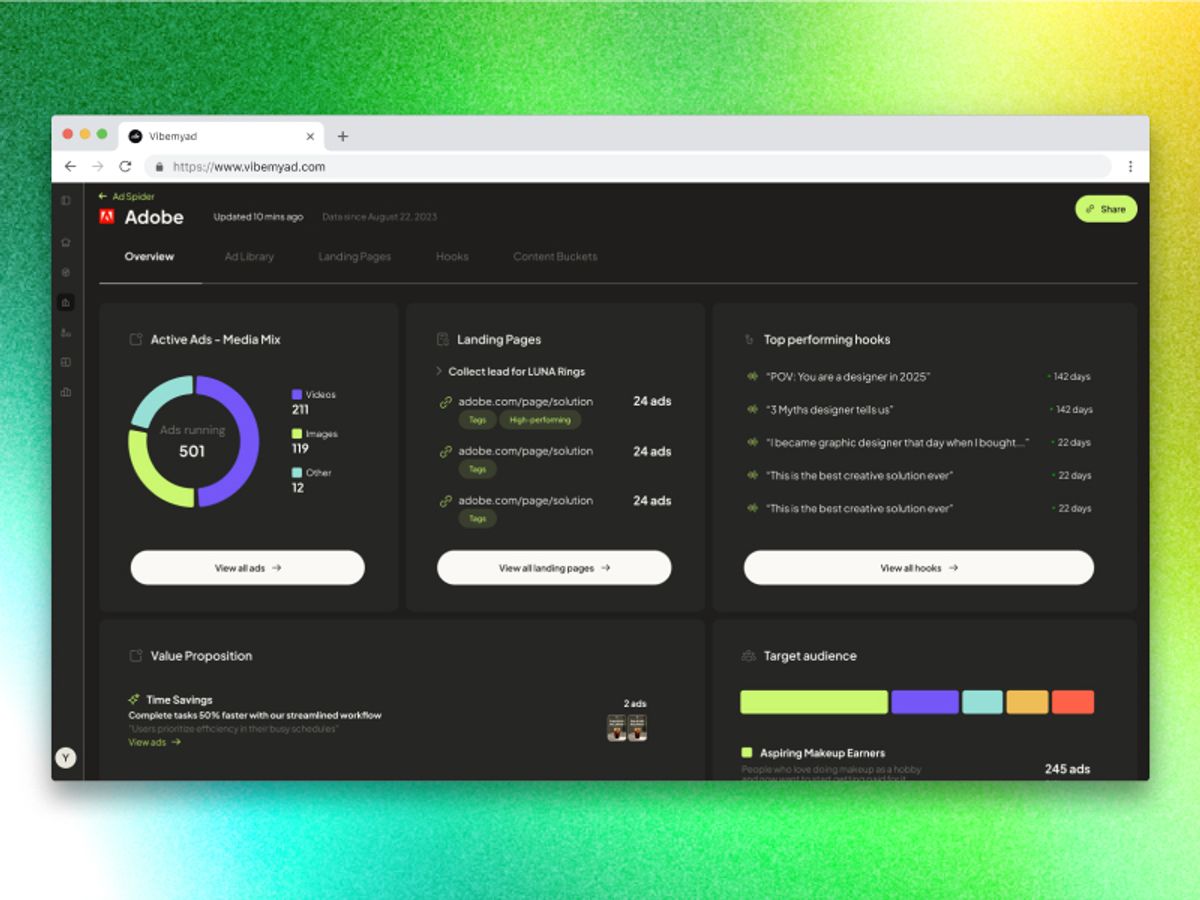
Vibemyad Ad Spider
Vibemyad Ad Spider tracks competitor ads across Facebook and Google in real time, showing you exactly what any brand is running, how long each ad has been active, and which creatives are being scaled.
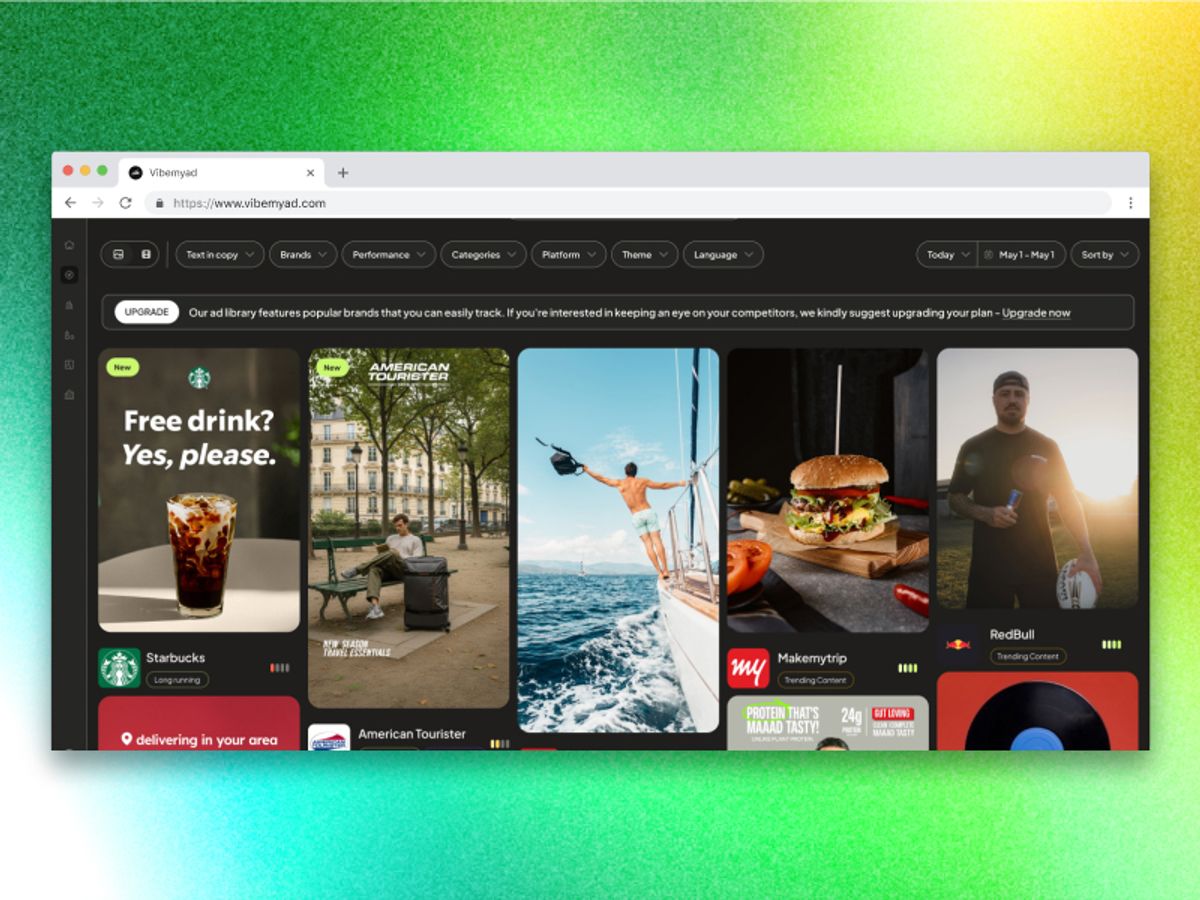
Vibemyad Ad Vault
Vibemyad Ad Vault analyses individual ad performance using three proprietary signals — Momentum Signal, which identifies ads gaining traction, Market Signal, which shows how an ad compares against category benchmarks, and Activity Signal, which tracks consistency of spend over time.
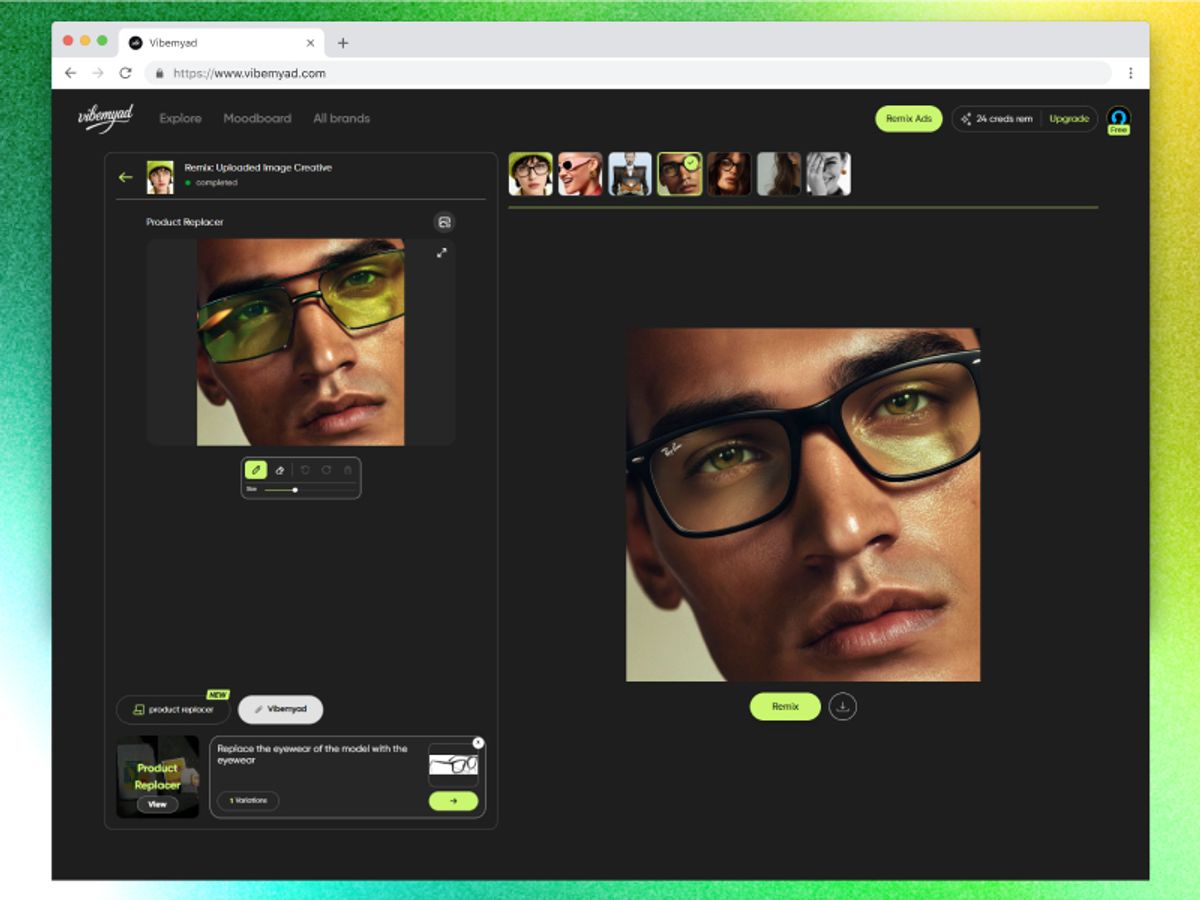
Vibemyad Ad Gen
Vibemyad Ad Gen generates new ad creative variations in seconds, using intelligence from your competitor research to produce hooks, copy, and visual concepts ready to test.
Instead of relying on guesswork or manual research, marketing teams can use real advertising intelligence to accelerate testing, discover winning creative patterns, and improve campaign performance across both Google and Facebook.
The most effective advertising strategy in 2026 is not Google Ads or Facebook Ads — it is both, used for what each does best. Google Ads wins on intent: when someone is searching for a solution, capturing that moment converts at the highest rate and typically produces stronger customer lifetime value. Facebook Ads wins on discovery: when you need to reach people who do not yet know they need your product, no platform builds awareness more efficiently at scale. Brands that combine both — using Facebook to generate demand and Google to capture it — consistently outperform those that choose one platform and ignore the other.
Get notified when new insights, case studies, and trends go live — no clutter, just creativity.
Table of Contents


Arpita Mahato
Content Writer, Vibemyad

Arpita Mahato
Content Writer, Vibemyad


Rahul Mondal
Product, Design and Co-founder, Vibemyad