March 12, 2026 • 10 min read

March 12, 2026 • 10 min read
Amazon Advertising and Facebook Ads solve different problems in e-commerce marketing.
Amazon captures demand. Facebook creates it.
That single difference in how each platform interacts with the customer explains why brands that rely on only one consistently underperform brands that use both strategically.
Many e-commerce brands spend heavily on paid advertising but fail to see consistent results. Campaigns run for weeks, budgets increase, and yet conversions remain unpredictable. One of the most common reasons is that brands often choose the wrong advertising platform for their objective.
Some businesses invest heavily in Facebook Ads, expecting immediate purchases, only to realize their audience is still in the discovery stage and not ready to buy. Others focus entirely on Amazon Advertising, assuming it will generate new demand, when in reality the platform primarily captures shoppers who are already searching for products.
This mismatch between advertising strategy and customer intent is what makes the debate around Facebook Ads vs Amazon Advertising so important for modern e-commerce brands.
Both platforms are powerful, but they operate at different stages of the customer journey. Understanding how they differ and when to use each is essential for building a profitable and scalable advertising strategy.
When comparing Facebook Ads vs Amazon Advertising, the biggest difference is customer intent.
In many Amazon Ads vs Facebook Ads ROAS comparisons, Amazon often delivers higher short-term conversion rates, while Facebook performs better at building brand awareness and reaching new audiences.
For most e-commerce businesses, the strongest strategy is using Facebook to create demand and Amazon to convert that demand into purchases.
The real answer depends on which stage of the buying journey you want to influence.
If your goal is to capture customers who are already searching for products, Amazon Advertising usually performs better. Amazon operates as a product marketplace where shoppers actively compare options, read reviews, and make purchase decisions.
However, if your objective is to introduce products to new audiences, Facebook Ads often deliver stronger results. Facebook’s advanced targeting allows brands to reach users based on interests, behaviors, demographics, and engagement patterns.
Because of this, experienced marketers rarely frame the debate as “Which is better, Amazon Ads or Facebook Ads?” Instead, they ask a more strategic question: Which platform aligns with the current marketing objective? In simple terms:
The fundamental difference between Facebook Ads and Amazon Advertising lies in how users interact with each platform. Amazon is a search-driven shopping marketplace. Most users visit the platform with a specific product in mind. They search for items, compare alternatives, and evaluate reviews before making a purchase.
Because shoppers are already close to buying, Amazon Ads often generate high conversion rates. Facebook operates in a completely different environment. It is a social discovery platform where users scroll through content, interact with friends, and watch videos.
Instead of responding to product searches, Facebook Ads appear within a user’s feed and introduce products based on interest targeting, behavioral signals, and demographic data.
This means:
Understanding this difference is critical when evaluating Facebook Ads vs Amazon PPC for e-commerce.
To properly evaluate Amazon Ads vs Facebook Ads, it helps to analyze how each platform performs across several strategic categories.
Customer intent is the most important factor in the Amazon Ads vs Facebook Ads ROAS comparison.
Amazon users are typically actively searching for products. Their searches often indicate strong purchase intent.
Facebook users are usually browsing content, not looking for products. Ads introduce products during this browsing experience. Because of this difference:
Both platforms offer powerful targeting, but they rely on different signals. Amazon Advertising targeting includes:
These targeting options allow brands to reach users based on purchase intent and product searches. Facebook Ads targeting includes:
This enables brands to reach highly specific audience segments, making Facebook ideal for expanding reach.
One of the main reasons brands invest heavily in Amazon PPC is its ability to drive direct sales. Because Amazon users are actively searching for products, ads appearing within search results often convert quickly.
In most Amazon Ads vs Facebook Ads ROAS comparisons, Amazon generates a higher short-term return on ad spend.
Facebook Ads can still convert effectively, especially through retargeting campaigns, but their primary strength lies in building awareness and warming up audiences.
Advertising costs differ significantly between the two platforms. Amazon Ads often involve higher CPCs, especially in competitive product categories where brands aggressively bid for keyword visibility.
Facebook Ads typically offer lower CPM and CPC costs, allowing brands to reach large audiences at scale. This cost difference makes Facebook particularly useful for awareness campaigns and new product launches.
Another key difference in Facebook Ads vs Amazon Advertising is where each platform fits in the customer journey. Facebook Ads influence the early stages of the funnel, where potential customers first discover a product.
Amazon Ads influence the final stage of the funnel, where customers compare options and complete purchases. When used together, these platforms can cover the entire buyer journey.
Facebook Ads are often used for long-term brand growth. They help introduce products, build brand recognition, and expand audience reach.
Amazon Ads focus more on immediate product sales, especially when shoppers are searching for specific products. Brands that rely solely on Amazon Ads may struggle to create new demand, while brands that rely only on Facebook may miss high-intent buyers.
Your product already has established search demand — people are actively looking for what you sell. You are selling in a competitive product category where shoppers compare options and read reviews before buying. Your primary goal is direct sales and immediate return on ad spend rather than building brand recognition. You are an established brand with product listings already optimized on Amazon.
Your product needs to be introduced to people who do not yet know it exists. You are a new brand, a DTC brand, or launching a product in a category where search demand has not fully formed yet. You have strong visual creative — photography, video, lifestyle content — that can stop a scroll. Your goal is building an audience, generating retargeting pools, or expanding into new demographics.
You are at a stage where you need to build awareness and convert it. Facebook generates the interest, Amazon captures it when the customer searches later. This is the full-funnel approach that consistently outperforms single-platform strategies for scaling e-commerce brands. For more on building a full-funnel paid strategy, read our guide on Google Ads vs Facebook Ads: Which Drives Better ROI in 2026.
One important insight often overlooked in the Facebook Ads vs Amazon Advertising discussion is how the two platforms actually work together in the real customer journey. Many customers first discover a product through Facebook Ads, but later search for that same product on Amazon before making a purchase. In this scenario:
This behavior is extremely common in modern e-commerce. Consumers rarely buy immediately after seeing an ad. Instead, they move across platforms, discovering products on social media, researching reviews, and finally purchasing on marketplaces like Amazon.
Because of this, many successful e-commerce brands build multi-channel advertising strategies that leverage both platforms. However, managing campaigns across multiple platforms introduces another challenge: advertising complexity.
When brands run ads on Facebook, Amazon, and other channels simultaneously, it becomes difficult to answer key questions such as:
This is why many brands are now turning to AI-powered ad intelligence platforms. AI-driven advertising tools help marketers analyze campaign performance, identify winning ad creatives, and optimize campaigns faster than traditional manual methods. Instead of relying on guesswork, brands can use AI insights to improve targeting, creative strategy, and overall ad performance across platforms.
Running high-performing campaigns across Facebook and Amazon requires more than a bigger budget. It requires knowing what is working in your category before you spend.
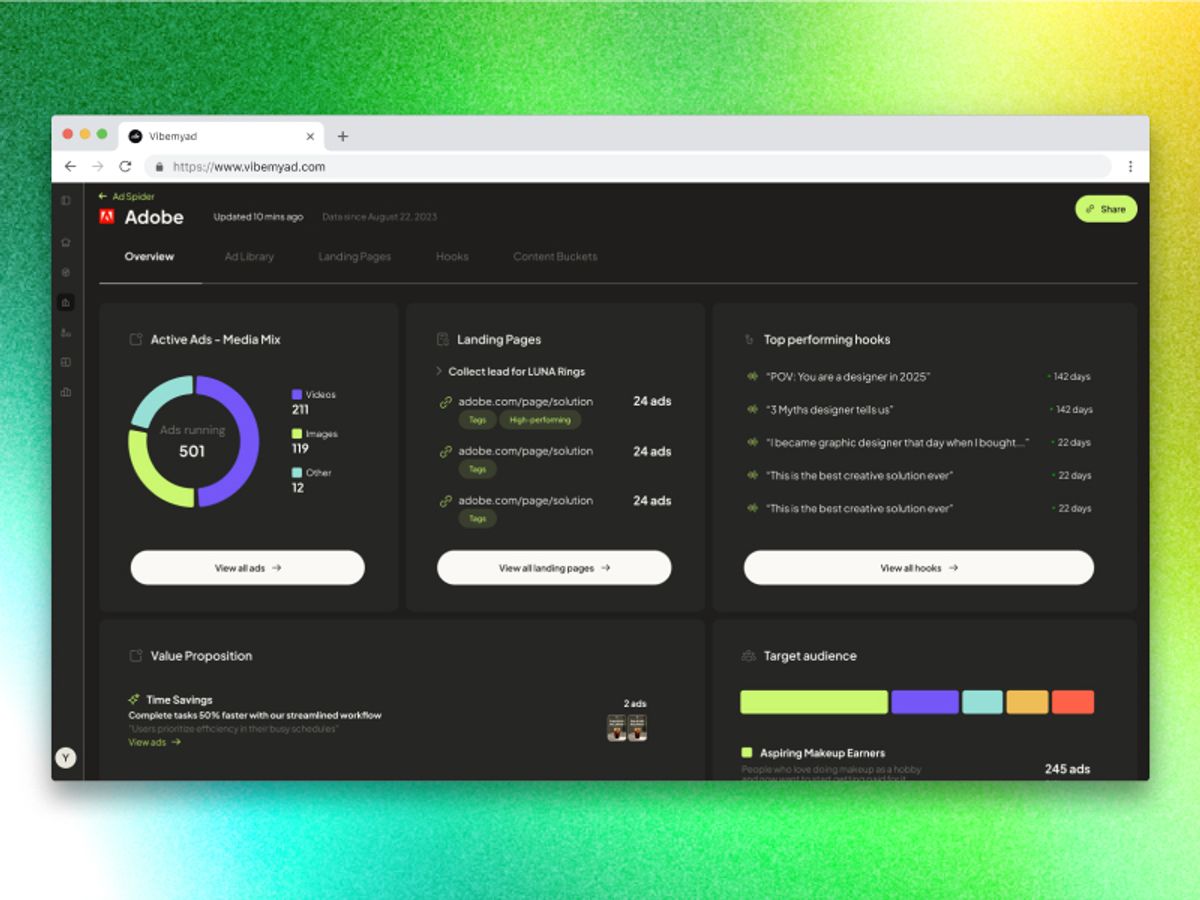
Vibemyad Ad Spider
Vibemyad Ad Spider tracks competitor ads across Facebook in real time, showing you exactly what any brand is running, how long each ad has been active, and which creatives are being scaled. Instead of guessing what messaging works in your category, you can see it directly from brands already spending and winning.
Vibemyad Ad Vault
Vibemyad Ad Vault analyses individual ad performance using three proprietary signals — Momentum Signal, which identifies ads gaining traction; Market Signal, which shows how an ad compares against category benchmarks; and Activity Signal, which tracks consistency of spend over time. This tells you not just what competitors are running, but which of their ads are actually working.
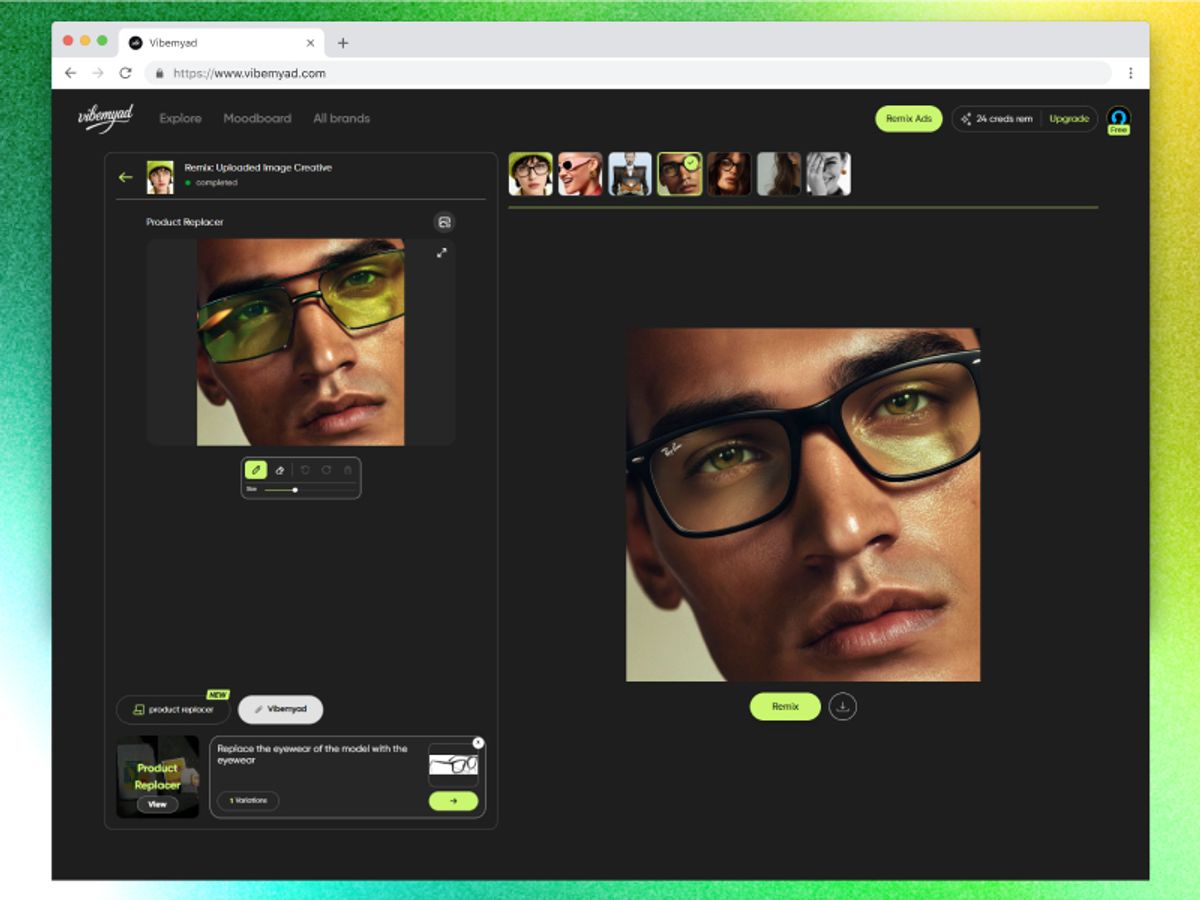
Vibemyad Ad Gen
Vibemyad Ad Gen generates new ad creative variations in seconds, using the intelligence from your competitor research to produce hooks, copy, and visual concepts that are ready to test. Instead of starting from a blank brief, you start from what the market has already validated.
For e-commerce brands running campaigns across Facebook and Amazon, the ability to research, analyse, and generate high-performing ad creatives from one platform significantly compresses the time between idea and result. Read more about how ad intelligence tools work and what to look for in 2026.
Get notified when new insights, case studies, and trends go live — no clutter, just creativity.
Table of Contents


Arpita Mahato
Content Writer, Vibemyad

Arpita Mahato
Content Writer, Vibemyad

Arpita Mahato
Content Writer, Vibemyad