July 23, 2026 • 13 min read

July 23, 2026 • 13 min read
Every ad has three decisions: a hook, a visual, and a line of copy. Five hydration brands answered all three differently, and only one still argues that it hydrates better.
Put the category's biggest brands side by side and they do not look like they sell the same thing:
That is not an accident of packaging design. Every ad comes down to three decisions: the hook that earns the stop, the visual that carries it, and the copy that closes it. Most hydration ads answer all three the same way, which is exactly why they blur together. The five brands below each changed at least one.
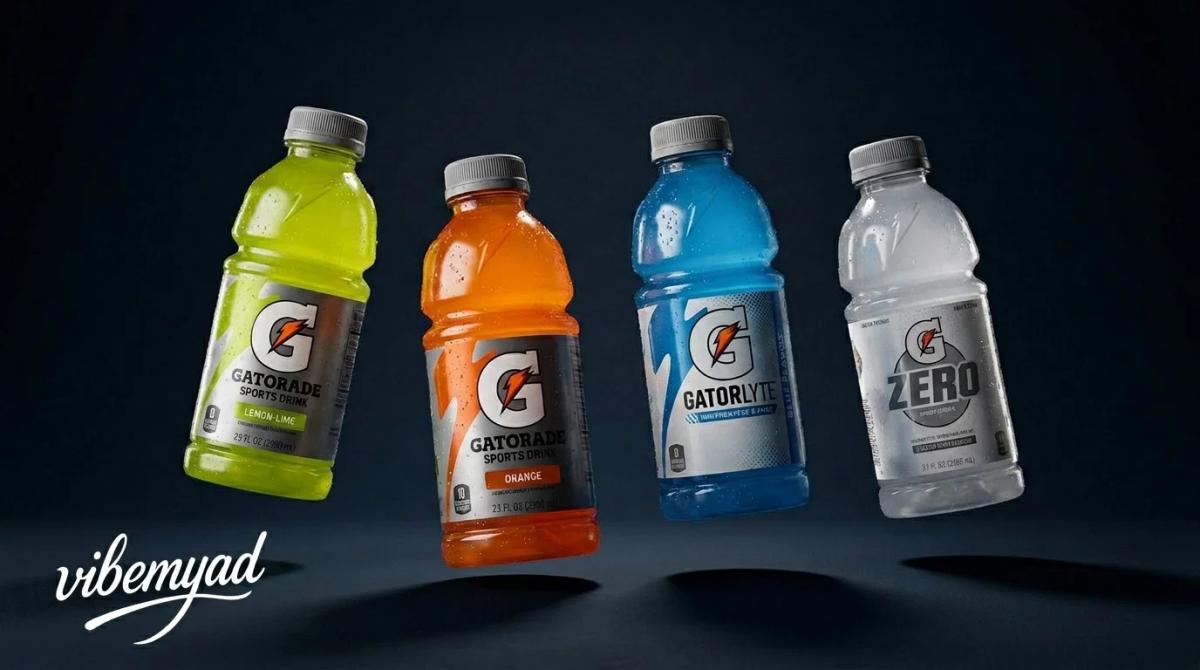
Gatorade's Ads
Gatorade advertises like an incumbent rather than a competitor. Reporting places its US sports drink share at roughly 65 to 70 percent, which changes the job entirely. These ads are not trying to win attention. They are reminding you the brand is the standard.
HOOK - Authority. You are an athlete, and this is what athletes use. It does not argue, it assumes.
VISUAL - Athletes mid-effort. Sweat, exertion, the bottle in hand during play. This is the visual language the whole category borrowed, which is why every rival's ad now looks like a Gatorade ad.
COPY - The claim is printed on the pack itself: number one sports drink in the world, hydrates faster, advanced hydration system. Most brands bury that in a caption. Gatorade puts it in the packaging, so every product shot is already an ad.
Three details are worth stealing regardless of your size:
Why it works here: Gatorade does not need novelty, so repeating itself compounds instead of reading as laziness. It is also the one hook a new brand cannot borrow, because the authority comes from decades of being believed rather than from anything in the ad.
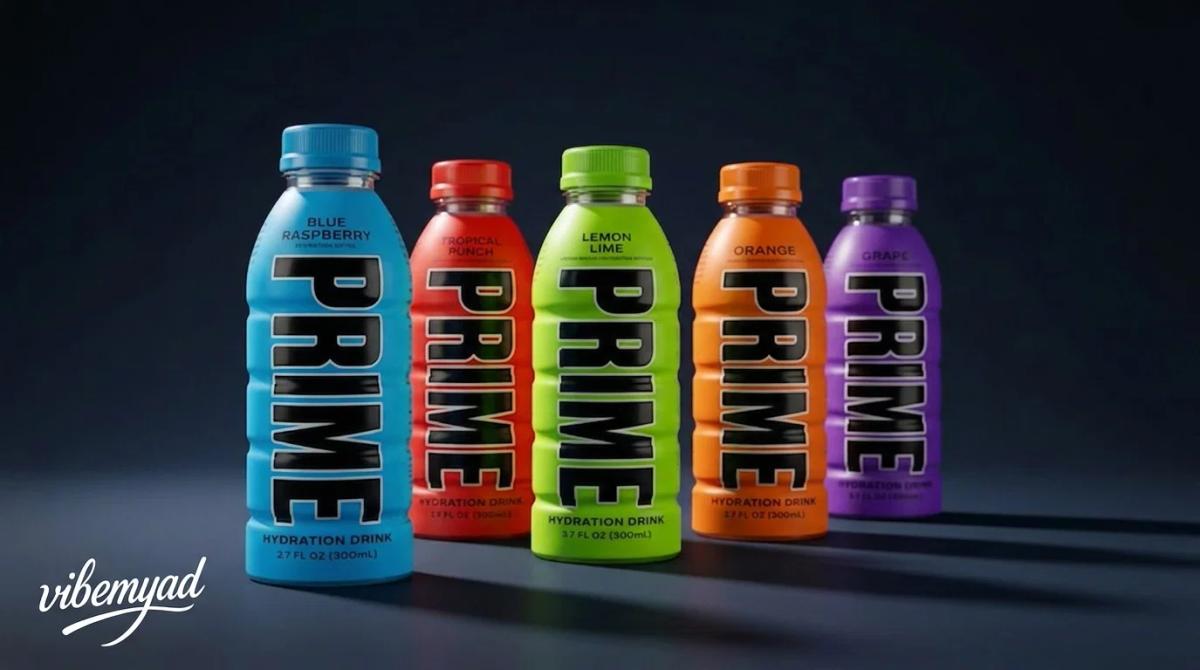
Prime's Ads
Prime is the clearest case in the category of a brand whose early ads were not ads at all.
HOOK - Founders plus scarcity. Logan Paul and KSI made this, and it sells out. Limited drops produced sellouts and resale markets, so the urgency was structural. The hook persuaded before anyone read a word.
VISUAL - One flat saturated color per flavor with the wordmark enormous across it. Blue raspberry, lemon lime, glowberry, ice pop. A bottle engineered for a thumbnail and a shelfie rather than a shelf.
COPY - Almost none. The flavor name and the logo, and that was the ad. Later came borrowed names rather than written claims: the UFC partnership, the Erling Haaland bottle, the Arsenal tie-in, all arriving after attention already existed.
The numbers show both the speed and the fragility: Bloomberg reported roughly 250 million dollars in first-year sales in 2022 and about 1.2 billion in 2023, while Business Insider reported UK revenue down about 70 percent in 2024, with US sales falling sharply the same year.
Why it worked, and why it broke: A founder-and-scarcity hook needs reach plus a constant supply of new moments. Once distribution expanded, scarcity was impossible to stage, and there was no copy underneath doing any work. Awareness without a reason to repurchase does not hold.
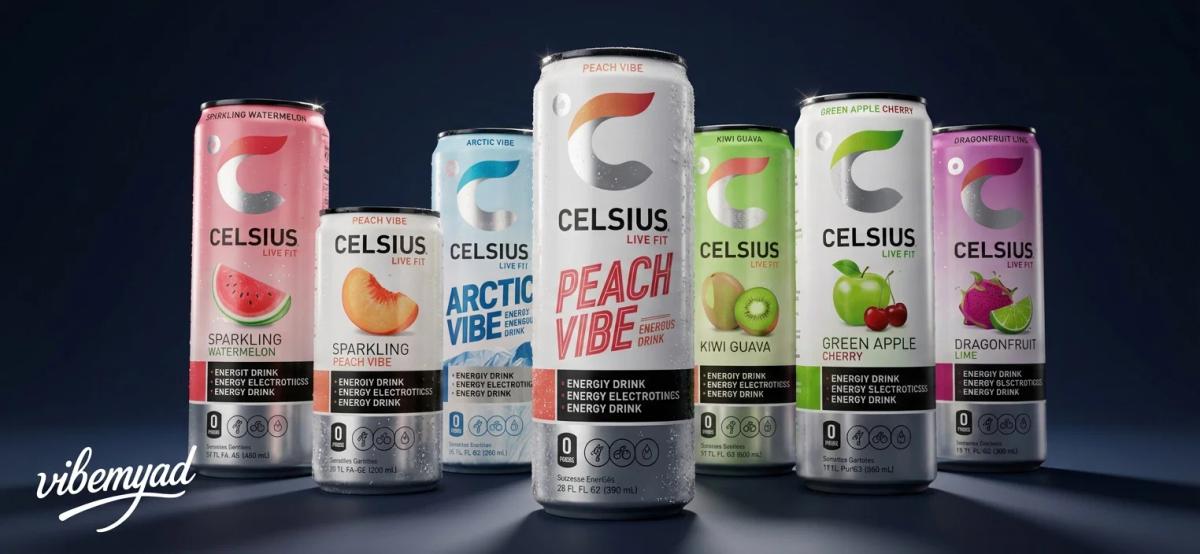
Celsius Ads
Celsius sits adjacent to hydration in functional energy, and its ads are the clearest example here of a brand that swapped the gym for the kitchen counter.
HOOK - Taste and mood rather than effort. This is a drink you choose, not one you earn. That single swap moves the addressable audience from athletes to everyone.
VISUAL - Almost every asset is the same construction: a clean white or silver can, the fruit that names the flavor, water in motion, hard studio light. No athlete, no gym, no sweat. The product is the hero and the fruit is the proof.
COPY - Short and mood-led. Live Fit as the line, and flavor names doing the positioning: Arctic Vibe, Peach Vibe, Tropical Vibe. These are feelings, not functions.
What that buys, and what it costs:
Why it works, with a caveat: A flavor hook speaks to everyone, which is its strength and its weakness. Anyone can shoot a can next to fruit, so the position is rented rather than owned.
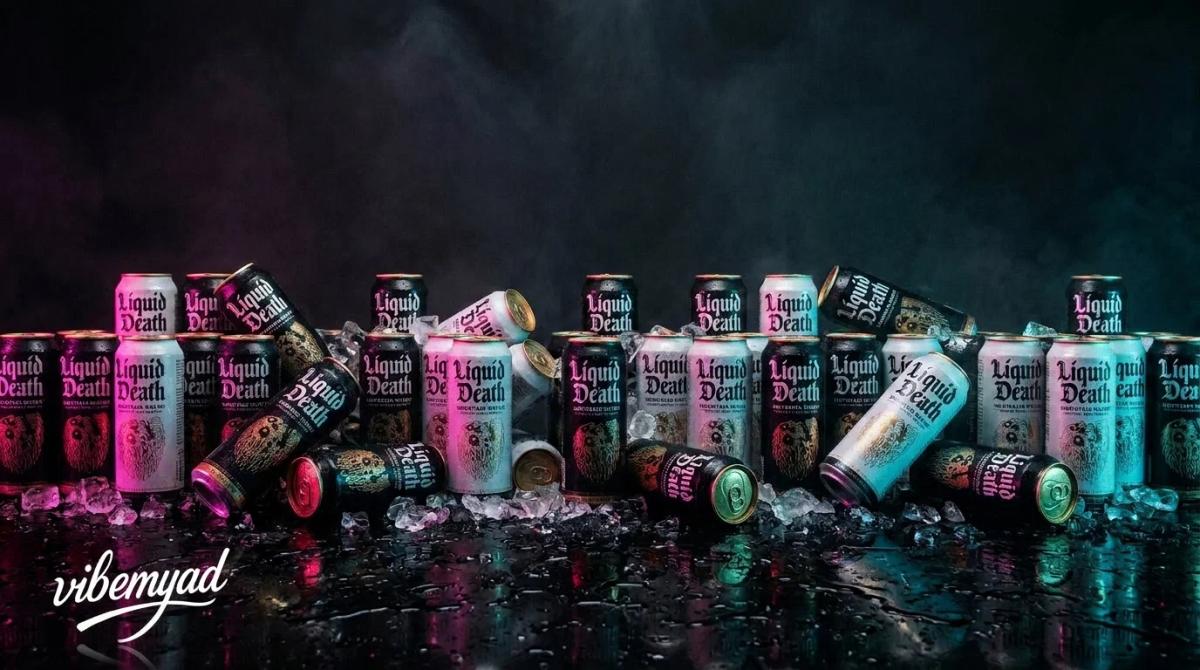
Liquid Death's Ads
Liquid Death sells canned water, not an electrolyte formula, which is exactly what makes it the sharpest lesson here. The hook is doing work no ingredient panel could do, and Forbes reported that the brand was valued at 1.4 billion dollars as of March 2024, up from 700 million in 2022, with retail sales of 263 million dollars in 2023.
HOOK - Identity, delivered as a joke you are in on. Holding the can says something about you. Founder Mike Cessario got the idea of watching people at Warped Tour drink water out of Monster cans because the can looked right, which told him the pack was the product.
VISUAL - A tallboy can, skull artwork, and metal-album lettering, designed to be mistaken for beer at a glance. Nothing in the frame signals wellness, purity, or mountains, which is what every other water brand shows.
COPY - Murder Your Thirst. Don't Be Scared. It's Just Water. The lines are jokes at the expense of beverage marketing itself. The water never argues for hydration, and where the newer energy cans do carry specs, five calories and one hundred milligrams of unsweetened caffeine, they are set small and deadpan underneath the joke rather than replacing it.
The thinking behind it is more transferable than the aesthetic:
Why it works here: Identity is the one thing a competitor cannot take by matching your formula. It is also the highest-risk hook, because it only works if the brand is genuinely funnier or braver than everyone else in the aisle. Half-committing produces a costume rather than a character.
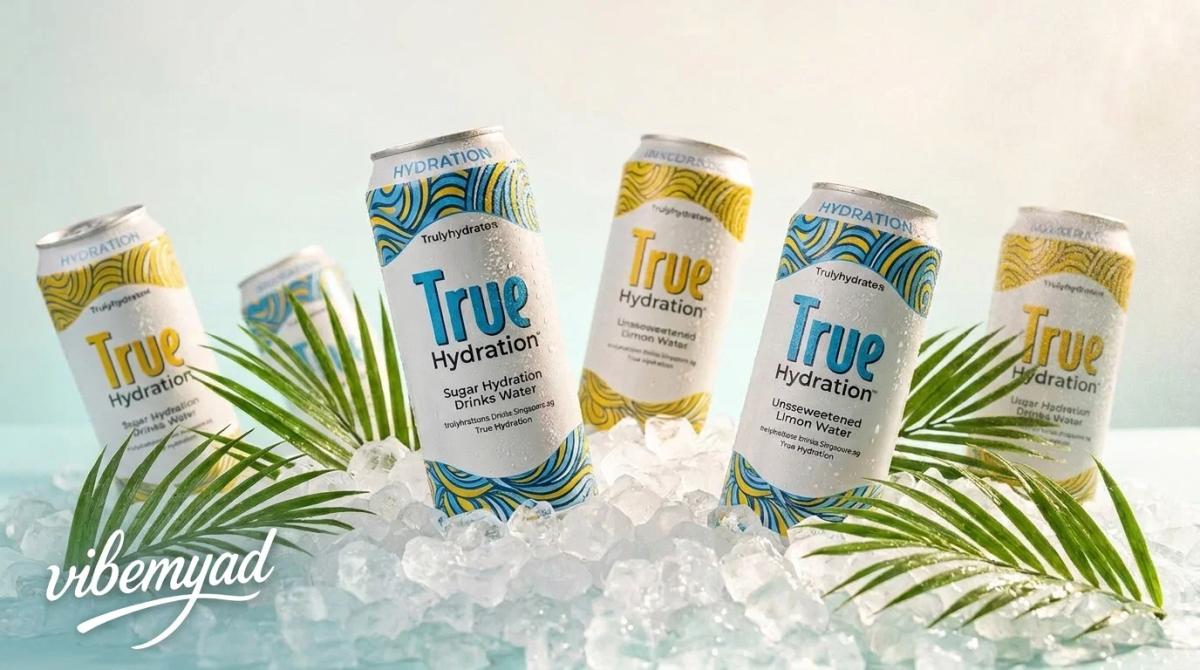
True Hydration Ads
True Hydration is the most instructive brand here for anyone not sitting on a nine-figure budget, because its hook costs nothing but a formulation decision and the discipline to keep the copy plain. It is also the only one of the five running a subtraction argument.
HOOK - The spec, stated as an absence. Zero sodium, zero sugar, zero calories. The brand's own argument is that most people already get more sodium than they need and that sugar-and-sodium formulas hydrate around cells rather than inside them, so the thing it removed becomes the reason to switch.
VISUAL - A clean white can with flowing blue and yellow line work, shot in bright natural daylight against real leisure settings: poolside, seaside, rattan outdoor furniture, pickleball paddles on a flat lay. Generous negative space, no athlete, no exertion. Packaging and unboxing content does heavy lifting alongside the product shots.
COPY - Plain and specification-led. Better living through quality hydration. Your daily wellness drink. Zero sodium, zero sugar. The supporting numbers are unusually specific for the category, citing an osmolality of 200 and 99.999 percent pure water, which reads as confidence rather than marketing.
Layered on top of that is a full DTC beverage marketing kit, and this is the part most worth copying:
Why it works here: A spec hook is available to any brand willing to make a real formulation choice and say so plainly. The risk is that it invites direct comparison, so the numbers have to hold up. Claims about what a drink does to your body also carry regulatory weight in most markets, which is worth checking before you put them in an ad.
Line up the same three decisions across all five, and the pattern has nothing to do with budget size.
Three things fall out of that grid:
Go back to one detail from Liquid Death, because it is the most useful thing in this article. Before the product existed, Cessario made a roughly 1,500 dollar commercial using 3D renders of a can that had not been manufactured, put about 3,000 dollars of Facebook ads behind it, and got 3 million views in four months plus hundreds of people asking where to buy it. No inventory, no photographer, no media budget. One ad, good enough to find out whether anyone cared.
That is now an afternoon's work. The bottleneck for most hydration and functional beverage marketing was never the idea; it was production: a single hero shoot for one hook can eat a quarter's budget, which is why small brands commit to one angle early and find out too late it was wrong. Here is how the same three decisions run in one session at vibemyad.com/home:
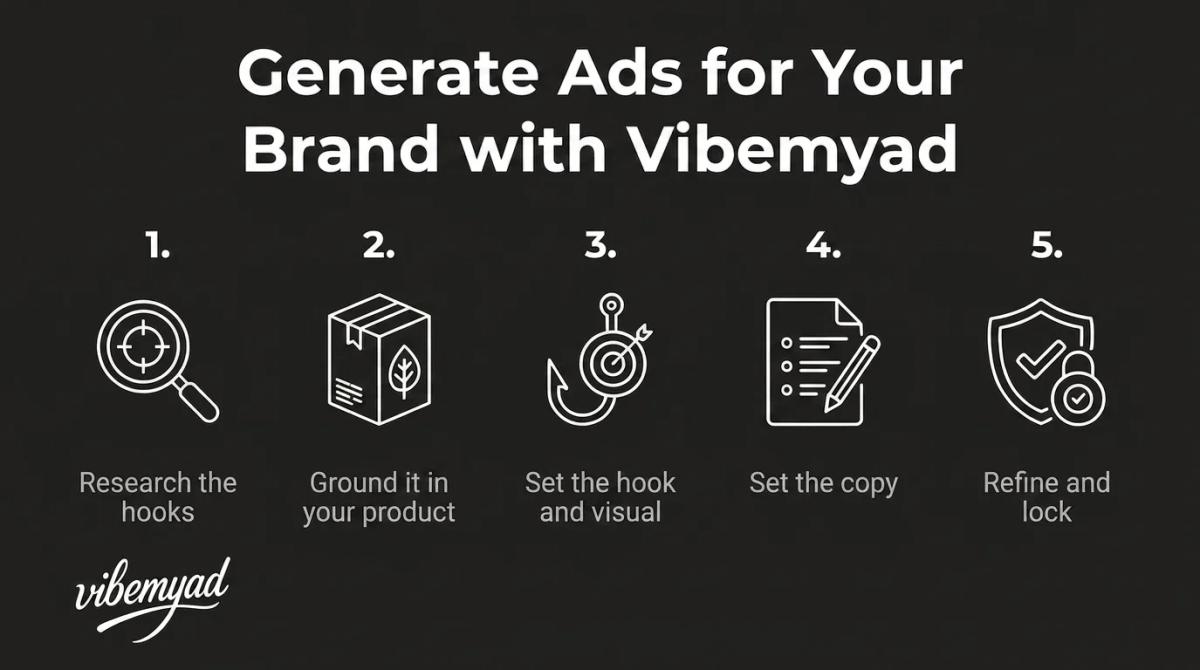
Generate Ads for Your Brand
To be precise about the division of labor: Vibemyad generates the ads, quickly and on brand. The audience testing still happens where it always has, in your own ads manager with your own spend. What changes is that you walk into that test with five hooks built instead of one. For the visual side of the decision, our guide to hydration and electrolyte ads that look premium covers what the calm, product-first look actually requires.
Get notified when new insights, case studies, and trends go live — no clutter, just creativity.
Table of Contents


Arpita Mahato
Content Writer, Vibemyad

Arpita Mahato
Content Writer, Vibemyad

Arpita Mahato
Content Writer, Vibemyad