August 04, 2026 • 7 min read

August 04, 2026 • 7 min read
Most hydration ads look fine and sell nothing. Five patterns separate the ones that stop the scroll from the ones that actually move the product.
• Lead with a problem or situation hook, not "hydrate." Name the failure or the moment.
• Frame the value as math, not poetry: "3x electrolytes, half the sugar" beats "advanced hydration."
• Blast the negative claim. Sugar-free is the category's trust password, so treat it as a badge.
• Match the format to the buyer, and run all three in parallel: infographic, lifestyle, and bundle.
• Expand beyond athletes into everyday occasions, illness, travel, and recovery to open a larger market.
What makes a good beverage ad is not the photography or the palette. It is whether the ad gives someone a reason to buy in the two seconds they look at it. In hydration, a crowded category where every pack promises the same thing, that comes down to a handful of repeatable, direct-response moves.
These five patterns are what the category's strongest ads keep doing, grounded in direct-response principle and in where the market is actually moving. They hold across the leaders, from Gatorade and Liquid I.V. to DripDrop and LMNT. None of them is a guaranteed win; you confirm conversion in your own testing, but they are the difference between an ad that only looks nice and a hydration drink ad built to earn the click.
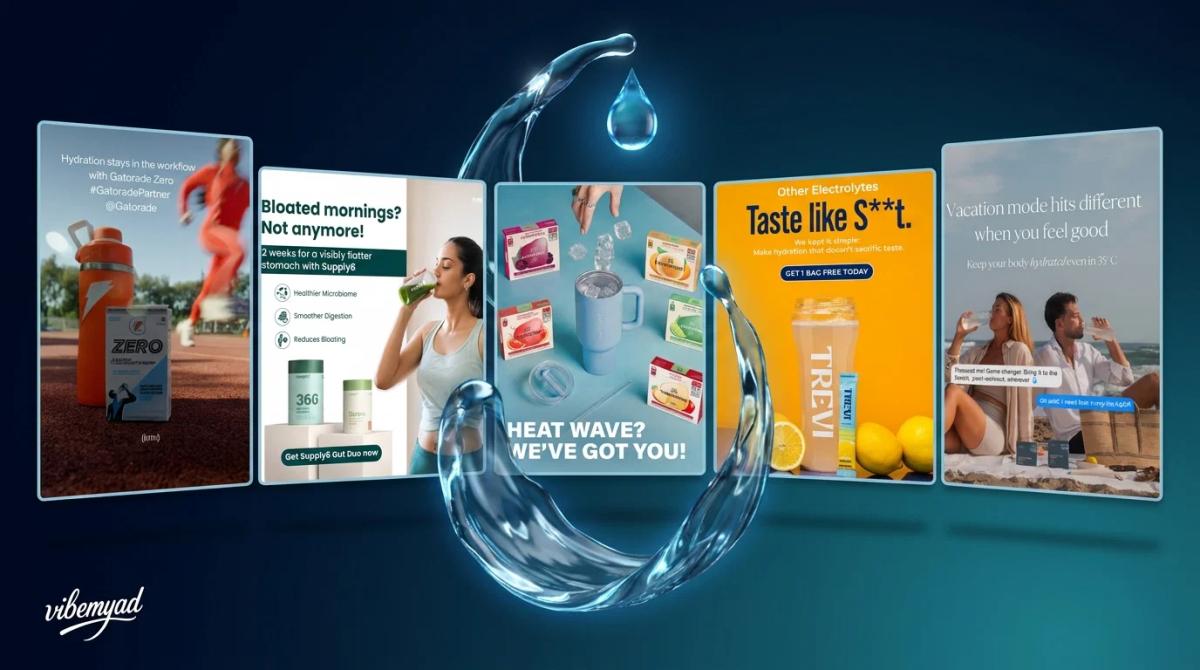
What Hook Makes a Hydration Ad Convert?
The best openers do not say "hydrate." They name a specific failure state or the exact moment of need. Four hook types do the work.
The gap to exploit: Situation and weather hooks are the least used. Liquid I.V. is one of the few that times campaigns to real heat waves, which is part of why they stand out. A hook tied to heat, a race, or a specific moment is open territory.
Hydration buyers are comparison shoppers, so the converting ads lead with arithmetic that beats the category leader, not poetry.
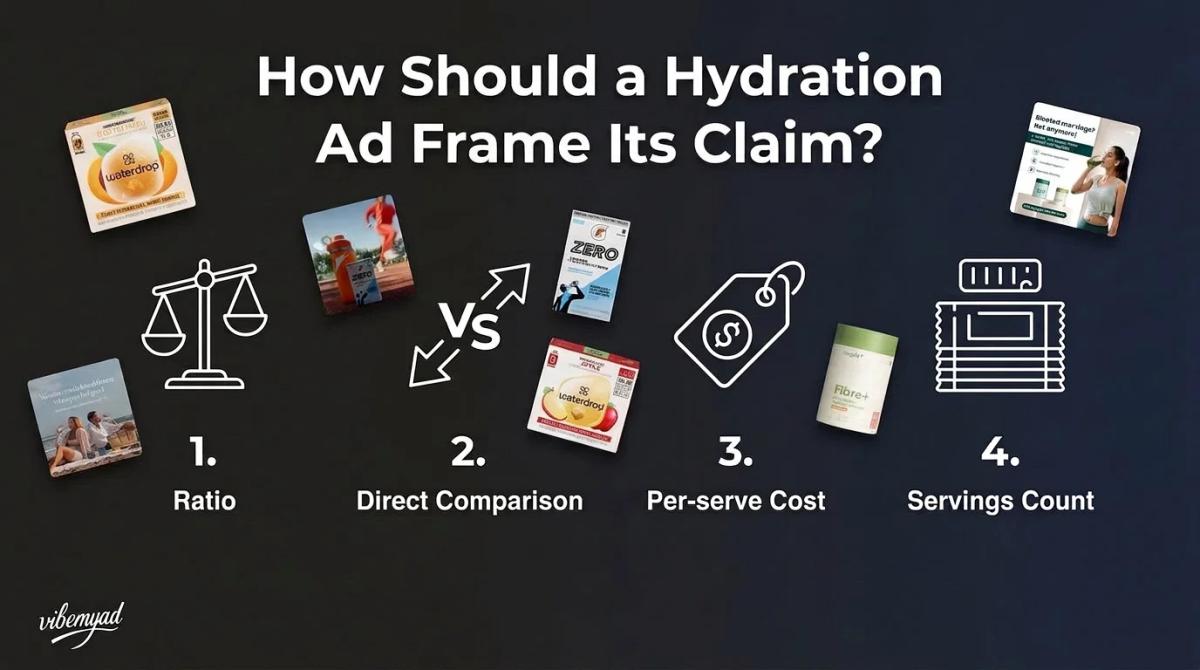
How Should a Hydration Ad Frame Its Claim?
• A ratio: DripDrop's "3x the electrolytes and half the sugar of sports drinks" turns the benefit into a number you can repeat in the aisle.
• A direct comparison: "Hydrates better than water alone," used by Gatorade and others, is memorable because it names the alternative.
• A per-serve cost: Calling out a low price per serving, the way value-focused powders do, reframes the pitch as unit economics.
• A servings count: "X servings per tub" quantifies the value of the pack at a glance.
The principle: These are proof stacks, not taglines. The best ads literalize the comparison so the buyer can repeat it back to themselves. If your claim cannot be said as a number, sharpen it until it can.
Yes, and the market backs it up. Sugar-free is not just prevalent in the ads; it is the fastest-growing part of the category: the sugar-free and zero-sugar segment has grown roughly 340 percent since 2021 to about a fifth of US sports drink sales, per 2026 Euromonitor and industry data. So the strongest ads do not bury the claim; they blast it.
• Sugar-free as a burst: Liquid I.V. and most of the category treat "sugar-free, no artificial sweeteners" as a badge, not a footnote.
• Even the salt brands lead with it: LMNT sells "more salt," yet still puts zero sugar front and center.
• Zero sugar at badge level: Placed top-of-frame, it does more work than any positive benefit line.
Why it works: In a category where mainstream sports drinks are synonymous with sugar, the absence of sugar is the primary purchase trigger. What you leave out sells harder than what you add in.
Three formats convert, each for a different audience temperature. The common mistake is using a single format for everyone.
The move: The strongest brands run all three in parallel, because the same product sells to a fitness buyer, a mainstream health seeker, and a gift buyer in three different visual languages.
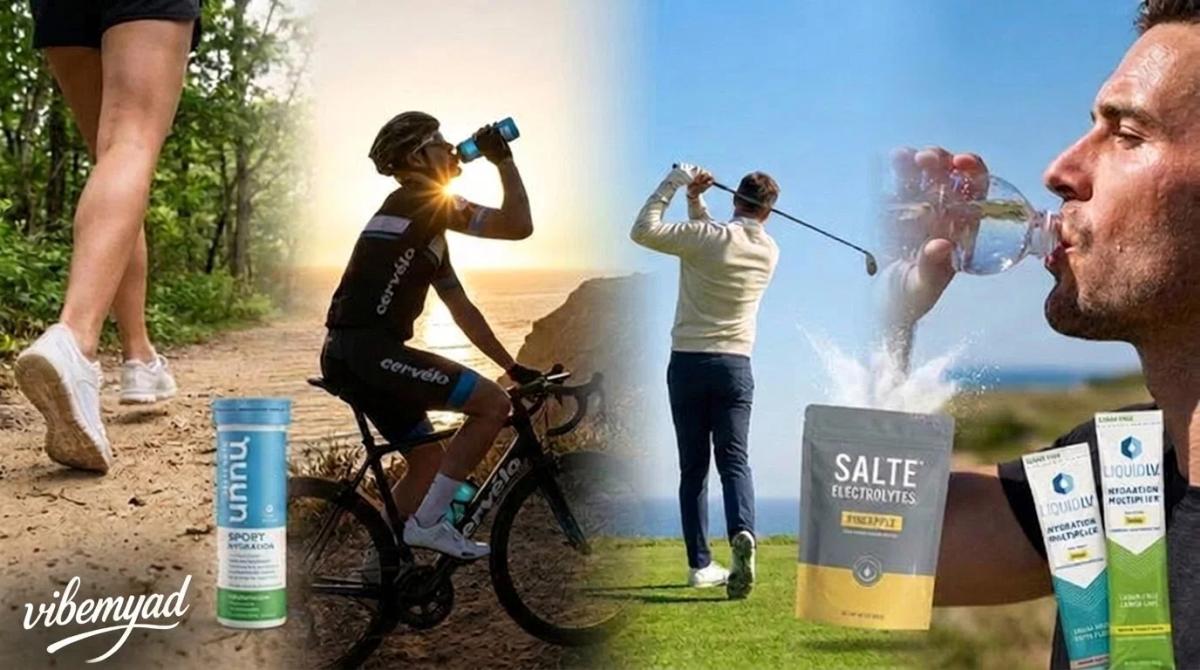
How Do You Sell Hydration Beyond Athletes?
The biggest market expansion in the category comes from reframing the product, not reformulating it. DripDrop is the clearest example: born as a medical rehydration product, it advertises across everyday contexts, illness, heat, travel, and recovery, rather than exercise alone.
That single move reframes the product from "sports drink" to "daily utility," and a daily utility has a far larger addressable market than a workout accessory. The product shot is the same tub of stick packs. The frame is what changes the buyer. Sleep, travel, and hangover recovery are the widest-open occasions, and almost no one owns them yet.
If you want hydration drink ad examples and electrolyte drink ad examples to study, these are the brands worth watching, and what each one leads with.
You already have the patterns. The reason they usually stay theoretical is production. Building enough concepts to test even three of them runs through an agency relay: a strategist to read the category, an art director and a designer to build each variation, a producer to finish the set, priced by the hour and measured in weeks.
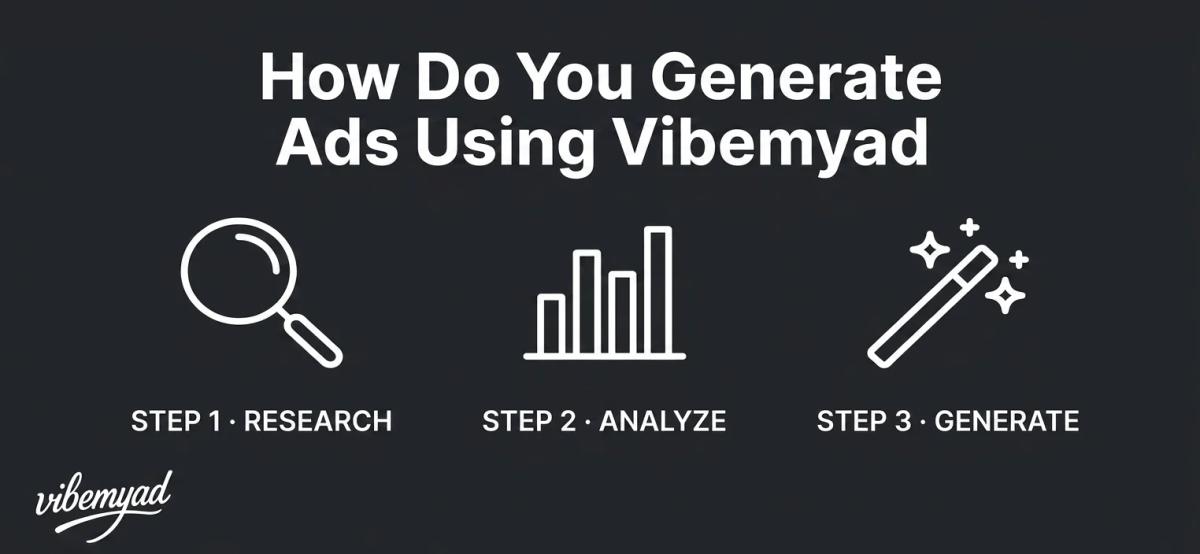
Generate Ads Using Vibemyad AI Agency
One agentic session runs that entire spine in an afternoon, which is what finally makes the whitespace reachable: the better-than-water comparison, the per-serve cost execution, and the non-athlete occasion ad for sleep, travel, or recovery that almost no one is running.
STEP 1 · RESEARCH: The planner's job. The agent pulls the category's live ads straight from the source, so you start from the hooks, claims, and formats brands are actually running and sustaining, not a blank page.
STEP 2 · ANALYZE: The strategist's call. It maps the patterns for you: the hooks, the math claims, the sugar-free badges, and the format split, then tells you which lane is crowded and which one your product can own.
STEP 3 · GENERATE: The art director and designer. Connect your product and the on-brand concept comes back, then gets refined in the same canvas.
• Ground in your product. The knowledge base pulls in your real packaging, palette, and logo, so the concept looks like your brand, not a stock render.
• Build your lane. The infographic, the in-moment lifestyle frame, or the bundle card- whichever lane the analysis pointed you to.
• Refine in place. Remix for variations, fix product text to keep the label exact, and use presets so a full set ships consistently.
Vibemyad AI Agency
The last step stays with you, and it should. You write and substantiate the claim, then test the concept in your own ads manager with your own spend. That is the honest division of labor: one session replaces the strategist, art director, and designer for the study-to-concept work and produces the still ads fast and on brand, while the media and the claims stay yours. For the wider view, see our teardown of how the biggest hydration brands win attention.
• Converting hydration ads open with a problem or situation hook, not the word "hydrate."
• They frame value as repeatable math and blast the sugar-free claim as a badge.
• They match the format to the buyer and run infographics, lifestyle, and bundle in parallel.
• They expand past athletes into everyday occasions, which is the widest-open lane in the category.
• The fastest way to test these patterns is to research, pick a lane, and generate concepts in one session.
Get notified when new insights, case studies, and trends go live — no clutter, just creativity.
Table of Contents


Arpita Mahato
Content Writer, Vibemyad

Arpita Mahato
Content Writer, Vibemyad

Arpita Mahato
Content Writer, Vibemyad