June 22, 2026 • 11 min read

June 22, 2026 • 11 min read
You typed "make an ad for my burger" into an AI tool and got a burger. Just not yours. Here is why almost every food ad generator hands back the same glossy stranger, and which tools actually keep your real dish.
• Most food ad generator AI tools return the same look because they generate from a text prompt, sampling the statistical average of every food image they were trained on, which means you get a plausible dish rather than the one you actually serve.
• Three things cause the sameness: the averaging effect that pulls every output toward the most common pattern, fictional output that invents an idealized dish you do not make, and no brand or food continuity to lock your real colors, plating, and logo.
• For a food brand, sameness is not just dull; it is risky, because on a delivery platform, the photo is a promise, and a generic invented dish is a promise the kitchen cannot keep when the box arrives.
• Five tools worth knowing in 2026 are Vibemyad, Predis.ai, AdCreative.ai, Creatify, and Simplified, and they solve genuinely different jobs, with only one built to keep your real dish accurate.
• Vibemyad Ad Gen grounds every image on your real dish and audits it for faithfulness, in one session at vibemyad.com/sessions, producing static images only, at every Meta and delivery-platform spec.
Open three different food ad generators, give them the same prompt, and you will get three versions of the same image. The same overhead flat lay, the same over-saturated color, the same anonymous dish that could belong to any restaurant on earth. This is not a coincidence or a bug. It is exactly how most of these tools work.
A generic text-to-image generator is a sampling machine. It was trained on enormous public image libraries, and when you ask it for a burger, it does not know your burger; it returns the statistical center of every burger it has ever seen. The average. That average is, by definition, the look everyone else also gets, because everyone is drawing from the same well. The tool was never designed to show your food. It was designed to show a believable generic version of that category of food.
Three failure modes stack on top of each other, and it is worth being precise about each because the fix depends on naming them:
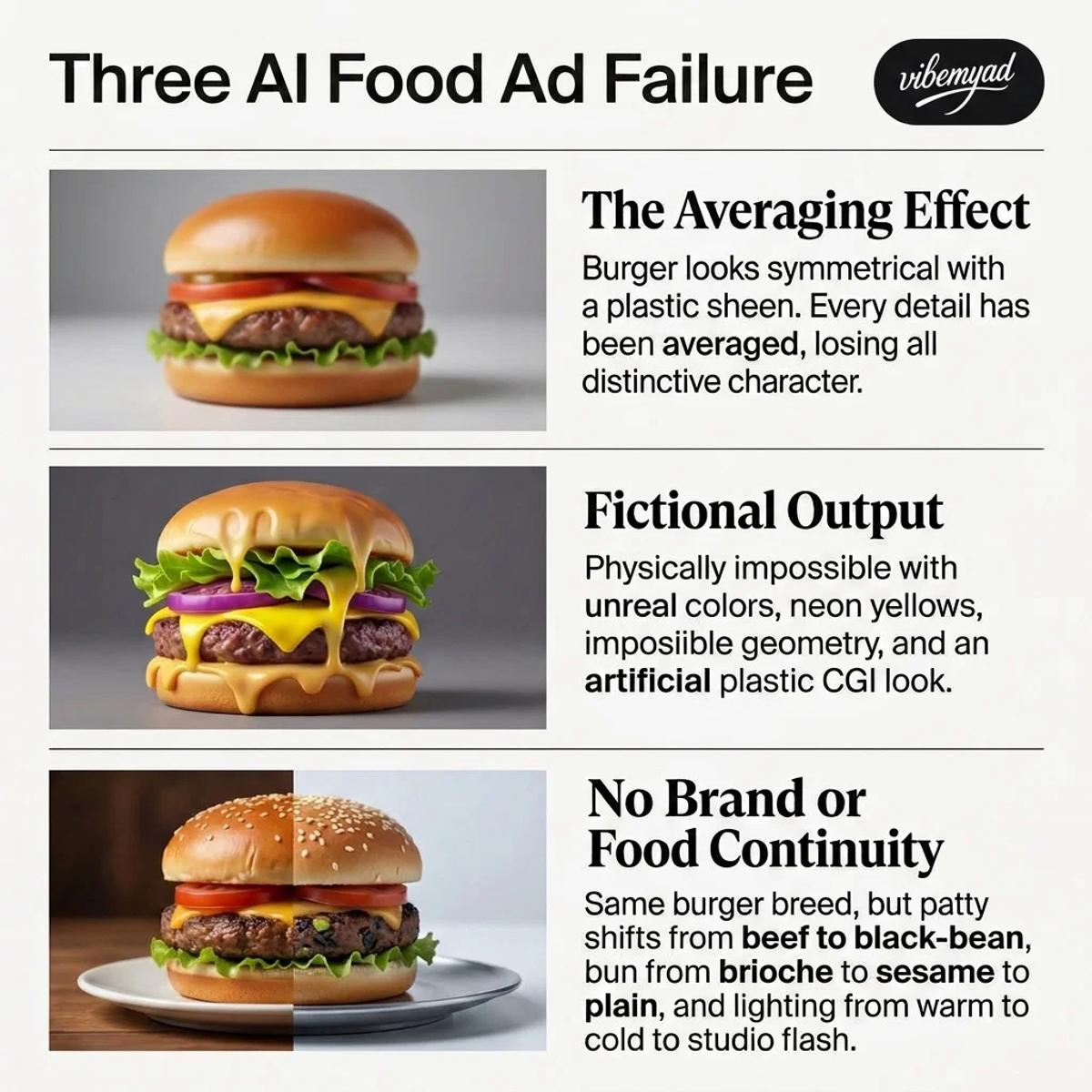
AI Food Ad Failure
• The averaging effect is the root cause, because broad models lean on the most common patterns in their training data, so the same compositions, the same three-quarter angles, and the same warm-saturated color grades surface again and again, no matter whose food you ask for.
• Fictional output is the visible symptom, because instead of your actual dish, the tool invents an idealized, slightly plastic one, a burger with the wrong patty count, cheese that melts in a way yours never does, and toppings you do not even put on the menu.
• No brand or food continuity is the quiet killer, because a basic prompt-based generator cannot lock your real colors, your plating, your logo, or the specific dish itself, so nothing it hands back is recognizably yours from one generation to the next.
The result is an ad that looks like AI made it, because one did, and it made the same thing for everyone else, too.
It is tempting to treat sameness as a cosmetic annoyance. For a food brand, it is closer to a liability, because the job of a food ad is to make a specific person order a specific dish, and a generic invented plate undermines that on two fronts at once.
• The first front is attention, because a feed is a wall of food images, and an average-looking one slides past unnoticed, since it reads as stock rather than as a real place a hungry person could order from tonight.
• The second front is trust, and it is the more expensive one, because on Grab, foodpanda, Deliveroo, or any delivery platform the photo is a promise, and when the ad shows an idealized dish while the box that arrives looks like something else, the customer does not blame the AI tool that drew it, they blame you, and that broken promise is the reorder you never get.
Consider what this means for a place whose entire identity lives in the specifics of one dish. Take Burnt Ends, the Michelin-starred modern-barbecue restaurant in Singapore, whose reputation rests on the smoke ring, the bark, and the exact char that comes off its custom brick kiln, the kind of detail regulars recognize instantly and order specifically for.
A generic AI generator handed the prompt "smoked pork sandwich" would produce a competent, glossy, anonymous sandwich, and it would be wrong in every way that matters, because it would not be that bark, that char, or that bun. For a brand built on a signature, a generic image is not a shortcut; it is a misrepresentation of the one thing the customer came for.
Most independent kitchens are in the same position even without a Michelin star, because the thing that makes a dish theirs is precisely the thing a prompt-based tool cannot know. So the real question is not how to make an AI food ad. It is how to make one that is still your food. That single distinction is what separates the tools below.
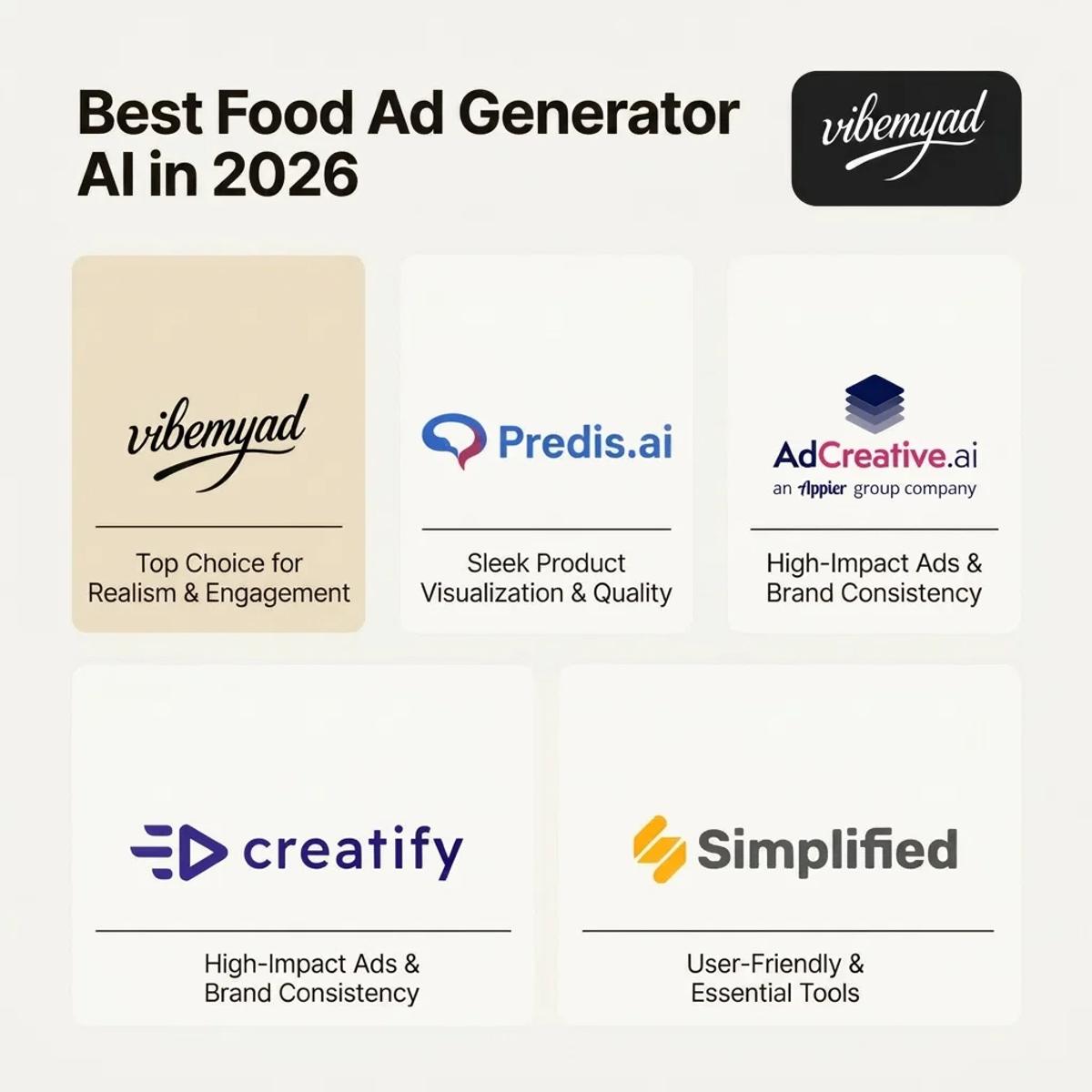
Best Food Ad Generator AI
There is no single best tool, because these five are built for different jobs, and the honest way to choose is to know what each one is for, what input it takes, and where its limit sits. Here is the straight version.
Vibemyad
• Built for food and QSR brands that need the ad to match the real plate, because it is the only tool here that grounds generation on your real dish photo and audits the output for faithfulness before you ever see it.
• Runs a five-agent pipeline under the hood, a Creative Director and Router that reads your brief, a Planner that asks the right questions, an Image Generator anchored on your reference, and an Evaluator that checks every output for accuracy, brief adherence, structure at ad scale, and brand consistency.
• Works as one chat session, where you pick a preset or describe the look and then remix into as many scenes as you need while the dish stays consistent.
• Honest boundary: it makes static images, carousels, and it does not run your ad account, so what it removes is the hard part, producing enough accurate, on-brand food images to keep your ads and listings fed.
Predis.ai
• Built to generate ads, posts, and videos from a text prompt and schedule them across channels, with a free tier of fifteen posts a month and paid plans from roughly nineteen to a couple of hundred dollars.
• Strength is breadth and scheduling, since it covers a lot of content types in one place.
• Honest limit: it is social-content-first rather than ad-platform-first, it does not integrate with Meta Ads Manager, and it generates from a prompt rather than grounded on your real dish.
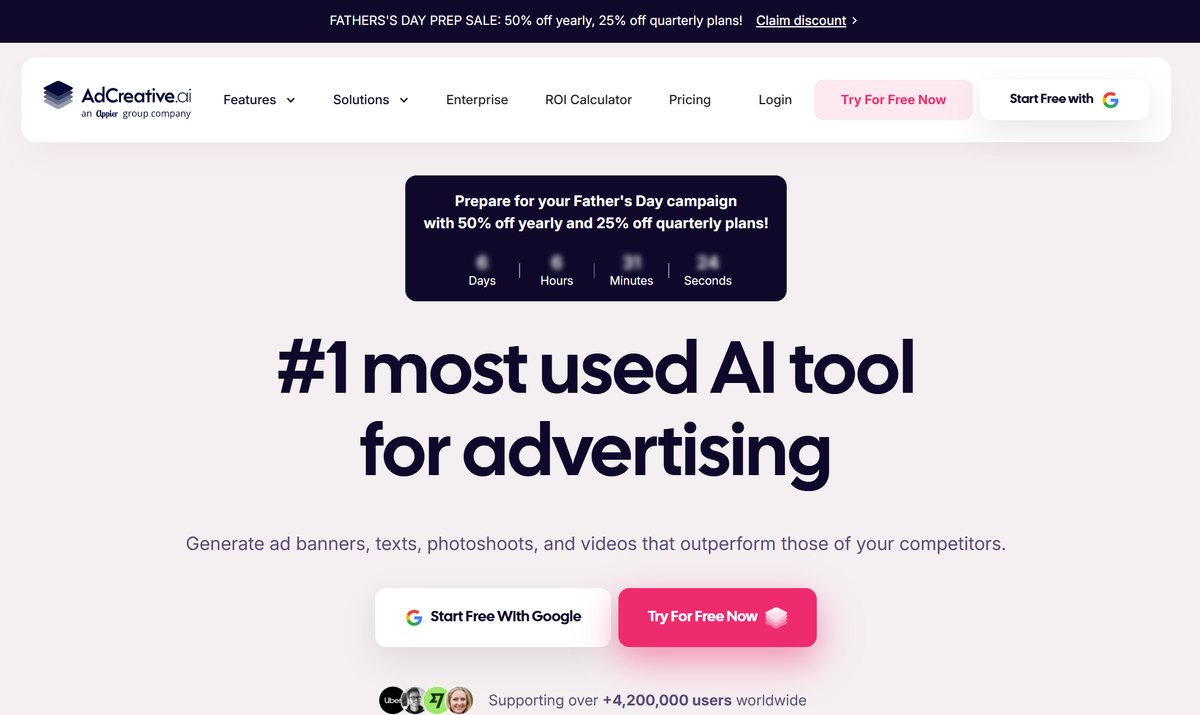
AdCreative.ai
• Built to generate static ad variations and predict which will convert before you spend, with a brand kit and direct Google Ads and Meta Ads Manager integration, starting around twenty-nine dollars a month.
• Strength is data, since it scores creatives on predicted conversion.
• Honest limit: it tells you which generic creative might perform, but it does not keep your real dish intact, so you are still optimizing a plausible plate rather than yours.
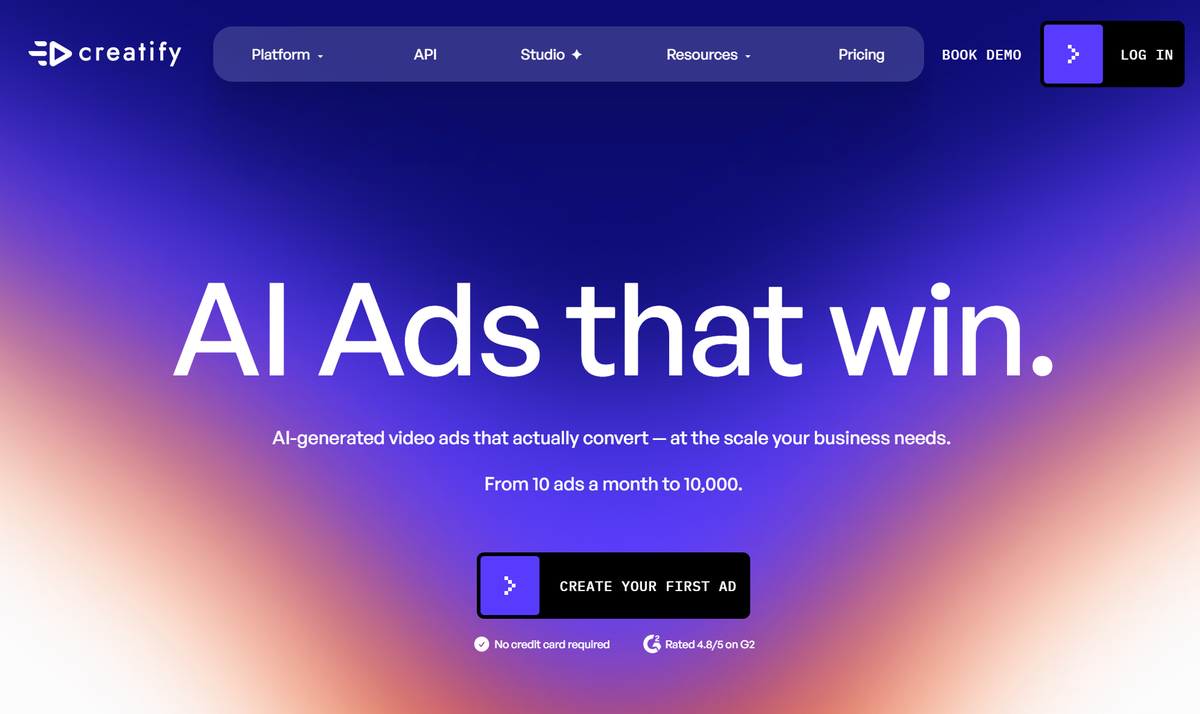
Creatify
• Built for a genuinely different job, turning a product URL or short description into short-form video ads with AI avatars and UGC-style variations, from roughly twenty-seven dollars a month.
• Strength is fast video at volume for Reels and TikTok.
• Honest limit: it is built for video, while a food brand that needs accurate static creative for feed ads and delivery thumbnails is solving the opposite problem.
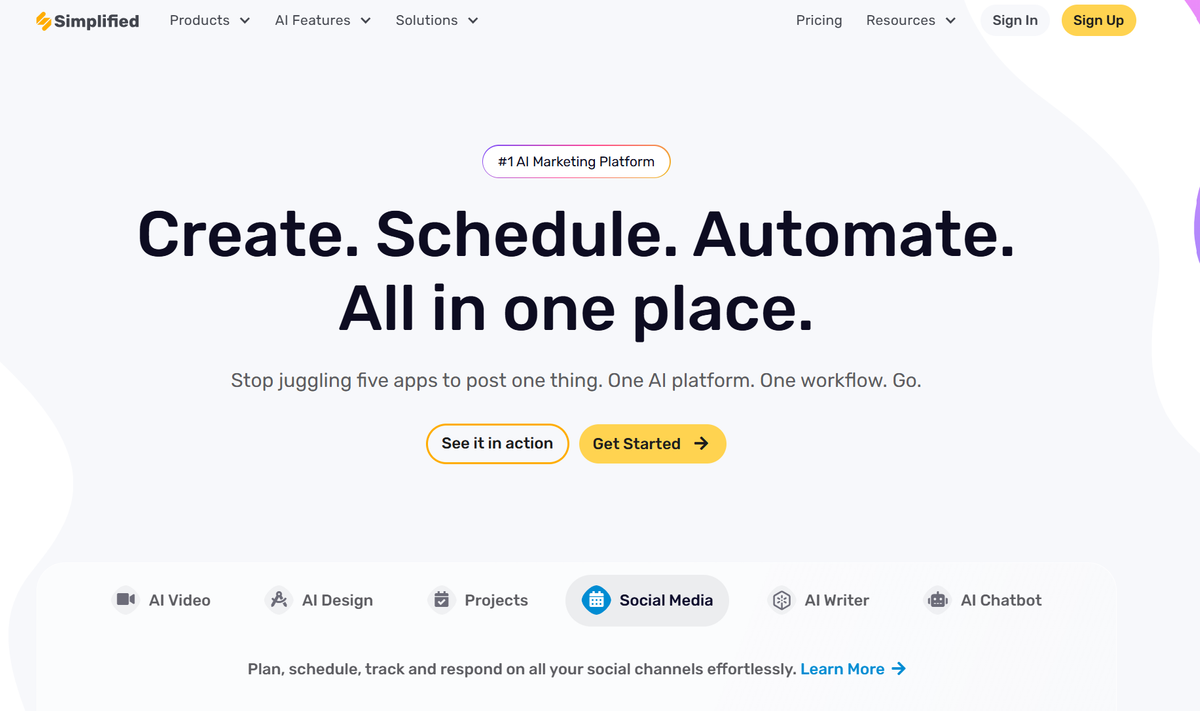
Simplified
• Built as a no-cost food-and-beverage ad generator, a reasonable place to start when budget is the only constraint.
• Strengths are the free tier and an all-in-one workspace.
• Honest limit: it is a generalist design tool rather than a food-accuracy engine, so it produces the same prompt-based generic output that the first half of this blog is about.
The table makes the split clear, and the row to read is food accuracy, because that is the axis on which a restaurant actually lives or dies.
For a restaurant or QSR specifically, the deciding factor is whether the tool can show the food you actually serve, because four of the five generate a plausible dish from a prompt, while one grounds on your real plate. That is the whole choice.
There are two honest ways out, and you can use either depending on how far you want to go.
Start with photographs of the dish you serve. Compare the generated result with the source for color, portion, ingredients and texture. Using a real reference helps define the job, but the finished image still needs a human accuracy check. Vibemyad Marketing Agency can support that production workflow.
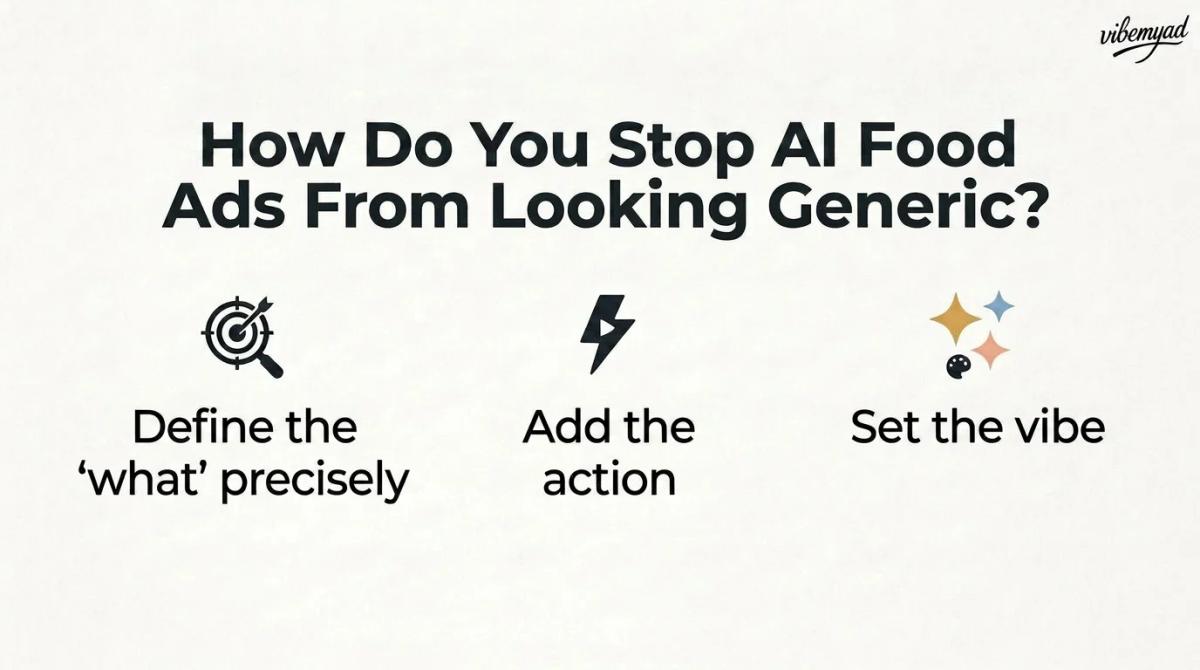
The second way, if you are staying on a general image model or an LLM for now, is to inject extreme specificity into the prompt, because vagueness is exactly what triggers the average, and three levers do most of the work:
How To Stop AI Food Ads From Looking Generic
• Define the ‘what’ precisely, which means not "a burger" but "a double smash burger with two thin patties, melted cheddar, and a toasted brioche bun," because every adjective you remove gets filled in by the statistical average.
• Add the action, which means "cheese still melting, served on a wooden board, one bite missing," because a dish caught mid-moment reads as real while a static hero shot reads as stock.
• Set the vibe, which means "shot on a phone, soft window light, warm tones, slight imperfection," because the imperfection is what separates a recommendation from an advertisement.
Specific prompts will pull the model away from the statistical center, but they still cannot guarantee it is your dish, which is why the first route wins for anyone whose food has to match the photo.
Escaping sameness is only half the goal, because the image also has to convert, and the data across food and beverage points is somewhat counterintuitive, since the glossy, over-styled studio shot usually loses to the image that looks like a real person took it at a real table. The reason is psychological, because a flawless studio image reads as an advertisement and people scroll past ads, while a warm, slightly imperfect, real-looking shot reads as a recommendation and people stop for those.
This is why accuracy and conversion point the same way, because the look that performs best is the one closest to your actual food, photographed with a little warmth, rather than the one that costs a fortune to over-produce. A tool that keeps your real dish is therefore not just safer on a delivery platform, it is generating the exact aesthetic that the feed already rewards.
• AI food ads look the same because most tools generate from a prompt and return the statistical average, which is a plausible dish and never quite yours.
• The three causes are the averaging effect, invented fictional dishes, and a lack of brand or food continuity, and they compound on each other.
• Sameness is a real cost for a food brand because, on a delivery platform, a generic invented dish is a promise the kitchen cannot keep, the way a generic render could never capture the exact charm a place like Burnt Ends is known for.
Compare tools using the same dish photograph and brief. If your team needs someone to handle the research, production and review, consider agency support as a separate service decision.
• The look that converts is the real, slightly imperfect one, so accuracy and performance point the same way.
Every generic food ad traces back to the same root, which is that the tool was never working from your food; it was averaging everyone's. You can fight that with longer prompts, but you cannot prompt your way to a dish that is actually yours, so the only real fix is a tool that starts from your real plate and keeps it accurate, all the way to the ad.
Get notified when new insights, case studies, and trends go live — no clutter, just creativity.
Table of Contents


Arpita Mahato
Content Writer, Vibemyad

Arpita Mahato
Content Writer, Vibemyad

Arpita Mahato
Content Writer, Vibemyad