June 15, 2026 • 12 min read

June 15, 2026 • 12 min read
Boosting a post is not running a Facebook ad, and that confusion is why most restaurant owners think the platform does not work. It works fine; the format you picked did not.
• Boosting optimizes for likes and comments. Real Facebook ads in Meta Ads Manager optimize for reservations, orders, and leads, so use the Sales or Leads objective, install the Pixel, and target a tight local radius.
• The quiet reason campaigns die by week three is creative fatigue. Two formats, lead generation and the dynamic carousel, run for months, but only if you keep feeding them fresh, on-brand food images.
• Vibemyad Ad Gen generates that static food creative in one chat session, from a photo of your dish or from scratch, so you stop booking a shoot every time the menu changes. It makes the creative, but you still run the campaign.
You spent $20 boosting a post. Your best dish, good lighting, and a decent caption. Facebook said 400 people saw it. You got 14 likes, 2 comments from friends, and zero new customers. So you wrote it off and decided Facebook ads do not work for restaurants.
Here is the uncomfortable truth. That was not a Facebook ad. That was a boosted post, and the two are not the same product. The difference is the difference between throwing flyers out of a car window and handing one directly to the person walking into a steakhouse on their anniversary. Meta built the Boost button to be one tap from your phone, and that convenience is exactly why it loses, it optimizes for the cheapest behavior, likes and comments, never reservations.
This blog covers how to advertise a restaurant on Facebook the right way, and the part almost nobody talks about: how to generate the food photography inside the ad yourself, instead of booking a shoot every time the menu changes.
A boosted post is created from your Facebook Page. You pick a photo, set a budget, and hit Boost. The objective is fixed, usually Engagement or Reach, so the algorithm finds people likely to like or share, not people likely to book a table.
A Facebook ad built in Meta Ads Manager is a different product. You choose your objective, and the algorithm optimizes for that outcome. You build layered audiences with geo-targeting, interests, life events, Custom Audiences, and Lookalikes. You install the Meta Pixel so the algorithm learns who actually converts, retargets people who viewed your menu but did not book, and tracks cost per reservation to the dollar.
The core difference in one line: a boosted post optimizes for engagement, a Facebook ad optimizes for whatever you actually want.
Running paid ads without the foundation is like turning on the grill before checking the gas. The ad runs, but it does not perform.
• Meta Business Manager is the hub, separate from your personal profile, where you manage your Page, Ad Account, and Pixel. Setup takes about ten minutes at business.facebook.com.
• The Meta Pixel is a snippet on your website that tracks what people do after they click, and feeds that data back so Meta finds more buyers like them. Configure three events: View Menu, Reserve a Table, and Order Complete.
• The Conversions API fixes a real leak, since the browser Pixel loses roughly 40% to 60% of conversion data to privacy and cookie restrictions. It sends data server-to-server. If you use a third-party ordering or reservation platform, get this piece right.
The objective is the most important choice in a campaign, because the algorithm is extremely literal about doing exactly what you ask.
Most owners pick Traffic because clicks look cheap. But Traffic finds people who habitually click links, not people who book restaurants, so you get a low cost per click and an empty dining room. Engagement is worse; it finds people who like and share.
Match the objective to the goal. For reservations or online orders, use the Sales objective with the Pixel firing on the booking or order event. For customer contacts, use the Leads objective, which powers the in-app Lead Generation form. If you are brand new with no Pixel data, start with Awareness for two to three weeks, then switch to Sales.
One mechanic decides whether this works: Meta needs roughly 50 conversion events to exit the learning phase, during which performance is inconsistent, and cost per result is higher. That is normal, not failure. Most owners panic on day five and turn it off, so the algorithm never reaches the part where it performs. Give every new campaign 10 to 14 days minimum.
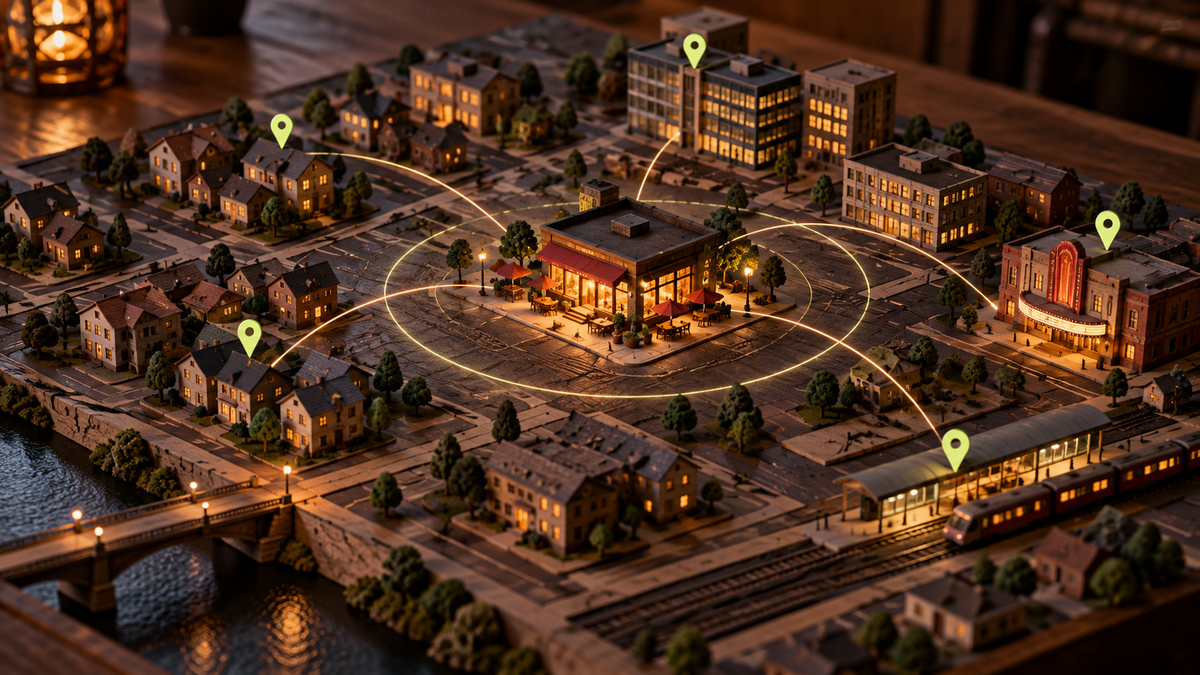
Local targeting should follow real dining occasions and travel patterns
The best creative in the world is wasted on the wrong audience. Build the audience in layers, starting with geography.
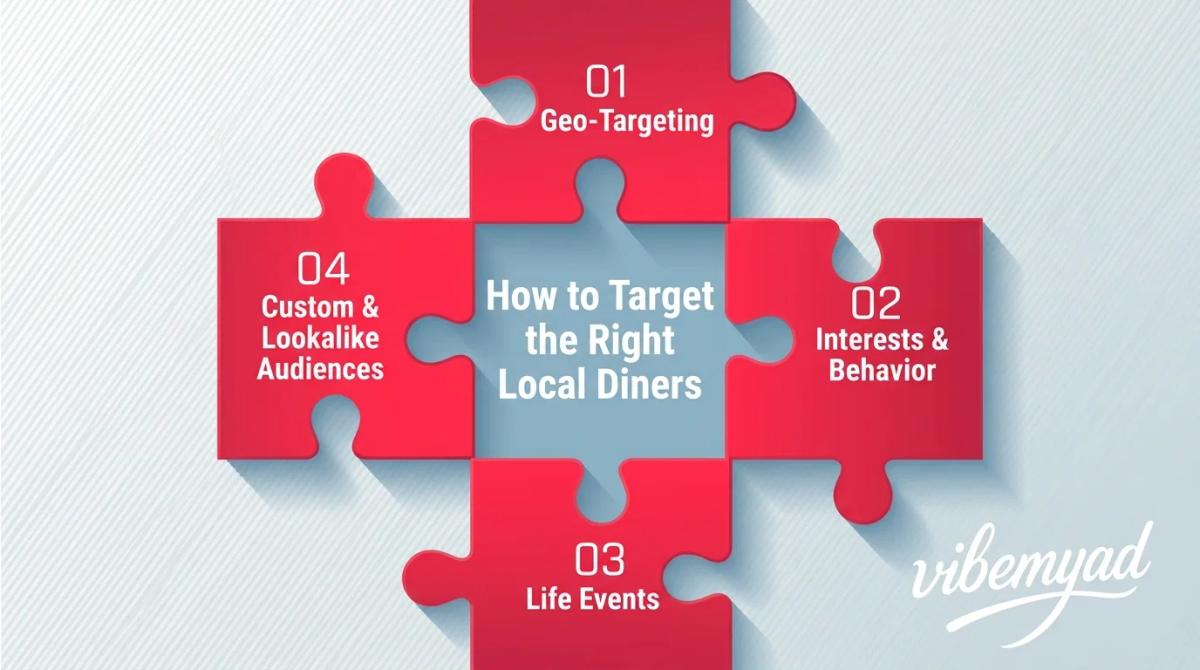
Target the Right Local Diners
• Layer 1, geo-targeting: A restaurant's customers are local, and almost nobody drives forty minutes for a casual dinner. That is an advantage, because the whole budget can focus on people who can realistically walk in. Drop a pin on your address and set a radius. One to three miles is the right start for most restaurants, five for a destination spot or a tourist area. Go wider, and you pay to reach people who will never visit. Meta gives four location options worth knowing: people living here, people recently here, people traveling here, and all of the above.
• Layer 2, interests and behavior: Inside that radius, narrow by who sees the ad. A fine dining steakhouse might target fine dining, wine, and steakhouse interests with a top-25% household income. A family Italian spot might target parents of children aged 4 to 12 interested in family dining. A fast casual place in a business district might target people who work nearby. Think like your most likely customer and layer those signals onto geography.
• Layer 3, life events: One of the most underused options for restaurants. Meta tracks anniversaries within 30 days, upcoming birthdays, and recently shown interest by engaging. For a special-occasion restaurant, that is extremely high intent, a steakhouse targeting anniversaries within 30 days within five miles is reaching people actively planning a celebration.
• Layer 4, Custom and Lookalike Audiences: Your existing customer data beats any interest targeting you can build cold. Upload your email list as a Custom Audience and retarget people who viewed your menu but did not book, warm audiences that convert far cheaper than cold traffic. Then build a Lookalike from your best customers, and Meta finds new locals who match their profile. It is the closest thing to cloning your best regulars.
Here is where most restaurant campaigns quietly fall apart, even with the right objective and audience.
A campaign does not need one good ad; it needs many. The algorithm performs best when it can test variations, promote winners, and rotate out losers, and audiences fatigue fast, so the ad that pulled reservations in week one stops by week four if it is the only one running. To stay healthy, a campaign needs a steady supply of fresh, on-brand static food images.
For a single location, that is the part that breaks. No designer on staff, no time to brief an agency weekly, so the campaign runs the same two photos until they burn out. The format does not fail the restaurant. The image supply does.
This is the gap Vibemyad closes, not by managing your ad account, but by generating the static food creative the campaign runs on.
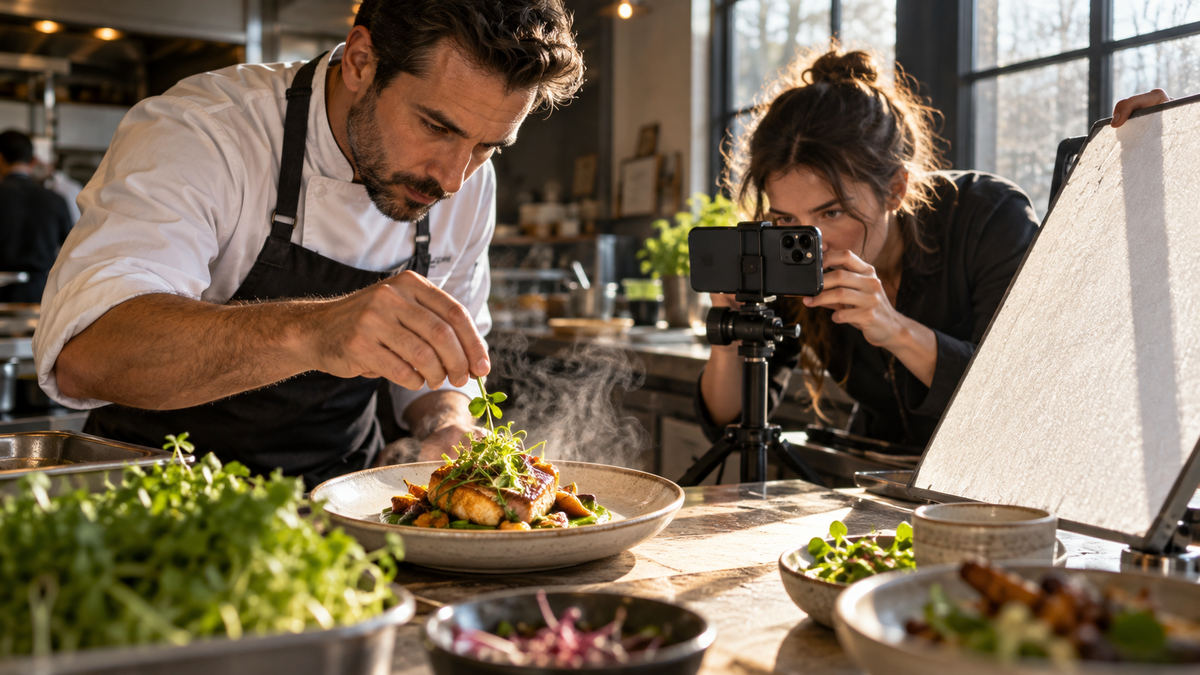
Restaurant ads depend on food imagery built for attention and appetite
Vibemyad Ad Gen produces static restaurant food creative inside a single chat session at vibemyad.com/sessions, ready at every Meta placement spec. You can start from a photo of your real dish or have the agent generate the whole scene from scratch. Either way, you brief the VMA Agent, it asks a few sharp questions, plans the shot, generates it, and you refine and export.
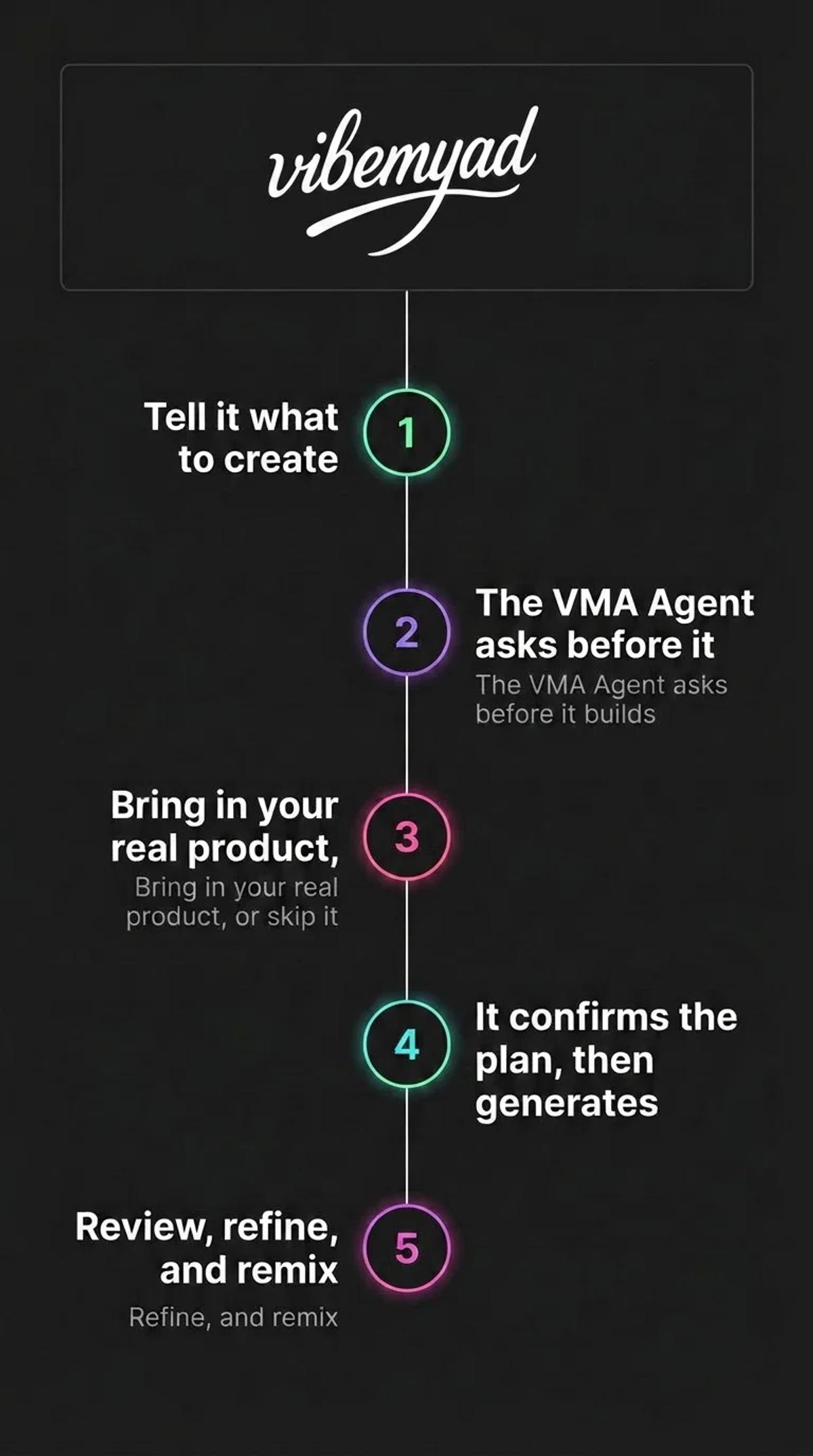
Genrate Food Images With Vibemyad
• Step 1, tell it what to create: The session opens on "What would you like to create?", with tabs for Research, Images, and Videos. You type your request in plain language, for example, "a restaurant food image with a customer at a table enjoying the dish," and attach a reference if you have one.
• Step 2, the VMA Agent asks before it builds: Instead of guessing, it asks a short set of clarifying questions, each as a tap-to-answer card. The first is whether you have a photo of your dish to feature as the hero or want the whole scene from scratch. From there, it narrows the venue (casual cafe, fine dining, fast casual) and the dish type. This question step is the difference between a usable ad and twenty random regenerations, because it locks the brief with you before spending a single credit on pixels.
• Step 3, bring in your real product, or skip it: If you chose a real dish, you upload a photo or pull from your saved Products and image gallery library, and the agent grounds the generation on it. Given several references, it picks the cleanest one and tells you which and why. If you choose generate-from-scratch, it builds the dish and the full scene from your text brief.
• Step 4, it confirms the plan, then generates: The agent plays back the creative direction in plain language before rendering, the scene, mood, lighting, and what stays the hero, for example, a bright, airy cafe scene with a diner mid-bite and the dish kept as the clear hero. You hit go, the Image Generator runs, and the visual appears in the Generations panel beside the chat.
• Step 5, review, refine, and remix: Each generation lands in the Generations panel with its reference thumbnails and a step-by-step trail. From there, you download it, or hit Remix to spin a variation, a different angle, a moodier evening vibe, without starting over. Because the session holds context, the same dish stays consistent across every variation, which is exactly what a carousel set needs.
Under the hood, that flow is several specialized agents in sequence: a planning layer that interprets your brief and asks the right questions, an image generator that executes the shot, and an evaluation pass that checks each output for accuracy, brief adherence, structural integrity at ad scale, and brand consistency. You experience it as one conversation.
The proof of this holds at the hard end: a regional Indian D2C brand selling pani puri built a full Meta campaign in one Vibemyad session, hero shot, packaging mockups, detail angles, and the same hand model across every frame, no food stylist, no reshoots, no character drift. Culturally specific cuisines are where generic AI tools collapse because their training data skews Western. If it holds for pani puri, it holds for your menu.
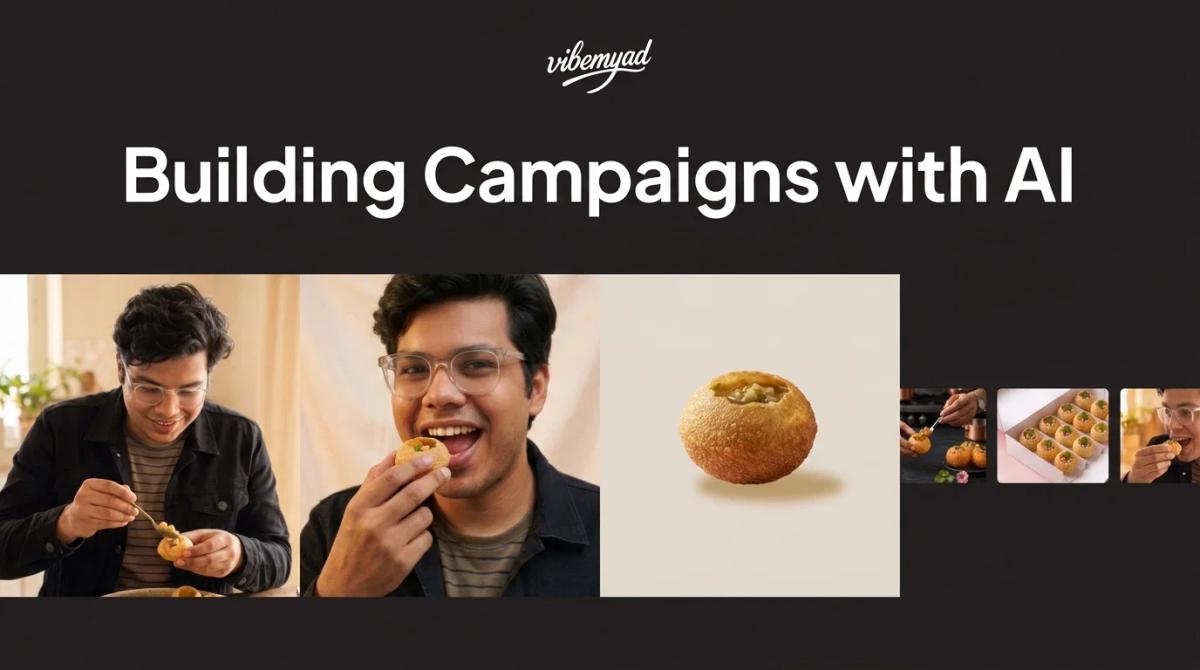
Building Food Campaigns For Restaurants With AI
The honest boundary. Vibemyad is an image only. It does not set up your Pixel, build your lead form, choose your objective, or manage targeting and budget; those stay in your Ads Manager, and it does not generate video. What it removes is the hardest recurring input: enough strong, on-brand food images to keep your ads fed for months.
Because food imagery still carries most restaurant ad performance, here are the formats that matter.
• A single image is the workhorse, especially for retargeting warm audiences. One dish, one offer, one call to action. It burns out only when you lack fresh variations, so rotate new ones in regularly.
• A dynamic carousel shows five to eight cards in one unit, each with its own image and link. Meta promotes the strongest card to the front and dials down the weak, so it self-optimizes and resists fatigue. Build it as a hero dish, variety cards, a social-proof card, and a final card with a direct call to action. The catch is real, a carousel needs five to eight consistent images, exactly the supply most restaurants lack, and one generation session solves.
• Lead generation runs inside the Facebook app. A user sees a specific offer and submits name, email, and phone in a few taps with the form pre-filled. Trigger an automated voucher within minutes, and the anonymous scroller becomes a trackable customer. The offer refreshes every six to eight weeks, and it is only as strong as the hero image selling it.
The right support model protects the owner's time without disconnecting advertising from operations
Wrong objective: Running Traffic or Engagement when the goal is reservations. For bookings, use Sales.
No Pixel or a broken one: Without the Pixel firing on your conversion events, the algorithm has no signal and cannot find your buyers. Fix it before you spend another dollar on a conversion campaign.
Stopping during the learning phase: Meta needs roughly 50 conversion events to exit learning. Give every campaign 10 to 14 days, and judge it on cost per reservation, not day-three impressions.
Stale or thin creative: Running the same two photos until the audience tunes them out. A healthy campaign needs a steady supply of fresh, on-brand static ads so winners get promoted and tired creative gets rotated out. Creative supply is what keeps a campaign alive past week three.
The Boost button is not a strategy. The gap between what you are getting and what you should be getting is almost always the same handful of things: wrong objective, missing Pixel, weak audience, and thin, stale creative. Get those right, run campaigns long enough to learn, and keep feeding them fresh food images. The one input that decides whether any of it lasts is the photography filling it, and that is the part you can stop outsourcing.
Get notified when new insights, case studies, and trends go live — no clutter, just creativity.
Table of Contents


Arpita Mahato
Content Writer, Vibemyad

Arpita Mahato
Content Writer, Vibemyad

Arpita Mahato
Content Writer, Vibemyad