June 07, 2026 • 15 min read

June 07, 2026 • 15 min read
Your brief is due Friday, and your creative team is asking what angle to run. You opened the Meta Ad Library forty-five minutes ago and still cannot find one ad worth referencing.
The problem is not a lack of creativity. It is a lack of fast, category-specific intelligence. QSR marketers, food service brand managers, and agency strategists are not slow. Their research process is. This guide breaks down the five creative patterns top QSR brands are running on Meta in 2026, and shows exactly how to generate the food photography behind each one inside Vibemyad in one agentic session.
QSR advertising on Meta is the practice of running paid Facebook and Instagram creative for quick service restaurants, fast casual chains, cloud kitchens, and food service operators whose customers decide in seconds rather than days. It splits into two creative categories. Brand advertising builds long-running positioning across years (Wendy's "Fresh, Never Frozen" stance is the canonical example). Campaign advertising runs against limited-time offers, seasonal moments, and new product launches, refreshed weekly because creative fatigue sets in faster in QSR than in nearly any other vertical. Both formats live on Meta because that is where decision-window-minutes-not-days shopping happens at scale.
Three reasons, all hardened in 2026.
These are not theories from marketing textbooks. They are recurring creative formats active across top QSR campaigns, patterns that have earned continued budget because they earn continued results.
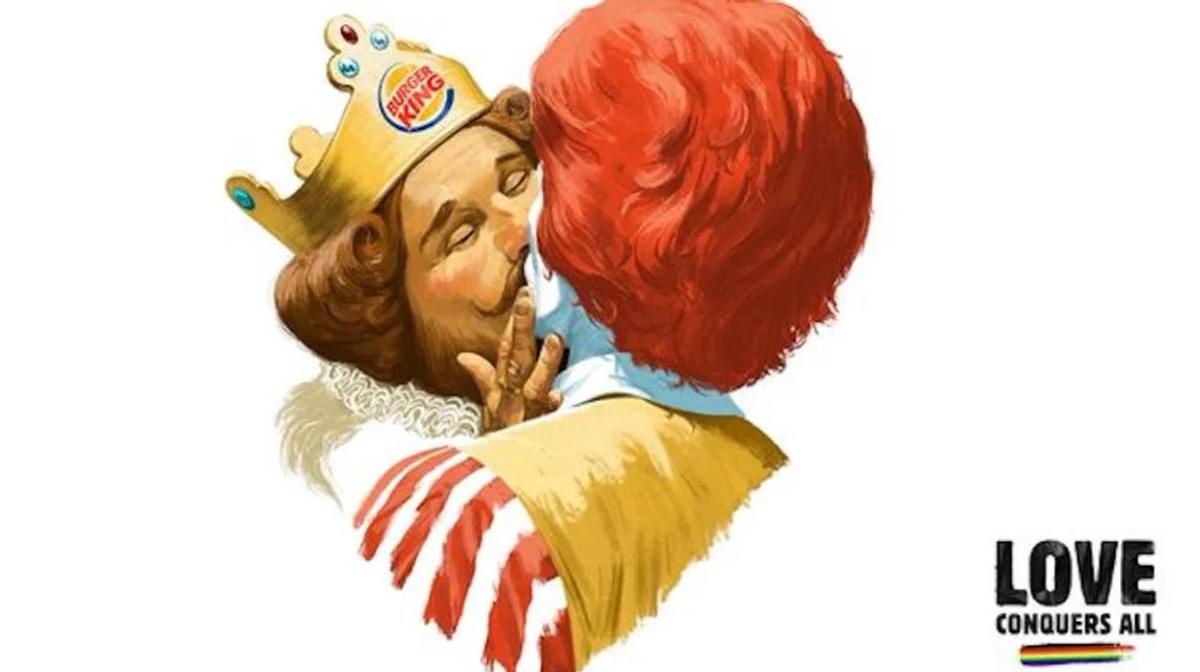
Competitor Callout ft Burger King and McDonalds
Bold creative that names or implies a rival. Hook in the first three seconds. Copy that invites comparison.
In March 2026, McDonald's released a video of CEO Chris Kempczinski awkwardly biting into the new Big Arch burger. It went viral for the wrong reasons. Within days, Burger King, Wendy's, and A&W all released CEO-led parodies across Meta. The dogpile became one of the most-watched QSR creative moments of H1 2026.
Competitor callouts work best when they sit on a real, long-running brand stance. Wendy's "Fresh, Never Frozen" has anchored their challenger identity since Super Bowl LI in 2017, which is why their callout creative lands every time. Brands without a functional differentiator should not run this pattern on a bluff. Best format: in-feed video and Reels.
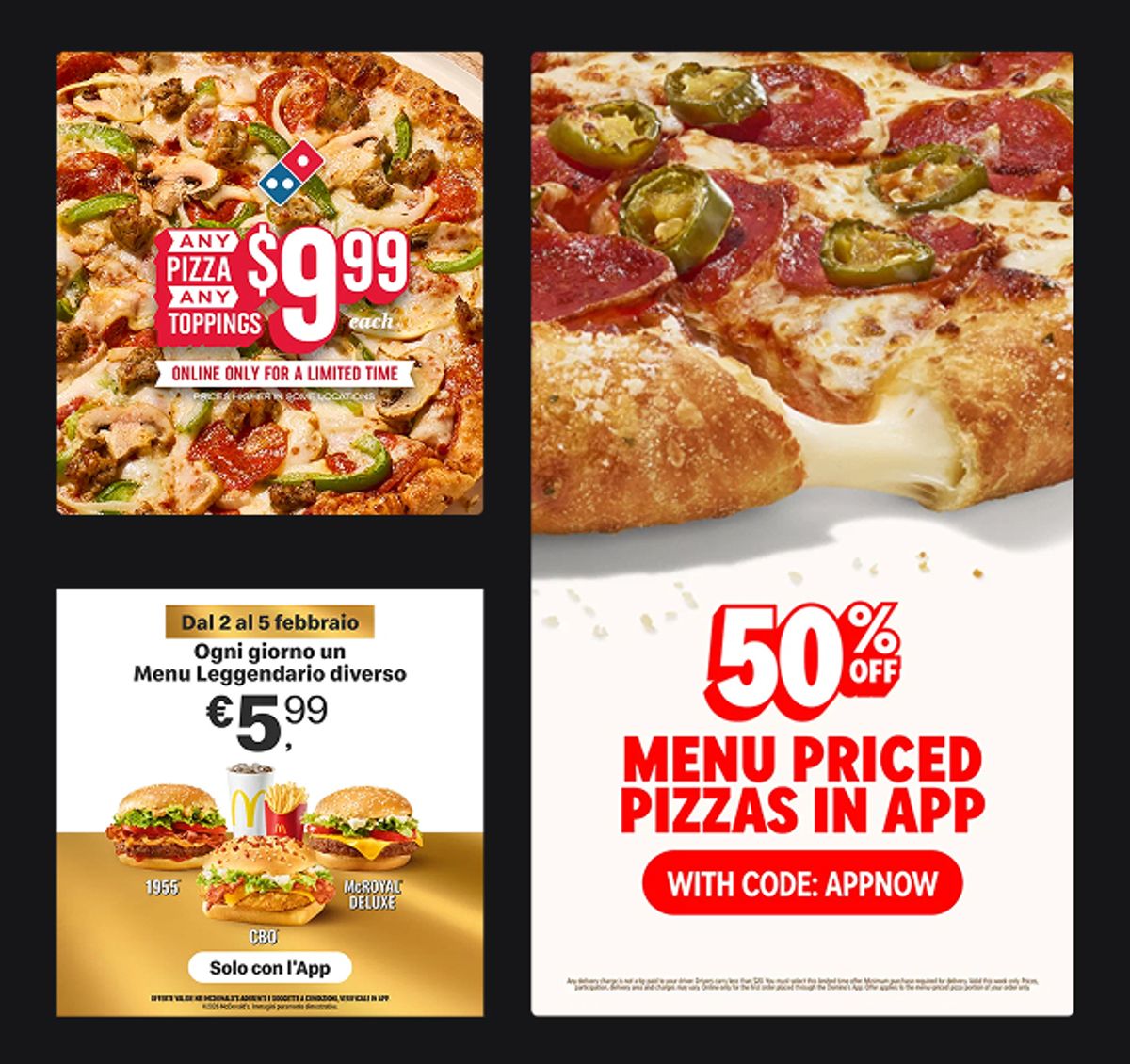
Time Urgency Drop Ads
Product-forward creative built on scarcity. Countdown language. "Back by popular demand." Seasonal packaging close-ups. Hard end date. No restaurant interior, no lifestyle noise. Product, typography, deadline.
QSR customers have low switching costs and high impulsivity. A limited item removes the biggest barrier to trial, which is the assumption that the option will always be there. When it will not be, "someday" becomes "today." This is the format behind every McRib, every Popeyes chicken sandwich relaunch, every Taco Bell limited menu rotation. The pattern earns continued budget for two decades because the behavior it triggers is structural, not trendy. Best format: Stories and Reels.
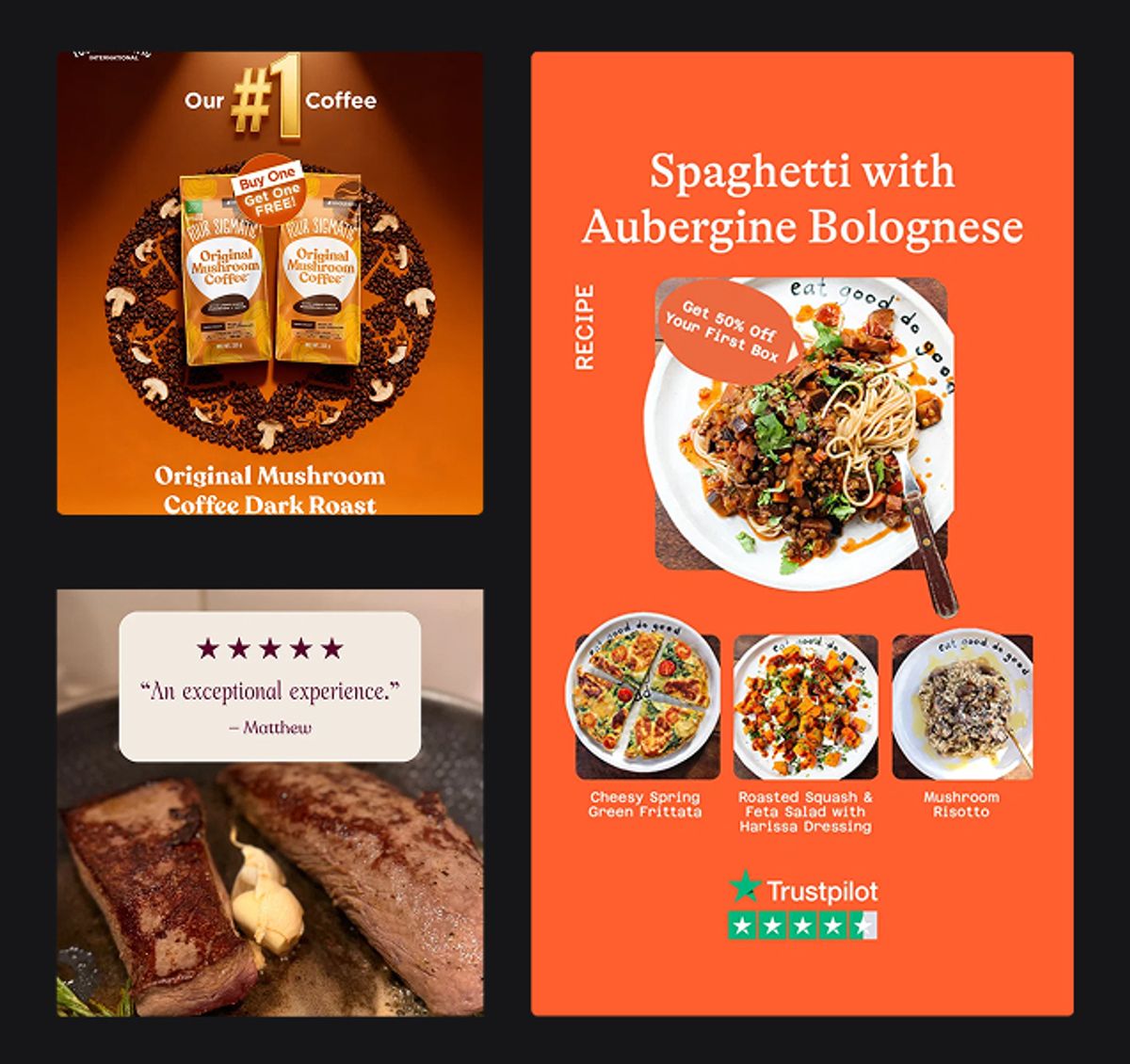
Social Proof Ads
UGC-style or reaction creative leading with "everyone is already talking about this." Comment screenshots used as visuals. Customer reaction compilations. Trending audio paired with product footage to signal cultural currency. The ad looks like content someone already loved.
The QSR category generates disproportionately positive engagement (the 1.9x figure above is real and category-wide). The smartest brands bring that social energy into the ad unit itself rather than leaving it in the comments. Social proof embedded in creative removes the need to convince. The strongest social proof creative does not look like an ad. It looks like content. The brand logo is a corner watermark, not a centered hero.
Value Anchor Ads
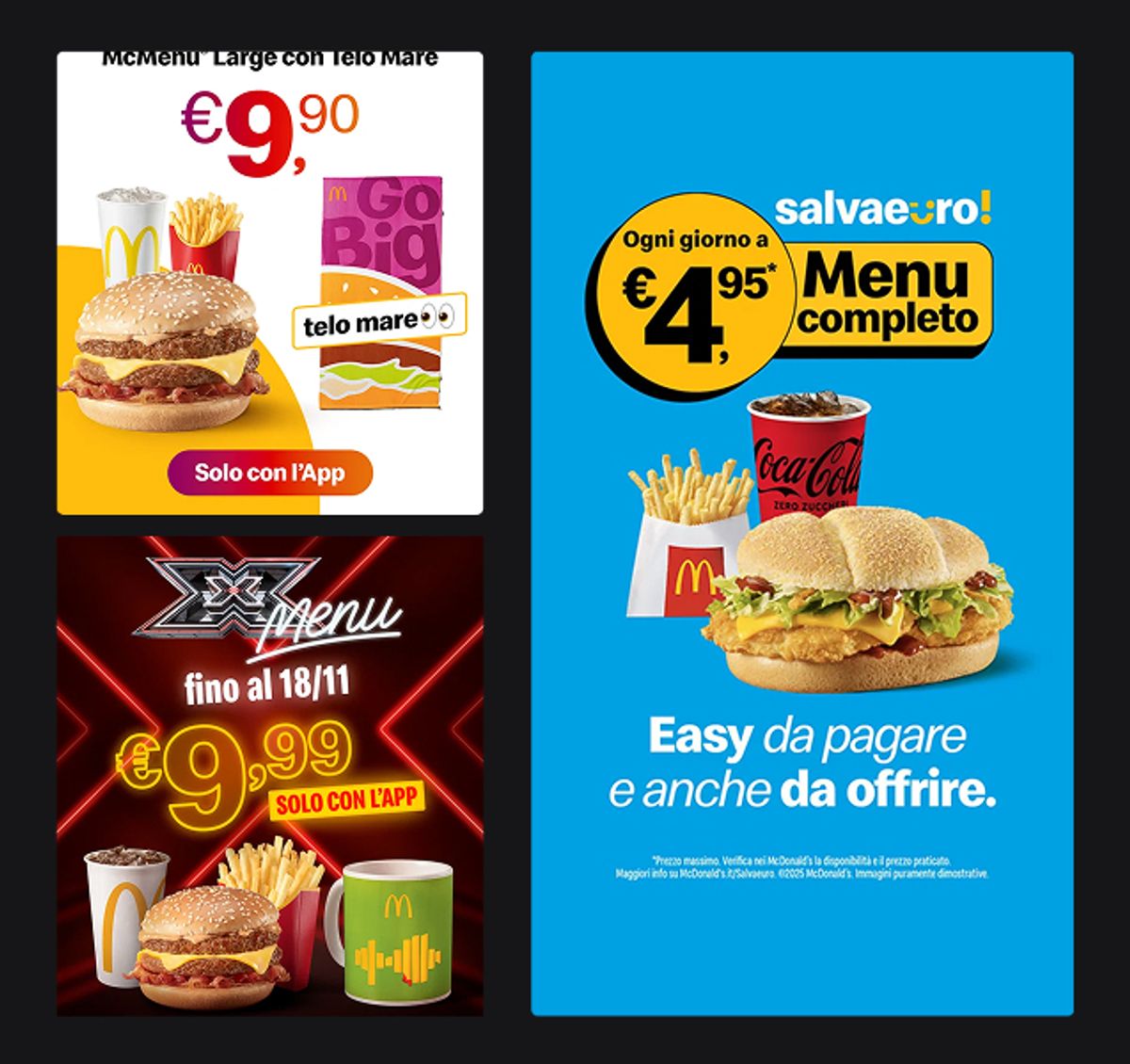
Clean, utilitarian visuals with the price point as hero. "Meal under $5." "The combo that actually fills you up." No lifestyle noise. The offer is front and center, paired with a high-quality food visual.
In inflationary markets, value messaging is not a race to the bottom. It is a relevance signal. Indian QSRs raised menu prices 20 to 25 percent during the 2022 inflation cycle per Business Standard's coverage of the category, and affordability has stayed live in 2026 as Jubilant FoodWorks (Domino's India) and Devyani International (KFC and Pizza Hut India) navigate volume-versus-price tradeoffs. The same dynamic plays out in the US, where value menus have returned to the center of category creative. The composition rule: image says premium, price says accessible, combination removes guilt.
Ads with Occasion Hook
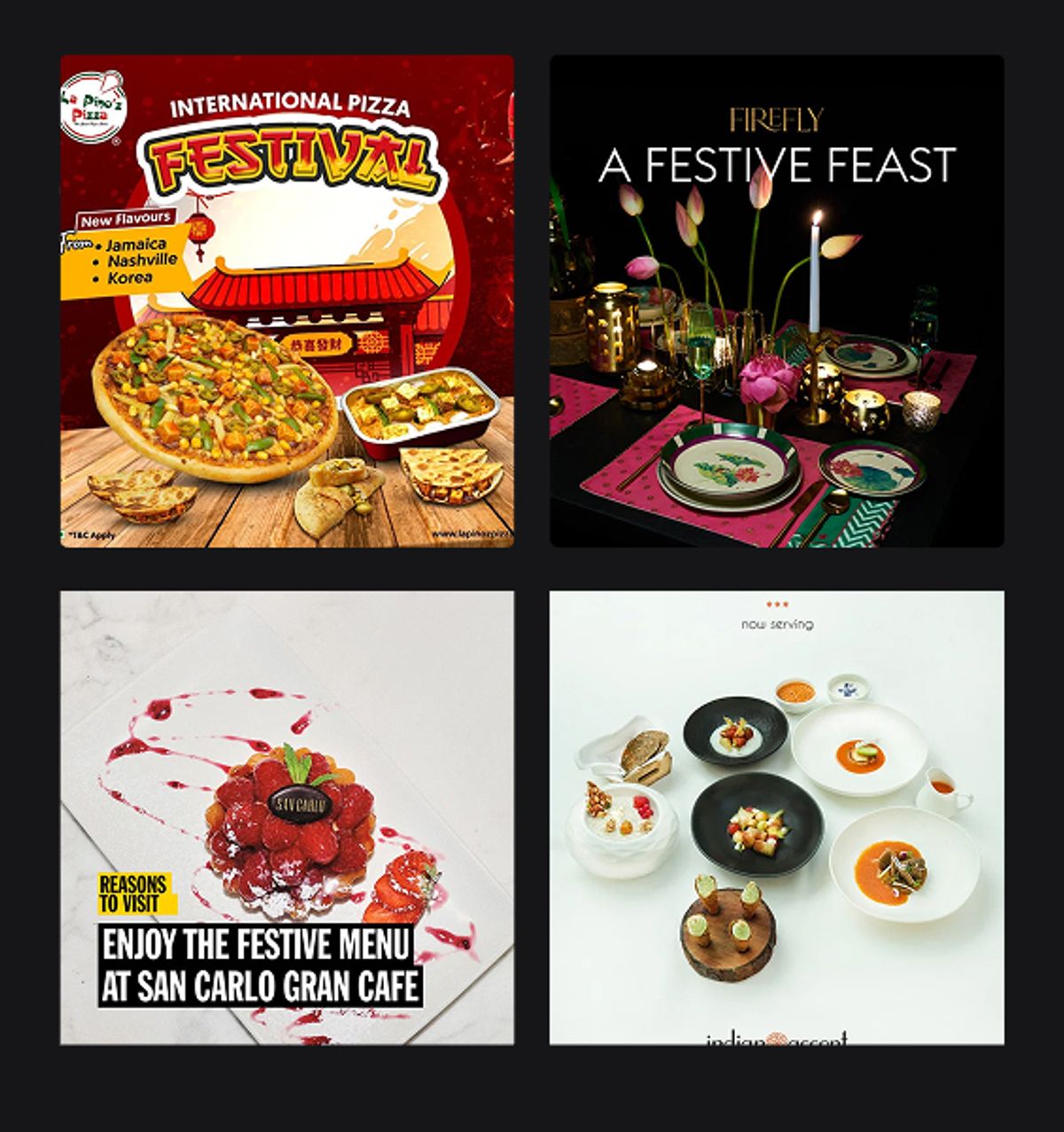
Creative anchored to a hyper-specific context. Late-night study session. Post-match celebration. Rainy afternoon comfort craving. Solo lunch between back-to-back calls. The situation is the headline. The product is the obvious answer.
It reframes the consumer's decision entirely. Instead of "Do I want fast food today?" the question becomes "What do I want for this exact moment?" The brand has already answered before the viewer thinks. Works in under two seconds or not at all. Best format: Stories and Reels. The strongest occasion-hook creative often skips brand identity in the first frame and reveals the product as the resolution.
Three things consistently, across every category leader.
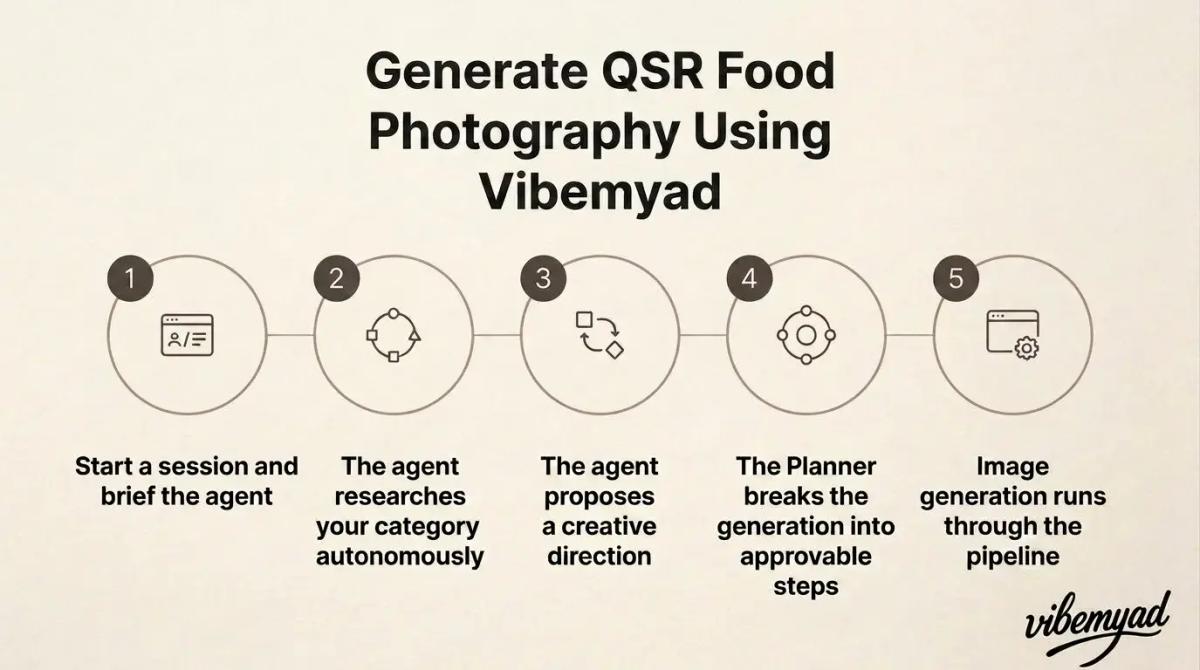
You do not search ad libraries, build reference boards, compile mood boards, or open multiple tools. You start an agentic session, and the agent does the research, proposes the creative direction, generates the food photography, and audits every output before it ships. Here is exactly how the workflow runs, end to end.
Generate QSR Food Photography using Vibemyad
Open vibemyad.com/sessions. Tell the agent your brand, your product, your campaign goal, and any constraints. A useful brief includes the campaign occasion (new launch, seasonal push, LTO, competitive response, value anchor, day-part), the channel format needed (image ad, carousel, Story cover), the brand identity reference (existing brand book, colors, fonts), and any cultural or geographic specificity (US D2C, Indian regional, monsoon, festive). The more specific the brief, the tighter the agent's first proposal.
A brief that works: "Launching a monsoon-special chicken burger for our D2C brand in India. Need three lifestyle hero shots for a Meta carousel. Festive Indian aesthetic, hand model holding the burger, plated styling, 1:1 and 4:5 formats. Brand book attached."
This is where the agentic architecture replaces every manual research workflow QSR marketers used to run. You do not open Vibemyad Ad Vault. You do not open Vibemyad Ad Spider. The agent does it for you, in the background, as part of its response cycle.
The Router agent decides whether the session needs research-heavy exploration or direct execution. For most new briefs, it routes to research first. The agent searches Vibemyad Ad Vault (over 10 million Meta ads indexed across nine dimensions, including brand, run duration, hook technique, ad concept, visual style, funnel position, content bucket, industry, and aspect ratio) for category-matched references. It filters by run duration to surface ads that have earned continued spend rather than ads that ran for a week and disappeared. It pulls Vibemyad Ad Spider's weekly tracking of up to 50 competitor brands in your category. It identifies which of the five patterns is currently converting for brands like yours.
This entire research process happens in seconds. You see what the agent found in chat, including the specific reference ads it is grounding on.
The Creative Director agent interprets your brief against the research findings and returns a recommended creative direction. The recommendation includes composition (how the product sits in frame), lighting setup (warm or cool, hard or soft, key light angle), mood (festive, late-night, energetic, calm), color palette, and which of the five patterns the direction fits. You see exactly what the agent is proposing and exactly which references it is drawing on. You approve, refine with conversational input ("warmer lighting, less props, closer to the burger"), or redirect entirely.
Once direction is approved, Plan Mode shows you exactly what the Planner agent will change in the image. Background swap. Subject placement. Lighting setup. Props. Color grading. Character pose. You approve each step or modify it before any pixels are generated. This is the architectural difference from prompt-shot tools. Plan Mode prevents the "regenerate twenty times to fix one thing" problem because every change is approved before it executes.
The Image Generator agent produces the visual. The Evaluator agent then audits every output against four criteria, each scored independently. Before-and-after accuracy checks that your product is recognizably your product, not a stylized AI version that looks like every other stylized AI version. Prompt adherence checks that the output matches what was briefed and planned. Structural integrity checks that the image holds together visually at ad-placement scale, with no broken hands, distorted text, or warped product geometry. Brand book consistency checks that the output looks like your brand across every variant in the session, with correct colors, fonts, and identity treatment. Only outputs that clear all four criteria advance to you. Failed outputs route back to the Planner, which adjusts and retries.
You refine the same conversation without restarting. Move the burger one inch left. Warm up the lighting. Change the plate. Try the same composition with a different model. The agent holds a character state across the entire session, which means the same hand model, the same face, and the same product persist across every lifestyle frame. This is the single hardest problem in AI food creative, where most tools (Midjourney included) fall apart. Vibemyad solves it via the agentic pipeline, maintaining character continuity across turns. When you are ready, export at the channel-correct aspect ratio (1:1, 4:5, 9:16, or 1.91:1).
The same agentic session generates six categories of food photography depending on what your campaign needs. Clean white background for catalog use and delivery app product tiles. Lifestyle for in-context paid social with model and environment. Flat lay for ingredient breakdowns and recipe-led content. Mood and season for festive, monsoon, summer, late-night, or cultural-moment aesthetic shifts. Texture and surface for close-up product detail, like static cheese pull, batter texture, or ingredient close-ups. Ad-ready formatted to Meta channel specs at 1:1 in-feed square, 4:5 in-feed portrait, 9:16 Stories and Reels, and 1.91:1 link preview.
A regional Indian D2C food brand selling pani puri ran a full Meta campaign inside one Vibemyad session. The agent researched the category, proposed a "hands-eating" creative direction, and generated the hero product shot, the packaging mockups, the detail and creative angles, the same hand model holding pani puri across every lifestyle frame, and the "eating the product" moment. One conversation. No food stylist. No reshoots. No character drift between frames. Culturally specific cuisines are usually where generic AI image tools collapse because training data is heavily Western. Vibemyad handles them because the agent grounds on a real category reference, not on generic training data.
Vibemyad is an image only. It does not generate video, sizzle reels, cheese pull motion, drink pours, or behavioral video content. QSR brands using video for behavioral creative will pair Vibemyad with a separate video workflow. Vibemyad handles the static portion of QSR creative, which remains the majority of paid social inventory across image ads, carousels, and the static elements inside Reels and Stories.
Vibemyad
The patterns are running right now. The category intelligence is available. The QSR brands winning on Meta are not more creative than you. They are better informed and move faster.
Get notified when new insights, case studies, and trends go live — no clutter, just creativity.
Table of Contents


Arpita Mahato
Content Writer, Vibemyad

Arpita Mahato
Content Writer, Vibemyad

Arpita Mahato
Content Writer, Vibemyad