July 28, 2026 • 11 min read

July 28, 2026 • 11 min read
Gatorade advertises to be believed. Prime advertised to be noticed. Both worked, and only one of them lasted.
• Gatorade advertises to be believed: earned authority, elite athletes, and a science institute behind every claim. Prime advertised to be noticed: founder reach, sports rights, and scarcity drops.
• Prime outsold Gatorade only in Walmart's hydration category at its 2023 peak. On total sports-drink sales, it was never close, and Gatorade still holds the category.
• Noticed is fast and cheap to start. It also decays quickly: Prime reached near-total recognition with low repeat purchase rates, and UK sales fell by about 48 percent in 2024.
• The two ads could not both be true. Gatorade's formula backs its performance claim. Prime carries about 5 milligrams of sodium per 8 ounces, which is everyday hydration, not sports performance.
• For a smaller brand, the fast move is to merge the two lanes Gatorade keeps separate, then test several hooks cheaply instead of betting on one hero shot.
Two hydration brands, two opposite theories of what an ad is for. Gatorade has spent 60 years teaching people to trust it, and its advertising is designed to make you believe its claims. Prime spent about eighteen months teaching people to notice it, and its advertising was built to make you stop, grab, and post. Both theories work. They just decay on completely different timelines, and the gap between them is the most useful thing a smaller brand can study.
Here is what each one actually runs, why Prime's approach spiked and then fell, and how to borrow the strongest parts of both without a stadium budget or a hundred million followers.
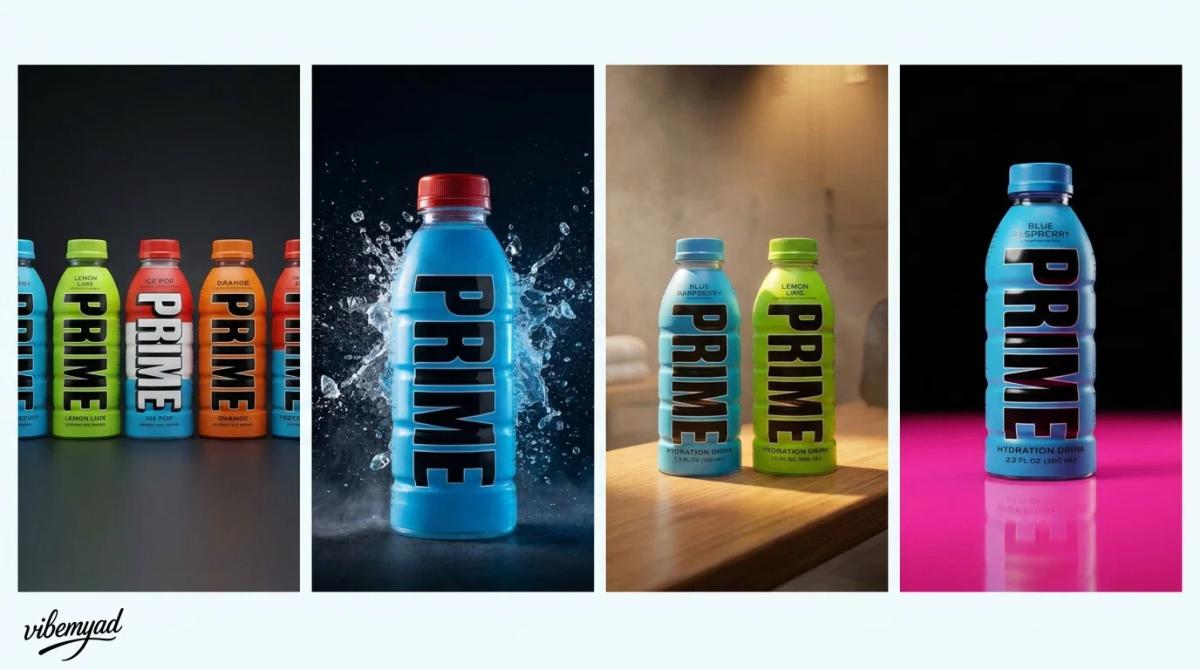
Did Prime Really Outsell Gatorade?
You will see the claim everywhere that Prime beat Gatorade. It is true in exactly one slot and false everywhere else, so it is worth getting right before we talk about the ads.
• The defensible version: At its 2023 peak, Prime hit an estimated 1.2 billion dollars in sales and outsold Gatorade specifically in Walmart's hydration category, per The Robin Report. That is a real achievement and a narrow one.
• The full picture: On total US sports-drink sales, it was never close. Circana data for the 52 weeks ending April 2025 put the category above 11.5 billion dollars, with Gatorade alone past 7.5 billion and Prime sitting fifth behind BODYARMOR, Powerade, and Electrolit.
• The viral version to ignore: The TikTok framing that Prime outsells Gatorade overall, or that it minted a billionaire off the back of it, is not supported by category data. Do not repeat it.
So the honest matchup is not that the underdog beats the giant. It is a challenger that borrowed enormous attention very fast, against an incumbent that has compounded trust very slowly. That difference shows up directly in how they advertise.
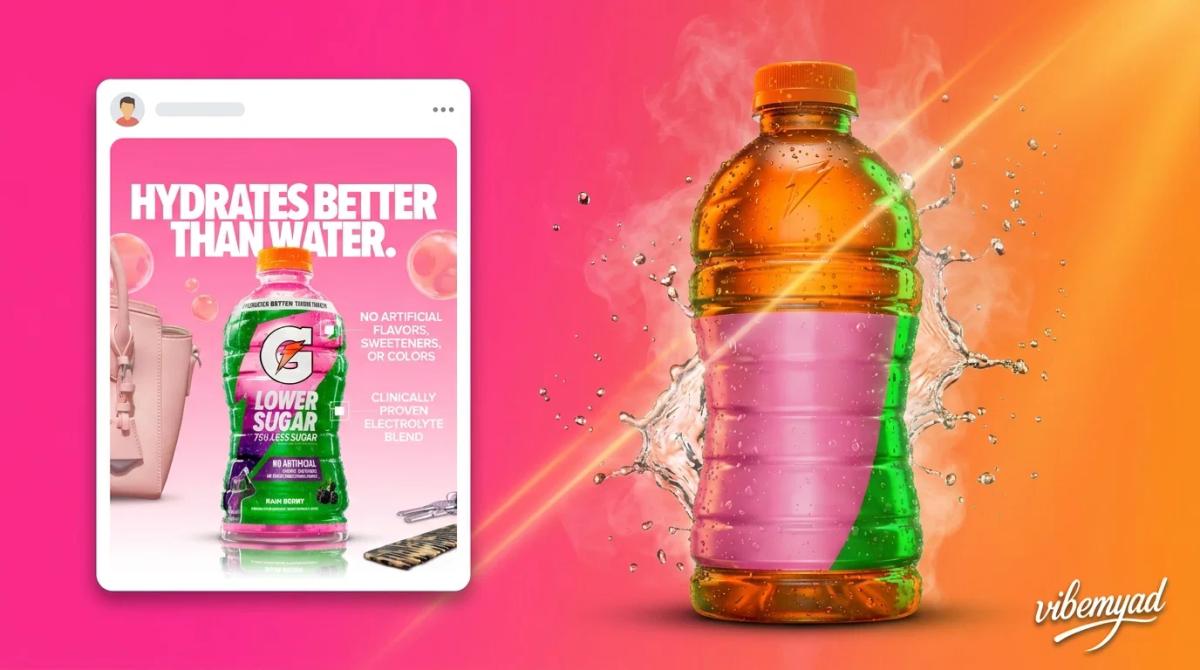
How Does Gatorade Advertise?
Gatorade runs two distinct creative lanes and keeps them clean. Both are in service of the same goal: not to win attention, but to be believed.
LANE 1 · PERFORMANCE GRAPHICS: The bottle dead-center on a saturated color field, with one superiority claim carrying the frame: number one sports drink in the world, hydrates faster, an advanced hydration system. Text-first, authoritative, built to stop the scroll on the promise rather than a face.
LANE 2 · ATHLETE AND UGC LIFESTYLE: Fast, vertical-native video that hides the sell inside a real moment: a training montage, a day-in-the-life, a bottle on the bench. The product is a prop, not the poster, and the trust comes from the person on screen.
Underneath both lanes sits credibility a challenger cannot fabricate quickly:
• The flagship idea barely changes. In 2024, Gatorade revived "Is It In You?" as its biggest campaign ever, anchored by a 60-second spot narrated by Michael Jordan and featuring Caitlin Clark, Josh Allen, A'ja Wilson, Jayson Tatum, and Sydney McLaughlin-Levrone, debuting in the NBA Conference Finals. The idea is defined as inner drive, explicitly set against "hype, clout or likes."
• Science is a named institution. The 2026 global football extension leans on "the sweat, the sacrifices and the science," citing the Gatorade Sports Science Institute's 41 years of work and data that footballers lose 1 to 2 liters of fluid per 90-minute match.
• The media mix is total-market. National TV, out-of-home billboards, and custom Snapchat and Instagram filters, so the paid social extends the TV idea rather than replacing it.
What Gatorade is really doing: Every element points to belief. The claim is printed on the pack, the faces are proven, the science has a building and a name. It is slow and expensive to build, which is exactly why a rival cannot copy it by next quarter.
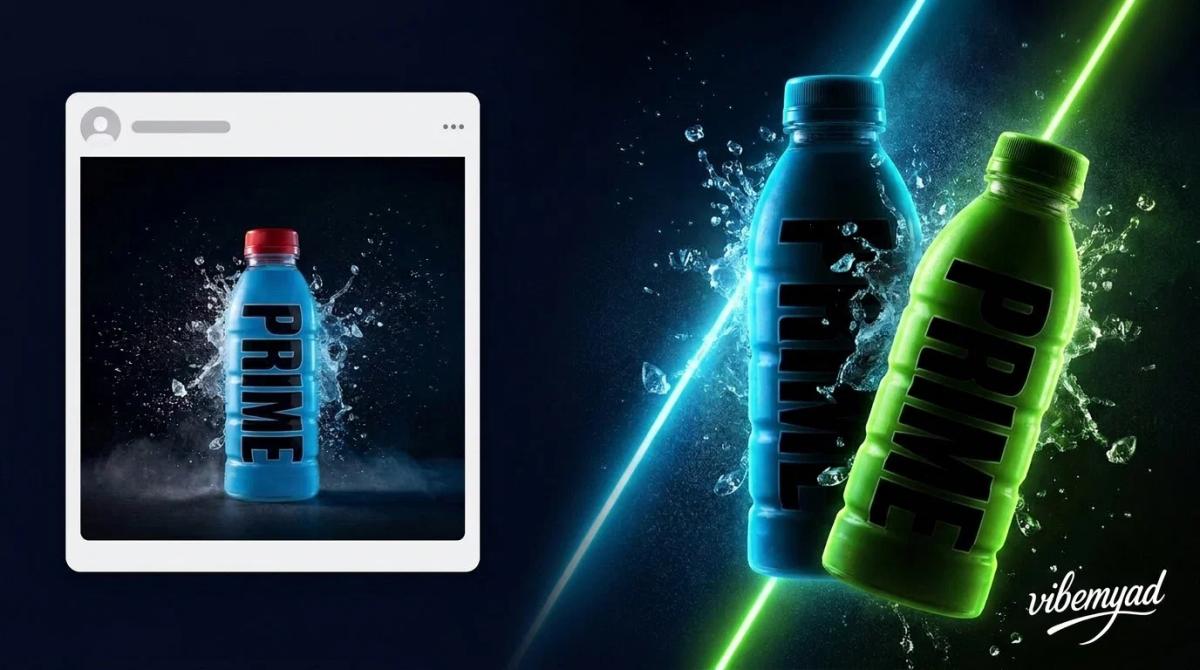
How Did Prime Advertise?
Prime ran the opposite play. Its early ads were not really ads; they were content, and the goal was raw attention.
THE REAL AD UNIT: A founder holding the bottle to camera. With a combined reach north of 100 million followers, Logan Paul and KSI built Prime inside their own content rather than around it, so the launch asset was something the audience opted into rather than an ad served to them.
THE CREDIBILITY LAND-GRAB: Sports rights bought instant legitimacy at speed: Arsenal in 2022, the UFC in early 2023 with Dana White personally endorsing it, then Barcelona and Bayern Munich, then WWE and the LA Dodgers. KSI announced the Barcelona deal with "Goodbye Gatorade," naming the target directly.
THE ATTENTION SPIKES: Prime became the first influencer-owned brand to run a Super Bowl spot, at a reported 6 to 7 million dollars for 30 seconds, alongside stunts like blue NASCAR liveries and constant scarcity drops that produced sellouts and resale markups.
What Prime was really doing: Every element points to being noticed. Borrowed reach, borrowed rights, manufactured scarcity. It is fast and, relative to a PepsiCo media budget, cheap to start. The catch is what happens when the novelty runs out.
Here is the part most teardowns miss. The two brands were advertising the same category but selling physically different products, and the ads could not both be honest about performance.
• Gatorade is built for sweat: It carries 300 to 350 milligrams of sodium per serving plus carbohydrates, which is what the body actually needs to replace during hour-plus, high-intensity effort.
• Prime is built for everyday sipping: It is coconut-water-based and potassium-forward, low in sugar, and carries about 5 milligrams of sodium per 8 ounces. Sports dietitians note that an ideal sports drink has at least 100 milligrams of sodium per 8 ounces, so Prime is closer to flavored hydration than to a performance formula.
• The mismatch mattered: Prime advertised a performance association, with athletes and combat-sports rights, while shipping an everyday-hydration mix. The claim and the formula pointed in different directions, and that gap is part of why the hype struggled to convert into a reason to rebuy.
The lesson: Your ad can borrow any aesthetic, but it cannot outrun your formula forever. Decide what your product is actually for, then let the hook claim only what the mix can back.
Both strategies work in their own window. They fail differently, and the numbers show it.
The decay is the whole story. Noticed spikes and then falls the moment the novelty and the founders' attention move on:
• Recognition without habit: Prime reached almost total brand awareness while repeat purchase stayed low, a gap widely cited in coverage of its decline. Awareness is not loyalty.
• The fall in the numbers: UK sales dropped about 48 percent in 2024, from £131.1 million to £68 million (NIQ, via The Grocer), one of the fastest-falling FMCG brands that year, and UK net profit fell roughly 91.6 percent. One projection has global sales sliding about 76 percent from the 2023 peak toward roughly 300 million dollars in 2025, though that figure is a projection rather than a filing.
• Belief just keeps compounding: A 60-year-old brand could revive a 1990s tagline in 2024 and have it land, because the trust was already there to reawaken.
You have neither Gatorade's nine-figure media budget and athlete roster, nor Prime's hundred-million-follower founder engine. So copying either wholesale is a trap. The faster, cheaper move is to merge the two lanes Gatorade deliberately keeps apart.
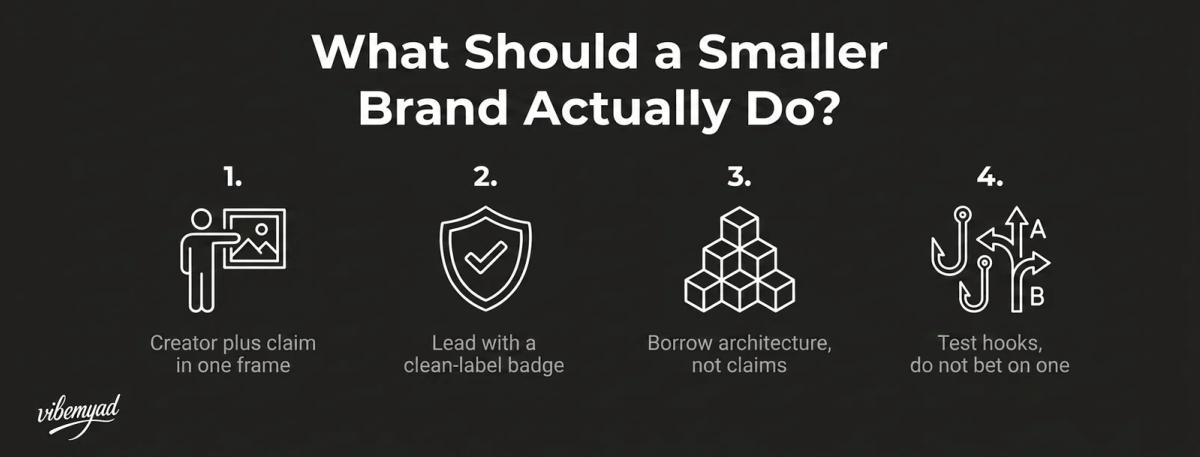
What Should a Smaller Brand Actually Do?
You have neither Gatorade's nine-figure media budget and athlete roster, nor Prime's hundred-million-follower founder engine. So copying either wholesale is a trap. The faster, cheaper move is to merge the two lanes Gatorade deliberately keeps apart.
• Creator plus claim in one frame: Put a real person in shot for trust, the way Prime's creator-holding-the-bottle unit works, then overlay a single bold claim in the top third for the readability of a performance graphic. You get authenticity and clarity in one asset instead of two.
• Lead with a clean-label badge: Flash the transparency in the first three seconds, as text badges rather than a buried caption. This borrows the challenger credibility that Prime's peer set uses, without losing the scroll-stopping energy.
• Borrow architecture, not claims: Steal the structure of a strong competitor ad, such as a training montage with the product at each natural break, but never lift their exact wording. "Clinically proven" and comparative hydration claims carry regulatory weight and have to be yours to make.
• Test hooks, do not bet on one: The reason small brands lose is committing a quarter's production budget to a single hero shoot. Build several hooks, run them, and scale only the ones that earn it.
That last point is the real bottleneck. The idea was never the hard part; production was. A single hero shot for one lane can eat a quarter's budget, which is why so many brands commit early and find out too late they chose the wrong hook. Here is how the same decisions run in one session at vibemyad.com/home:
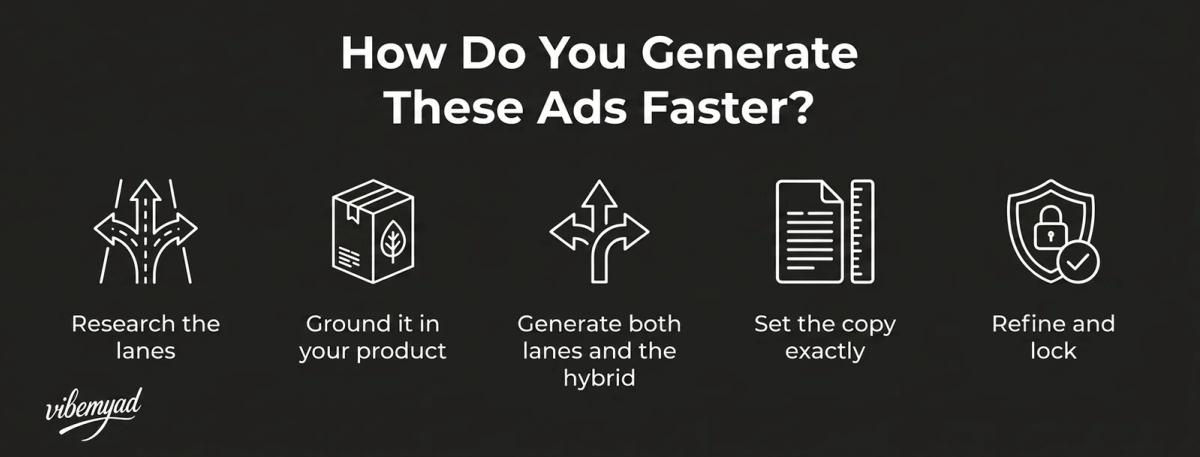
How Do You Generate These Ads Faster with Vibemyad
That last point is the real bottleneck. The idea was never the hard part; production was. A single hero shot for one lane can eat a quarter's budget, which is why so many brands commit early and find out too late they chose the wrong hook. Here is how the same decisions run in one session at vibemyad.com/home:
• Research the lanes: See what is already live in your category, which hooks competitors are leaning on, and which ads they keep sustaining spend behind, so you generate from evidence rather than a blank canvas.
• Ground it in your product: Connect your website and the knowledge base pulls in your real packaging, palette, and logo, so a performance-graphic concept and a creator-led concept both come out looking like your brand.
• Generate both lanes and the hybrid: Describe the shot in chat or start from a preset, then produce the bold product-hero version, the creator-in-frame version, and the merged version that carries a claim overlay on a real person.
• Set the copy exactly: Use the in-canvas text tools to place your hook and badges, and fix product text to keep the label sharp.
• Refine and lock: Remix to spin variations off a winner, set the aspect ratio per placement, and add to preset so a whole range ships consistently.
No product photo yet? The agent builds a concept render from a placeholder so you can test the direction now and re-run it with your real can later.
To be precise about the division of labor: Vibemyad produces the ads, quickly and on brand, across as many hooks as you want to try. The audience testing still happens where it always has, in your own ads manager with your own spend. What changes is that you walk into that test with both lanes and the hybrid built, instead of one. For the wider category picture, our teardown of how the biggest hydration brands win attention covers the other registers worth stealing.
• Gatorade advertises to be believed; Prime advertised to be noticed. Believed to be slow to build and durable. Notice is fast to start and fragile.
• Prime outsold Gatorade only in Walmart's hydration category at its 2023 peak. The overall matchup was never close.
• An ad cannot outrun the formula. Prime's performance framing sat on top of an everyday-hydration mix, and the gap showed up in weak repeat purchase.
• The smaller-brand move is to merge Gatorade's two lanes: a real person for trust, one bold claim overlaid for clarity, a clean-label badge in the first three seconds.
• Borrow a competitor's ad architecture, never its exact claims, and test several hooks cheaply instead of one expensive shoot.
Get notified when new insights, case studies, and trends go live — no clutter, just creativity.
Table of Contents


Arpita Mahato
Content Writer, Vibemyad

Arpita Mahato
Content Writer, Vibemyad

Arpita Mahato
Content Writer, Vibemyad