April 25, 2026 • 13 min read

April 25, 2026 • 13 min read
Most AI ad generators are template libraries with a language model bolted on top. You pick a format, fill in your product name, and watch the tool produce the same carousel structure every other brand in your category is already running. That is not intelligence. That is automation dressed up as strategy.
A real AI ad generator for fitness brands running Facebook Ads does something fundamentally different. It starts with what is already working in your market -across your competitors, across formats, across funnel stages and uses that signal to generate creative built on evidence, not guesswork.
For fitness brands specifically, this distinction matters more than in almost any other vertical. Sportswear is one of the most visually saturated categories on Meta. Nike, Adidas, Puma, Reebok, and Under Armour are all running paid creative simultaneously. The audience has seen every format. They have scrolled past a thousand high-performance gear ads. The only way to break through is to know what is actually cutting through the noise right now and build from there.
In the fitness and health category on Facebook, conversion rates consistently outperform the platform average - with fitness brands seeing conversion rates around 14.29% compared to the cross-industry average of 8.95% Stackmatix - which means the creative decision is high-stakes in both directions. Get it right and fitness audiences convert at an above-average rate. Get it wrong and the creative fatigue cycle burns budget fast.
An AI ad generator for fitness is not a content machine. It is a competitive intelligence engine that happens to create ads. For Facebook Ads specifically, that means the generator needs to understand what hook formats are winning in feed, what visual styles are driving click-through for fitness audiences right now, which copy lengths convert, and what your competitors launched last week. Without that context, you are not generating ads. You are generating noise.

All of these images have been generated via Vibemyad Ad Gen
The fitness category on Meta has a creative fatigue problem that targeting cannot fix. Your audience sees fitness content every single day, across every platform. An ad that performs in week one is a zombie by week three. Most brands respond by producing more, more shoots, more formats, more variations, and end up with a pipeline that is expensive, slow, and still guessing. The real solution is not volume. It is velocity plus intelligence.
The gap between scaling and burning budget is a creative decision made before production, not during it. The brands scaling Facebook Ads profitably in fitness know what is working before they spend a dollar on production. An AI ad generator built on real market data closes that gap before the brief is written, not after the campaign has run.
The gap between a fitness brand scaling on Facebook and one burning budget comes down to one thing: knowing what creative decisions to make before you make them. AI ad generators built for performance, not just output volume, close that gap at three specific points in the process.
Before you write a line of copy or brief a designer, you need to know what is already winning in your space. Which hook formats are your competitors using? What visual styles are driving engagement for fitness audiences right now? What copy lengths convert on Facebook specifically? Which of those formats have been running for 30 or more days, meaning a real budget is behind them? A proper AI ad generator starts here, not at the blank page. It ingests competitor creative data, identifies patterns, and surfaces the hypotheses most likely to perform before you spend anything on production.
Once you have the intelligence layer, generation becomes significantly more effective. Instead of prompting a model to create a Facebook ad for my running shoes, you are working with real context: generate a hook-first video script for a mid-funnel fitness audience using the conversational format currently outperforming in the sportswear category, with a sub-15-word opening line. The output quality difference is not marginal. It is the difference between an AI tool that writes ads and one that writes ads that convert.
After a campaign runs, you need to understand not just which ad performed but why. Was it the hook? The visual? The copy length? The offer? An AI system that tracks performance signals across your own ads and competitor ads simultaneously gives you a compounding intelligence advantage. The creative that wins this month becomes the intelligence that sharpens next month's brief. Every campaign makes the next one smarter.
The brands winning on Facebook are not guessing less. They are learning faster.
Vibemyad is the only platform in this category where intelligence and generation are architecturally separated into three dedicated layers, each doing one job before passing to the next.
Vibemyad Ad Vault
Vibemyad Ad Vault is a visual ad search engine with over 10 million ads pre-analysed by AI workflows. Run duration is surfaced upfront, which means you are not browsing a raw library. You are looking at a filtered view of what has sustained spend. An ad running for 90 days is an ad someone kept paying for. That is your validation signal before a brief is written.
Vibemyad Ad Spider
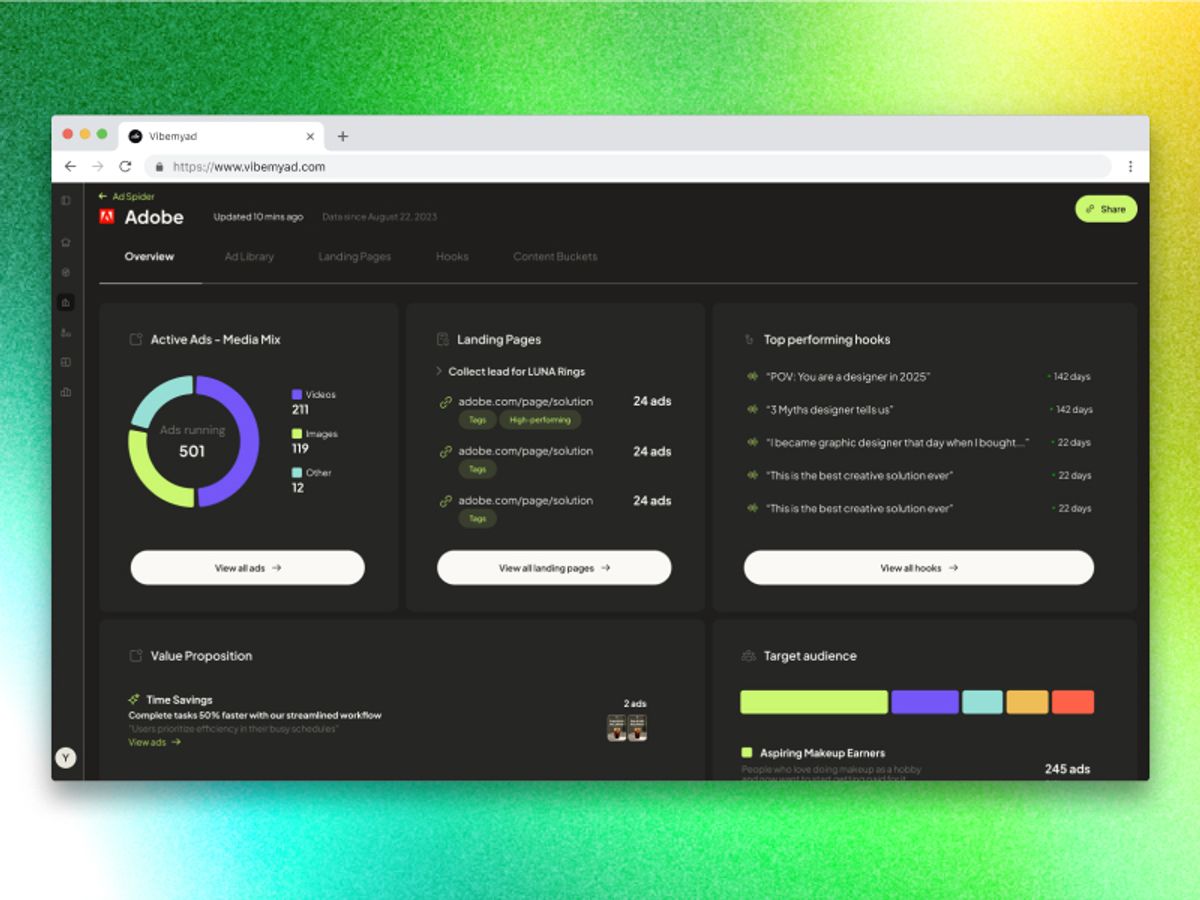
Vibemyad Ad Spider tracks up to 50 competitor brands simultaneously, capturing every new creative a tracked brand launches and every ad they pull down. It surfaces similar brands automatically as it maps your competitive landscape, so your tracking list becomes more accurate over time. This layer answers the question prompt-based tools cannot: which concepts have real budget behind them right now?
Vibemyad Ad Gen
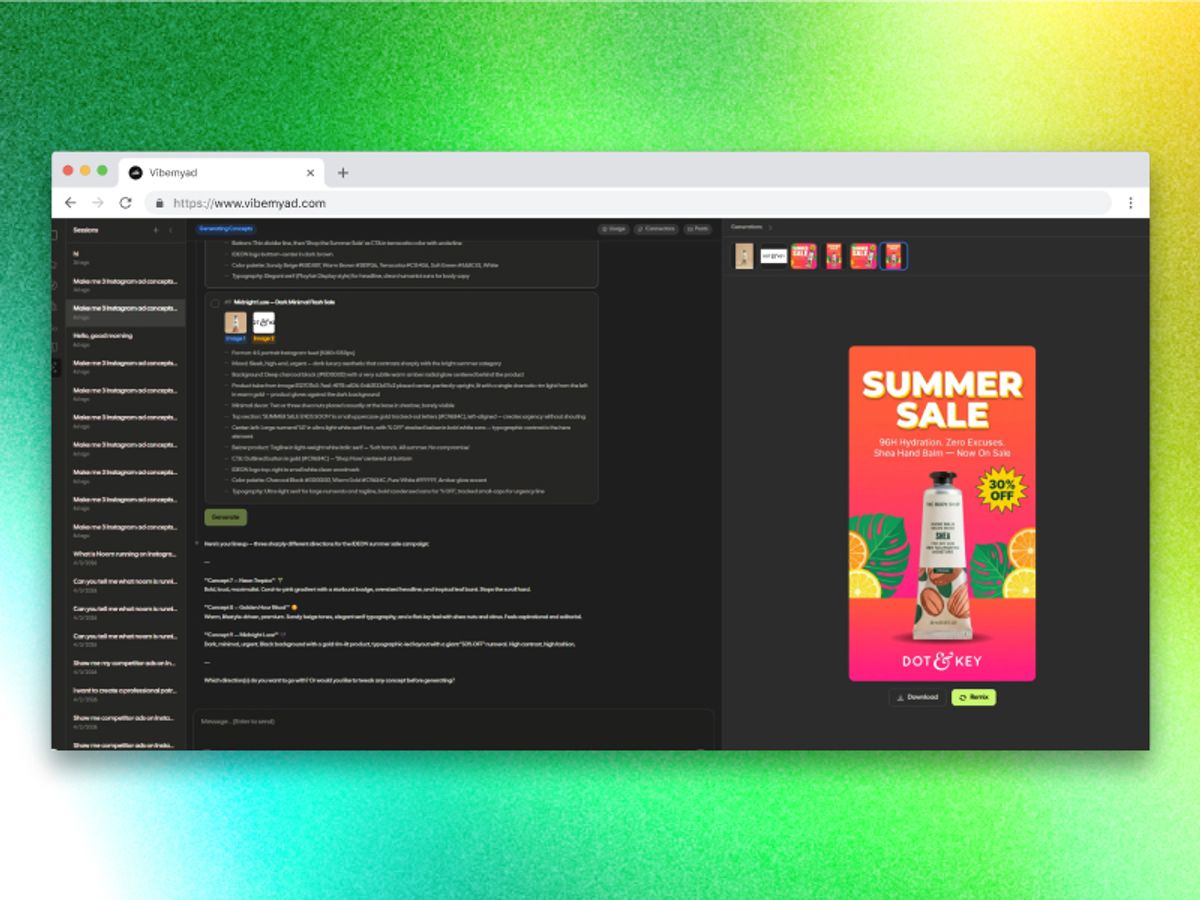
Vibemyad Ad Gen is where the intelligence built across the first two layers becomes production-ready creative. Ad Gen has turned agentic, rather than selecting from a preset menu of modes, you open a conversation with the Vibemyad Ad Gen agent and tell it what you want to build.
You can describe the format, point to the concept you validated in Vibemyad Ad Vault, explain your product and brand context, and the agent handles the creative production through that conversation. The brief and the build happen in the same place, without switching tools or translating research into a separate design brief.
For teams that need to move fast, the workflow is three steps.
Brand book inputs ensure every output uses your exact fonts, styling, and brand voice. The concepting phase is eliminated entirely because the concept was validated before the conversation started.
Adcreative.ai
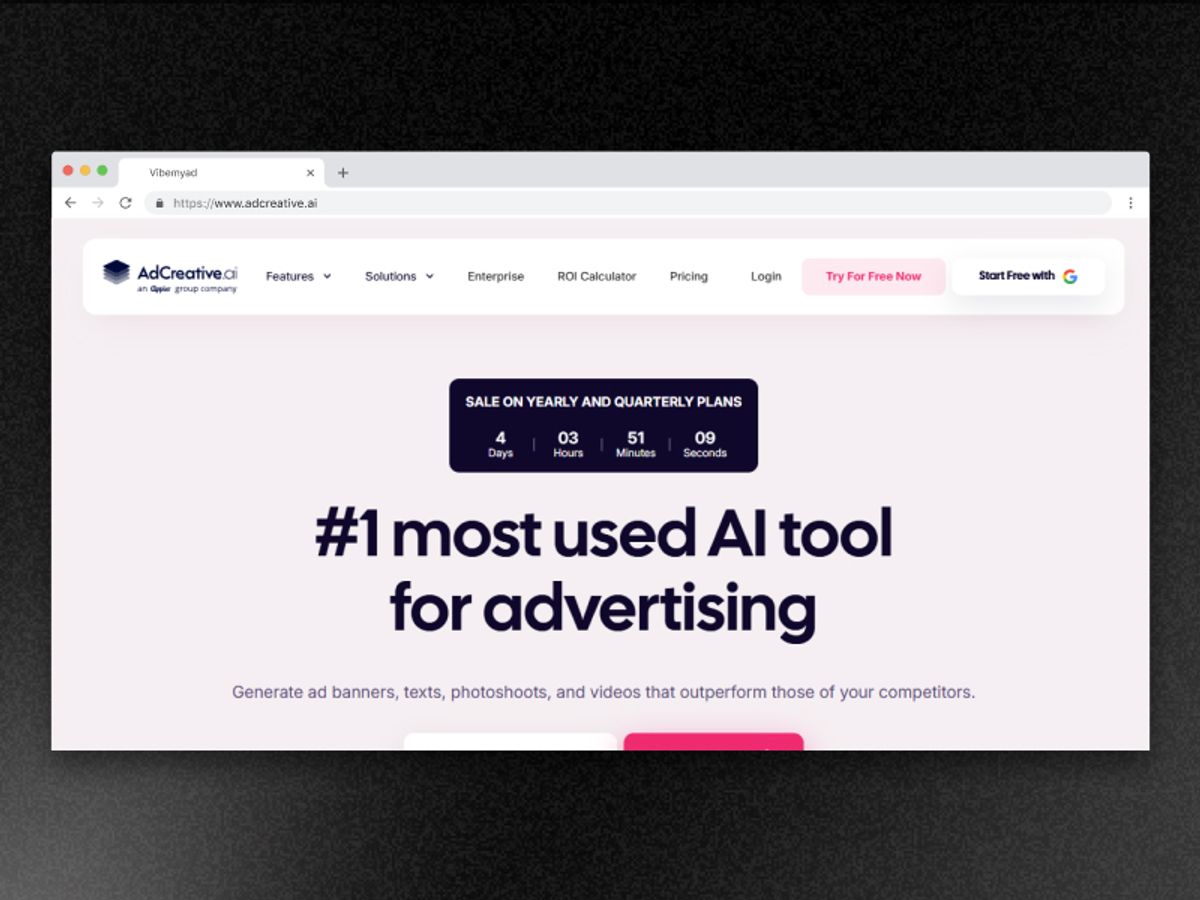
AdCreative.ai uses proprietary AI models trained on over $35 billion in ad spend data to generate high volumes of static ad variations, each scored with a conversion prediction before launch. It integrates directly with Meta Ads Manager and generates 100-plus static variations from a single product concept, covering different layouts, headline placements, colour schemes, and visual treatments simultaneously. The creative scoring system predicts which static designs will convert before you spend a dollar on media, helping you prioritise the strongest candidates for testing first.
The primary limitation is recency. Historical database intelligence tells you what worked before across other brands and other audiences — not what your competitors are actively sustaining spend on right now. In a market where creative trends shift on a four to six week cycle, the gap between what the database knows and what is winning today is the primary constraint on output quality. Best suited for D2C brands with a clear brief and a weekly static testing cadence that outpaces what a design team can produce.
AdStellar
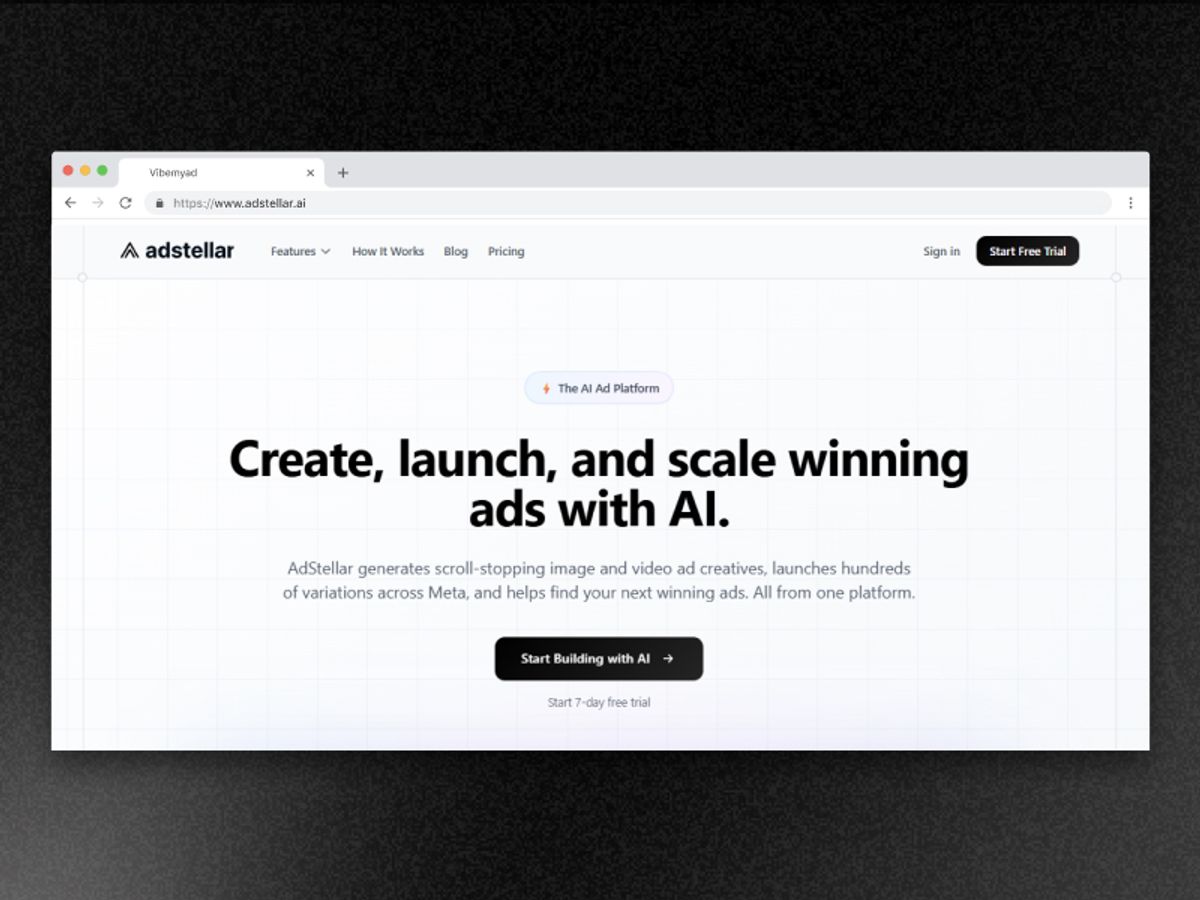
AdStellar connects static creative generation directly to Meta Ads Manager, eliminating the manual gap between approved creative and live campaign. It generates static ad variants, pushes them to campaigns, and surfaces optimisation recommendations from live data — all inside one platform. Best for D2C teams where static creative production is not the bottleneck but the operational cost of moving from approval to live campaign is.
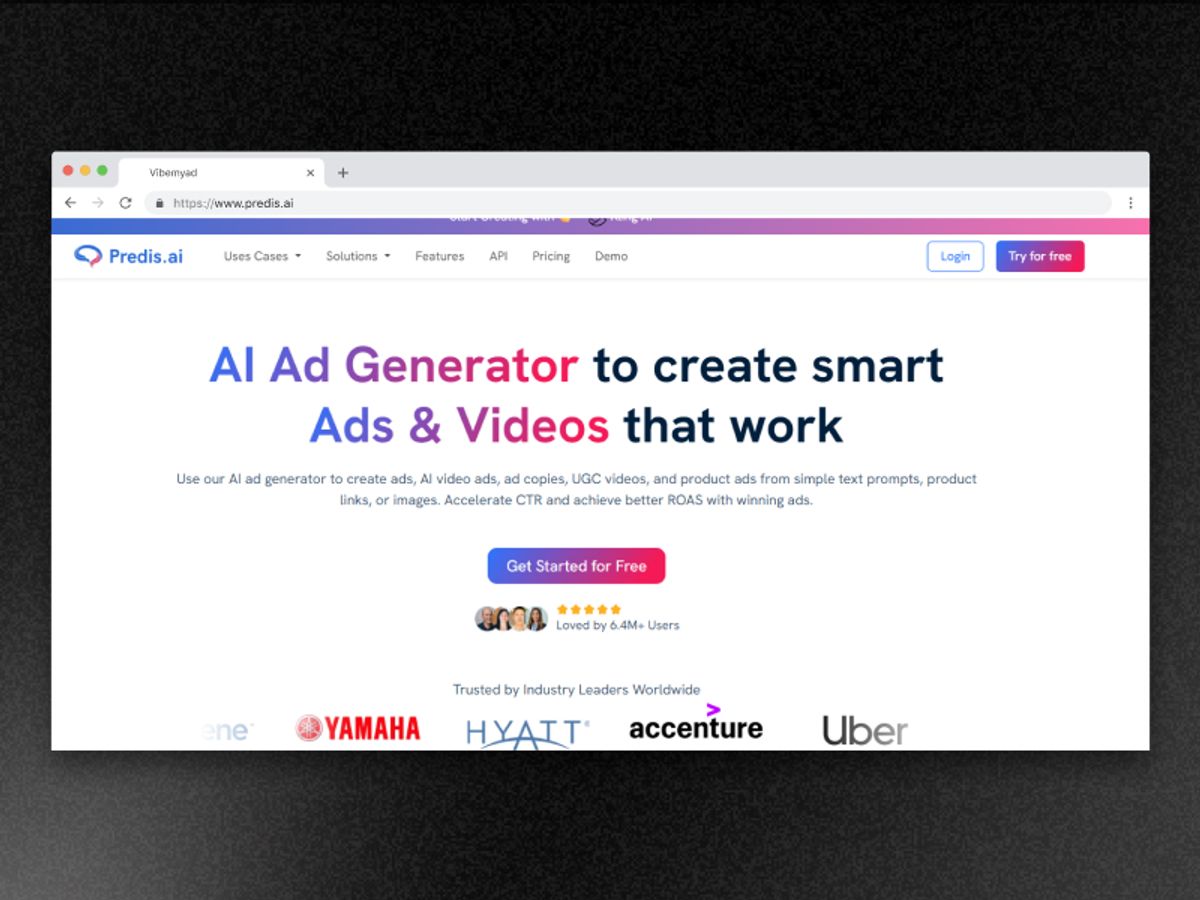
Predis.ai
Predis.ai produces both organic social posts and paid static ad creatives from the same platform, eliminating the need for two separate tools for small teams. It integrates directly with e-commerce catalogues and includes content scheduling. For D2C brands running static creative across both organic and paid channels, the unified workflow removes the brief duplication that slows small teams down. Best for small D2C teams where the social media manager also runs paid campaigns and context-switching between tools is the primary operational friction.
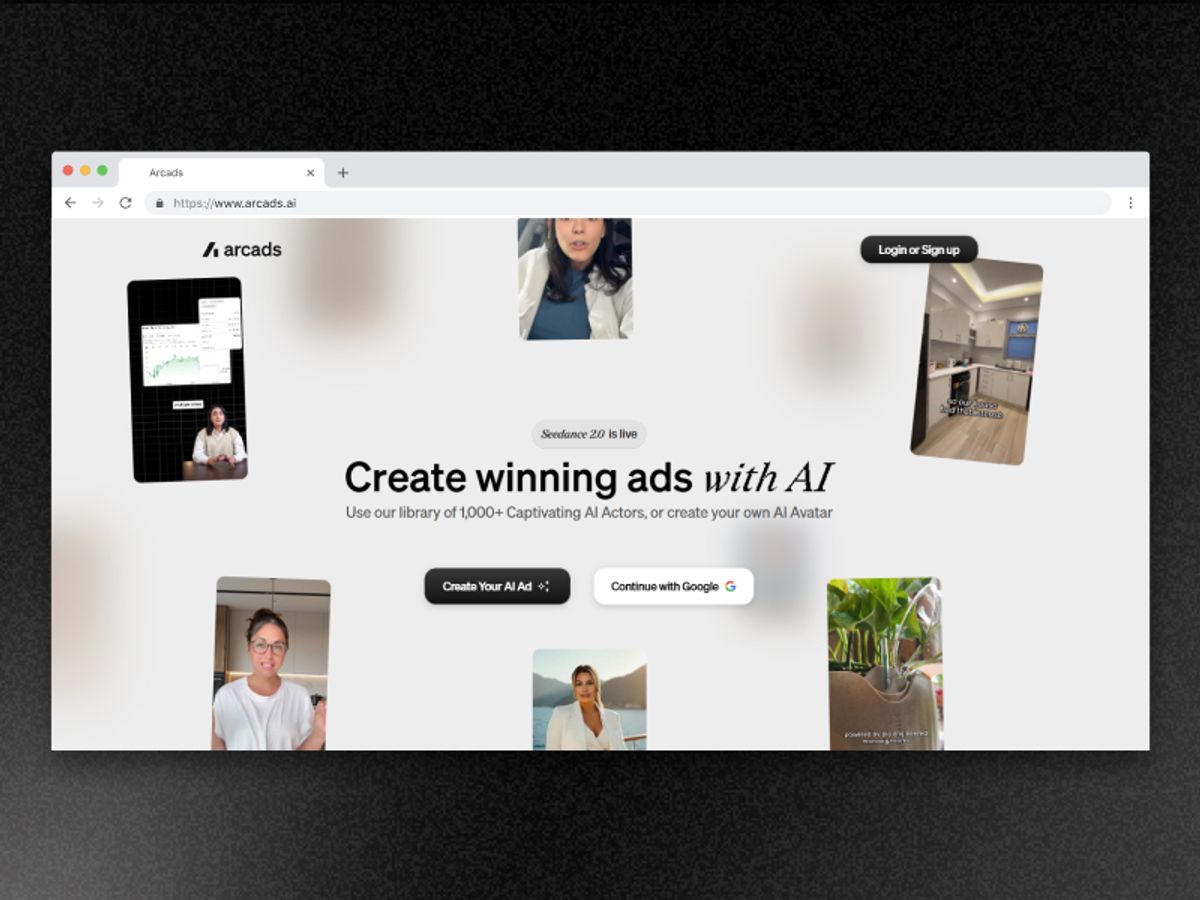
Arcads
Arcads offers a library of hyper-realistic AI avatars that deliver scripts with natural expressions, tone, and pacing. You can run the same script through 10, 20, or 50 different actors simultaneously, with support for 35-plus languages. Arcads is most valuable for D2C brands that already have a working static creative system and want to add UGC video as a supplementary format — not as a replacement for static intelligence.
Intelligence-first is not a marketing term. It describes where the value of an AI tool actually comes from, and it has direct consequences for your Facebook ad performance.
Start tracking your competitors and generating ads built from real market intelligence.
Get notified when new insights, case studies, and trends go live — no clutter, just creativity.
Table of Contents


Arpita Mahato
Content Writer, Vibemyad

Arpita Mahato
Content Writer, Vibemyad


Rahul Mondal
Product, Design and Co-founder, Vibemyad