April 20, 2026 • 14 min read

April 20, 2026 • 14 min read
TL;DR
Most D2C brands pick an AI ad generator based on the demo. The demo looks impressive. The tool generates something in thirty seconds. They launch it, it underperforms, and they blame the tool. The tool is rarely the problem. The starting point is.
Look at how the best D2C brands actually operate.
Dr. Squatch runs over 5,800 creatives in active rotation, constantly testing new hooks, angles, and personas weekly. They trust the hook, not just the production. SKIMS wraps discount urgency in minimal product-close static imagery - no video, no UGC creator, just a tight crop and a proven angle.
Glossier builds entire campaigns around customer selfies and two-line product stories. None of these brands are generating from blank prompts.
Meta's Andromeda delivery engine - the retrieval system that decides which ads get considered before the auction even happens - replaced the old rule-based system in 2025 and now uses deep neural networks to match individual users to ads based on predicted response rather than audience targeting inputs. Scaledon
It favours content with a clear value arc that maps to specific user intent — not just aesthetic or trend relevance. Superads That value arc has to come from somewhere validated — from what the market has already rewarded with sustained spend, not from what a team thinks sounds right in a briefing room.
Static images still drive approximately 60 to 70 percent of conversions on Meta Social Media Examiner, making them the format most brands underinvest in thinking about while overinvesting in producing.
Creative testing plays the most critical role in determining whether campaigns succeed or fail. Even when a brand has an average website experience or basic campaign structure, strong creatives can still generate profitable results. The right AI ad generator for a D2C brand on Meta is not the fastest or the cheapest. It is the one that gives your static creative the best possible starting point.
Understanding which category of tool you need matters more than which specific product you pick within that category. A brand that needs validated intelligence before briefing its static creative will not solve its problem by switching to a faster generator.
Intelligence-first generators start from validated competitor data before generation begins. They identify which static concepts have been proven by sustained market spend, extract the structural patterns behind those concepts, and use that as the creative foundation. This is the category most D2C brands do not know exists — and the one that changes the math on creative hit rates. Vibemyad is the only platform operating here.
All-in-one performance generators combine static creative generation with predictive scoring, bulk variation output, and in some cases campaign management. They compress the time between brief and live campaign. AdCreative.ai, AdStellar, Quickads.ai, and Predis.ai sit in this category with different strengths across static and carousel formats. Their intelligence layer is historical rather than live — they tell you what has worked before, not what your specific competitors are sustaining spend on right now.
Video-first UGC generators produce authentic-looking video creative at scale without film crews or human creators. They use AI actors, voiceover, and scriptwriting to generate talking-head and testimonial-style ads for Meta Reels and Stories. Arcads and Creatify lead this category. For most D2C brands, these are most valuable as a supplementary layer once the static creative system is working — not as a replacement for it.
The category distinction is the decision that determines everything downstream.
The D2C brands winning on Meta in 2026 share a single operational pattern regardless of geography or category — they test static creative at a higher velocity than their competitors and start each test from a stronger foundation.
American D2C brands like Dr. Squatch, SKIMS, and AG1 treat static creative as a precision instrument. SKIMS produces minimal product-close static ads that wrap discount urgency in high-fashion restraint - no face, no scene, only the product and how it sits on the body. AG1 pairs clean product photography with morning ritual messaging in a static format before scaling winning angles into video. Top DTC brands on Meta report 4 to 6x ROAS by pairing static creative with retargeting through custom audiences of past site visitors. Neither brand is starting from a generic template.
Asian D2C brands like Mamaearth and Minimalist run structured, proof-led static creative built around ingredient transparency. Minimalist takes a science-first approach — offering dermatologically-tested skincare with clearly listed active ingredients and percentages, growing 300 percent year-over-year in 2024. Their Meta static creative names the active ingredient and the percentage in the headline. The ad does not need video to convert because the proof is in the copy and the product. They use AI generation to scale what is already culturally and scientifically grounded — not to replace the thinking behind it.
Middle East D2C brands like Huda Beauty and Namshi operate in a high-intent market where static product and before-and-after creative consistently perform alongside video. Middle East consumers are highly educated, often researching ingredients, comparing international formulations, and expecting visible results quickly. Before-and-after static ads with localised Arabic copy are among the highest-converting formats in the region — a format that AI static generators can produce at the speed and volume these markets require.
The common thread across all three markets is the same: the highest-ROAS brands run the most structured static testing systems. AI generation tools are the production engine behind those systems. The starting point for each static creative is what separates the brands that compound from the ones that burn budget.
Vibemyad is the only platform in this category where intelligence and generation are architecturally separated into three dedicated layers, each doing one job before passing to the next.
Vibemyad Ad Vault
Vibemyad Ad Vault is a visual ad search engine with over 10 million ads pre-analysed by AI workflows. Run duration is surfaced upfront, which means you are not browsing a raw library. You are looking at a filtered view of what has sustained spend. An ad running for 90 days is an ad someone kept paying for. That is your validation signal before a brief is written.
Vibemyad Ad Spider
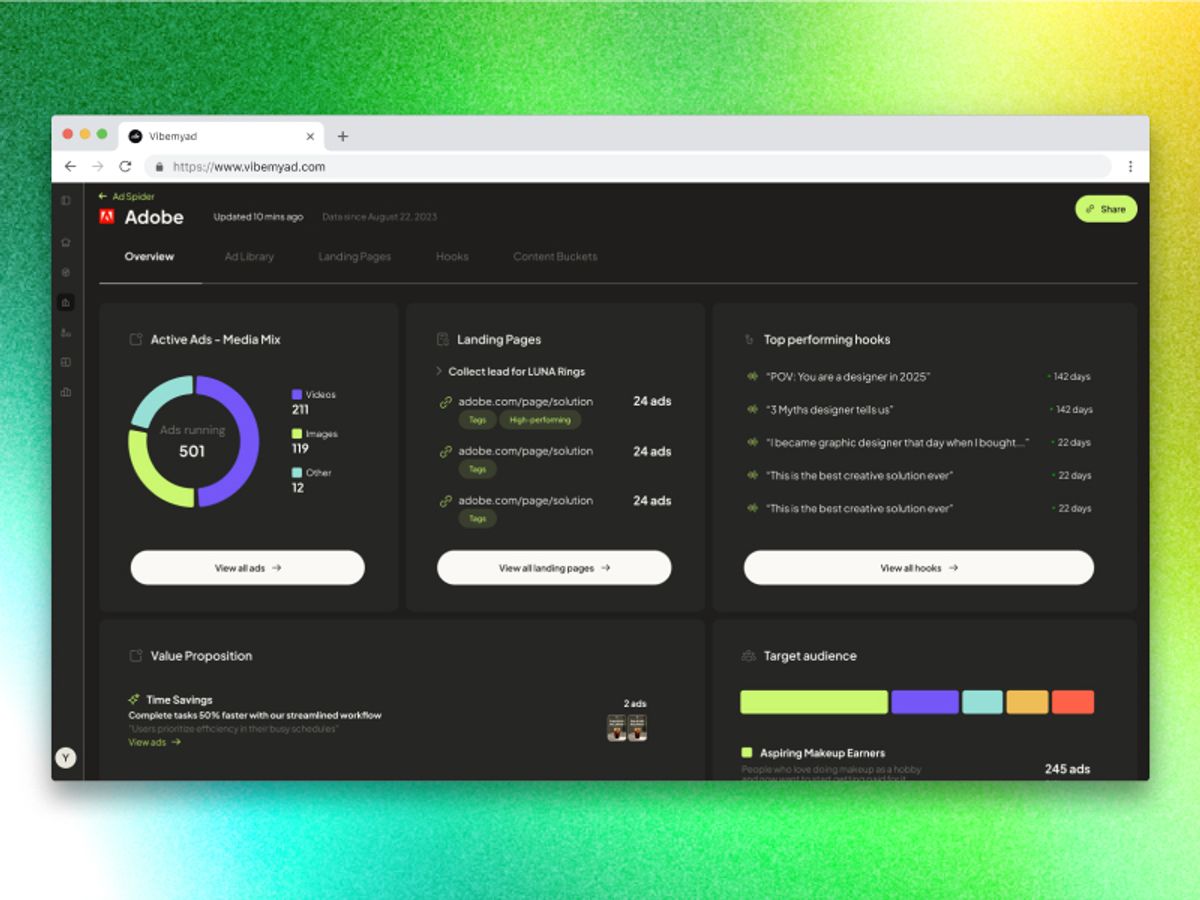
Vibemyad Ad Spider tracks up to 50 competitor brands simultaneously, capturing every new creative a tracked brand launches and every ad they pull down. It surfaces similar brands automatically as it maps your competitive landscape, so your tracking list becomes more accurate over time. This layer answers the question prompt-based tools cannot: which concepts have real budget behind them right now?
Vibemyad Ad Gen
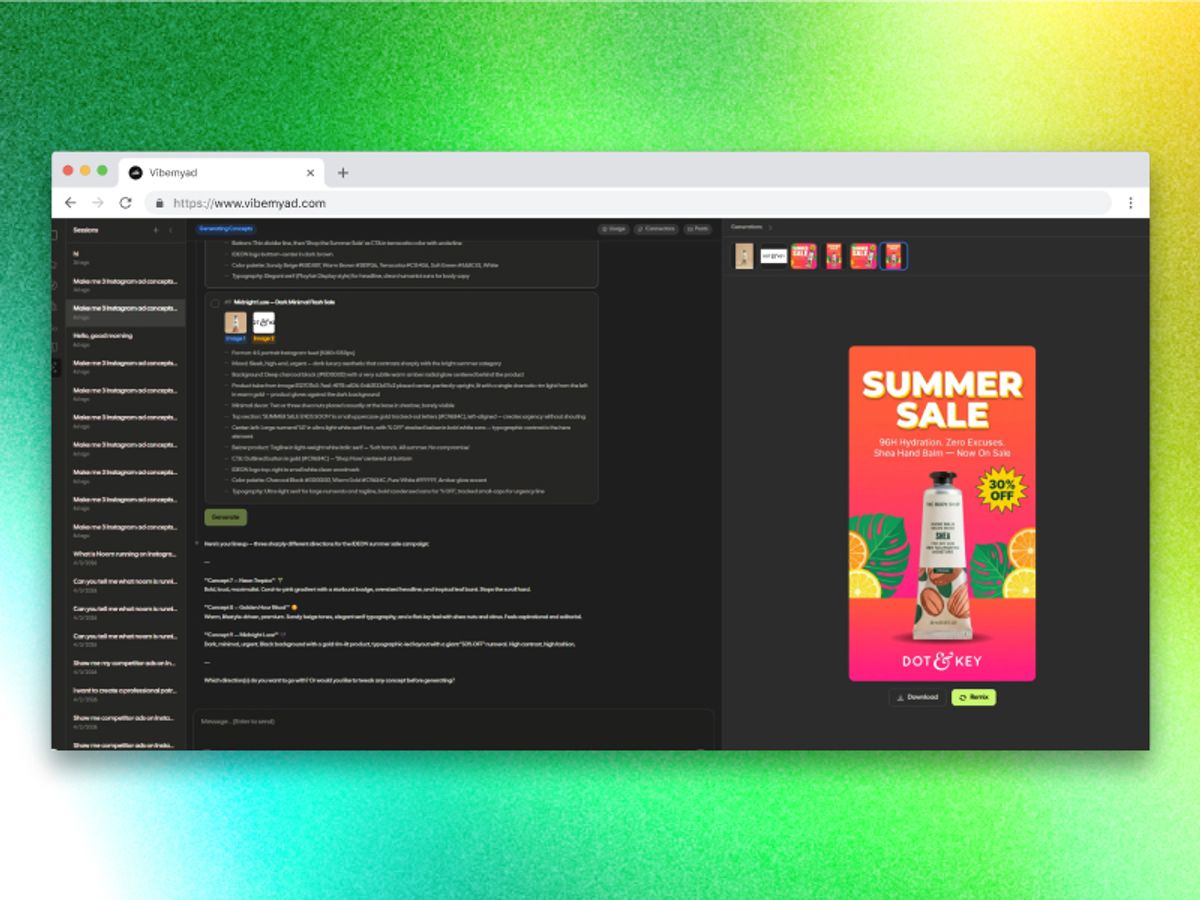
Vibemyad Ad Gen is where the intelligence built across the first two layers becomes production-ready creative. Ad Gen has turned agentic, rather than selecting from a preset menu of modes, you open a conversation with the Vibemyad Ad Gen agent and tell it what you want to build.
You can describe the format, point to the concept you validated in Vibemyad Ad Vault, explain your product and brand context, and the agent handles the creative production through that conversation. The brief and the build happen in the same place, without switching tools or translating research into a separate design brief.
For teams that need to move fast, the workflow is three steps.
Brand book inputs ensure every output uses your exact fonts, styling, and brand voice. The concepting phase is eliminated entirely because the concept was validated before the conversation started.
Adcreative.ai
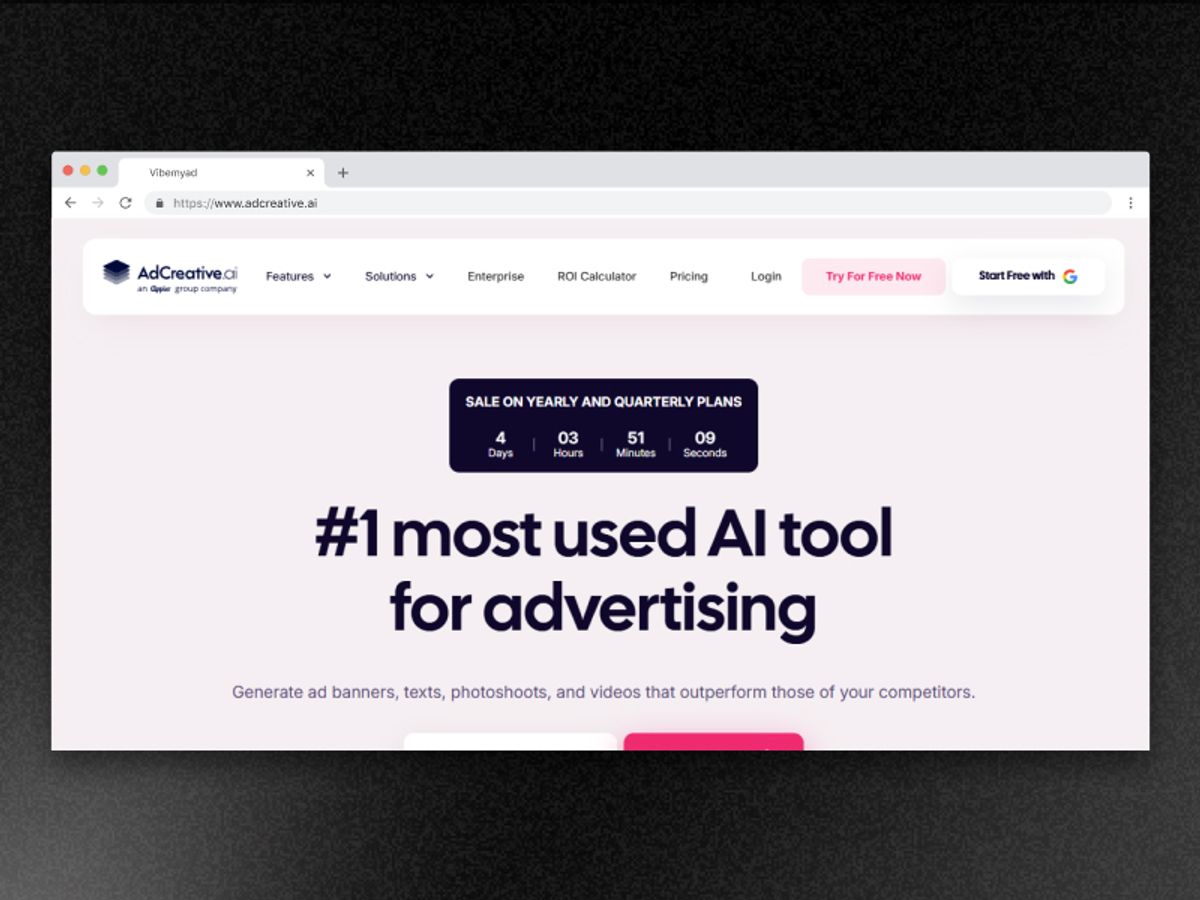
AdCreative.ai uses proprietary AI models trained on over $35 billion in ad spend data to generate high volumes of static ad variations, each scored with a conversion prediction before launch. It integrates directly with Meta Ads Manager and generates 100-plus static variations from a single product concept, covering different layouts, headline placements, colour schemes, and visual treatments simultaneously. The creative scoring system predicts which static designs will convert before you spend a dollar on media, helping you prioritise the strongest candidates for testing first.
The primary limitation is recency. Historical database intelligence tells you what worked before across other brands and other audiences — not what your competitors are actively sustaining spend on right now. In a market where creative trends shift on a four to six week cycle, the gap between what the database knows and what is winning today is the primary constraint on output quality. Best suited for D2C brands with a clear brief and a weekly static testing cadence that outpaces what a design team can produce.
AdStellar
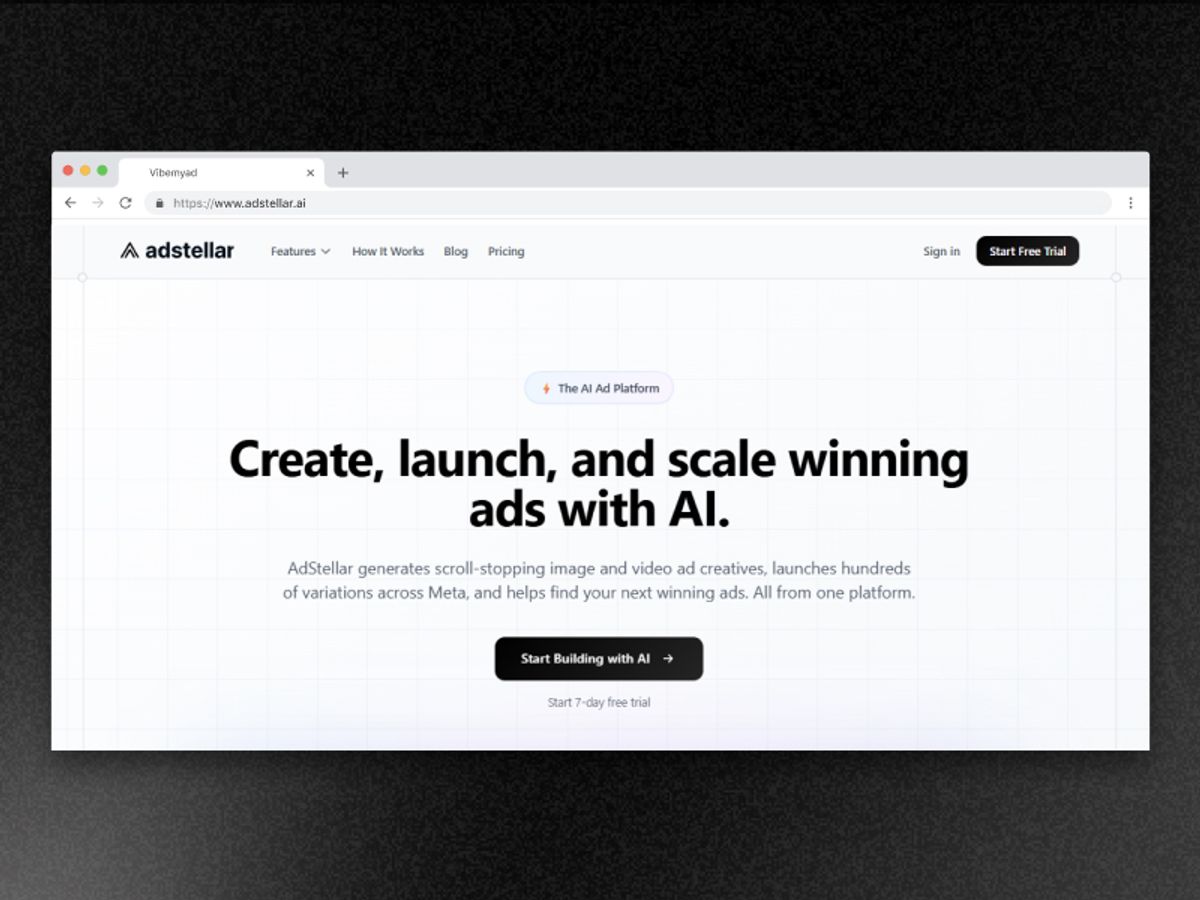
AdStellar connects static creative generation directly to Meta Ads Manager, eliminating the manual gap between approved creative and live campaign. It generates static ad variants, pushes them to campaigns, and surfaces optimisation recommendations from live data — all inside one platform. Best for D2C teams where static creative production is not the bottleneck but the operational cost of moving from approval to live campaign is.
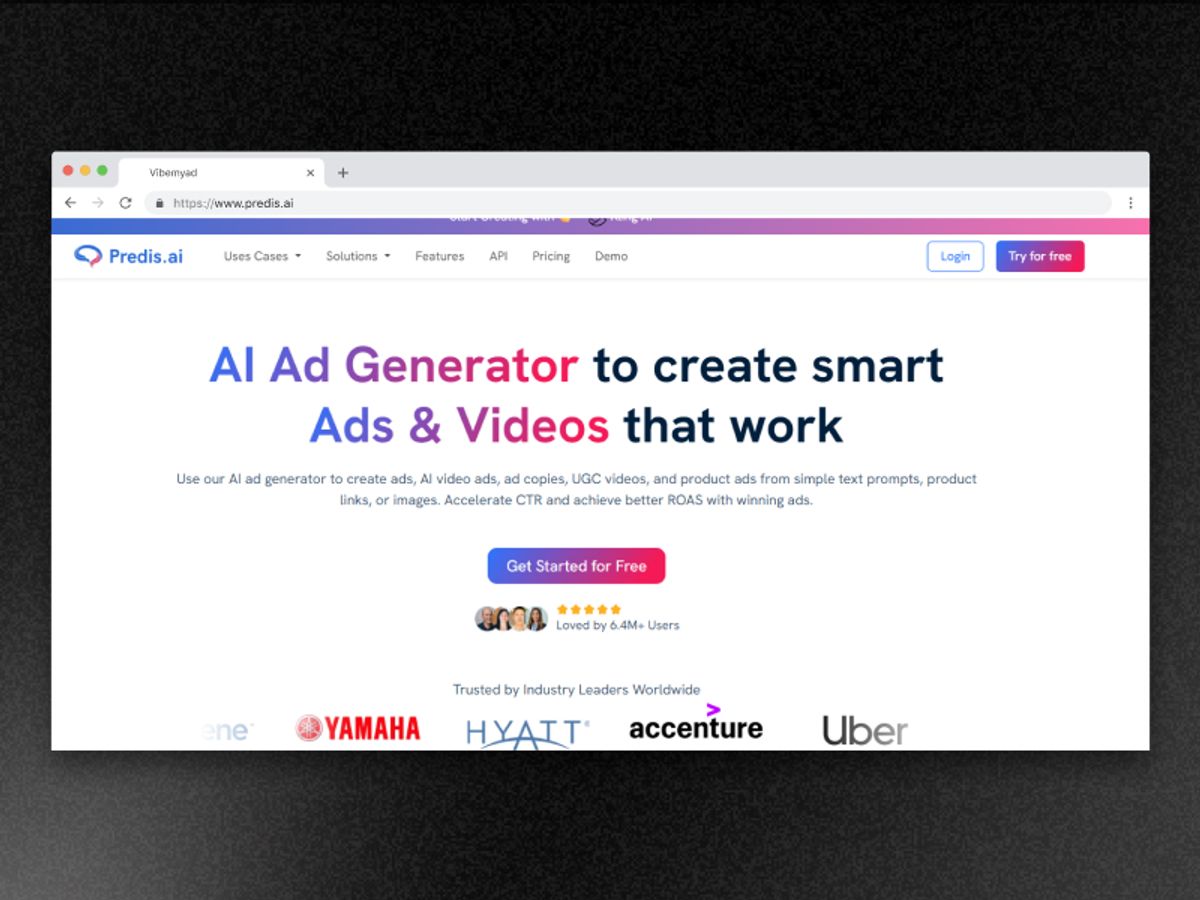
Predis.ai
Predis.ai produces both organic social posts and paid static ad creatives from the same platform, eliminating the need for two separate tools for small teams. It integrates directly with e-commerce catalogues and includes content scheduling. For D2C brands running static creative across both organic and paid channels, the unified workflow removes the brief duplication that slows small teams down. Best for small D2C teams where the social media manager also runs paid campaigns and context-switching between tools is the primary operational friction.
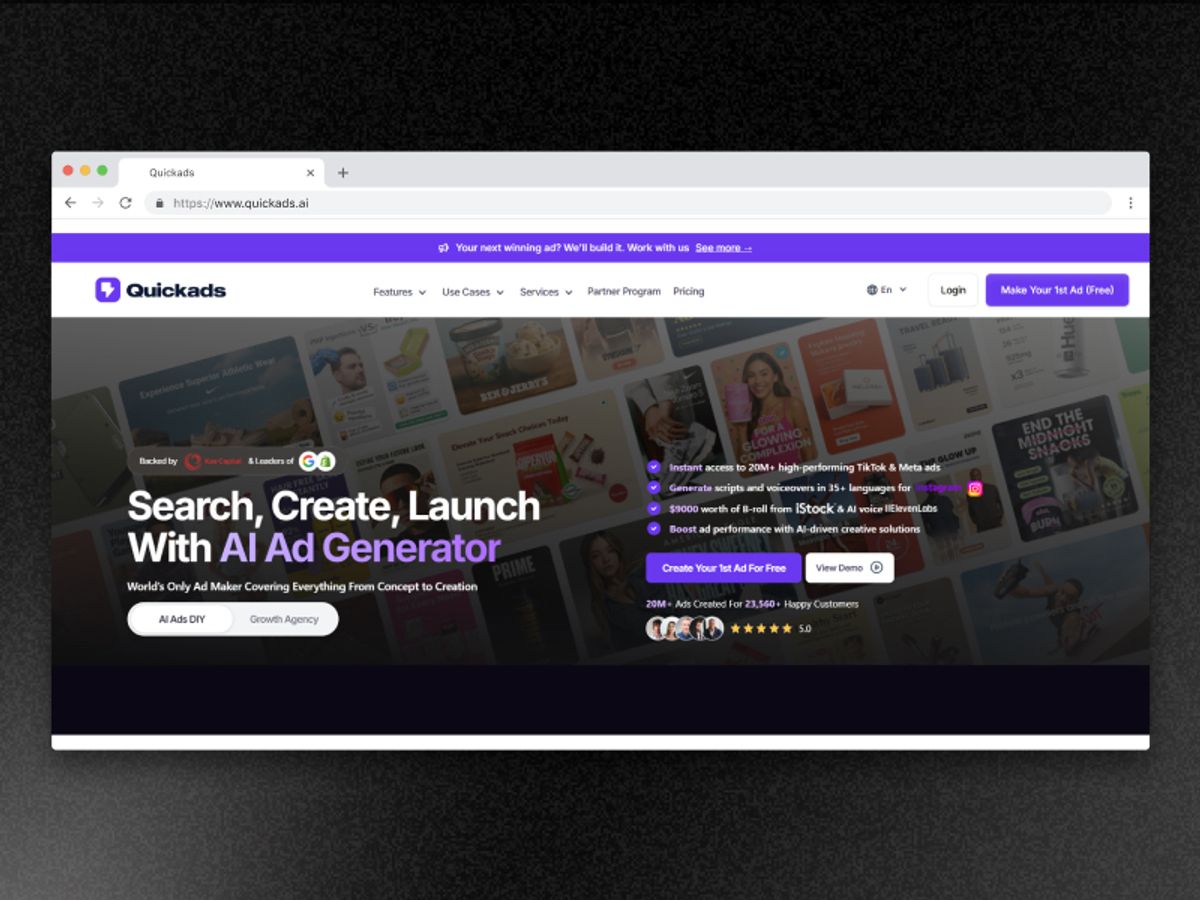
Quickads.ai
Upload one product photo and type a single sentence. Quickads.ai generates 30 different static and video variations instantly, with access to a 20 million-plus AI-scored ad inspiration library and support for 35-plus languages. The platform is built for raw generation speed across large product catalogues where volume matters more than creative depth.
The distinction that matters for intelligence-first teams: Quickads.ai generates from what you ask it to build, not from what the market has validated. Output quality is entirely dependent on the brief brought to it. Teams pairing it with upstream competitive research get considerably more out of it than teams using it as a starting point.
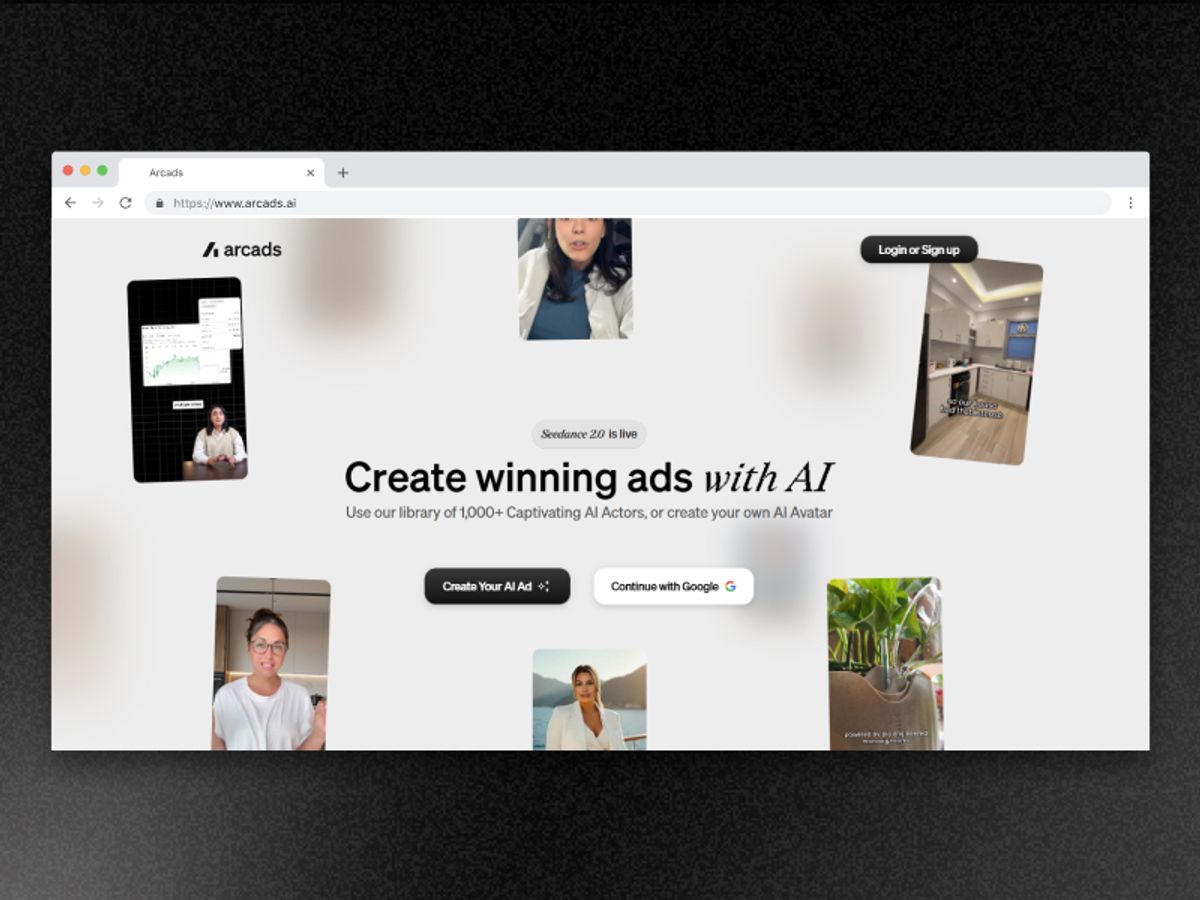
Arcads
Arcads offers a library of hyper-realistic AI avatars that deliver scripts with natural expressions, tone, and pacing. You can run the same script through 10, 20, or 50 different actors simultaneously, with support for 35-plus languages. Arcads is most valuable for D2C brands that already have a working static creative system and want to add UGC video as a supplementary format — not as a replacement for static intelligence.
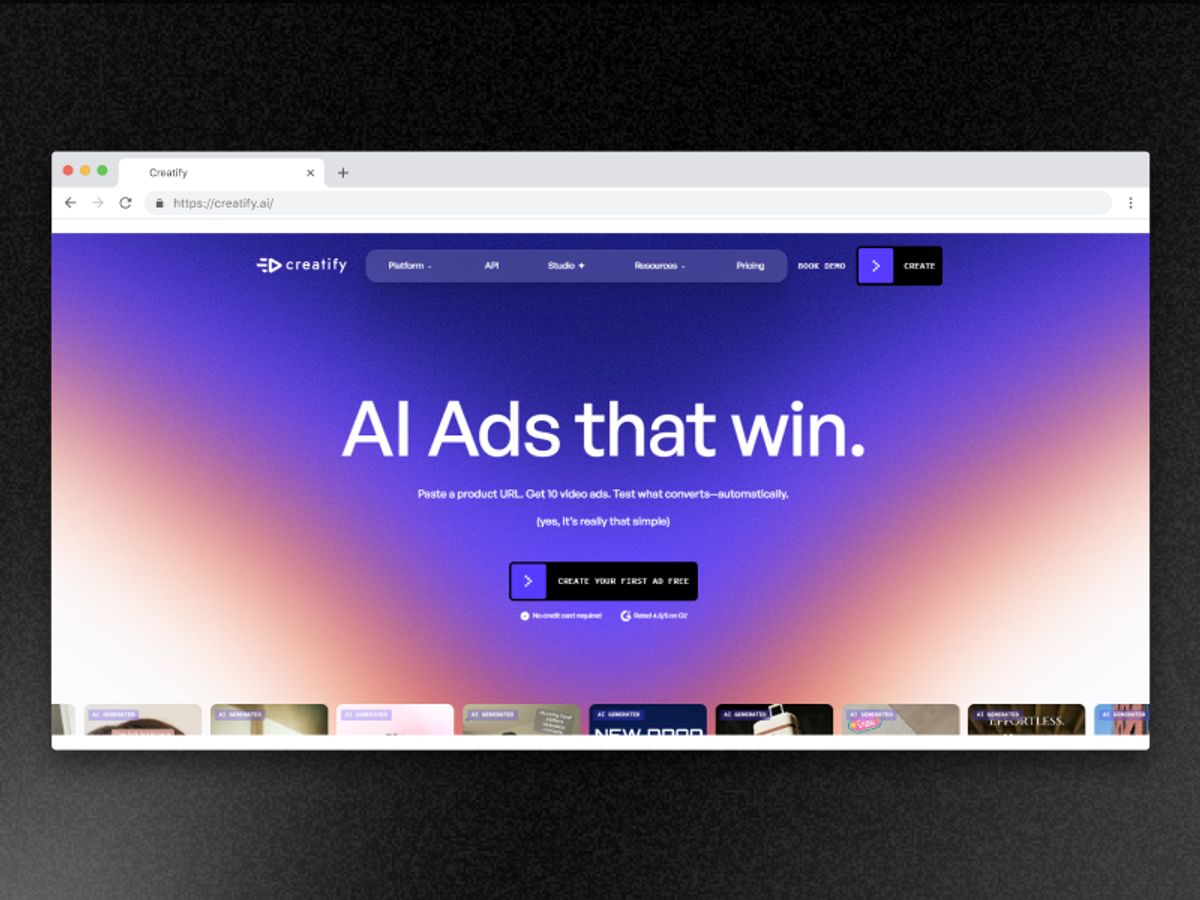
Creatify.ai
Creatify scrapes product images, text, and pricing from any Shopify or Amazon URL and generates 5 to 10 complete video ad variations with a built-in editor for music, captions, transitions, and B-roll. Most relevant for D2C brands with large catalogues that want to extend proven static concepts into video format after static testing has identified the winning angle.
The single most important question before selecting a tool is this: does your team know what to brief before it starts generating static creative? If hooks are based on instinct rather than data, the root cause is intelligence, not production speed. That question determines which category of tool you need before any specific product comparison is relevant.
If your brief is not grounded in validated market evidence, start with Vibemyad. Vibemyad Ad Vault and Vibemyad Ad Spider answer the intelligence question - which competitor static concepts have real budget behind them right now, which formats are sustaining past 30 and 60 days, and which hook structures are being scaled versus retired. Once that foundation exists, Vibemyad Ad Gen turns it into production-ready creative through a single conversation with the agent.
If your brief is solid and static production volume is the constraint, AdCreative.ai generates the most variations fastest with predictive scoring attached to each. If you need static and organic social media from one platform without switching tools, Predis.ai removes the context-switching cost for small teams. If raw generation speed across a large product catalogue is the priority, Quickads.ai delivers the most variants in the shortest time.
The most important thing to evaluate before committing to any tool is hook flexibility. The first frame of a Meta static ad determines whether it stops the scroll. Ensure your chosen tool lets you generate multiple hook variations independently - different opening lines, different psychological angles, different visual frames. Tools that only vary colour or layout will not give you the structural testing data that compounds over time.
Brand consistency is equally non-negotiable. The tool must accept your brand kit - logos, colour palettes, fonts - so that generated static ads do not look like generic stock templates. Direct Meta Ads Manager integration shortens the path from generation to live campaign significantly.
Most high-growth D2C brands on Meta in 2026 run two tools in combination. The most effective pairing is Vibemyad for the intelligence and generation layer combined with AdCreative.ai for high-volume scored static generation at testing velocity.
The tool is not the competitive advantage — the starting point is. The D2C brands achieving 4 to 6x ROAS on Meta are winning because they feed their tools validated competitor intelligence rather than internal guesswork. Vibemyad Ad Vault and Vibemyad Ad Spider exist to close that gap before Vibemyad Ad Gen produces a single static creative.
Vibemyad is the only tool where intelligence and generation are architecturally separated. Ad Vault identifies winning static ads by run duration across a continuously updated dynamic library. Ad Spider tracks what competitors are actively scaling across up to 50 brands simultaneously. Ad Gen turns that intelligence into a branded static creative through a conversation with the agent — no prompt, no blank brief, no separate design tool required.
Static images drive approximately 60 to 70 percent of conversions on Meta Social Media Examiner, making them the highest-value format to get right. Every D2C brand has access to the same generation tools. The ones that compound are the ones that start from validated market evidence — and that is the structural difference between a static creative process that gets better every week and one that stays expensive regardless of how much AI is added.
Your competitors are already telling you what works on Meta. Vibemyad helps you build from it.
Get notified when new insights, case studies, and trends go live — no clutter, just creativity.
Table of Contents


Arpita Mahato
Content Writer, Vibemyad

Arpita Mahato
Content Writer, Vibemyad

Arpita Mahato
Content Writer, Vibemyad