April 17, 2026 • 10 min read

April 17, 2026 • 10 min read
Your competitor launched 50 ad variants this week. They did not brief a designer. They did not write 50 prompts. They fed validated competitor intelligence into a generation pipeline and let it run. Here is how that works, which tools make it possible, and which one does it best.
Intelligence-first means the tool validates concepts before generating them, not after. The starting point is market evidence, not a prompt. Artificial intelligence is only useful as the data and structure you feed into it.
Most tools on the market today are prompt-based. You describe an audience, upload a product image, or write a brief, and the tool assembles variants from that input. Any intelligence involved comes after the creative is built, in the form of predictive scoring or A/B test results. You generate first and find out if the concept had merit later.
Intelligence-first tools invert that sequence. They start by identifying which competitor concepts have already been validated by sustained market spend, extract the structural patterns behind those concepts, and use that foundation as the creative input. Generation is the final step, not the first. This matters because it determines your failure rate before you spend a dollar on testing.
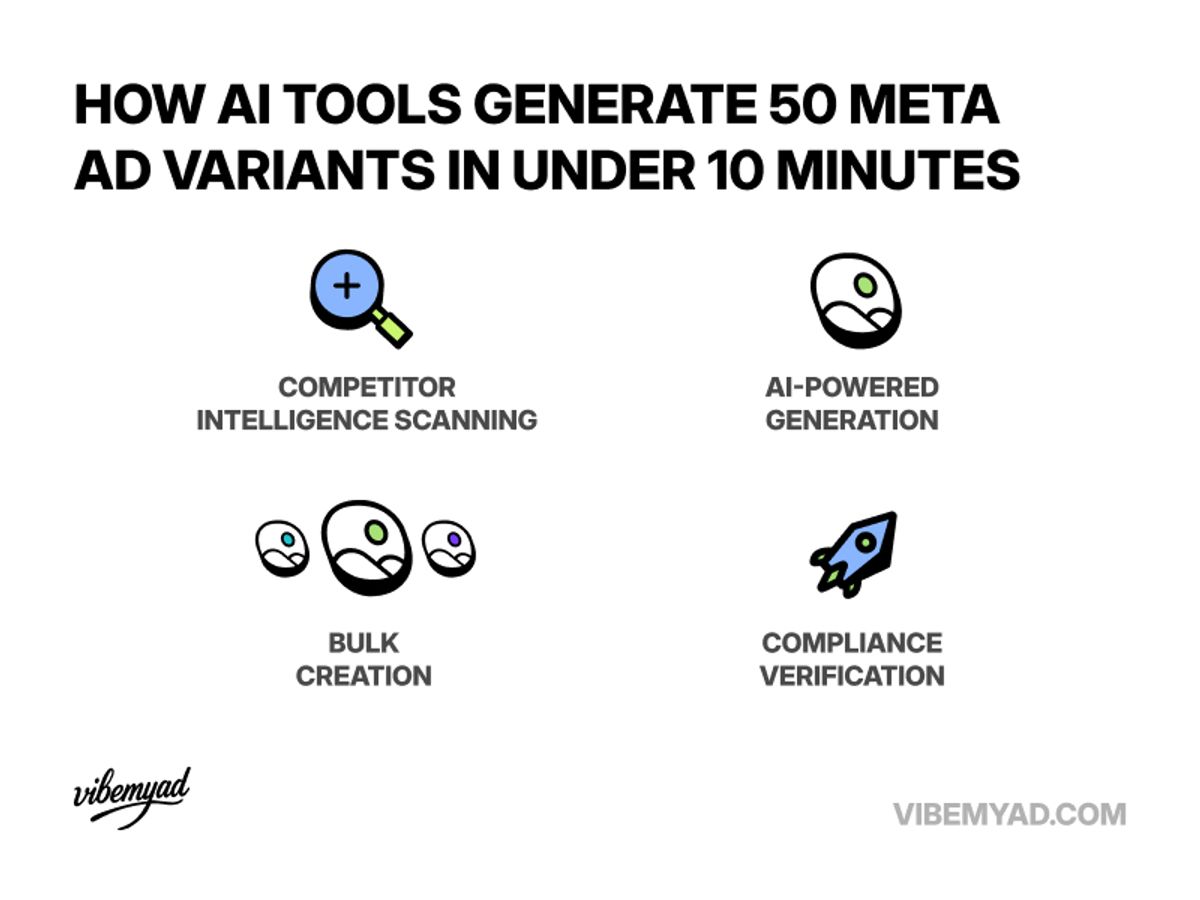
How AI Tools Generate 50 Meta Ad Variants in Under 10 Minutes
Competitor intelligence scanning: Pulls active ads from the Meta Ad Library and proprietary databases, identifying which creatives are currently running and, in the stronger tools, how long they have been running. Run duration is the key signal. An ad sustained for 60 or more days represents a deliberate spend decision, not an oversight.
The difference between tools is not in whether they follow this process. It is in how deep the intelligence layer goes before step two begins.
These five tools are ranked by intelligence depth: how much validated competitor data informs the creative before a single variant is built.
Vibemyad is the only platform in this category where intelligence and generation are architecturally separated into three dedicated layers, each doing one job before passing to the next.
Vibemyad Ad Vault
Vibemyad Ad Vault is a visual ad search engine with over 10 million ads pre-analysed by AI workflows. Run duration is surfaced upfront, which means you are not browsing a raw library. You are looking at a filtered view of what has sustained spend. An ad running for 90 days is an ad someone kept paying for. That is your validation signal before a brief is written.
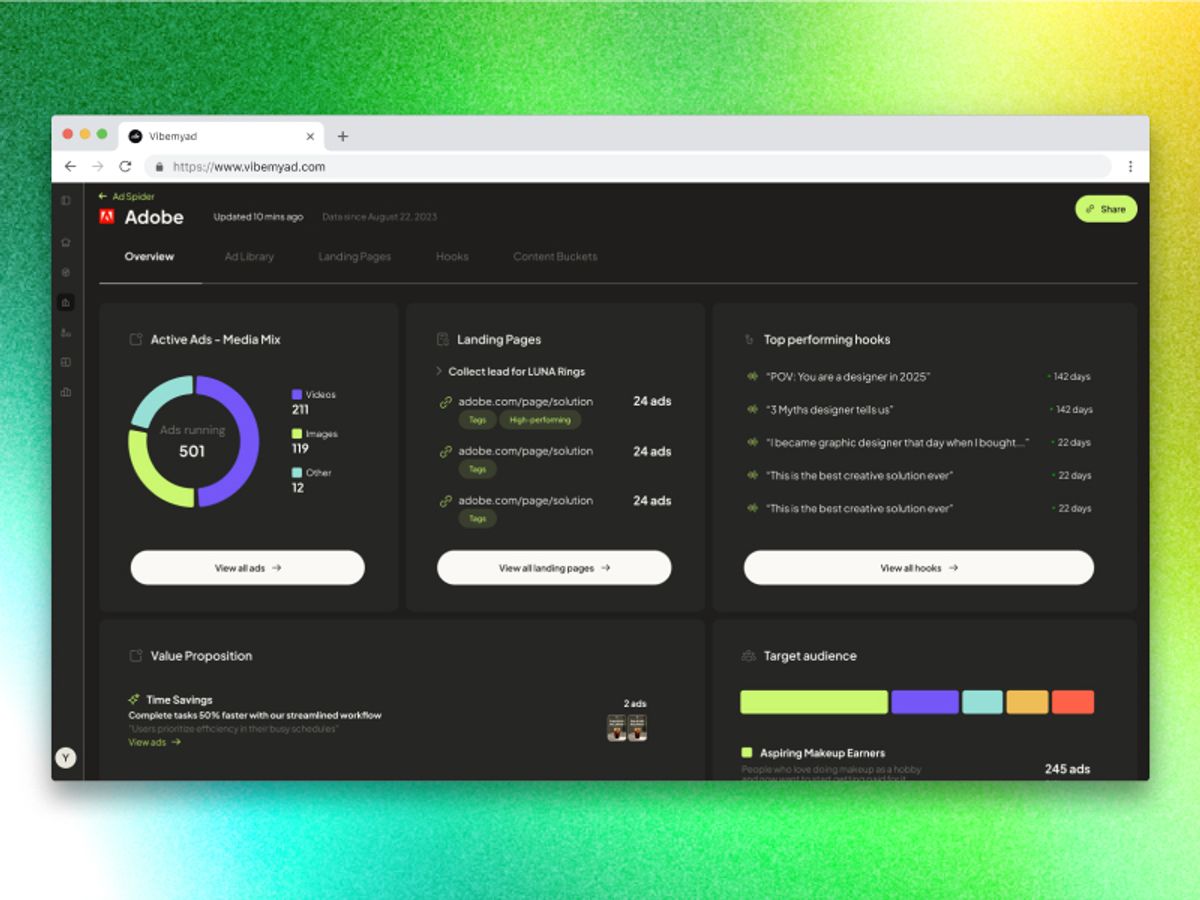
Vibemyad Ad Spider
Vibemyad Ad Spider tracks up to 50 competitor brands simultaneously, capturing every new creative a tracked brand launches and every ad they pull down. It surfaces similar brands automatically as it maps your competitive landscape, so your tracking list becomes more accurate over time. This layer answers the question prompt-based tools cannot: which concepts have real budget behind them right now?
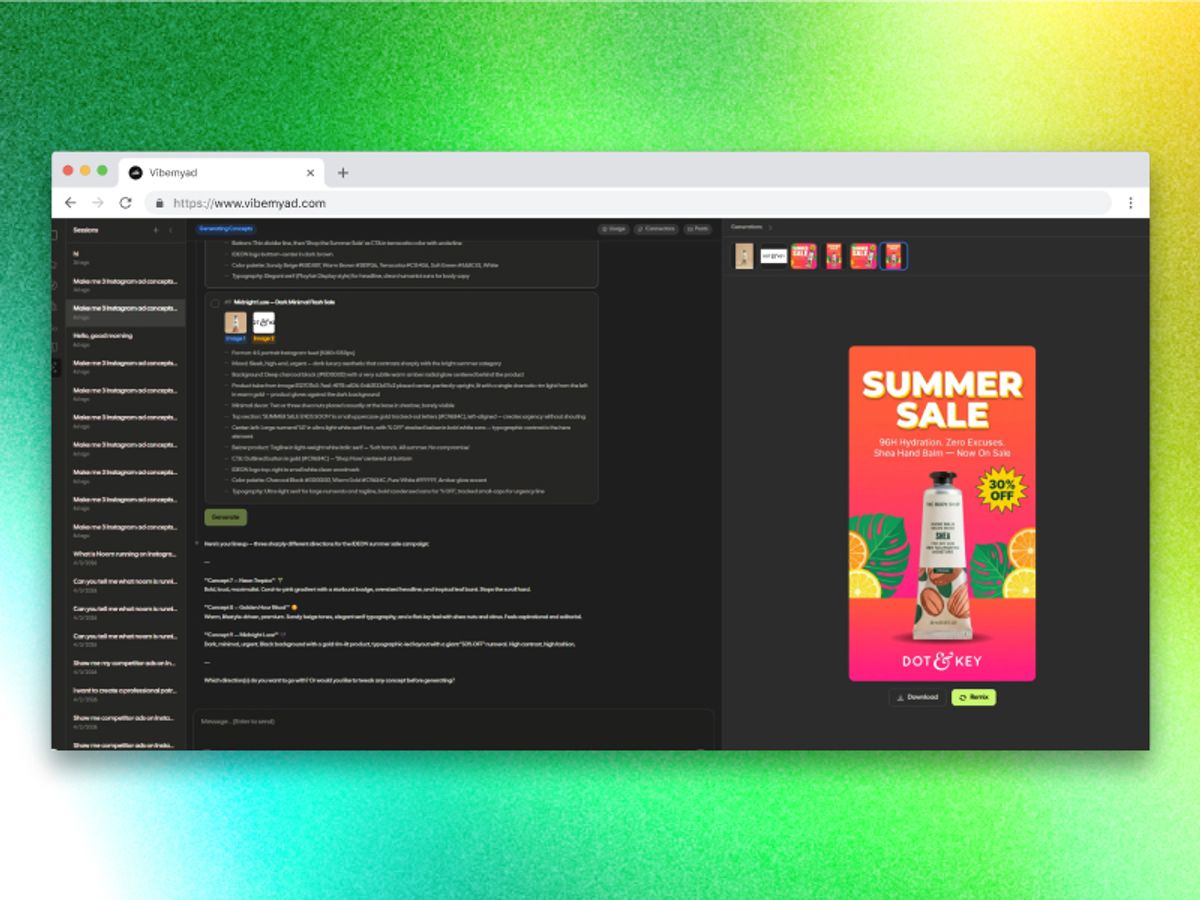
Vibemyad Ad Gen
Vibemyad Ad Gen is where the intelligence built across the first two layers becomes production-ready creative. Ad Gen has turned agentic, rather than selecting from a preset menu of modes, you open a conversation with the Vibemyad Ad Gen agent and tell it what you want to build.
You can describe the format, point to the concept you validated in Vibemyad Ad Vault, explain your product and brand context, and the agent handles the creative production through that conversation. The brief and the build happen in the same place, without switching tools or translating research into a separate design brief.
For teams that need to move fast, the workflow is three steps.
Brand book inputs ensure every output uses your exact fonts, styling, and brand voice. The concepting phase is eliminated entirely because the concept was validated before the conversation started.
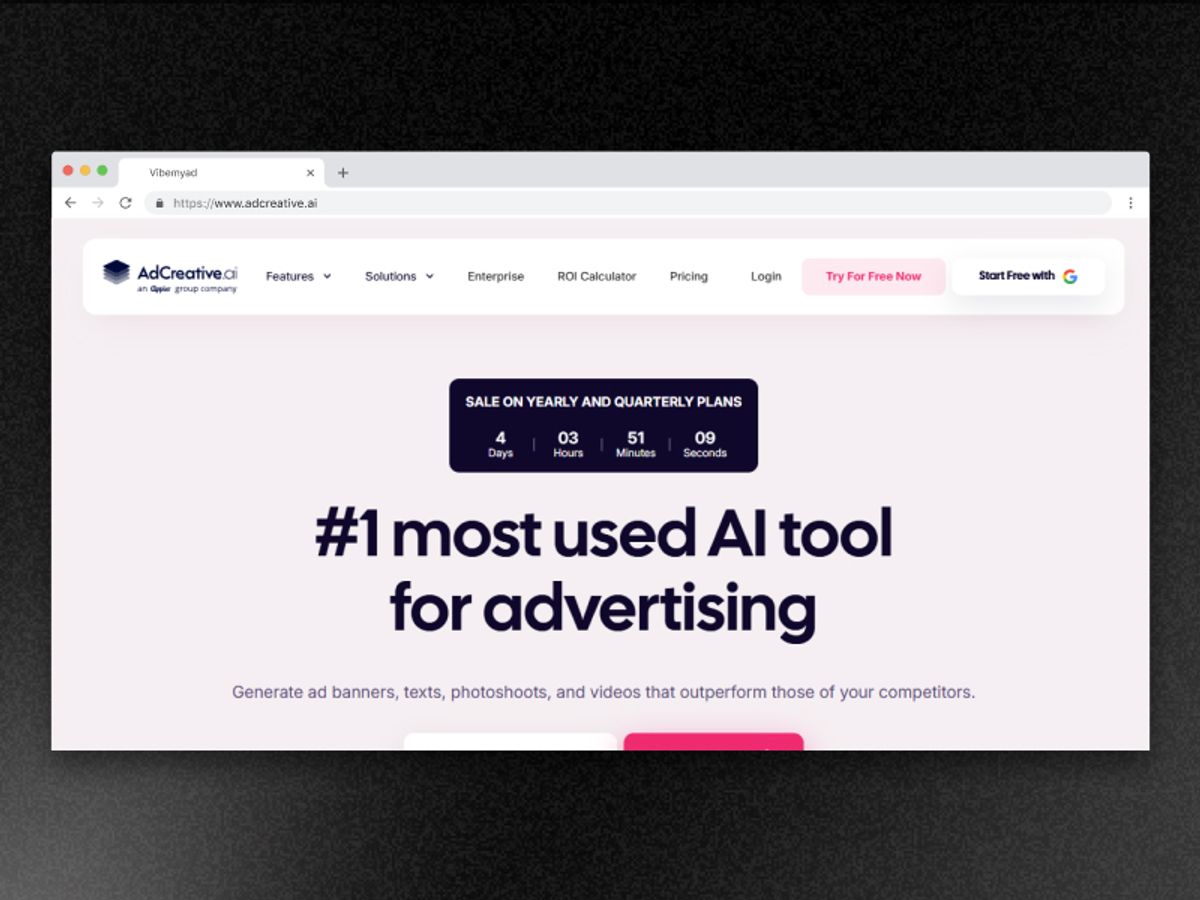
Adcreative.ai
What makes it different: Trained on millions of high-performing ad creatives with a conversion-focused engine that analyzes which layouts, colors, text placements, and fonts historically drive clicks and conversions.
The volume workflow:
The cross-match feature (unique advantage): Provide 5 headlines and 10 visual styles. The platform generates every combination = 50 unique ads, all branded consistently, all sized for every Meta placement.
Conversion scoring: Every creative receives a 0-100 score before launch. Test only the top-scoring 30%, cut testing waste by 70%.
When it wins: Aggressive testing phase (50+ concepts monthly), high testing budget, need predictive scoring before launch, value data-backed generation.
When it loses: Limited testing budget (can't afford 6-8% hit rates), highly specific brand visual identity, and needs competitive intelligence about what's working now.
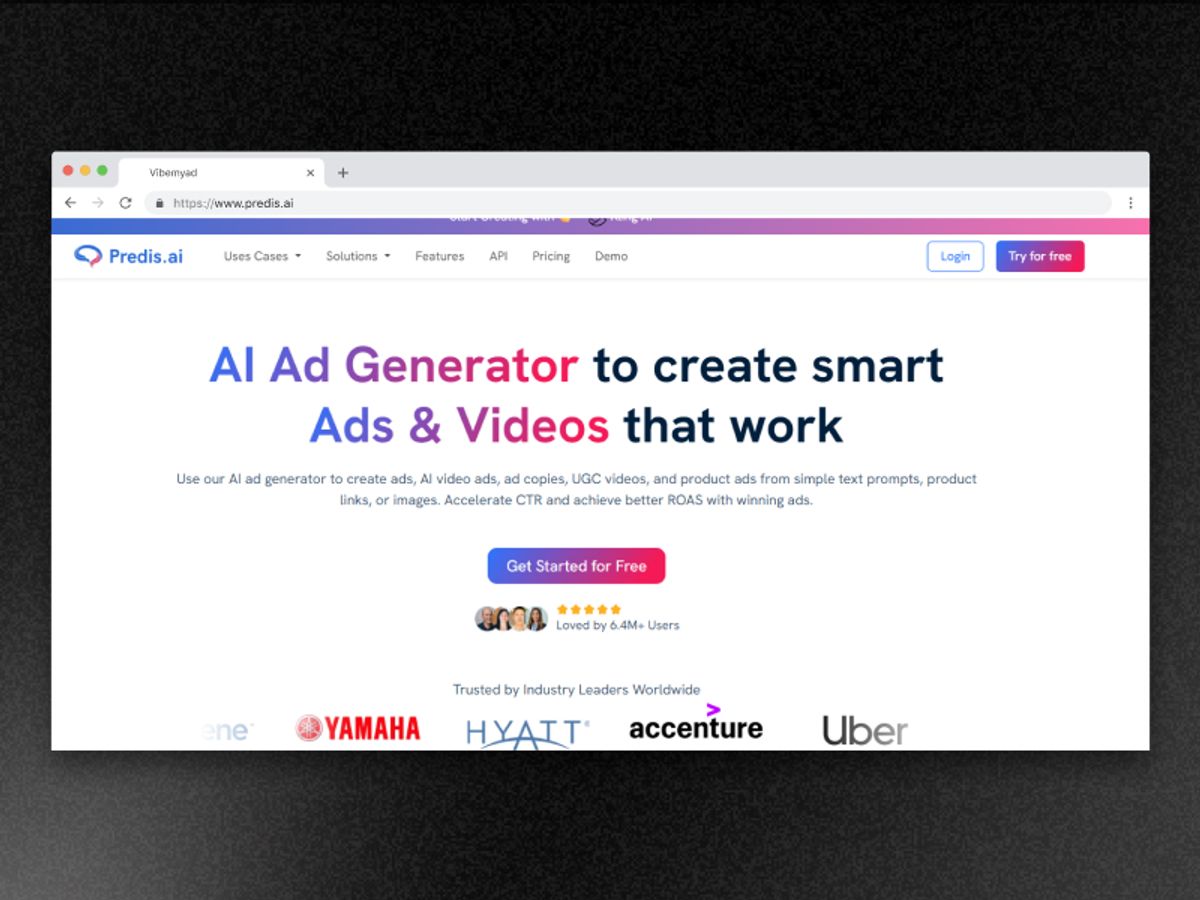
Predis.ai
What makes it different: Not trying to be the best ad generator, but trying to be the only tool small teams need for the entire social workflow.
The all-in-one consolidation:
The workflow:
When it wins: 2-3 person team managing paid ads and organic social, need one tool for everything, scheduling automation as important as creation, value consolidation over best-in-class.
When it loses: Performance marketer focused exclusively on paid acquisition, needs deeper competitive intelligence (60-day validation tracking), and a large team where different people handle different functions.
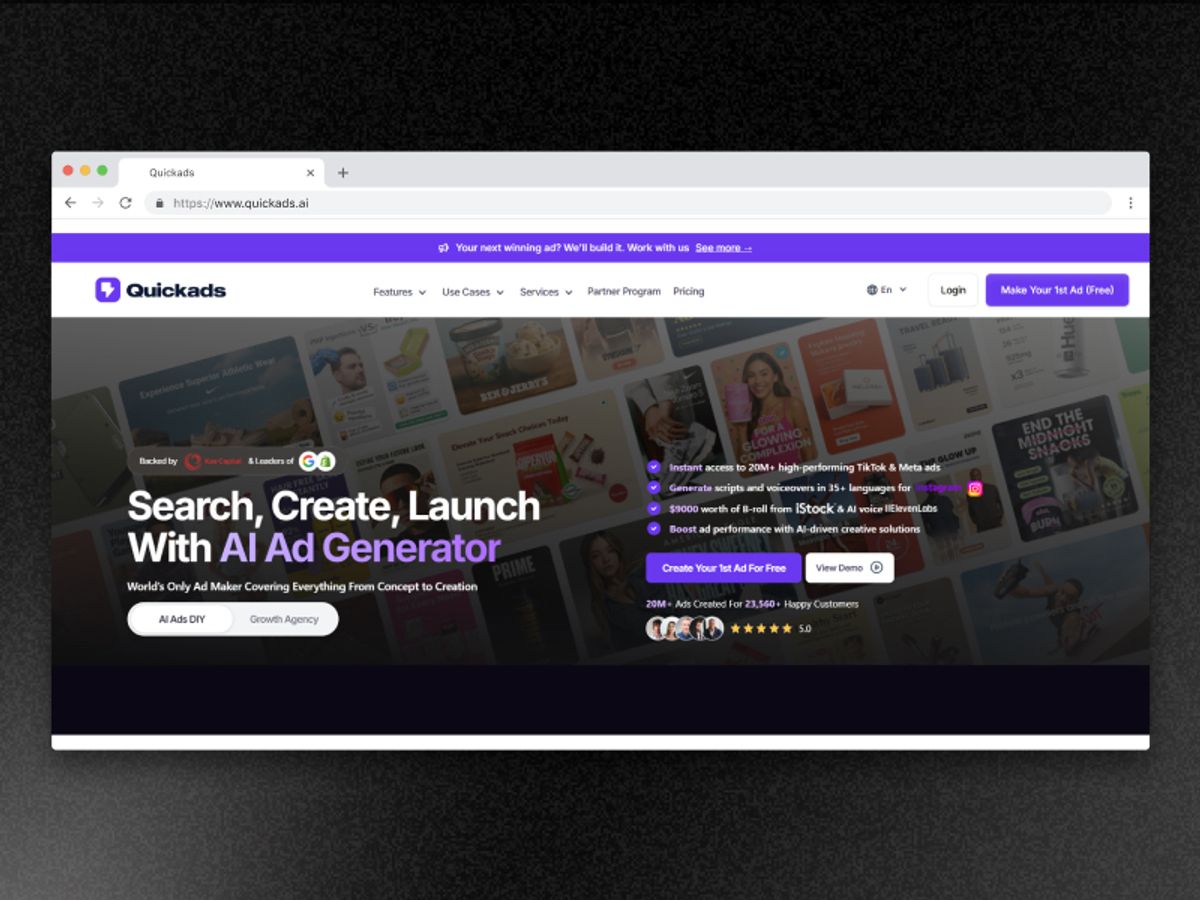
Quickads.ai
What makes it different: Speed matters more than sophistication. Generates studio-quality video and image ads in under 30 seconds from just a product URL.
The URL-to-ad workflow:
Virtual photoshoots (ROI advantage): Traditional product photography requires a studio, models, and a photographer ($5,000-$10,000). Quickads.ai generates professional-quality product photos for a fraction of that cost.
One-click ad cloning: Found 3 winning ads from 50 tests. Click winners, click "clone," get new variations with the same style but different copy angles.
20-million-ad library: Built-in competitive intelligence, search your category, see what's running, get inspired.
When it wins: Need ads today, testing many small concepts, product photography budget limited, simplicity over sophistication, launching new products frequently.
When it loses: Highly specific brand visual identity, need validation intelligence (60-day tracking), luxury category where "good in 30 seconds" underperforms "perfect in 3 weeks."
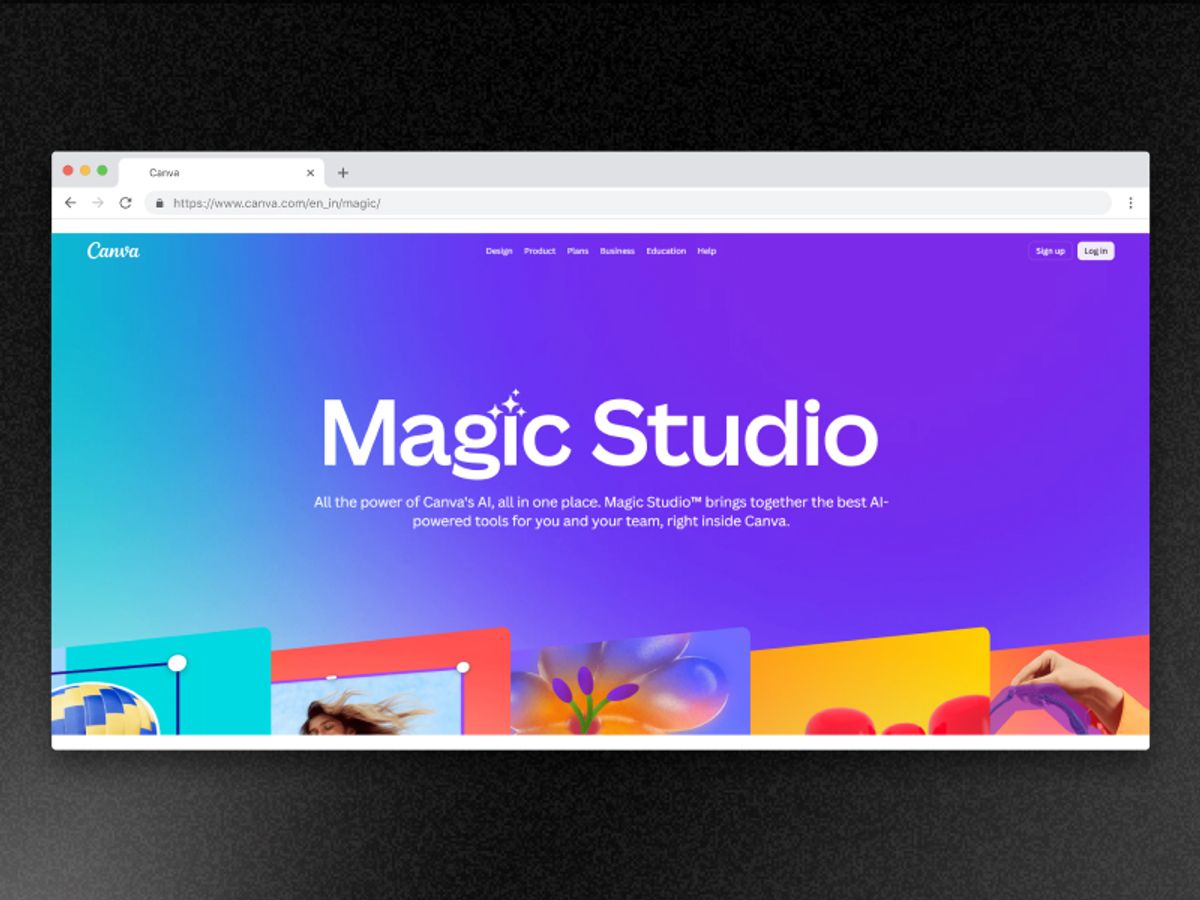
Canva Magic Studio
What makes it different: Not trying to replace the design workflow with AI, but trying to enhance the existing workflow. AI features are embedded into the design tool that 110 million people already use.
The familiar interface strategy:
How it works:
When it wins: Team already lives in Canva daily, wants AI assistance (not automation), design control matters more than speed, 5+ designers who value creative control.
When it loses: Need AI automation that handles volume (doesn't generate 50 variations in 60 seconds), need competitive intelligence, team doesn't use Canva, need speed more than control.
Because a lower failure rate on testing compounds across every campaign cycle, and intelligence depth is what drives failure rate down.
Get notified when new insights, case studies, and trends go live — no clutter, just creativity.
Table of Contents


Arpita Mahato
Content Writer, Vibemyad

Arpita Mahato
Content Writer, Vibemyad

Arpita Mahato
Content Writer, Vibemyad