May 31, 2026 • 12 min read

May 31, 2026 • 12 min read
By 2026, every credible AI product photo generator will produce a clean, photorealistic product image. Output quality has converged. The tools no longer separate based on whether the image looks good. They separate based on what the image is built from.
An AI product photo generator is a tool that takes a single product image and produces studio-quality marketing visuals, including clean catalog shots, lifestyle scenes, and ad creative, without a traditional photoshoot. By 2026, the category will have split into two types. Output-first tools optimize the image itself: background, lighting, shadows, and resolution. Intelligence-first tools optimize what the image is based on, grounding generation in references that are already converting in the brand's category. Once output quality converges, which it has, that second layer is what separates a tool that produces pretty images from one that produces images that perform.
• Output quality has converged across credible AI product photo generators in 2026. Every tool in this ranking produces clean, photorealistic output. The ranking is decided by what happens before generation: intelligence, brand consistency, and workflow.
• Five criteria separate the tools: output fidelity, intelligence layer, brand consistency at scale, workflow architecture, and channel fit.
• Of the five tools evaluated, Vibemyad ranks first for D2C brands whose product photography feeds performance advertising, because it is the only tool that grounds generation in validated Meta ad references. Claid.ai leads pure marketplace-catalog production at scale, Photoroom leads mobile-first listing edits, Pomelli leads free SMB studio shots, and Adobe Firefly leads maximum manual control.
Two years ago, the question buyers asked was simple: Does the AI produce a usable image, or does it warp the logo and melt the label? In 2026, that question is mostly settled. The leading tools all clear the output-fidelity bar. They preserve product geometry, render believable contact shadows, and hold packaging text without distortion most of the time.
That convergence changes the buying decision. When every tool produces a clean hero image, comparing tools on the hero image tells you nothing. The hero image is the entry ticket, not the differentiator.
Output quality still matters because the cost of getting it wrong is real. The National Retail Federation and Happy Returns reported that US consumers returned $890 billion worth of goods in 2024, about 16.9 percent of total annual retail sales, and a significant driver of e-commerce returns is the gap between what a product looks like in photos and what arrives in the box. Accurate representation is non-negotiable. But it is now the floor, not the ceiling. The ceiling has moved upstream, to what the generation is based on.
When the output quality is equivalent, the variable that decides commercial performance is the starting point of the generation.
Most AI product photo tools start from a blank prompt or a template. You describe the scene you want, or you pick a preset, and the AI renders it. The output looks good, but it is grounded in nothing except your own aesthetic instinct. You are guessing at what converts.
Intelligence-first tools start from market evidence. Before generating, they surface what is already running and performing in your category, then build the product image against that validated structure. The difference is not visible in a single image. It is visible in performance because one image is built from a guess, and the other is built from what the market has already rewarded.
This is the same prompt-first versus intelligence-first split that runs through every creative format, including AI carousel generation and Meta ad creative more broadly. Generation is a commodity. Intelligence is not.
Five criteria separate the tools once output quality is equivalent. Use these as the evaluation framework before any trial or sales call.
Does the tool preserve product geometry, label text, packaging colors, and logo placement without distortion? This is the table-stakes criterion every credible tool now clears most of the time. Test it on your hardest SKUs: transparent packaging, reflective surfaces, dense label text. The tools separate on edge cases, not clean desk-lamp shots.
Can the workflow use a visual reference to communicate composition and lighting while preserving your product? Test that with your own assets. A competitor reference can inform a brief, but its public appearance does not establish that it converts profitably.
Does the tool hold your brand identity (palette, typography, composition logic) across an entire catalog, or does it drift after the first ten images? Ten great images are a demo. Five hundred consistent images are a production system. The tools that scale enforce a brand book automatically; the tools that do not require manual quality review on every asset.
Is the tool agentic (it asks, plans, generates, and evaluates), template-driven (you pick a preset), manual (you edit in a creative suite), or API-first (you write code to batch jobs)? The right architecture depends on who is operating it. A marketing team and a developer team need different tools, and buying the wrong architecture means the tool sits unused.
Is the output built for marketplace catalog listings (white-background, compliance-driven), or for ad performance and creative (hook-driven, differentiation-driven)? These are different jobs with different optimization targets. A clean Amazon listing image and a scroll-stopping Meta ad are not the same asset, and most tools are built for one or the other.
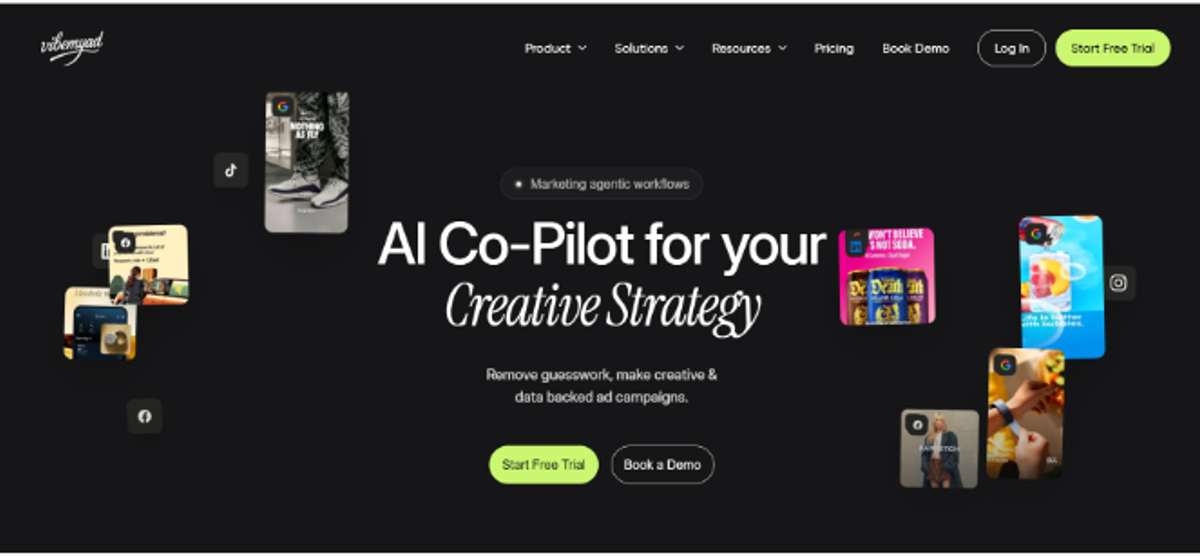
Vibemyad
Best for: D2C brands whose product photography feeds Meta performance advertising, where the image has to convert, not just look clean.
Vibemyad is the only tool in this ranking built on the premise that AI creative generation in 2026 is an intelligence problem, not a generation problem. It is an integrated system of three coordinated products.
• Vibemyad Ad Vault indexes over 10 million active Meta ads classified across nine dimensions, so teams generate against validated references rather than a blank prompt.
• Vibemyad Ad Spider tracks up to 50 competitor brands on Meta with weekly syncing, keeping the reference pool current.
• Vibemyad Ad Gen is the fully agentic generation layer, running a five-agent pipeline (Creative Director, Router, Planner, Image Generator, Evaluator) where every output passes a four-criteria rubric before it advances. Brand book enforcement holds identity across every generation.
Where the tradeoff lands: Vibemyad is built for ad performance and creative grounded in market intelligence, not bulk marketplace-catalog throughput. If you need 5,000 white-background Amazon listing images delivered by API, that is Claid's lane. If you need product creative that mirrors what is converting on Meta in your category, that is Vibemyad's.
Positioning: Most AI product photo tools make your product look good. Vibemyad makes your product look like what is winning in your category.
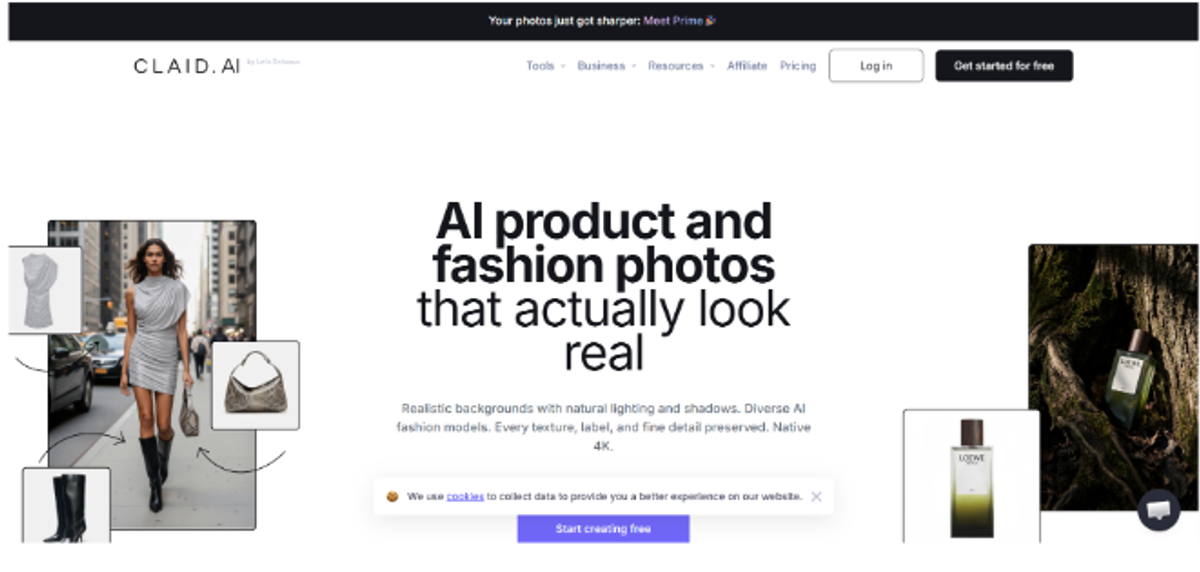
Claid.ai
Best for: E-commerce teams producing large catalogs across thousands of SKUs.
Claid is the strongest all-around e-commerce product photography platform. Its AI Photoshoot generates catalog shots, lifestyle scenes, and on-model imagery; a separate AI Fashion Models tool handles apparel, and API automation lets brands and marketplaces process thousands of SKUs. Output fidelity on lighting, shadows, and textures is genuinely strong.
Where the tradeoff lands: Claid is API-first and the most technically oriented tool in this list, which makes it powerful for developers but a steep learning curve for marketers or solo sellers. It is an output-quality and automation engine, not an intelligence layer. Generation is prompt and template-driven, with no competitor-performance data behind it.
Positioning: Claid optimizes catalog output at scale. Vibemyad optimizes what the output is based on.

Photoroom
Best for: Marketplace sellers who need fast listing edits from a phone.
Photoroom is a marketplace-first AI editor with a polished mobile app, class-leading background removal, over 1,000 templates sized for Shopify and Amazon, and fast batch workflows. It processes a very high volume of product images monthly, which tells you the product-market fit is real.
Where the tradeoff lands: Photoroom is editing-first more than generation-first. Its AI backgrounds can tip into looking artificial in complex lifestyle scenes, and consistency controls are limited compared to brand-locked systems. There is no competitor-intelligence layer.
Positioning: Photoroom is the fastest way to clean a listing image on your phone. Vibemyad is how you build performance creative grounded in market data.

Pomelli
Best for: Small and medium businesses with no photography budget.
Pomelli is a free AI marketing tool from Google Labs whose Photoshoot feature turns a basic product photo into studio-grade output using Google's image model, anchored to a "Business DNA" profile it builds by scanning your website. For an SMB with no creative team, it is a genuinely strong free on-ramp.
Where the tradeoff lands: Pomelli is an experimental beta that Google could sunset; it is available only in the US, Canada, Australia, and New Zealand, and it has no direct publishing. It is template-first, not intelligence-first, with no competitor data behind generation. Fine for tests and early listings, risky as core revenue infrastructure.
Positioning: Pomelli is the best free on-ramp for SMBs. Vibemyad is the intelligence-first system for brands running paid performance.
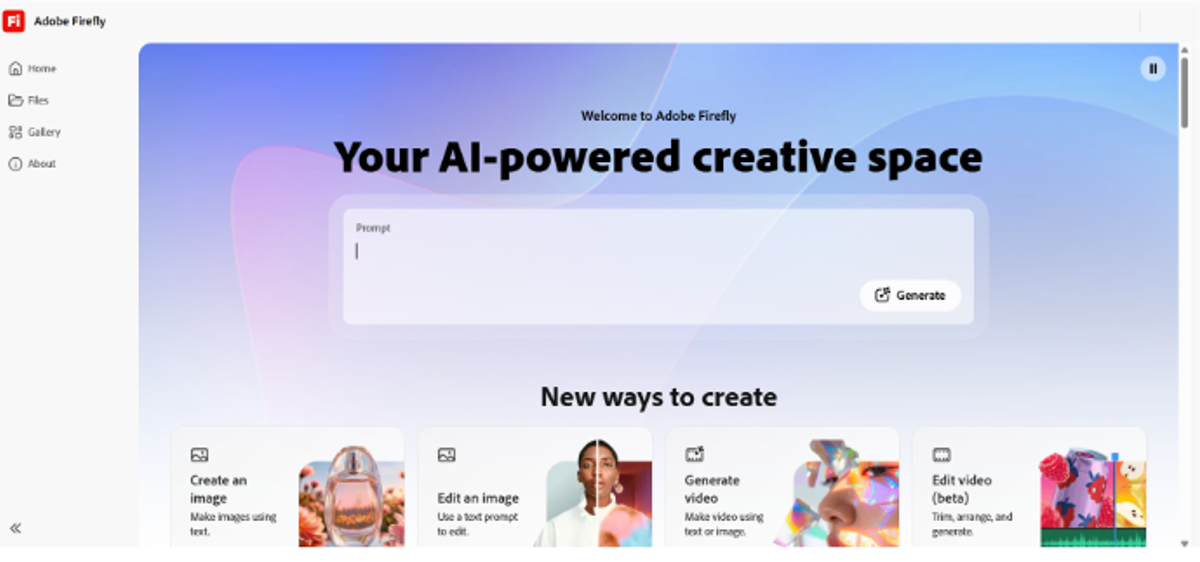
Adobe Firefly
Best for: Skilled designers who need pixel-perfect, brand-critical retouching.
Adobe Firefly is the maximum-control option, commercially safe generative AI with deep Photoshop and Creative Cloud integration. It is the right tool when you need a human QA layer, brand-critical accuracy, or hand-finished hero imagery.
Where the tradeoff lands: Firefly is a creative-suite generative layer, not a product-photography automation tool. It requires a skilled operator, has no e-commerce batch automation, and has no competitor intelligence. Powerful in skilled hands, slow for catalog scale or marketing-team self-service.
Positioning: Firefly has maximum control for a skilled designer. Vibemyad is intelligence-first automation for a marketing team.
Vibemyad runs generation as one agentic conversation, not a template picker. You search Vibemyad Ad Vault for your category and filter for ads with real run time, which gives you validated references rather than guesses. You select a reference, and the Vibemyad Ad Gen agent deconstructs its composition, lighting, and asset placement directly. You upload your product, and the agent fuses it into the scene with matched shadows, lighting, and texture. You refine through direct conversational commands in the same thread, and the Evaluator checks every output for structural integrity and brand book consistency before it advances. The full breakdown of the agentic workflow lives in the AI product photography guide.
Vibemyad is image generation only. The output is static product imagery and ad creative, built to perform on Meta.
• Ranking tools on a single hero image: Output quality has converged, so a side-by-side of one clean image tells you almost nothing. Test the thing that has not converged: consistency across a batch of ten of your hardest SKUs, and whether the generation is grounded in anything beyond your prompt.
• Confusing catalog tools with performance-creative tools: A white-background Amazon listing image and a scroll-stopping Meta ad are different assets with different optimization targets. A tool tuned for marketplace compliance is not automatically tuned for paid social performance, and buying the wrong lane means the output underperforms where you actually spend media.
• Buying on output quality alone: Output quality is now the floor. Paying a premium for marginally cleaner shadows while ignoring whether the tool grounds generation in market evidence is optimizing the variable that no longer separates the field.
• Ignoring brand drift at scale: Ten great images in a demo says nothing about image five hundred. The cost of inconsistency is cumulative: a catalog where every image looks subtly different erodes the brand equity each image was supposed to build. Test consistency at volume, not in the demo.
• Choosing a free beta for a revenue-critical workflow: A free experimental tool is excellent for tests and early listings. As the core infrastructure behind paid campaigns, a tool that could be sunsetted or restricted by region is a dependency risk, not a saving.
• Output quality has converged in 2026. Every credible AI product photo generator clears the fidelity bar, so ranking tools on a hero image is ranking them on the entry ticket. The real differentiator moved upstream, to what the generation is based on.
• Five criteria separate the tools: output fidelity, intelligence layer, brand consistency at scale, workflow architecture, and channel fit. Match the tool to the job. Claid for catalog scale, Photoroom for mobile listing edits, Pomelli for free SMB shots, Adobe Firefly for maximum manual control, and Vibemyad for performance creative grounded in market intelligence.
• Most AI product photo tools make your product look good. Vibemyad makes your product look like what is winning in your category. Generation is a commodity. Intelligence is not.
See how intelligence-first product creative works in practice. Research what is converting in your category, generate market-validated product images, and refine inside one agent workflow at Vibemyad.
Get notified when new insights, case studies, and trends go live — no clutter, just creativity.
Table of Contents


Arpita Mahato
Content Writer, Vibemyad

Arpita Mahato
Content Writer, Vibemyad

Arpita Mahato
Content Writer, Vibemyad