August 31, 2026 • 24 min read

August 31, 2026 • 24 min read
Google "best shopify marketing agency" today and the second organic result is not an agency. It is a Reddit thread in r/shopify titled "Legit (and affordable) Marketing?" Three slots later comes a Shopify Community thread whose author opens with "I am inundated with daily emails from businesses who promises to expand my current business by 3-5x." That is the market you are shopping in, and it is why this list is organized by specialty instead of ranked one to twelve. The best Shopify agency for a $40M home goods brand replatforming to Shopify Plus is a terrible answer for a $2M skincare brand that needs forty new ads a month.
• Twelve agencies, grouped by the one thing each is genuinely best at, with pricing model, Shopify partner tier and worst-fit client named for every entry.
• "Shopify Partner" on a website means very little. The Shopify Partner Directory invites Plus, Premier and Platinum tier partners plus a limited number of Registered-tier ones, and reaching Plus alone takes either $500,000 a year in referral and co-sell revenue or $2.5 million from existing merchants, plus deal minimums and ten Verified Skills across at least three employees, per Shopify's own Help Center.
• Only one of the twelve publishes a price. Uproer lists managed SEO from $5,000 a month on a twelve-month commitment. Everyone else makes you take a call.
• Merchants on Reddit consistently report $2,000 to $5,000 a month in retainers, or 10% to 25% of ad spend, and the loudest complaint is not price. It is that the senior who pitched the account disappears after the wire clears.
• Vibemyad, the Shopify marketing agency that publishes this list, sits at number two by specialty. We named the competitors we lose to and the brands we are wrong for, because a list that only flatters us is worth nothing to you.
Four filters, applied in order.
• Verifiable on their own site. Every client name, statistic and partner tier below was read on the agency's own pages, not pulled from a directory profile. Where a third-party listing contradicted the agency's own site, the agency won. Clutch lists Common Thread Collective in New York, for example, while the agency's own site gives a Costa Mesa, California address, so Costa Mesa is what you will read below.
• A real specialty, stated plainly. Every agency here would happily sell you six services. Each entry names the one they are actually known for. This matters more than it sounds: the most consistent advice in merchant threads is that specialists beat full-service generalists at this size, phrased on Reddit as preferring "small specialists who own one thing really well" over "'full service' teams trying to do everything."
• A number you can check. Eleven of the twelve publish at least one case-study figure with a client name attached. Where an agency publishes none, we say so rather than borrowing one.
• An honest bad fit. Every entry ends with who should look elsewhere. Six of these twelve buy no paid media at all. Six build nothing on Shopify. If nobody tells you that before the call, you find out in month two.
Numbers throughout are current as of August 2026. Where an agency was quiet about pricing, we wrote "not published" instead of guessing.
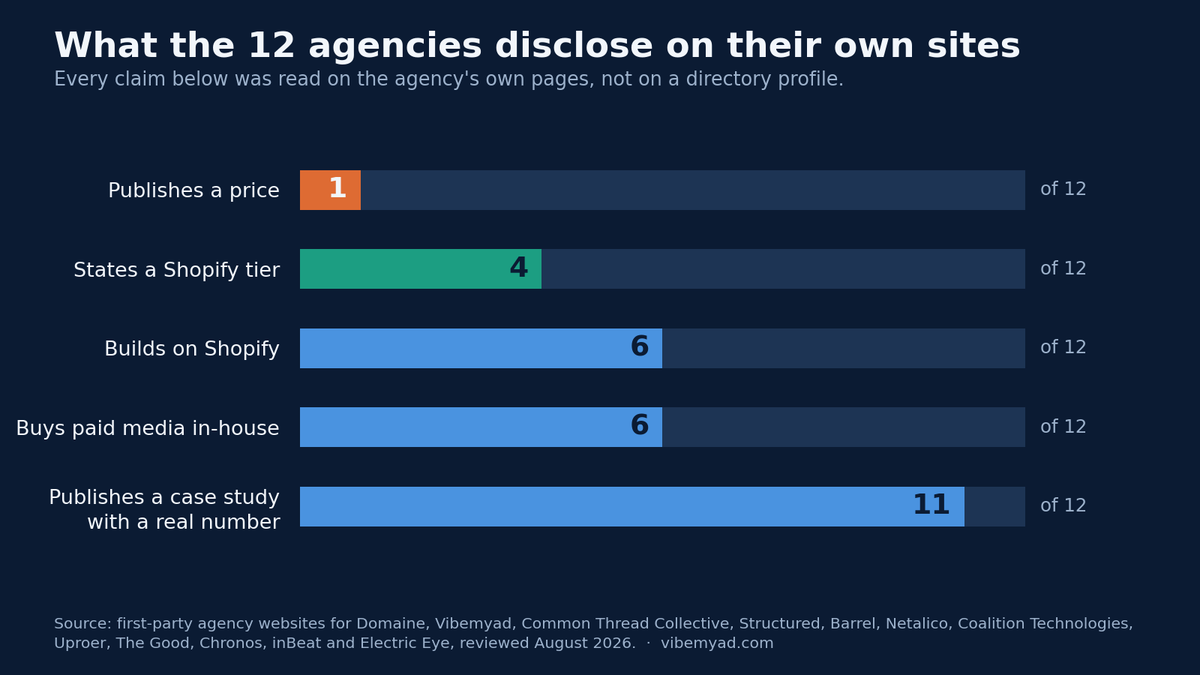
Only one of the twelve publishes a rate, and only four state a Shopify directory tier on their own website.
The "Shopify tier stated" column is doing real work. Four of the twelve state a directory tier on their own website. The rest either show a generic partner badge with no tier language or make no Shopify partner claim at all, which is perfectly fine for a media or SEO shop and misleading only if a sales deck implies otherwise.
Domaine
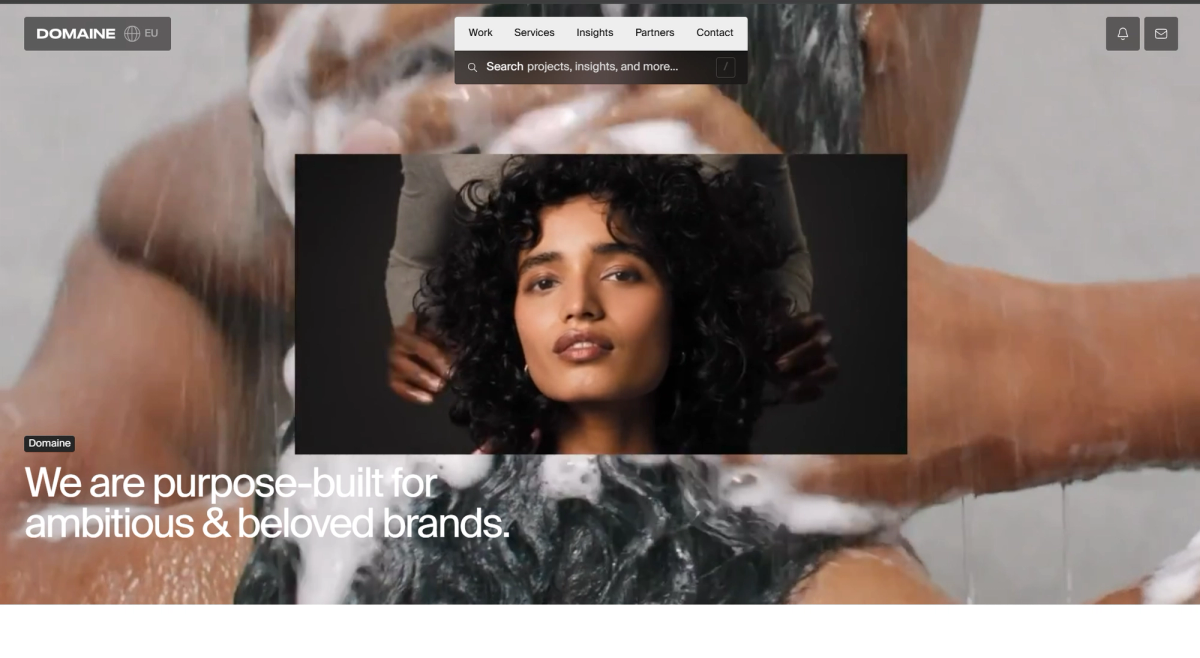
Domaine is the default answer when a large brand needs to move onto Shopify Plus or rebuild what it already has. Its own homepage claims 750 Shopify sites launched, 150 migrations to Shopify, more than $5 billion in portfolio GMV and over 300 full-time staff, and its client wall carries Timex, Olaplex, Peloton, FIGS, Arhaus, Milk Makeup, Mejuri, Daily Harvest and Nobull. It calls itself a Shopify Platinum Partner, the top service tier.
The proof is build-shaped rather than media-shaped. Domaine's Arhaus case study reports a 24% lift in average order value, and its Olaplex work is credited with a 31% conversion increase and a 51% cut in largest contentful paint. The company was formed in September 2023 by the merger of Tomorrow and Half Helix, backed by BV Investment Partners, and has since absorbed the European engineering shop Code.
One caution before you shortlist them. Note the URL: domaine.co is a parked domain sale page, and the agency lives at domaineworldwide.com. Their marketing practice is retention only, covering lifecycle, email, SMS and CRM. There is no paid social or paid search buying in the service list, so a growing brand that needs someone in Meta Ads Manager on Monday should pair them with a media partner or look further down this list. Smaller merchants get routed to a separate Studio offering.
Vibemyad
Full disclosure: Vibemyad publishes this blog. We put ourselves at number two rather than number one because Domaine serves a scale of brand we do not, and because a self-serving list would not survive a second read.
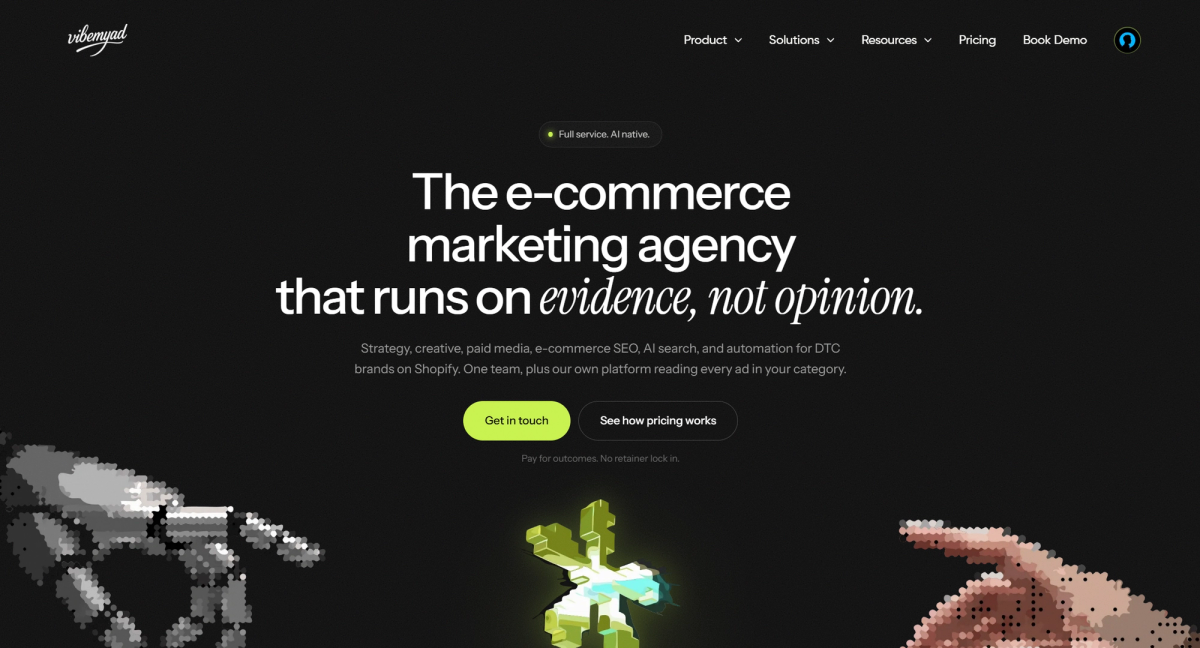
Vibemyad is an AI marketing agency built for DTC brands in beauty, fashion, food and beverage and wellness, most of them on Shopify. The difference from the other names here is structural. Most agencies rent AI tools. Vibemyad runs its own platform, which reads every ad running in a category in real time and classifies competitor creative by hook, format and funnel stage. That market read feeds the creative engine, and the same connected system runs through strategy, creative, paid media on Meta and Google, e-commerce SEO and AI search, and site and landing page work. AI does the heavy lifting. Humans decide what to act on, which is the part that never gets automated.
Two things make the commercial model different. Pricing is outcome-based, with no retainer and no long-term contract, so the fee tracks the value of the work rather than the size of the team. And the start is fast: BestLanding had ads live in four days and saw conversions rise 28%, and Noise now receives more finished creative in a week than its in-house studio produced in a month.
Wrong fit if you want a named account team on a fixed monthly retainer, a Shopify Plus replatform, or an enterprise procurement process. Those are reasonable things to want and they are not how we work.
Common Thread Collective
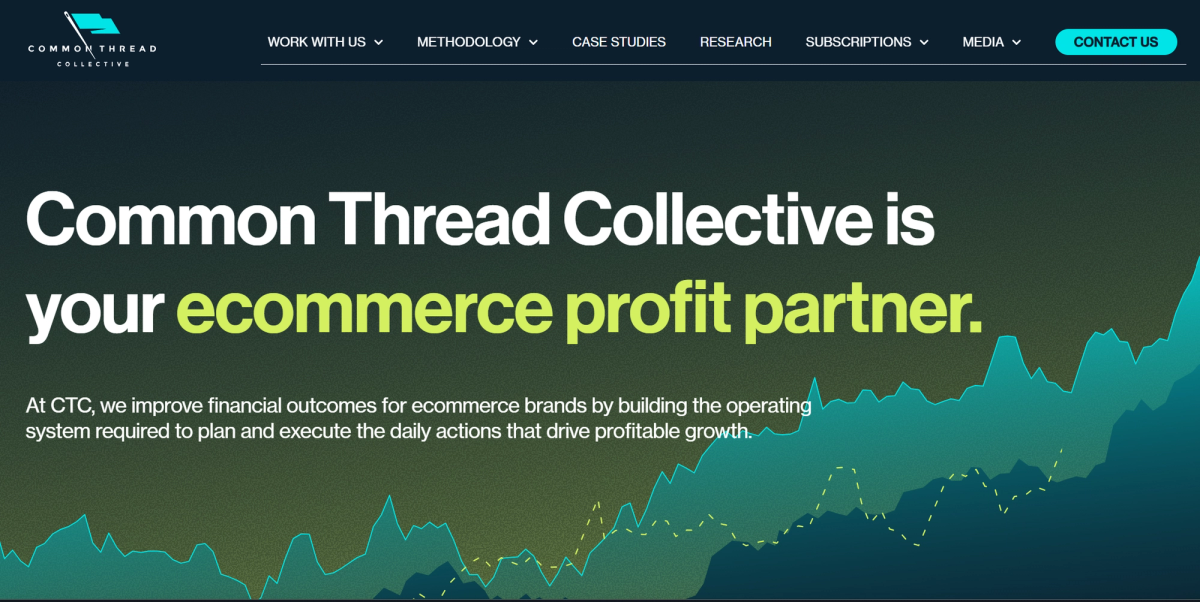
Common Thread Collective sells to a P&L, not to a ROAS screenshot. The Costa Mesa agency built its practice around forecasting: it commits to a revenue and contribution-margin target and reports landing within 3% of forecast, claims to have engineered $3 billion in profitable growth, and works with Theragun, Liquid Death, Native, Girlfriend Collective, ColourPop, Igloo, Quay and Born Primitive.
The numbers are unusually specific for this category. Its Igloo Coolers study reports 4.6x year-over-year online growth as the brand expanded from legacy retail into DTC, and its Born Primitive study cites average quarterly sales growth of 882.11% alongside 30% year-to-date margins.
CTC states no Shopify partner tier and does no Shopify development, so this is a media, creative and forecasting partner, not a build partner. Its own contact page targets seven to nine figure e-commerce brands, so if you are doing $50,000 a month, this is not yet your agency.
Structured
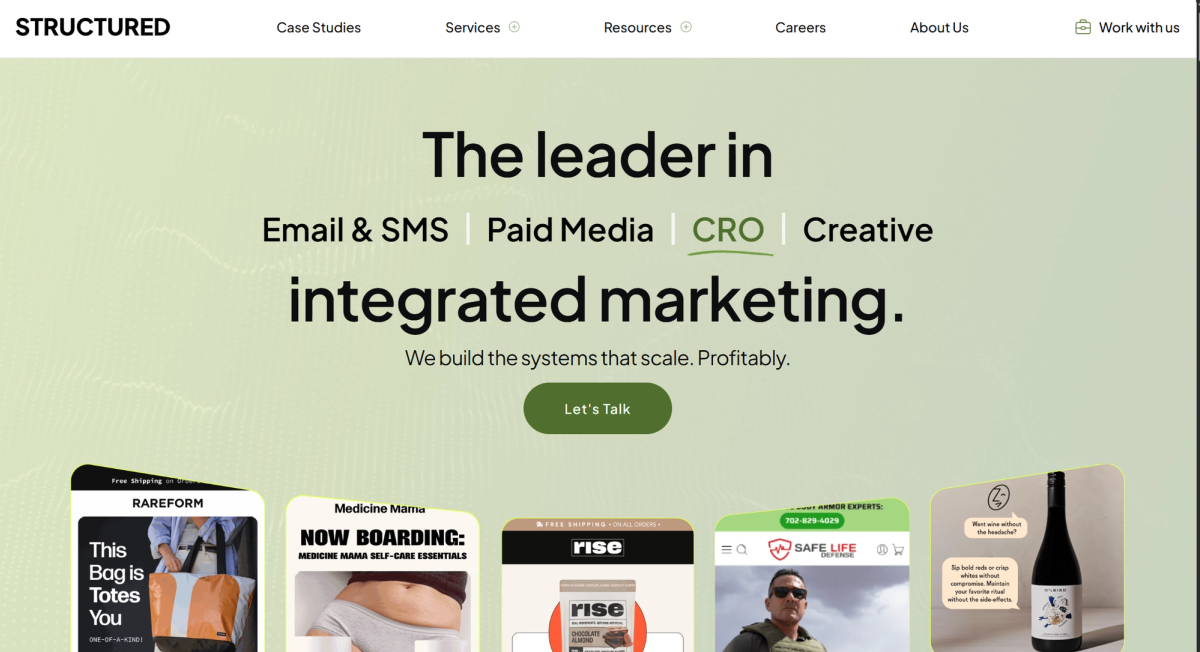
Structured, co-founded by Chase Dimond and Nick Shackelford, exists to make paid social creative cheap to test and fast to iterate. The client list reads like a DTC who's-who: Dollar Shave Club, True Classic, Vessi, Posh Peanut, Poo-Pourri, HigherDOSE and Jennifer Fisher Jewelry across roughly thirty published studies.
The headline result is a CAC story rather than a ROAS story. Structured's Dollar Shave Club USA work is published as a 57% drop in subscription CAC through buy-box optimization, with a 68% reduction in blended CAC on the same page. It reports a 95% brand retention rate and two to three weeks to onboard.
Two caveats worth knowing before the call. Structured publishes no office address on its own site, and it makes no Shopify partner claim anywhere, because it does no Shopify development. If you need a store built or a theme rebuilt, that is a second vendor.
Barrel
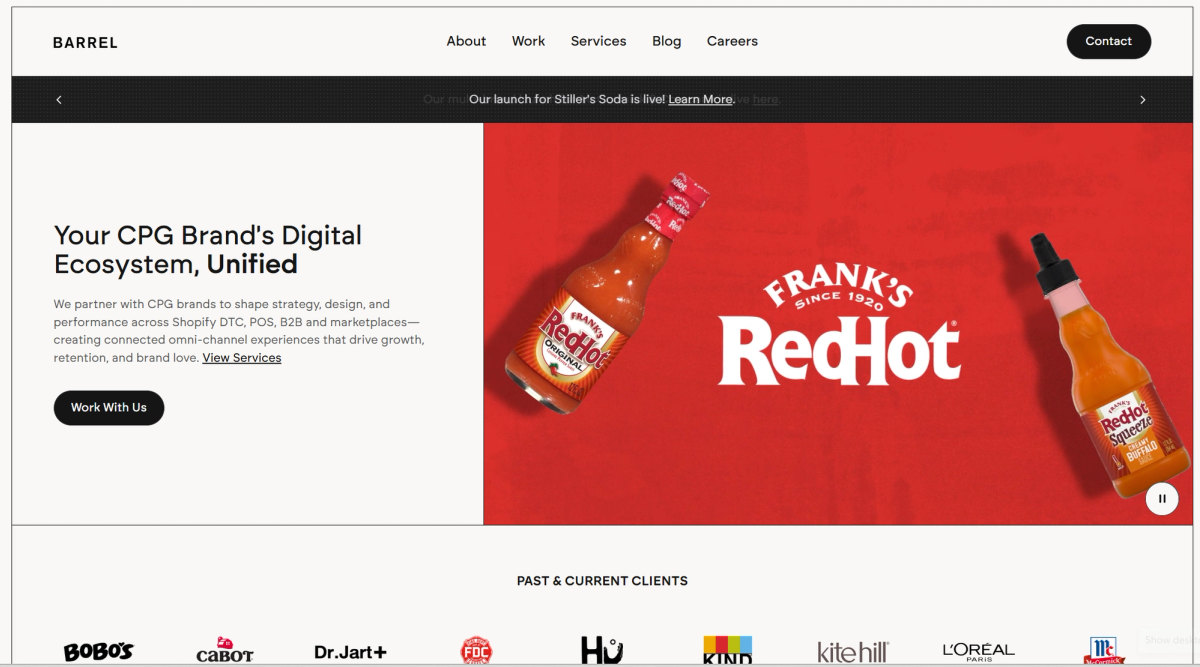
Barrel is a New York agency that has narrowed hard into one category, describing itself as a CPG commerce agency. Its own about page states plainly: "We've been working with Shopify since 2009 and are a Shopify Platinum Partner." The roster is exactly what that positioning predicts, with McCormick, Kind Snacks, Cabot Creamery, Sakara, Once Upon a Farm, Oishii, Sweet Loren's, Mack Weldon and L'Oreal Paris.
If your brand sells across DTC, grocery and B2B wholesale at once, Barrel has already solved the problems that combination creates. Its published testing work is granular in a way that suggests real practice, including a 6.06% conversion lift at 93.9% significance for Mack Weldon from hiding product listing page filters by default and showing four products per row instead of three.
The trade-offs are category and evidence. Outside CPG the fit loosens fast, and most of Barrel's published work is qualitative, so buyers who want a wall of performance numbers will find the portfolio thin. Barrel also is not a performance media partner.
Netalico
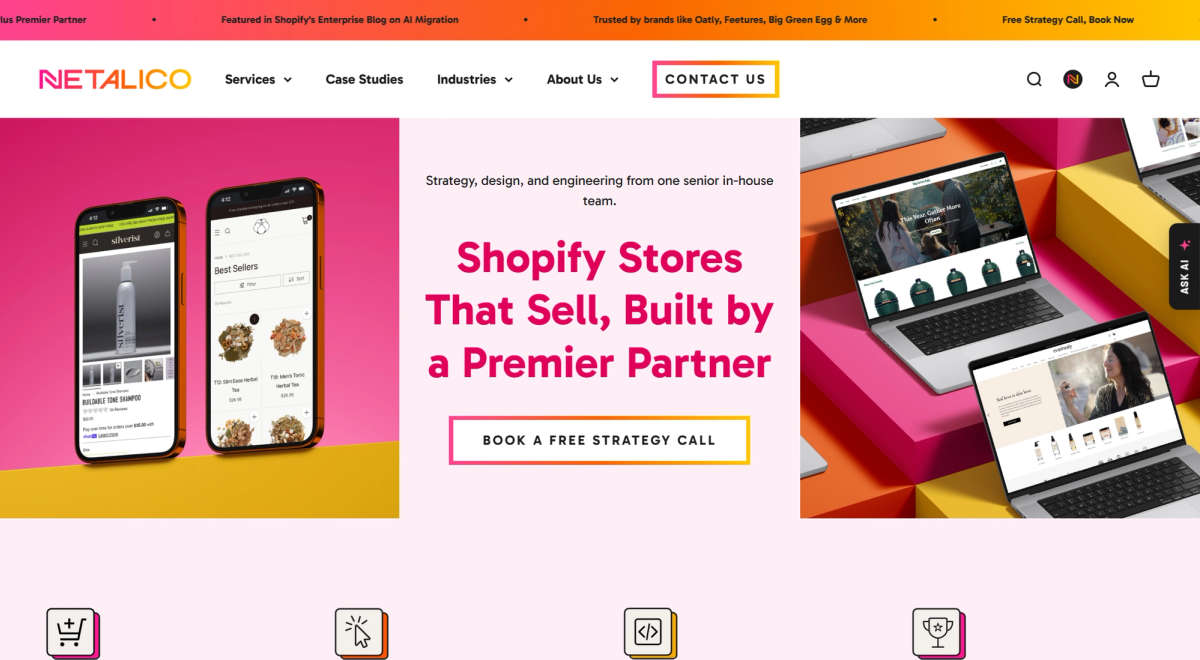
Netalico is the pick when the engineering is the hard part. It is a Shopify Plus Premier Partner with a deliberately small senior team of roughly twenty-five people across the Americas, founded in 2013 by a former NASA engineer, and it states that nothing is subcontracted. Clients include Oatly, Big Green Egg, Crossrope, Feetures, Audio Advice and Mijenta Tequila, and the agency says it manages more than $150 million in client revenue.
The engagement model is refreshingly explicit for this list. Netalico states that about 85% of clients work on a monthly retainer, structured in hours, with case studies referencing an Essential Retainer at 30 hours a month.
Two honest limits. Netalico publishes scope metrics rather than outcome metrics, so across seven case studies you will find "over 350+ requests in the first 90 days post-launch" and a ten-week build timeline, but no conversion or revenue lift. And there is no paid social or paid search buying in the service list at all. This is development, UX, Klaviyo, CRO and AI search.
Coalition
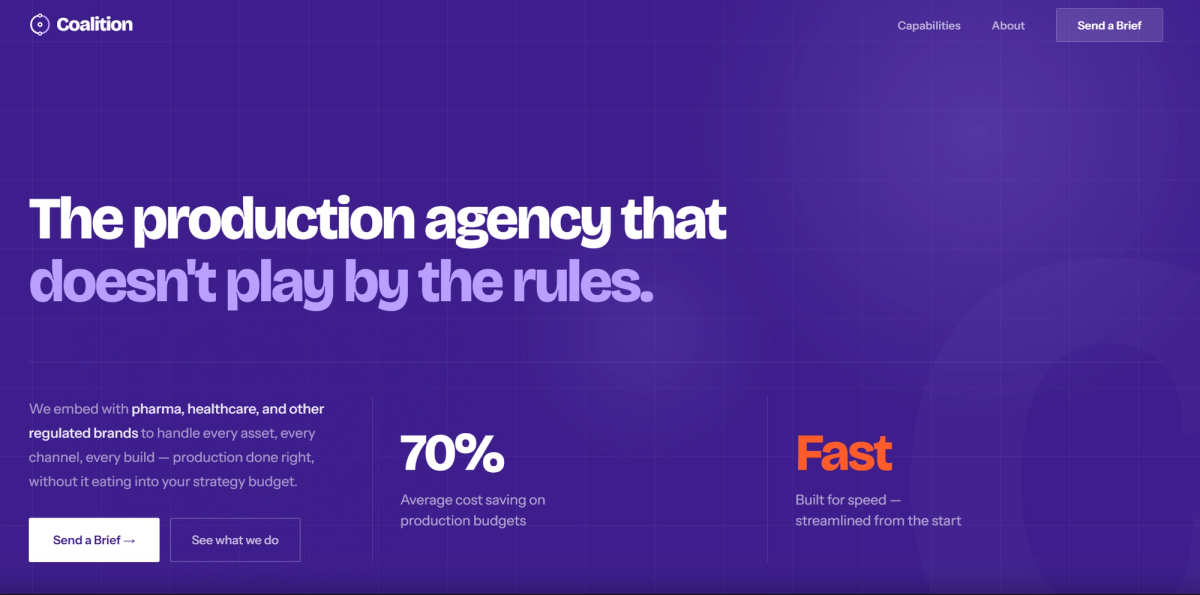
Coalition Technologies is the largest operation on this list by headcount, with more than 250 specialists across nine offices, founded in 2009 in Los Angeles, and it holds Shopify Premier Partner status. It leads with search rather than with Shopify craft, and its scale claims are correspondingly large: 34 million e-commerce transactions, 860 published case studies and a 98% client retention rate.
For a Shopify-relevant proof point, its Sugatsune America work is published as a 261% traffic increase driven by its AI-assisted SEO process. Worth flagging: Coalition's most-promoted study, Pink Lily generating $2.5 million in first-year revenue on $100,000 of fees, is a BigCommerce store, not Shopify.
Coalition offers month-to-month contracts but publishes no rates, only a pricing estimator. The bad fit is straightforward. If you want a boutique, senior, Shopify-native team, this is the opposite of that: a large, multi-platform generalist where Shopify is one platform among several.
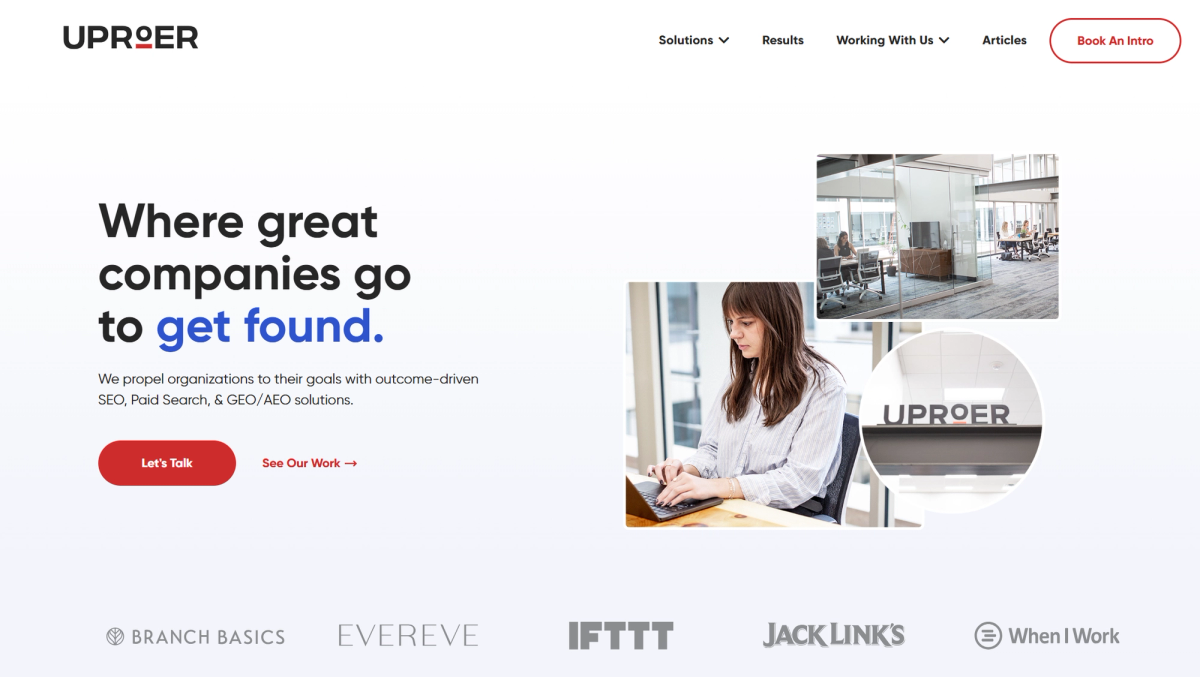
Uproer
Uproer is the only agency on this list that publishes what it charges, which by itself tells you something about how it operates. The Saint Paul, Minnesota agency lists Managed SEO from $5,000 a month and Managed SEO and SEM from $10,000 a month, both on twelve-month commitments with 60-day terms, with content production from $2,500 a month, and it front-loads a separately scoped strategy phase in month one. Its own line is "Where great companies go to get found."
The results are search-shaped and specific. Uproer reports growing SEO and SEM revenue by 84% in twelve months for Branch Basics and organic revenue by 1,065% for Thread Logic, with a client list that includes Evereve, BruMate, Jack Link's and Northern Tool.
Uproer makes no Shopify partner claim and works across Shopify, Magento, WooCommerce and BigCommerce. Its stated target is brands doing more than $10 million a year, and the twelve-month term plus $5,000 floor rules out most early-stage stores. If you want fast paid social wins, this is the wrong door.
GOOD
The Good has run research and experimentation as a structured program since 2009, and was a certified B Corporation for nine years. Its focus is testing rather than media buying, and that narrowness is the appeal: when your problem is that traffic arrives and does not convert, a testing specialist beats a generalist who will suggest more traffic.
The numbers hold up. Its Dynojet engagement is published as more than $5 million in annualized revenue gain from twenty-two completed tests at a 50% win rate, and its Xerox work reports 86.7% conversion growth among returning visitors. Clients span Nike, Adobe, The Economist, MillerKnoll, Snow Peak and Laird Superfood.
Two limits. The Good makes no Shopify partner claim and is platform-agnostic, and testing needs traffic, so a store doing a few hundred sessions a day cannot reach significance and will burn months finding that out. Engagements start with a mutual-fit call and no rates are published.
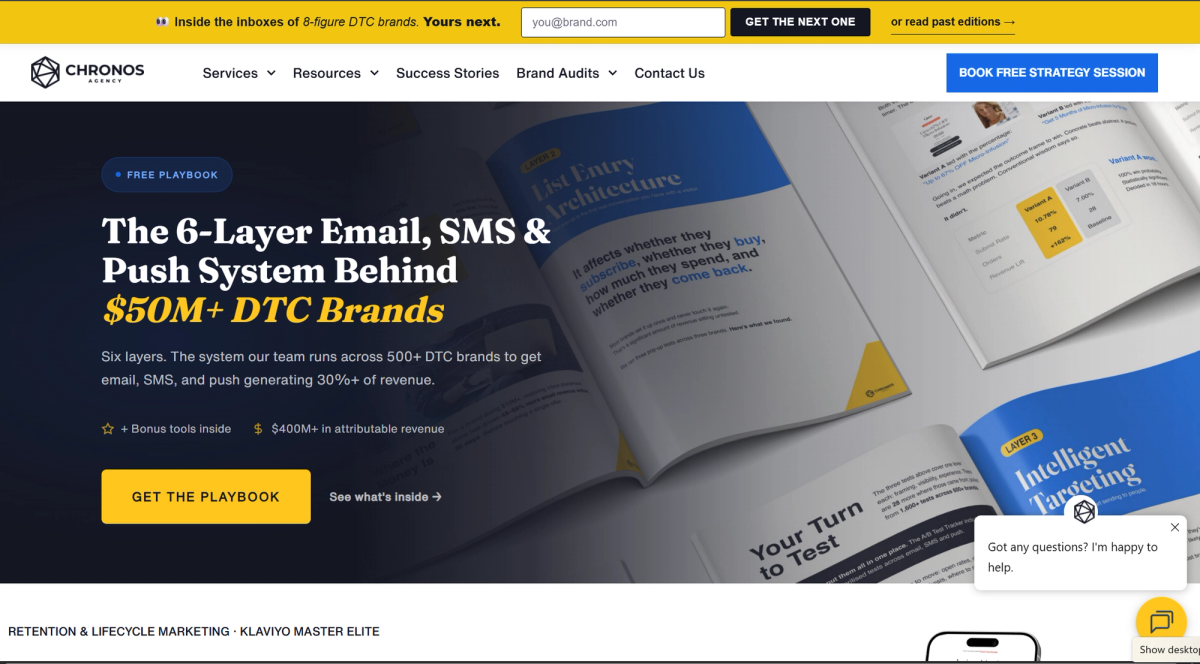
Chronos Agency
Chronos is a retention specialist, and its headline credential is Klaviyo rather than Shopify: it holds Klaviyo Master Elite Partner status, the highest tier Klaviyo awards. Founded in 2017 with a team above eighty, it works with The Oodie, Truly Beauty, Organifi, Chargeasap and Calming Blankets.
Its Garvee study is the clearest retention number in this set, reporting email-attributed revenue up 1,067% year over year, from $143,000 in Q4 2024 to $1.6 million in Q4 2025.
Two things a US brand should weigh. Chronos positions itself around brands doing $100,000 a month or more, and it is APAC-based across Sydney, Singapore and Kuala Lumpur, so timezone overlap is real work. It shows a standard Shopify Partners badge with no tier language, and it is a retention partner, not an acquisition one.
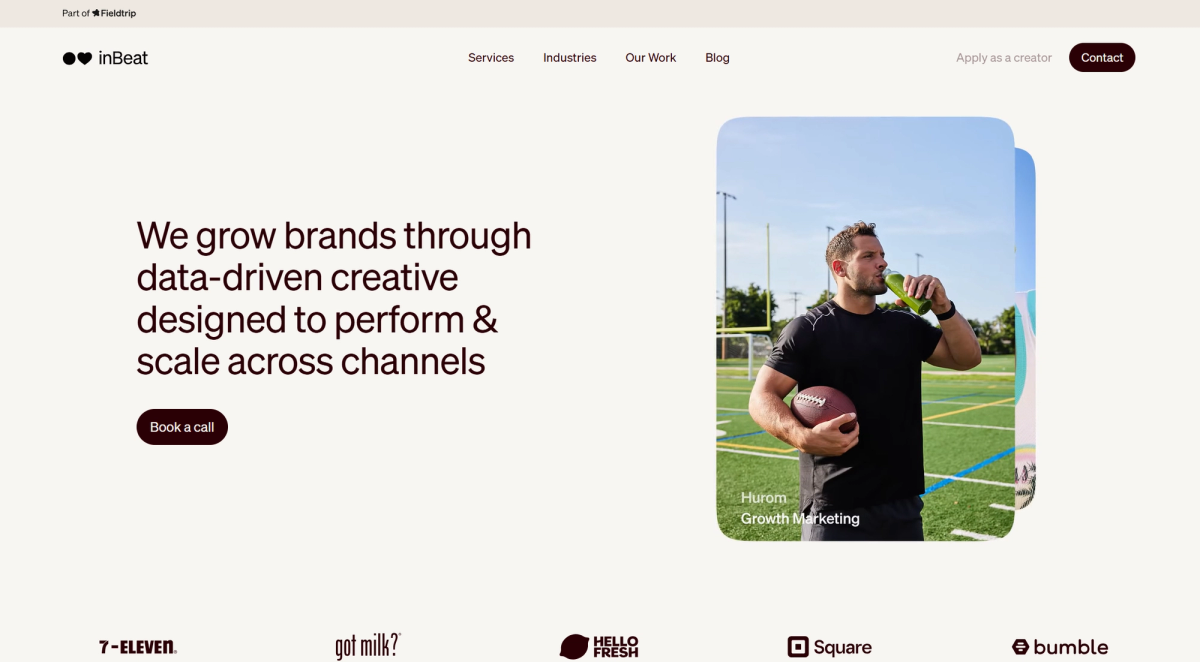
inbeat Agency
inBeat solves the bottleneck that kills most Shopify paid social accounts, which is creative supply. The Montreal agency, with offices in New York and Los Angeles, runs a micro-creator network to produce UGC specifically as ad fuel, and it says it ships more than 300 assets a month and has more than $20 million in paid media under management. Clients include Bumble, New Balance, Nordstrom, HelloFresh, Prose and Native.
Its Hurom campaign is published as 300% ROAS growth, a 65% reduction in overall CPA and 33% month-over-month profit margin growth.
Two clarifications. inBeat's site lists nine "locations" but only three are real offices; the rest are market landing pages. And the model assumes budget: if you want a handful of polished hero assets rather than a high-churn testing pipeline, or if your monthly spend is small, the economics do not work. There is no Shopify build, SEO or lifecycle work here. For how machine-generated UGC is changing that math, we covered it in AI UGC ads.
Electric Eye Agency
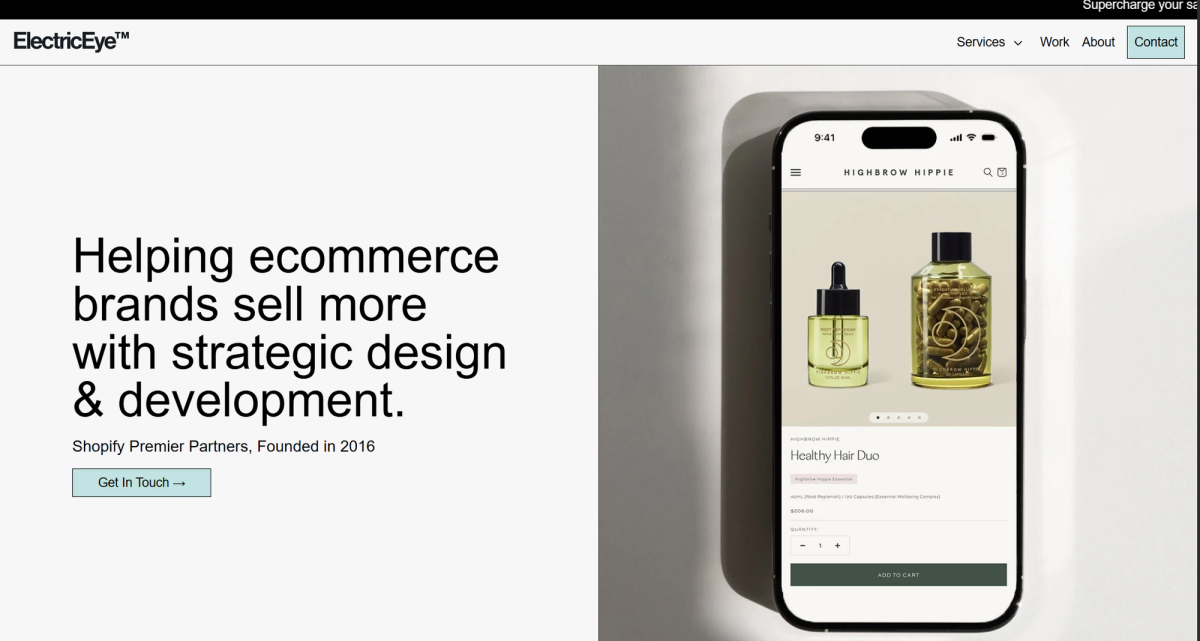
Electric Eye is the smallest agency on this list and the most honest about it, describing itself as a tight-knit team out of Columbus, Ohio, founded in 2016 and working exclusively on Shopify. It has built over 100 Shopify stores and sells ongoing optimization and maintenance retainers rather than one-off builds, which is the right shape for a brand that has a store and needs it to get steadily better.
Its Happy Nuts engagement, run as an optimization retainer, reports conversion rate up 55%, average order value up 9% and revenue per session up 64%. Note that of the eight Electric Eye case studies we checked, Happy Nuts is the only one carrying performance numbers.
Two flags. Electric Eye's homepage says "Shopify Premier Partners" while its about page says "Shopify Experts and Partners," and those are not the same claim, so ask them to confirm the tier. And there is no paid ads management anywhere in the service list, so media stays with you or a second vendor.
A Shopify marketing agency is a team you hire to grow revenue from a Shopify or Shopify Plus store, typically across some combination of paid media, creative production, SEO, email and SMS retention, conversion optimization and store development. That is a wide definition, and it is wide on purpose, because almost nobody does all of it well.
In practice the twelve agencies above split into four jobs, and knowing which one you are buying prevents most bad engagements.
• Demand. Getting new customers in at a cost you can afford. Paid social, paid search, creator content. Vibemyad, Common Thread Collective, Structured and inBeat live here.
• Discovery. Being found without paying per click. SEO, content and now visibility inside AI answers. Uproer and Coalition Technologies live here.
• Conversion. Turning the traffic you already have into orders. CRO, testing, site speed, checkout. The Good and Electric Eye live here.
• Retention. Selling to people who already bought. Email, SMS, lifecycle. Chronos lives here, and Domaine's marketing practice sits here too.
Store development, which Domaine, Netalico and Barrel do, is a fifth job and a separate purchase. Confusing "we need marketing" with "we need a better store" is the single most expensive mix-up in this category, and it usually surfaces as a six-figure headless rebuild that a merchant later describes, as one did in an r/shopify thread on headless builds, as "spending a ton of money just trying to recreate what Shopify has already figured out." Our guide on what an e-commerce marketing agency does breaks the service lines down further.
There is no published rate card for this category, and only Uproer on this list quotes a number publicly. What exists instead is a large body of merchants saying out loud what they pay, and the ranges are consistent enough to plan against.
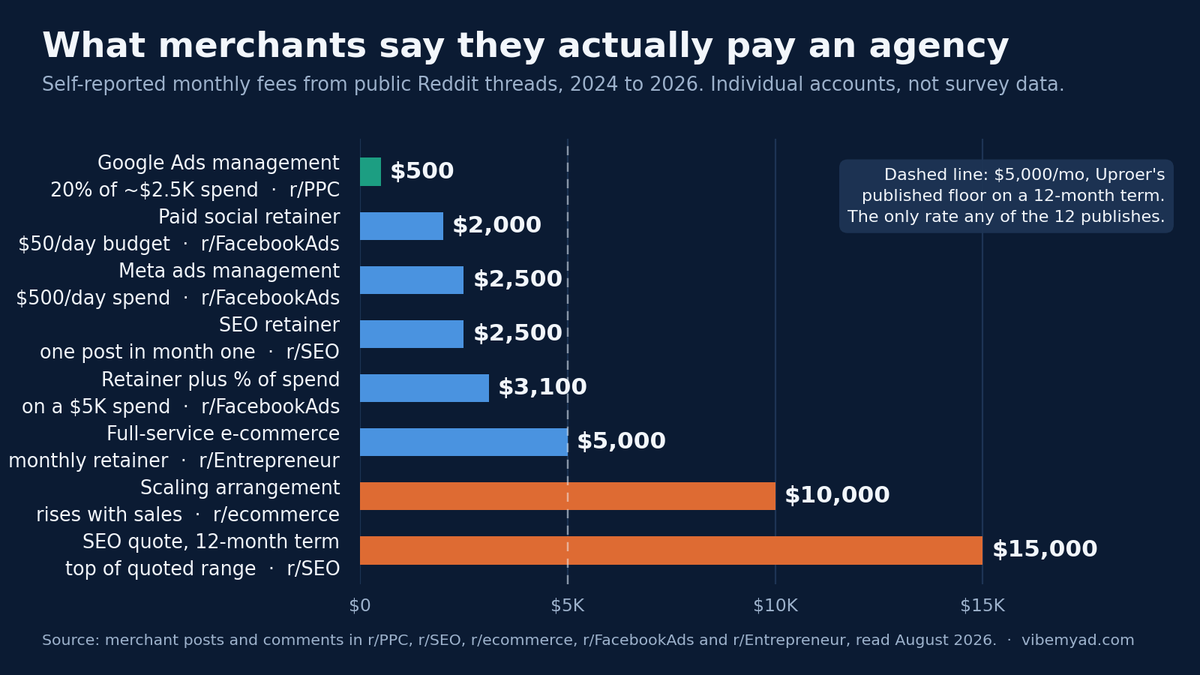
Self-reported monthly fees from public merchant threads, 2024 to 2026. Individual accounts, not survey data.
• Monthly retainers. Merchants across r/PPC, r/SEO, r/ecommerce and r/FacebookAds most often report $2,000 to $5,000 a month, with SEO quotes reaching $5,000 to $15,000 a month on twelve-month terms. Agency-side commenters in those same threads say they will not write a proposal under $5,000 a month.
• Percentage of ad spend. The common band is 10% to 20%, with 25% quoted to smaller accounts and widely called too high. One frequently proposed tier structure scales from 25% on $1,000 to $5,000 of monthly spend down to 15% above $25,000.
• Hybrid. Retainer plus a percentage. One merchant reported paying $2,600 a month plus 10% of a $5,000 spend, which is $3,100 in fees against $5,000 reaching the platform, and the thread agreed that ratio is indefensible.
• The rule of thumb merchants actually use. If the agency fee is a large fraction of the media budget, most of your money is not reaching a customer. Below roughly $5,000 a month in spend, the near-universal advice in these threads is to hire a freelancer or run it yourself.
Two market forces are pushing the arithmetic. Meta's own Q2 2026 results report that average price per ad rose 12% year over year while impressions rose 14%, so the cost of buying attention is genuinely climbing. And AgencyAnalytics' 2026 benchmarks report, based on 494 agency respondents surveyed between February and April 2026, found budget cuts and economic pressure are now the top reason clients leave, at 42%, ahead of performance concerns.
The deeper question is not the number but the shape. A retainer pays for time whether or not it works. A percentage of spend rewards spending more. Outcome-based pricing ties the fee to the result, which is the model Vibemyad chose for exactly that reason. We go through the trade-offs in detail in retainer versus outcome pricing and in our breakdown of what a digital marketing agency fee actually buys.
The honest answer depends almost entirely on your monthly spend and how much of your own time you can give it.
• Under $5,000 a month in ad spend. A freelancer or your own hands. At this level a $2,000 retainer buys you, by several practitioners' own accounting in these threads, six to eight hours of work a month. That is not a team, it is a contractor with a nicer invoice.
• $5,000 to $30,000 a month. The specialist agency window. You have enough spend to justify professional management and enough data to judge it, and you probably need one thing done exceptionally rather than six things done adequately.
• Above $30,000 a month. Hybrid usually wins. An in-house owner who holds strategy and the accounts, plus specialist partners for creative volume, SEO or retention.
• Any level, if the problem is the product. No agency fixes margin, price or a product nobody wants. Responders in merchant threads raise this constantly, and it is worth an honest hour before you brief anyone.
We put numbers on the comparison in our guide to full-service versus specialist agencies, and if you are early, what under $5,000 actually buys is the more useful read.
Six questions, drawn from what merchants say they wish they had asked.
• Who is actually on my account, by name and by hours? This is the number one grievance in every long agency thread. One r/Entrepreneur post about a $5,000 a month retainer describes the founder and the "VP of Strategy" vanishing after onboarding and the work landing with a twenty-two-year-old juggling fourteen accounts. Get names and time allocations in the contract.
• What is your Shopify partner tier, and are you in the directory? The directory invites Plus, Premier and Platinum tier partners plus a limited number of Registered-tier ones, and Shopify's Help Center states that reaching Plus needs either $500,000 a year in referral and co-sell revenue or $2.5 million from existing merchants, plus deal minimums and at least ten Verified Skills across at least three employees. "Shopify Partner" without a tier is a free signup.
• What access do you need, and why? A merchant on the Shopify Community forum was asked by an ads agency for permanent access to custom scripts, Liquid files and Shopify reports. The sharpest reply was the right one: "They are not doing any custom development work. Why will they need access to the theme files?" Grant the minimum.
• Who owns the ad accounts and the data? Refusing to give a client admin access to their own Google Ads or Meta account is the most-cited red flag in r/PPC. You should own the accounts and pay the platforms directly.
• What does month three look like, specifically? Paid media typically needs up to 90 days for stable performance and SEO needs three to six months, which means you are locked in before you can judge. A good agency gives you a dated milestone list. "It needs more time" as a first answer in month two is a tell.
• What would make you fire us as a client? Agencies that only ever say yes are selling capacity, not judgment.
Our nine-question vetting framework goes deeper in how to choose an e-commerce marketing agency.
• A guaranteed result. Page-one guarantees and fixed ROAS promises are the strongest negative signal in the category. As one r/PPC commenter put it, "Don't ask for guarantees, this is a major red flag client wise. Good agency will run away."
• They found you. The heuristic merchants apply on the Shopify Community forum is that the agencies with spare capacity are the ones cold-emailing, and the good ones are busy and come by referral. Unsolicited outreach promising 3x to 5x growth is the most common complaint in that forum.
• The fee dwarfs the media. If management costs more than half of what reaches the platform, the math is working for them, not you.
• A twelve-month term on a slow-feedback service. SEO lags by three to six months. A twelve-month lock means you find out in month four and pay through month twelve.
• Reporting instead of results. A branded PDF every Friday that leads with impressions and time on site rather than revenue and contribution margin.
• Undisclosed subcontracting. Ask directly whether any of the work is white-labeled and who does it.
• Buzzword services with no mechanism. The 2026 version is AI visibility and answer engine optimization sold as a $3,000 audit plus a monitoring dashboard. Generative search optimization is real work, but ask what changes on your site as a result. If the deliverable is a dashboard, that is a subscription, not a service.
Vibemyad starts where most agencies start last, which is with evidence about your category rather than a moodboard.
• Day zero. The platform reads every ad currently running in your category and classifies competitor creative by hook, format, offer and funnel stage. You see what is already working before anyone writes a brief. You can get that teardown free without hiring anyone.
• Days one to four. Concepts and variations come out of the creative engine informed by that read, humans select and direct, and campaigns go live. BestLanding had ads live in four days.
• Ongoing. Paid media on Meta and Google, static, video and UGC creative, e-commerce SEO and AI search visibility, and landing page and CRO work, all running off the same connected system rather than six disconnected tools.
• The commercial part. Outcome-based pricing, no retainer, month to month. You are buying a result, not a seat count.
What we are not: a Shopify Plus development shop, an enterprise agency of record, or a fully automated black box. AI does the heavy lifting on research and production. People decide what to run, what to kill and what to override. If you want to see how that compares to the broader field, we ranked ourselves honestly in the best AI marketing agencies and the best e-commerce marketing agencies for DTC brands too.
• There is no single best Shopify marketing agency. Match the specialty to the job: demand, discovery, conversion, retention or development.
• Check the Shopify tier, not the badge. Reaching Plus tier alone takes either $500,000 a year in referral and co-sell revenue or $2.5 million from existing merchants, plus deal minimums and ten Verified Skills across at least three employees, per Shopify's Help Center.
• Only Uproer publishes a price, from $5,000 a month on a twelve-month term. Everyone else quotes on a call, so go in with the merchant-reported bands of $2,000 to $5,000 a month or 10% to 20% of spend.
• Get the named team and their hours into the contract. The junior-swap is the most common complaint merchants report, across ads, SEO and development alike.
• Six of these twelve run no paid media and six build nothing on Shopify. Ask which job you are actually buying before the second call.
• Ad costs are still climbing. Meta reported average price per ad up 12% year over year in Q2 2026, which raises the value of creative volume and lowers the tolerance for a slow agency.
Get notified when new insights, case studies, and trends go live — no clutter, just creativity.
Table of Contents


Arpita Mahato
Content Writer, Vibemyad

Arpita Mahato
Content Writer, Vibemyad

Arpita Mahato
Content Writer, Vibemyad